How Does a Solar Powered Watch Work?
Struggling to keep your watch running without constantly changing batteries? You’re not alone. Many people wish for a timepiece that combines convenience with eco-friendliness, so they don’t have to worry about frequent maintenance or harmful waste.
A solar-powered watch captures light through solar cells beneath its dial, converting it into energy stored in rechargeable batteries. You just need to expose it regularly to natural or artificial light, which triggers electricity via the photovoltaic effect, keeping the watch running smoothly.
It can work for months on a full charge and maintains impressive accuracy with proper care.
If you want to understand how light sources affect efficiency and how to maintain your watch, there’s more to explore.
Key Takeaways
- Solar cells beneath the dial absorb natural and artificial light to power the watch.
- The photovoltaic effect in solar cells converts light energy into electrical energy for operation.
- Rechargeable batteries store energy so the watch keeps running during low or no light conditions.
- Continuous light exposure is necessary to maintain battery charge and keep the watch performing well.
- Intelligent circuits and power-saving modes help optimize energy use and extend the battery’s lifespan.
How Solar Watches Capture Light
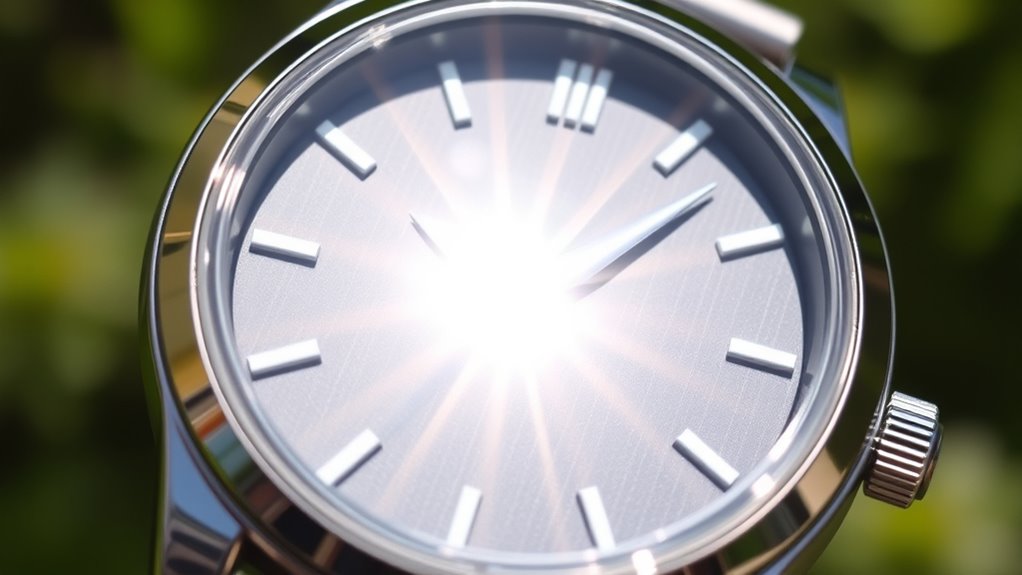
A solar watch captures light through tiny solar cells embedded beneath its dial. When you wear one, these cells absorb various light types, natural sunlight and artificial indoor lighting alike. This design guarantees the watch continuously converts light into electrical energy, maintaining its charge without frequent battery changes.
You’ll notice that solar efficiency depends on how well these cells capture and convert light. Advances in technology have improved their sensitivity, so even dimmer light types can power your watch effectively.
As you go about your day, the solar cells work quietly, transforming available light into power. This seamless process keeps your watch running reliably while reducing environmental impact and the hassle of battery maintenance.
Which Light Powers Solar Watches Best?
Which types of light power your solar watch most efficiently? The best light sources for solar watches are those that emit strong, consistent light, like sunlight. While indoor lights can charge your watch, they do so at a slower rate, affecting solar watch efficiency.
Understanding these differences helps you keep your watch running reliably.
| Light Source | Intensity | Solar Watch Efficiency |
|---|---|---|
| Direct Sunlight | Very High | Maximum |
| Indirect Sunlight | Moderate | Good |
| LED Indoor Light | Low | Moderate |
| Fluorescent Light | Low | Moderate |
| Incandescent Light | Very Low | Poor |
For best results, expose your watch to natural sunlight whenever possible to maximize solar watch efficiency.
How Solar Cells Convert Light Into Energy
When light hits the solar cells in your watch, it sets off something called the photovoltaic effect. Basically, this is the start of how energy gets converted. The cells soak up photons from the light, which excites electrons and creates an electric current. And that’s how your watch turns sunlight into the power it needs to keep ticking.
Photovoltaic Effect Explained
Because solar cells capture sunlight and turn it into electricity, understanding the photovoltaic effect is key to knowing how your solar-powered watch stays charged. Photovoltaic cells are made of semiconductor materials, usually silicon, that absorb sunlight and create an electric current.
When light hits these cells, it excites electrons, freeing them to flow through the material. This movement of electrons generates electricity, powering your watch. The process is called energy conversion because it transforms light energy directly into electrical energy without any moving parts.
As long as light reaches the photovoltaic cells, your watch can keep running by continuously converting energy. This efficient, silent process guarantees your watch remains charged simply from exposure to light.
Light Absorption Process
Although solar cells look simple, they perform a complex task by absorbing sunlight and converting it into usable energy for your watch. They capture a broad range of the light spectrum, including visible and some infrared rays, to maximize energy intake. This absorption is key to improving the energy efficiency of your watch, ensuring it runs longer without needing a battery change.
Here’s how the light absorption process works in your solar-powered watch:
Solar cells contain semiconductor materials that react to sunlight. Different wavelengths in the light spectrum excite electrons within the cells. Excited electrons generate electrical current. The design optimizes absorption to capture more sunlight under various lighting conditions.
This process makes your watch both eco-friendly and convenient.
Energy Conversion Mechanism
Once solar cells absorb sunlight, they immediately start converting it into electrical energy to power your watch. This happens through a process called the photovoltaic effect, where solar technology uses semiconductor materials to generate electric current when exposed to light.
When photons hit the solar cells, they excite electrons, creating electron-hole pairs that move freely and produce electricity. The design maximizes energy efficiency, ensuring minimal loss during conversion.
This electrical energy then charges a rechargeable battery inside your watch, keeping it running even in low light. Thanks to advancements in solar technology, modern solar-powered watches achieve impressive energy efficiency, allowing them to function reliably while requiring little maintenance or battery replacement.
You can rely on this mechanism to keep your watch ticking sustainably.
Where Solar Watches Store Their Energy
You might wonder how your solar watch keeps running when it’s not exposed to light. Well, it stores energy in rechargeable batteries that are specially designed to hold and release power efficiently.
Knowing a bit about the types of batteries used and how long they typically last can really help you appreciate just how smart your watch’s energy system is. It’s pretty cool when you think about it!
Rechargeable Battery Types
Since solar watches rely on capturing light to function, they need efficient rechargeable batteries to store that energy for later use. You’ll find various rechargeable battery types in these watches, each with unique benefits. The most common are lithium-ion batteries, prized for their high energy density and long life.
Other types include nickel-metal hydride (NiMH), which offers good capacity but is less common today. Some older models use silver oxide batteries, but these aren’t rechargeable. Understanding these options helps you appreciate how your solar watch keeps ticking without frequent replacements.
Here are key rechargeable battery types used in solar watches:
- Lithium-ion: compact, durable, and high capacity
- Nickel-metal hydride (NiMH): reliable, eco-friendly
- Silver oxide: mostly non-rechargeable, legacy use
- Lithium polymer: flexible shape, lightweight
Energy Storage Mechanisms
Although solar panels capture sunlight to power the watch, the energy needs a reliable place to be stored so your watch keeps running even in the dark. Solar watches use rechargeable batteries or capacitors designed for high energy efficiency and optimized storage capacity.
These storage mechanisms manage power through intelligent circuits, ensuring your watch maintains consistent performance. Thanks to design innovations, modern watches handle frequent charging cycles with minimal battery degradation, enhancing your user experience.
They also reduce environmental impact by avoiding disposable batteries. Effective power management balances energy input and output, so your watch never runs out unexpectedly.
Battery Lifespan Factors
When you rely on a solar-powered watch, understanding the factors that affect battery lifespan becomes essential. The battery longevity directly influences how well your watch stores energy and functions over time.
Several elements can impact this lifespan, and being aware of them helps you maintain your watch efficiently while minimizing environmental impact.
Consider these key factors:
- Charge cycles: Frequent charging and discharging can reduce battery efficiency.
- Exposure to light: Insufficient sunlight limits charging, shortening battery life.
- Temperature: Extreme heat or cold affects battery performance and durability.
- Battery type: Quality and chemistry of the rechargeable battery determine longevity.
How Solar Watches Use Stored Energy
After the solar cells capture sunlight and convert it into electrical energy, your watch stores this power in a rechargeable battery or capacitor. This stored energy guarantees your watch runs continuously, even without direct light.
Advances in design innovations and technological advancements have improved energy efficiency, reducing environmental impact and aligning with consumer preferences. By understanding charging techniques and maintenance tips, you can optimize your watch’s performance.
User experiences highlight how brand comparisons and market trends influence your choice.
| Aspect | Benefit | Impact |
|---|---|---|
| Energy Efficiency | Longer battery life | Less frequent charging |
| Design Innovations | Sleek, durable models | Improved user appeal |
| Market Trends | Growing eco-consciousness | Increased demand |
| Maintenance Tips | Simple care routines | Prolonged device life |
| Brand Comparisons | Varied features | Informed purchases |
How Long Solar Watches Run Without Light
Because solar watches store energy efficiently, they can keep running for weeks or even months without exposure to light. This impressive solar watch longevity means you won’t have to worry if you leave your watch in a drawer or dark place for a while.
However, light exposure effects still matter for maintaining peak performance and battery health. When you wear your watch regularly under natural or artificial light, it recharges continuously, extending its lifespan.
Here’s what you should know about how long solar watches run without light:
- Most models run 3 to 6 months on a full charge
- Power-saving modes help extend battery life during darkness
- Prolonged lack of light may eventually stop the watch
- Regular light exposure keeps the rechargeable battery healthy and efficient
How Accurate Are Solar Watches Compared to Others?
You might be wondering how solar watches measure up against other types when it comes to accuracy. Well, they usually keep time just as precisely as traditional quartz watches. But here’s the thing—factors like how much light they get and the condition of their battery can affect how well they perform. So, let’s take a closer look at what influences their timekeeping accuracy and see how they compare overall.
Timekeeping Precision Comparison
Accuracy plays an essential role when choosing a watch, and solar-powered models hold their own against traditional timepieces. Thanks to advanced timekeeping technology, solar watches maintain impressive solar accuracy, often rivaling quartz and mechanical counterparts.
When comparing precision, consider these points: solar watches typically deviate only a few seconds per month. Quartz watches offer slightly better accuracy but rely on battery replacements. Mechanical watches vary more, sometimes losing or gaining several seconds daily.
Solar watches combine eco-friendly energy with consistent timekeeping precision. You get reliable performance with minimal maintenance in solar watches, making them a smart choice if you want accuracy and sustainability combined.
Their timekeeping technology guarantees you won’t often need to reset your watch, keeping you punctual effortlessly.
Factors Affecting Solar Accuracy
While solar watches generally offer reliable timekeeping, several factors can influence their accuracy. Solar efficiency depends heavily on light intensity. If your watch doesn’t get enough sunlight, it can struggle to maintain ideal power.
Environmental factors like extreme temperatures also play a role. Too hot or cold can disrupt the internal mechanisms. Battery maintenance is essential since solar watches store energy in rechargeable cells that degrade over time.
Your usage habits matter too. Consistent exposure to light keeps the battery charged and the watch running smoothly. Ultimately, watch design impacts accuracy. The quality of components and movement precision determine how well it performs compared to traditional quartz or mechanical watches.
Caring for Your Solar Watch
A solar watch relies on consistent exposure to light to keep running smoothly, so it’s important to give it the care it deserves. Proper watch maintenance guarantees the solar cells and battery last longer, maintaining accuracy and performance.
Consistent light exposure is key to maintaining your solar watch’s accuracy and longevity.
Here’s how you can care for your solar watch:
- Regularly expose your watch to natural or artificial light to recharge the battery.
- Avoid storing your watch in dark places for extended periods to prevent battery drain.
- Clean the watch face and solar panel gently with a soft cloth to remove dirt and grime.
- Have the battery and watch components checked by a professional every few years for peak battery care.
Why Solar Watches Are Eco-Friendly and Affordable
Because solar watches draw power from light rather than disposable batteries, they offer an eco-friendly alternative that reduces electronic waste. You gain eco benefits by cutting down battery disposal and lowering your carbon footprint.
Plus, solar watches save you money over time with cost savings on battery replacements and maintenance.
| Aspect | Solar Watch Benefit |
|---|---|
| Power Source | Uses renewable light |
| Battery Life | Long-lasting, rechargeable |
| Waste Reduction | Less battery disposal |
| Maintenance Costs | Minimal |
| Environmental Impact | Lower carbon footprint |
Choosing a solar watch means you’re supporting sustainability and enjoying affordable, hassle-free timekeeping.
How to Choose the Right Solar Watch for You
How do you find a solar watch that fits your lifestyle and needs? Start by considering your style preferences and design aesthetics, whether you want something sporty, classic, or modern. Factor in budget considerations to narrow down options without sacrificing quality.
Pay attention to brand reputation and warranty options to guarantee reliability and support. Also, focus on lifestyle compatibility. If you’re active, choose durable materials and size selection that suits your wrist comfortably.
Here’s what to keep in mind:
- Feature comparison to match your daily activities
- User reviews for real-world insights
- Maintenance tips to prolong battery life
- Warranty options for peace of mind
Frequently Asked Questions
Can Solar Watches Charge Indoors or Only Outdoors?
You can definitely charge a solar watch indoors, but it charges more slowly compared to outdoors. Solar watches have good light sensitivity, so even artificial indoor lighting helps maintain the power.
However, direct sunlight outdoors provides the strongest energy boost. If you rely only on indoor charging, make sure your watch spends plenty of time near bright lights to keep it running smoothly without unexpected stops.
Do Solar Watches Require Battery Replacements?
You’ll never have to worry about battery replacements destroying your day when using a solar watch! Thanks to advanced solar technology, these watches boast an incredible battery life that can last for years without a single change.
The rechargeable battery absorbs light, so it keeps powering your watch smoothly. While eventual replacement is possible after a decade or more, you can rely on your solar watch to keep ticking with minimal hassle for a very long time.
Are Solar Watches Water-Resistant?
Yes, many solar watches offer water resistance, but it depends on the model. When you choose a solar watch, check its water resistance rating to match your needs, whether for swimming or everyday use.
Solar technology doesn’t affect water resistance, so you can enjoy both features without worry. Just remember, water resistance varies, so don’t expose your watch beyond its limits to keep it working perfectly.
How Durable Are Solar Watches Compared to Mechanical Watches?
Solar watches are as tough as a well-built fortress when it comes to durability compared with mechanical watches. You’ll find solar efficiency means fewer battery replacements, which reduces wear over time.
Mechanical watches have intricate parts that can be more delicate and need regular maintenance. On the other hand, solar watches generally handle shocks and daily use better. So, if you want a watch that’s low-maintenance and resilient, solar watches usually come out ahead.
Can Solar Watches Function in Extreme Temperatures?
Yes, your solar watch can function in extreme temperatures, but temperature effects might impact its performance. High heat or freezing cold can reduce solar efficiency, causing the battery to charge slower or temporarily lose power.
However, most solar watches are designed to withstand a wide temperature range, so they keep running reliably in harsh conditions. Just remember, extreme and prolonged exposure may shorten your watch’s lifespan or affect its accuracy.
Conclusion
Now that you know how solar watches work, it’s impressive to learn they can run for months even in complete darkness once fully charged. This means you won’t have to worry about replacing batteries frequently, saving you time and money.
Plus, you’re helping the environment by using renewable energy. Choosing a solar watch is a smart, eco-friendly move that combines convenience with sustainability.
So, why not make the switch to a solar powered watch today? It’s a simple way to enjoy reliable timekeeping while supporting a greener planet.