
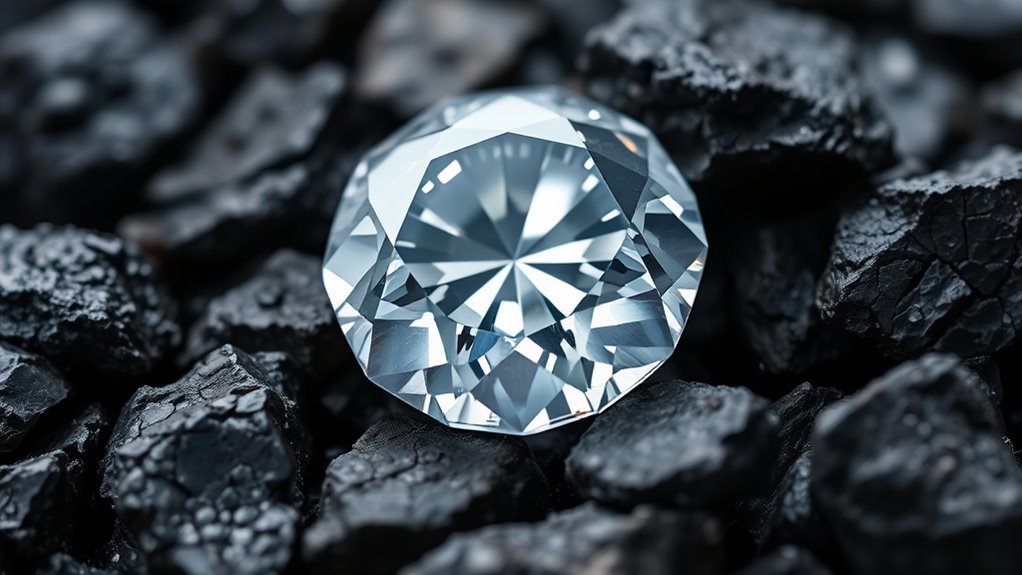
What Is a Diamond Made Of?
If you’ve ever wondered why diamonds are so incredibly durable and dazzling, you’re not alone. Many people struggle to understand what makes diamonds stand out from other stones.
Whether you’re shopping for the perfect piece or just curious about their unique qualities, knowing what a diamond is made of can really help.
A diamond is made entirely of carbon atoms arranged in a strong, three-dimensional lattice, where each atom bonds to four others, creating a rigid, tetrahedral pattern. This atomic structure gives diamonds their unmatched hardness and brilliance, far exceeding graphite or charcoal.
Diamonds form deep underground under intense heat and pressure, or can be created synthetically with precise conditions.
You’ll find how this unique formation and structure shape diamonds’ beauty and strength in the deeper details ahead.
Key Takeaways
- Diamonds are composed entirely of carbon atoms arranged in a rigid, three-dimensional tetrahedral lattice.
- Carbon atoms in diamonds form strong covalent bonds with four neighbors, creating exceptional hardness.
- The uniform atomic structure and crystal symmetry provide diamonds with brilliance and durability.
- Diamonds differ from other carbon forms like graphite by their tightly bonded, non-layered crystal network.
- Natural diamonds form deep within the Earth under high pressure and temperature over millions of years.
What Are Diamonds Made Of at the Atomic Level?
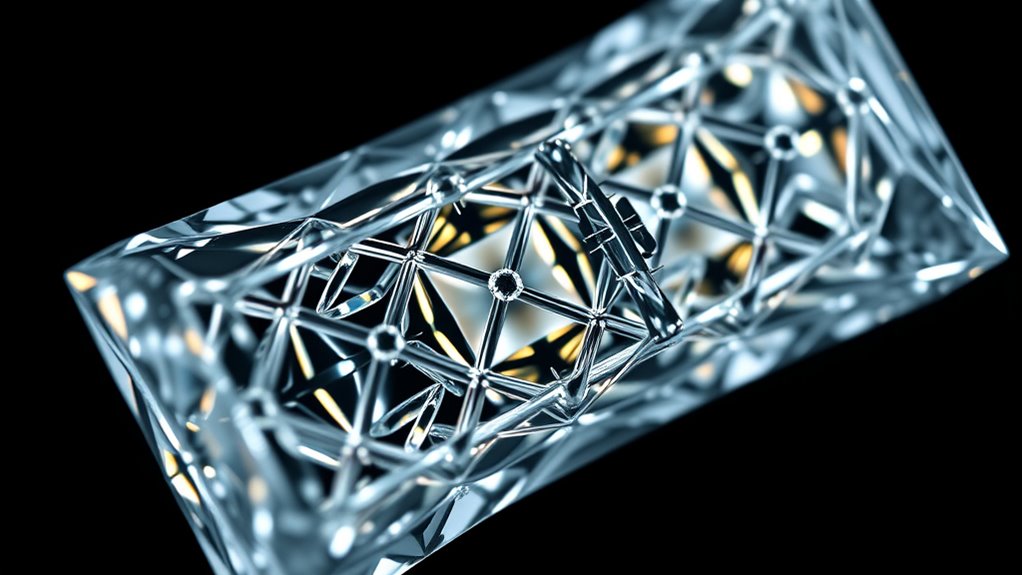
At the atomic level, diamonds consist entirely of carbon atoms arranged in a unique crystal structure. When you look into the diamond atomic composition, you’ll find it’s made purely of carbon, one of the most versatile elements.
Carbon exists in several forms called carbon allotropes, including graphite, graphene, and diamond. What sets diamonds apart from other allotropes is how their atoms bond tightly in a rigid framework, giving diamonds their incredible hardness and brilliance.
You might find it fascinating that despite sharing the same element, carbon allotropes exhibit vastly different properties due to their atomic arrangements. Understanding this diamond atomic composition helps you appreciate why diamonds are so distinct and valued, even though they’re made from the same element found in everyday materials.
How Carbon Atoms Create a Diamond’s Crystal Structure
The way carbon atoms bond together determines the diamond’s crystal structure. In diamonds, each carbon atom forms strong covalent bonds with four other carbon atoms, creating a three-dimensional network.
This atomic arrangement is what distinguishes diamonds from other carbon allotropes like graphite, where atoms bond differently. The precise tetrahedral bonding pattern in diamonds results in a rigid, repeating lattice that extends throughout the crystal.
When you look at this structure, you’ll see how the uniform atomic arrangements contribute to the diamond’s brilliance and unique properties. Understanding these carbon allotropes and their atomic arrangements helps you appreciate how nature organizes carbon atoms to produce vastly different materials, with diamonds showcasing one of the most remarkable crystal structures among them.
Why Are Diamonds Harder Than Graphite or Charcoal?
Although graphite and charcoal are also made of carbon, you’ll find diamonds much harder because of how their atoms are bonded. In diamonds, each carbon atom links tightly to four others in a strong, three-dimensional network. This arrangement gives diamond durability that’s unmatched.
On the other hand, graphite’s atoms form layers held together by weaker forces, allowing the layers to slide over each other easily. That’s why you experience graphite softness compared to diamond hardness. Charcoal, being more amorphous with less organized carbon structures, lacks the rigid bonding that diamonds have.
How Strong Covalent Bonds Give Diamonds Their Toughness
You’ll find that each carbon atom in a diamond forms strong covalent bonds with four other carbon atoms. Because of this, it creates a rigid crystal structure that holds everything tightly together. When you understand this bonding, it’s easier to see why diamonds are so tough.
Carbon Atom Bonding
Strong covalent bonds between carbon atoms give diamonds their incredible toughness. When you look at carbon allotropes, you’ll notice that the way carbon atoms bond sets them apart.
In diamonds, each carbon atom forms four strong covalent bonds with neighboring atoms, creating a rigid, stable network. This bonding is much stronger than the bonds found in other carbon allotropes like graphite, where atoms are bonded in layers that can slide over each other.
These strong bonds directly influence diamond properties such as hardness and thermal conductivity. Because of this atomic bonding, diamonds resist scratches and can transmit heat efficiently.
Understanding carbon atom bonding helps you appreciate why diamonds are so distinctly durable compared to other forms of carbon.
Diamond Crystal Structure
The way carbon atoms connect in a diamond forms a unique crystal structure that gives the gem its unmatched toughness. This diamond lattice arranges atoms in a repeating, three-dimensional pattern, creating incredible strength. The crystal symmetry guarantees that the forces applied to the diamond spread evenly, preventing fractures.
Here’s why the diamond crystal structure makes it so tough:
- Each carbon atom forms four strong covalent bonds in a tetrahedral shape.
- The diamond lattice is rigid, locking atoms firmly in place.
- Crystal symmetry distributes stress uniformly throughout the structure.
- The tightly packed lattice resists deformation under pressure.
You can see how this precise atomic arrangement results in diamonds being one of the hardest natural materials on Earth.
How Natural Processes Form Diamonds Deep Underground
You know, diamonds actually begin as simple carbon deep inside the Earth. It’s down there, under crazy pressure and heat, that they slowly take shape over millions of years. This intense environment changes the carbon into that sparkling crystal structure we all recognize. Then, when a volcanic eruption happens, it kind of gives these diamonds a ride closer to the surface. That’s how they eventually end up in the hands of gem hunters.
Carbon Source Origins
Although diamonds sparkle on the surface, their origins lie deep within the Earth’s mantle. Intense heat and pressure transform carbon into crystalline structures.
The carbon responsible for diamond formation comes from various sources, all contributing to the unique carbon allotropes found in nature. You’ll find that:
- Carbon originates from ancient organic matter subducted into the mantle.
- Mantle carbonates release carbon during melting processes.
- Some diamonds form from primordial carbon trapped since Earth’s formation.
- Carbon from recycled crustal material cycles back into the mantle over millions of years.
These natural processes supply the essential carbon, allowing diamond formation to occur far beneath the surface. Understanding these carbon source origins reveals how Earth’s dynamic system crafts these precious gems.
Extreme Pressure Conditions
When carbon atoms get buried deep within the Earth, they face extreme pressures that force them to rearrange into diamond’s unique crystal structure. You might not realize it, but these pressure conditions are far beyond what we experience on the surface.
At depths over 140 kilometers, the environment becomes an intense world of extreme environments where carbon atoms compress tightly together. This intense pressure changes the way atoms bond, transforming soft graphite-like carbon into the hardest natural material you know as diamond.
If the pressure conditions weren’t just right, high enough and sustained over millions of years, this transformation wouldn’t happen. So, the next time you see a diamond, remember it formed under nature’s incredible forces deep underground, in conditions you can hardly imagine.
Volcanic Transport Mechanism
Because diamonds form deep within the Earth’s mantle, they need a way to reach the surface without losing their structure. This happens through volcanic transport mechanisms driven by mantle dynamics. Volcanic eruptions rapidly bring magma from the deep earth to the surface, carrying diamonds trapped within. These geological processes guarantee diamond transportation occurs swiftly, preserving the precious mineral deposits.
Here’s how it works:
- Magma formation occurs deep in the mantle, where intense pressure and heat exist.
- Volcanic activity pushes this magma upward through cracks in the Earth’s crust.
- Diamonds embedded in the magma travel intact during the ascent.
- When volcanic eruptions happen, diamonds are deposited near the surface, making them accessible for mining.
How Impurities Affect Diamond Color and Composition
Impurities play an essential role in determining a diamond’s color and composition, directly influencing its appearance and value. When you look at a diamond, its color grading depends largely on the impurity types present during its formation.
For example, nitrogen atoms can give diamonds a yellow or brown tint, while boron impurities may cause a blue hue. These tiny inclusions alter how light interacts with the crystal lattice, creating different shades.
Understanding these impurity types helps gemologists evaluate a diamond’s quality more accurately. So, when you consider a diamond’s color, remember it’s not just pure carbon but a complex mix influenced by natural impurities that shape its unique beauty and worth.
How Synthetic Diamonds Are Made From Carbon
You’ll start by picking the right carbon source to create synthetic diamonds. After that, you’ll apply high pressure and carefully control the temperature to mimic how diamonds form naturally. These steps are really important for making good-quality synthetic diamonds.
Carbon Source Selection
When creating synthetic diamonds, selecting the right carbon source plays a crucial role in determining the quality and properties of the final product. You need to take carbon sourcing carefully into account to guarantee your diamonds have the desired purity and structural integrity. Plus, choosing a sustainable carbon source can greatly reduce the environmental impact of diamond production.
Here are four key factors to take into account:
- Purity of the carbon source affects the diamond’s clarity and strength.
- Renewable or recycled carbon sources help minimize environmental impact.
- Cost-effectiveness balances quality with budget constraints.
- Availability guarantees consistent production without delays.
High Pressure Process
Although it requires specialized equipment, the high pressure process transforms carbon into synthetic diamonds by mimicking the intense conditions deep within the Earth. You apply extreme pressure, often over 5 gigapascals, to carbon sources, replicating the natural geological processes responsible for diamond formation.
This intense pressure rearranges carbon atoms into a crystal lattice, creating diamonds with properties nearly identical to natural ones. By controlling pressure precisely, you guide carbon through phases that mirror Earth’s mantle environment, speeding up what normally takes millions of years.
This method proves essential for producing high-quality synthetic diamonds used in industry and jewelry. Understanding and replicating these geological processes allows you to harness nature’s power in a lab, turning ordinary carbon into precious diamonds efficiently and reliably.
Temperature Control Techniques
Controlling temperature plays a crucial role in turning carbon into synthetic diamonds, as precise heat levels influence how carbon atoms bond and arrange themselves. You need effective temperature regulation to guarantee the crystal structure forms correctly. Heat management techniques help maintain consistency during the growth process, preventing defects.
Here are key temperature control techniques you’ll use:
- Resistive Heating: Uses electric currents for stable heat application.
- Induction Heating: Provides rapid, localized temperature changes.
- Laser Heating: Allows precise, targeted heat control.
- Cooling Systems: Regulate excess heat to avoid structural damage.
How Natural and Lab-Grown Diamonds Differ in Quality
Because natural and lab-grown diamonds form through very different processes, their qualities often vary in subtle but important ways. When you compare them side by side in a lab comparison, you’ll notice differences in clarity and color that affect diamond grading.
Natural diamonds typically have unique inclusions from their long formation underground, while lab-grown diamonds often show fewer impurities due to controlled conditions. However, both types can achieve high grades, depending on the precision of the growth or natural conditions.
You should know that grading standards remain the same for both, ensuring you get a reliable assessment of quality. Understanding these distinctions helps you make an informed decision whether you prefer the natural origin or the scientific craftsmanship behind lab-grown diamonds.
How Diamond Structure Creates Its Sparkle and Brilliance
When light enters a diamond, its unique crystal structure bends and reflects the rays in ways that create the gem’s signature sparkle. This sparkle comes from precise sparkle mechanics, where light refracts, reflects internally, and disperses into vibrant colors.
Several brilliance factors influence how dazzling a diamond appears:
- Cut quality: Angles and proportions optimize light return.
- Clarity: Fewer inclusions mean less light scattering.
- Symmetry: Perfect alignment improves light flow.
- Polish: Smooth surfaces maximize reflection.
You’ll notice that the diamond’s atomic lattice tightly packs carbon atoms, allowing exceptional light interaction. By understanding these brilliance factors, you can better appreciate why diamonds shine so intensely and how their sparkle mechanics set them apart from other gemstones.
Common Industrial and Jewelry Uses of Diamonds
Although diamonds are best known for their dazzling beauty in jewelry, they also play an important role in various industrial applications. When you see a diamond in jewelry settings, you’re admiring its brilliance and durability, perfect for rings, necklaces, and earrings.
But beyond sparkle, diamonds’ hardness makes them invaluable in cutting, grinding, and drilling tools. You’ll find industrial diamonds embedded in saw blades and drill bits, enabling precision work on tough materials like metal and stone.
Whether in jewelry or industry, diamonds’ unique properties make them versatile. So, next time you admire a diamond’s shine, remember it’s just as significant in machines that shape the world around you. Diamonds truly bridge beauty and function in everyday life.
Frequently Asked Questions
How Should I Care for and Clean My Diamond Jewelry?
You should care for your diamond jewelry by using gentle cleaning techniques like soaking it in warm soapy water and brushing softly with a toothbrush. Avoid harsh chemicals that can damage the setting.
Regular jewelry maintenance, including professional inspections, helps keep your diamonds secure and sparkling. Store your pieces separately to prevent scratches.
Following these steps guarantees your diamond jewelry stays beautiful and lasts for years to come.
What Is the Historical Significance of Diamonds in Culture?
Think of diamonds as timeless storytellers, shining with rich diamond symbolism across cultures. You’ll find they’ve symbolized eternal love, strength, and purity in countless cultural references, from royal crowns to engagement rings.
Throughout history, diamonds have been prized not just for their beauty but as powerful icons representing status and commitment. When you wear or admire a diamond, you’re connecting with centuries of meaning and tradition.
How Do Diamond Prices Vary Globally?
You’ll notice diamond pricing varies widely across global markets due to factors like local demand, import taxes, and currency fluctuations. In places with high demand and limited supply, prices tend to be higher.
Conversely, markets with more competition or lower demand might offer better deals. Furthermore, certification standards and retailer markups also influence prices, so you should compare options globally to get the best value for your diamond purchase.
Are Diamonds Ethically Sourced?
You might feel uneasy knowing some diamonds have a troubled past, but ethical sourcing aims to change that. When you choose diamonds from responsible suppliers, you avoid conflict diamonds, those linked to violence and exploitation.
Many jewelers now prioritize transparency, ensuring their stones come from conflict-free zones. By asking the right questions and supporting certified diamonds, you play an essential role in promoting fairness and peace within the industry.
What Are the Environmental Impacts of Diamond Mining?
You’ll find that diamond mining often leads to habitat destruction, harming local ecosystems and wildlife. It uses a lot of water and energy, contributing to pollution and soil erosion.
However, sustainable mining practices are emerging to reduce these impacts by minimizing waste and restoring the environment after extraction. If you want to support eco-friendly choices, look for diamonds certified through responsible mining initiatives that prioritize sustainability and protect natural habitats.
Conclusion
Now that you know diamonds are pure carbon atoms locked in a crystal cage, you see why they’re tougher than anything else you find in nature. Whether formed deep underground or crafted in a lab, their strong bonds give them unmatched strength and sparkle.
When it comes to diamonds, you really can’t judge a book by its cover. Each one tells a unique story of nature’s power and human innovation combined, making diamonds truly remarkable.