5 Key Factors That Determine How Much a Diamond Does Cost
Trying to figure out how much a diamond should cost can feel overwhelming. You’re not alone—many people struggle to understand what really drives a diamond’s price. With so many factors to consider, it’s easy to get confused or worry about paying too much.
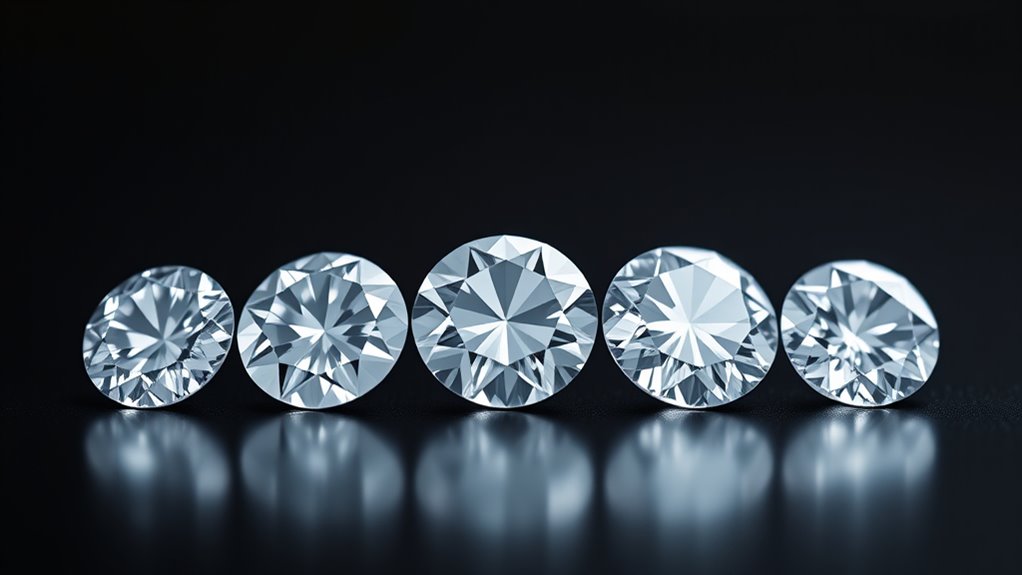
You determine a diamond’s cost by focusing on five key factors. First, the Four Cs—carat, cut, color, and clarity—are essential, with carat affecting size and cut influencing sparkle.
Color and clarity affect rarity and beauty, while certification from trusted labs like GIA guarantees quality. Fluorescence can also impact value.
Understanding these elements helps you make smart choices, and there’s more to investigate about how each factor shapes a diamond’s true worth.
Key Takeaways
- Carat weight significantly influences price. Larger diamonds command exponentially higher costs because they are rare.
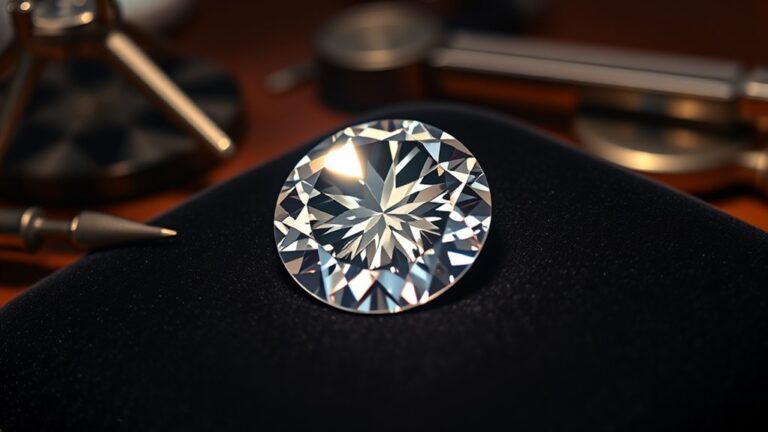
- Diamond cut quality affects brilliance. Well-cut stones are more valuable no matter their size.
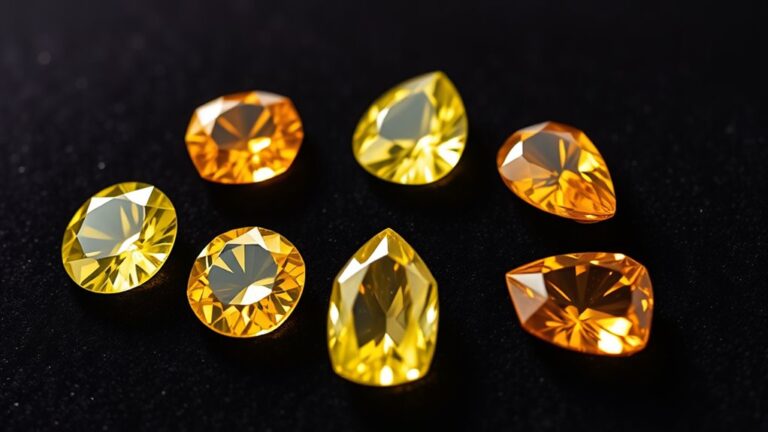
- Color grade impacts value too. Near-colorless and fancy colored diamonds usually cost more.
- Clarity level determines price by measuring internal inclusions and external blemishes. Fewer imperfections raise the value.
- Certification authenticity and fluorescence presence affect price as well. Reputable grading and mild or no fluorescence are preferred.
Understanding the Four Cs: The Basics of Diamond Pricing
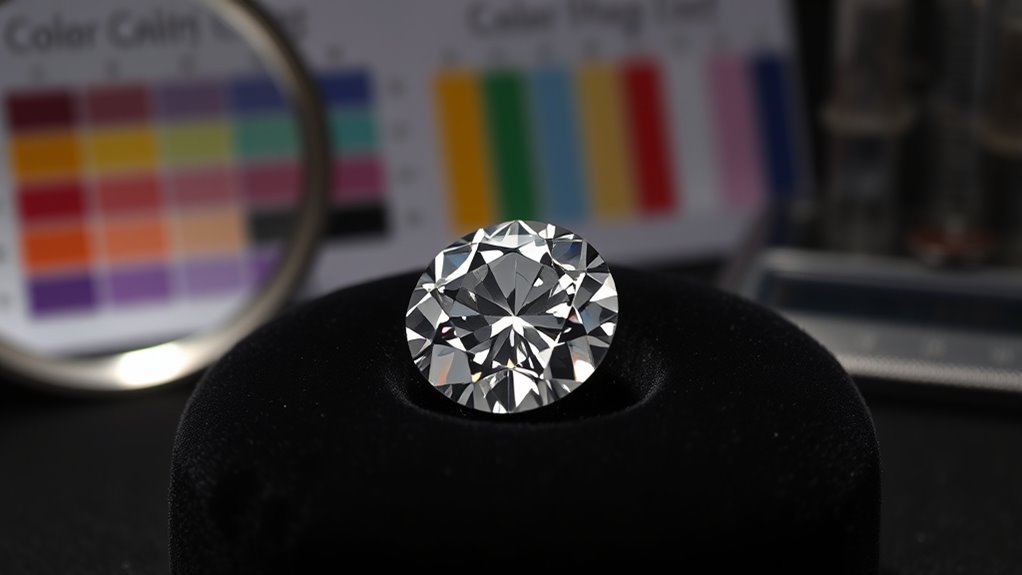
Although many factors influence a diamond’s price, the Four Cs: Carat, Cut, Color, and Clarity, are the primary elements you need to understand to evaluate its value accurately. When you grasp these basics, you can better interpret diamond pricing trends and how market demand shapes costs.
For example, a well-cut diamond reflects light beautifully, increasing its appeal and price. Color and clarity affect rarity; the less color and fewer inclusions, the higher the value.
While carat weight plays a big role, understanding the balance among all four aspects helps you make smarter buying decisions. Keep in mind that market demand fluctuates, impacting pricing, but the Four Cs remain your best guide for gauging a diamond’s true worth.
How Carat Weight Affects Diamond Price
Among the Four Cs, carat weight often grabs the most attention because it directly relates to a diamond’s size. You’ll quickly notice the carat significance when shopping, as diamonds jump in price noticeably with even slight increases in weight. This happens because larger diamonds are rarer and more desirable.
Your perception of a diamond’s value often hinges on weight perception, where bigger stones seem more impressive and valuable. However, keep in mind that carat weight isn’t the only factor influencing price. Cut, clarity, and color also play vital roles.
Still, understanding how carat weight affects cost helps you make informed choices. When you balance size with quality, you get the best value for your investment, avoiding overpaying just for carat alone.
Why Diamond Color Grade Matters
Why does diamond color grade matter so much when determining cost? Because it directly influences how you perceive a diamond’s beauty and value. Color perceptions shape your choice, as even subtle differences impact a stone’s sparkle and appeal.
Market trends also play an essential role, driving demand for certain color grades and affecting prices. When you understand why color grade matters, you make smarter decisions. Consider these points:
- Diamonds closer to colorless typically cost more.
- Fancy colored diamonds can command premium prices.
- Trends favor near-colorless grades like G-H currently.
- Color affects how a diamond complements skin tones.
- Grading consistency guarantees fair market pricing.
Knowing this helps you balance beauty and budget effectively.
The Role of Clarity and Cut in Diamond Value
When you evaluate a diamond’s value, clarity and cut play essential roles that go beyond color. Clarity grading measures how free the diamond is from internal inclusions and external blemishes. The fewer imperfections it has, the higher its clarity grade, which directly impacts its price.
You’ll want to carefully examine the clarity grading to make sure you’re getting the best balance of beauty and value.
Cut types are just as significant since they determine how well the diamond reflects light. A well-cut diamond maximizes brilliance and sparkle, making it appear more vibrant and valuable.
Even a high-clarity diamond can look dull if the cut is poor. So, when evaluating a diamond’s worth, consider both clarity grading and cut types to make a smart purchase.
Additional Diamond Price Factors: Certification and Fluorescence
Clarity and cut greatly influence a diamond’s value, but other factors like certification and fluorescence also affect its price. When shopping, you should consider certification types, as they authenticate quality and impact trust and price.
Fluorescence effects can either improve or slightly reduce a diamond’s value depending on their strength and color impact.
Here’s what to keep in mind:
- Certification types like GIA or AGS provide reliable grading.
- Diamonds without certification often cost less but carry risk.
- Strong fluorescence might cause a hazy or oily look.
- Mild fluorescence usually doesn’t affect appearance or price.
- Fluorescence can sometimes make lower-color diamonds appear whiter.
Understanding these additional factors helps you make a smart, confident purchase.
Frequently Asked Questions
How Does Diamond Market Demand Influence Prices?
You’ll find that diamond market demand directly influences prices because when demand rises, prices usually go up. Since diamonds are rare, even slight shifts in market trends can cause significant price swings.
If more people want diamonds, sellers know they can charge more, reflecting the diamond’s rarity. Conversely, if demand drops, prices tend to fall. So, staying aware of market trends helps you predict how diamond prices might change.
Do Diamond Prices Vary by Country or Region?
Yes, diamond prices do vary by country or region. You’ll notice this because currency exchange rates affect the cost when buying diamonds internationally.
Plus, regional preferences play a big role. Certain cuts, sizes, or colors might be more popular in some areas, driving up demand and prices there.
How Do Synthetic Diamonds Compare in Price to Natural Ones?
Synthetic diamonds usually cost less than natural ones, even though their synthetic clarity can be just as impressive. You might be surprised to find that while synthetic diamonds often boast near-flawless clarity, market perception still favors natural diamonds for their rarity and tradition.
When you compare the two, you’ll notice synthetic options offer great value, but natural diamonds maintain a higher status and price due to their unique origin and established desirability.
Can the Diamond’s Origin or Ethical Sourcing Affect Its Cost?
Yes, the diamond’s origin and ethical sourcing can definitely affect its cost. When you choose diamonds with ethical certifications and sourcing transparency, you’re paying for assurance that the diamond was mined responsibly and without human rights abuses.
This added accountability often increases the price because it involves stricter standards and traceability. So, if you value ethical sourcing, be ready to invest a bit more for that peace of mind.
What Impact Do Retailer Markups Have on Diamond Pricing?
Retailer markups can greatly affect diamond pricing because retailers use various strategies to maximize profit. When you shop, you might not always see the full breakdown, as pricing transparency varies widely.
Some retailers bundle costs into the price, while others clearly separate them. Understanding these strategies helps you negotiate better and spot fair deals.
Conclusion
Now that you know the five key factors influencing diamond prices, you’re better equipped to make smart choices. Did you know a one-carat diamond can cost up to 50% more than a 0.9-carat? That tiny difference in weight can hugely impact value!
Keep these insights in mind when shopping, and you’ll find a diamond that fits both your budget and your style perfectly. Understanding these factors will help you make the best decision when it comes to how much a diamond does cost.