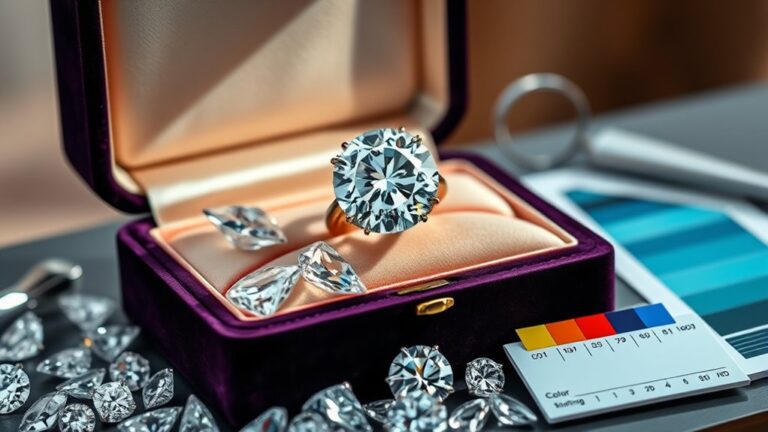
7 Key Factors That Determine How Much a Diamond Costs
Shopping for the perfect diamond can feel overwhelming, and you’re not alone. Many people struggle to understand why diamond prices vary so much, making it tough to find the best value without getting lost in the details.
You’ll find that a diamond’s price mainly depends on seven key factors:
- carat weight, which influences size and cost jumps;
- cut quality, affecting sparkle and value;
- color grading, with rarer colors costing more;
- clarity, determining how flawless it looks;
- certification, which guarantees grading trustworthiness;
- shape, guiding style and demand;
- and market trends, shaping rarity and price fluctuations.
Understanding these basics can help you make smarter diamond choices as you investigate further insights.
Key Takeaways
- Carat weight significantly influences price, with notable jumps at popular sizes like 1 carat because of higher demand.
- Cut quality impacts both the diamond’s sparkle and market value. Superior cuts usually command higher prices.
- Color grading ranges from D (colorless) to Z, affecting price. Rarer, colorless diamonds tend to be more valuable.
- Clarity determines visual appeal and price. Eye-clean diamonds without visible inclusions are more desirable.
- Certification from trusted labs ensures reliable grading and gives buyers confidence in the diamond market.
How Carat Weight Affects Diamond Price
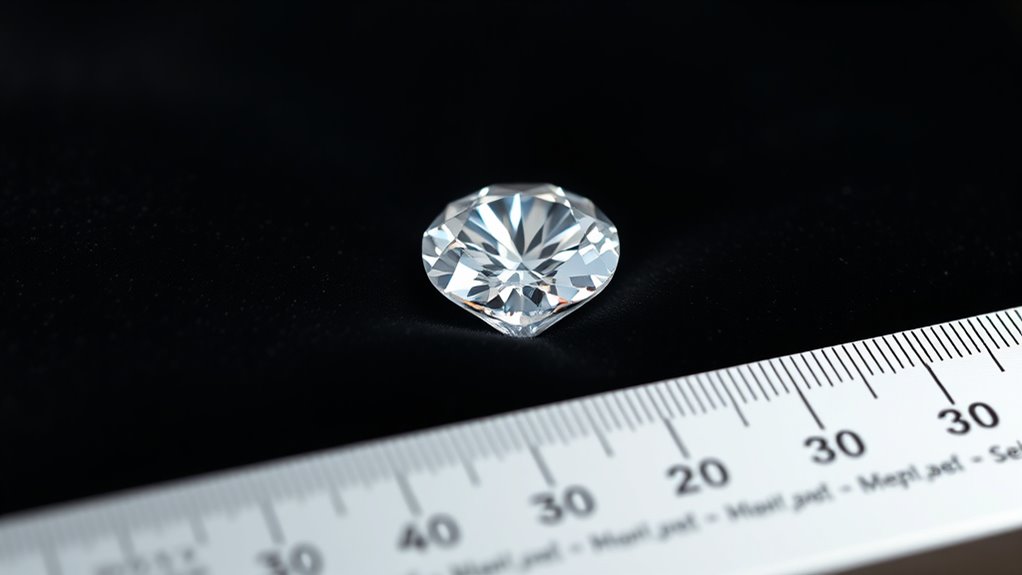
Although several factors influence a diamond’s price, carat weight plays a crucial role. You need to understand the carat significance because it directly impacts the cost you’ll pay.
Diamonds are priced in specific pricing tiers, meaning that even a slight increase in carat weight can cause a noticeable jump in price. For example, a 0.9-carat diamond often costs less than a 1-carat one, despite the small weight difference.
Diamond prices jump significantly at key carat weights, even with minimal weight differences like 0.9 to 1 carat.
This happens because diamonds at popular weight marks tend to be more in demand, pushing prices higher. When shopping, keep in mind that carat weight isn’t just about size; it’s about how the market values those specific weights.
Knowing this helps you make smart choices without overspending.
How Cut Quality Impacts Diamond Price and Sparkle
You’ll want to get a good grasp on how cut grades influence a diamond’s sparkle and overall light performance. Basically, the quality of the cut plays a huge role in not just how beautiful the gem looks, but also how much it’s worth. So, let’s dive into why cut quality is such a big deal when it comes to pricing diamonds.
Cut Grades Explained
When you choose a diamond, its cut grade plays an essential role in determining both its sparkle and price. Understanding cut grade terminology helps you grasp the cut grade significance, which directly impacts value.
Cut grade evaluation follows strict cut grade standards set by gemological labs, guaranteeing consistency. By focusing on cut grade implications, you appreciate how subtle differences in proportions and angles affect brilliance.
Cut grade comparison lets you weigh options, identifying diamonds with superior craftsmanship. Cut grade visualization tools can help you see these differences clearly, making your decision easier.
Sparkle and Light Performance
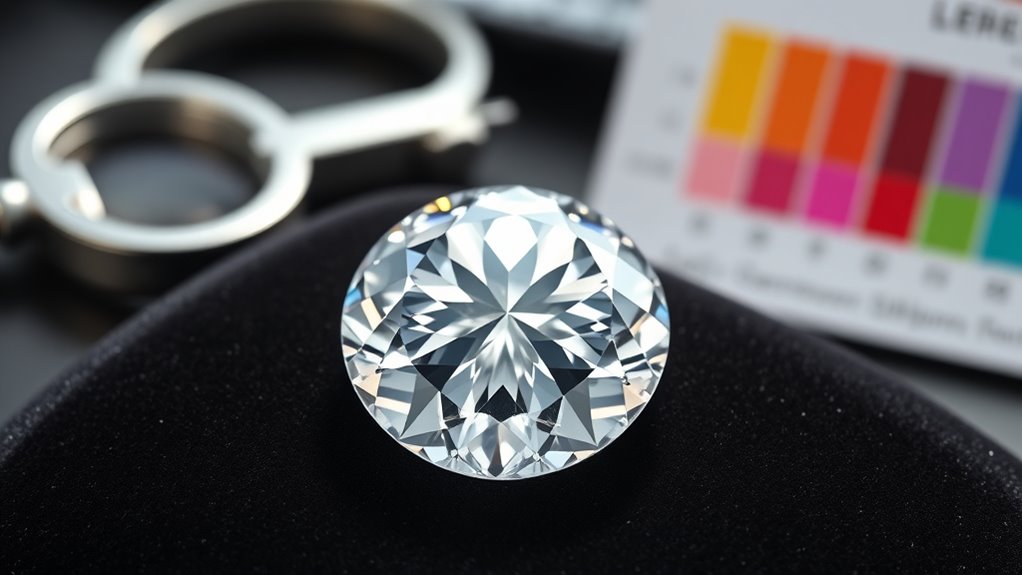
Because cut quality directly controls how light dances within a diamond, it plays an essential role in both the gem’s sparkle and its price. When a diamond is expertly cut, it maximizes light dispersion, creating vivid flashes of color and enhancing the brilliance effect. Poor cuts cause light to leak, dulling the sparkle and lowering value.
Here’s how cut quality shapes what you see:
- Precise angles and proportions guarantee light reflects internally, boosting brilliance.
- Symmetry affects how evenly light scatters, influencing the diamond’s fire.
- Polishing smoothness impacts light’s path, refining sparkle intensity.
Impact on Market Value
Although many factors influence a diamond’s price, cut quality plays an essential role in determining both its market value and visual appeal. When you choose a well-cut diamond, it reflects light brilliantly, enhancing its sparkle and making it more desirable.
Market trends show that buyers increasingly prioritize cut quality over size or color, driving up demand and prices for superior cuts. As a buyer, you’ll notice diamonds with excellent cuts maintain higher resale value and attract more interest.
Jewelers also price diamonds based on cut grades, knowing that buyer preferences lean toward stones that maximize brilliance. Ultimately, investing in a quality cut means you’re paying for a diamond that not only looks stunning but also holds its value better in changing market conditions.
How Diamond Color Influences Price and Appearance
You’ll notice diamond color is graded on a scale from D (colorless) to Z (light yellow or brown). This grading directly affects both the diamond’s price and its visual appeal. So, understanding how subtle color differences impact what you see can really help you make a smarter choice.
Color Grading Scale
The color grading scale plays an essential role in determining a diamond’s value and visual appeal. When you understand how grading techniques assess color, you’ll appreciate why diamonds priced differently may look subtly distinct. Experts evaluate diamonds against a master set under controlled lighting, focusing on slight variations that affect color perception.
Here’s a quick look at the scale:
- D-F: Colorless, the rarest and most valuable, with no noticeable hue.
- G-J: Near colorless, offering a balance of quality and affordability.
- K-Z: Noticeable color, often faint yellow or brown, impacting price considerably.
Impact on Visual Appeal
When you choose a diamond, its color greatly impacts both its price and how it looks to the eye. Diamonds with less color, like those graded D or E, tend to appear more brilliant and are priced higher due to their rarity.
As color becomes more noticeable, usually from the near-colorless range onward, the diamond’s visual characteristics shift, affecting its sparkle and overall appeal. Your aesthetic preferences play a key role here. Some might prefer the warmth of a faint yellow tint, while others seek the icy clarity of colorless stones.
Understanding how color influences not only cost but also the diamond’s visual charm helps you make a choice that fits your style and budget perfectly.
How Clarity Affects Diamond Price and Beauty
Although clarity might seem like just a technical detail, it plays an essential role in both the price and visual appeal of a diamond. When you understand clarity grades and inclusion types, you grasp how tiny imperfections affect visual perception and price perception alike.
Here’s what to evaluate:
- Eye clean diamonds have no visible inclusions to the naked eye, offering the best beauty balance without costly clarity improvement.
- Different inclusion types like feathers or crystals impact light reflection and overall sparkle differently, influencing how you see the diamond.
- Grading standards help you compare clarity accurately, ensuring you get a diamond that meets your expectations without overpaying.
Why Certification Matters for Diamond Pricing Confidence
Because diamond pricing can vary widely, having a reliable certification gives you the confidence to know exactly what you’re paying for. Certification types from respected gemological institutes guarantee the appraisal process follows consistent grading standards. This transparency builds market trust and offers buyer assurance against overpaying or buying misrepresented stones.
| Certification Type | Issued By | Key Benefit |
|---|---|---|
| GIA | Gemological Institute of America | Widely trusted grading standards |
| AGS | American Gem Society | Strict quality controls |
| IGI | International Gemological Institute | Thorough appraisal process |
When you choose certified diamonds, you rely on experts who guarantee the diamond’s quality, making your purchase safer and pricing clearer.
How Diamond Shapes Affect Price and Style
Since diamond shapes influence both appearance and price, understanding their impact helps you make a smarter choice. Shape preferences vary widely, shaped by trend influences and cultural significance. Your selection affects visual aesthetics and setting compatibility, impacting both style and cost.
Consider these key points:
- Historical context and celebrity choices often revive classic shapes, raising demand and price.
- Fashion statements steer popularity, with unique cuts sometimes costing more due to intricate craftsmanship.
- Setting compatibility determines how well a shape fits a design, affecting overall appeal and value.
How Market Demand and Rarity Influence Diamond Price
When you consider buying a diamond, understanding how market demand and rarity affect price is essential. Supply dynamics and consumer trends directly impact cost. This is especially true in luxury markets where rarity perceptions add premium value.
Diamonds with higher investment potential often reflect cultural significance and ethical sourcing concerns. Global fluctuations in availability can cause prices to shift suddenly.
| Factor | Influence on Price | Key Considerations |
|---|---|---|
| Supply Dynamics | Affects availability | Mining output, ethical sourcing |
| Consumer Trends | Drives demand | Fashion, cultural significance |
| Rarity Perceptions | Adds premium | Unique colors, size |
| Global Fluctuations | Causes volatility | Economic shifts, trade policies |
Frequently Asked Questions
How Does Diamond Fluorescence Impact Its Value?
Diamond fluorescence can either positively or negatively impact its value depending on fluorescence effects and market perception. If you find a diamond with strong fluorescence, it might appear hazy or oily in sunlight, lowering its value.
However, some buyers appreciate the unique glow, especially in lower color grades, which can boost appeal. Ultimately, how fluorescence influences price varies, so you should consider how the market currently views these effects before deciding.
What Role Does Diamond Origin Play in Pricing?
Diamond origin plays a big role in pricing because you’ll want to contemplate diamond sourcing and its ethical implications. If a diamond comes from conflict-free or sustainably mined sources, it often commands higher market demand and price.
You’ll also find that gem certification verifies this origin, giving you confidence in your purchase. So, when you’re shopping, check where the diamond’s from and how it’s certified to understand its true value.
How Do Retailer Markups Affect Diamond Cost?
Retailer markups directly impact diamond cost by increasing the price you pay beyond the wholesale value. Retail pricing often includes markup strategies that cover overhead, marketing, and profit margins.
When you shop, you’ll notice some stores use higher markups, especially in luxury settings, while others offer competitive pricing. Understanding these strategies helps you negotiate better deals and choose retailers who offer fair value for the diamonds you want.
Can Insurance Costs Influence Overall Diamond Expenses?
Yes, insurance costs can influence your overall diamond expenses. During the appraisal process, the gem’s value is assessed, which affects your insurance premium.
If market demand for certain diamonds rises, appraisal values could increase, raising insurance costs. You’ll want to keep updated appraisals to guarantee your coverage matches the diamond’s current worth, so you’re protected without overpaying on insurance as market trends shift.
How Does Diamond Treatment Affect Price and Durability?
Diamond treatment methods can lower the price because they elevate appearance but don’t add natural value. When you consider durability factors, treated diamonds might be less resilient since some treatments can weaken the stone.
Clarity enhancement boosts clarity but may affect toughness. Color grading often improves with treatment, making the diamond look better. However, you should know treated diamonds usually cost less and require careful handling to maintain their quality over time.
Conclusion
When choosing a diamond, remember it’s like picking a perfect song; each factor adds its unique note. Just as a 1-carat diamond can cost anywhere from $2,000 to $25,000 depending on cut and clarity, your choice shapes the overall harmony of price and beauty.
By understanding these key factors, you’ll confidently find a diamond that sings to your style and budget, making your purchase truly unforgettable. Knowing these 7 key factors that determine how much a diamond costs will help you make the best decision.