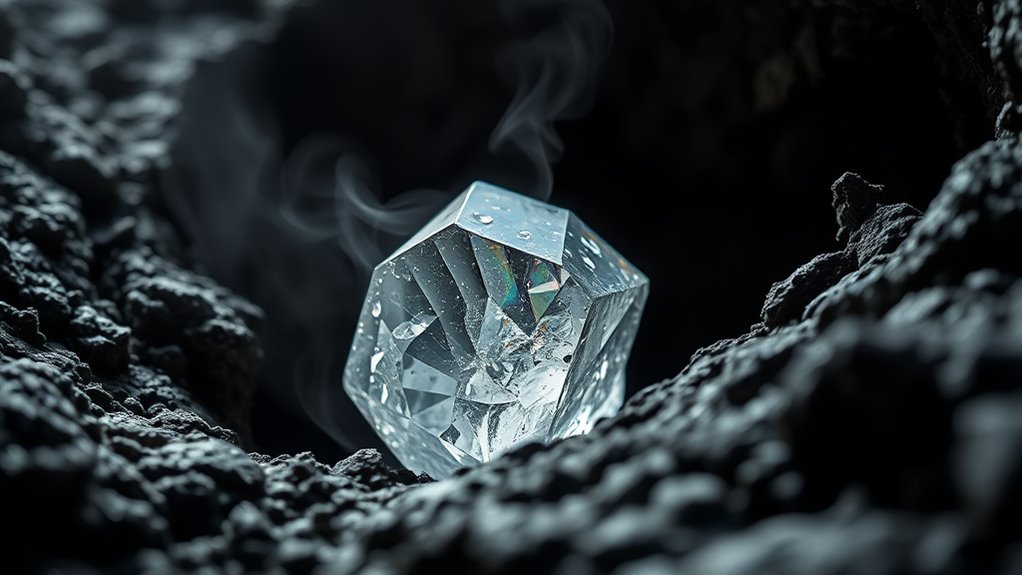
How Is a Diamond Made?
If you’ve ever wondered where diamonds come from or how they’re made, you’re not alone. Many people struggle to understand the fascinating process behind these precious gems.
Whether you’re curious about their natural origins or the science behind synthetic diamonds, getting the full picture can be tricky.
You make a diamond deep underground where intense heat and pressure transform carbon atoms into a tightly bonded, crystal structure. This process takes millions of years at temperatures of 900 to 1,300 degrees Celsius and pressures around 45 to 60 kilobars.
Natural diamonds then travel to the surface through volcanic eruptions, ready for mining.
Synthetic diamonds can be created faster in labs, but natural ones hold unique value.
Keep exploring to understand their journey and uses.
Key Takeaways
- Diamonds form deep underground when carbon atoms bond under extreme pressure (45-60 kilobars) and high temperature (900-1,300°C) over millions of years.
- Carbon atoms arrange in a strong 3D lattice, creating the hardness and brilliance unique to diamonds.
- Natural diamonds reach the surface through volcanic eruptions via kimberlite or lamproite pipes.
- Synthetic diamonds are lab-created by replicating natural pressure and temperature conditions much faster and with controlled environments.
- Geological processes and long timescales are essential for natural diamond formation, distinguishing them from synthetic alternatives.
What Are Diamonds Made Of?
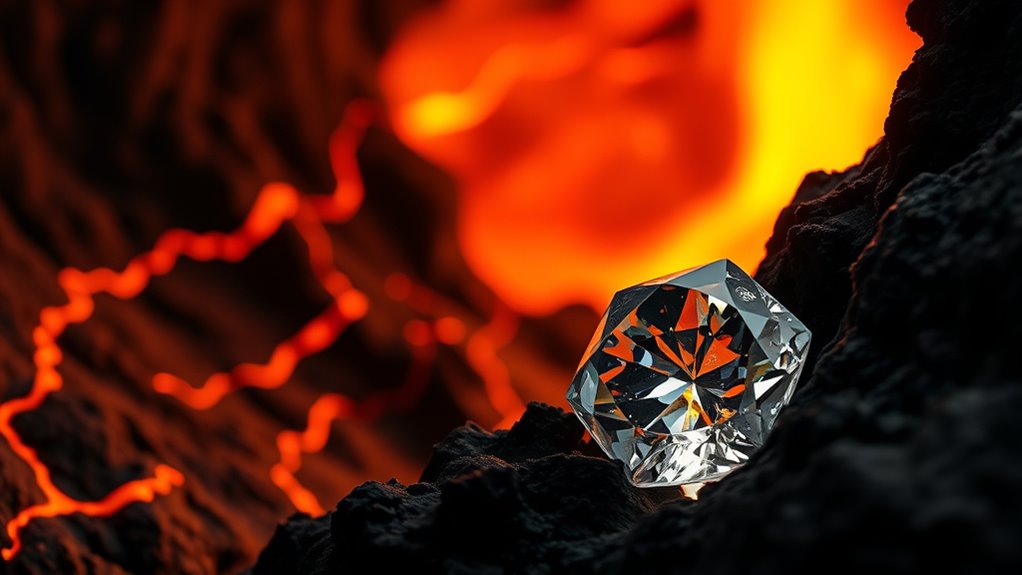
Although diamonds may look simple, they’re actually made of a single element: carbon. When you examine diamond composition, you’ll find that its unique properties come from how carbon atoms bond together.
Unlike graphite, where carbon atoms form layers, diamonds have a tightly packed carbon structure. Each carbon atom connects to four others in a three-dimensional lattice, creating an incredibly strong and rigid framework. This atomic arrangement gives diamonds their hardness and brilliance.
How Do Natural Diamonds Form Deep Underground?
The unique carbon structure that makes diamonds so strong and brilliant forms under intense conditions deep within the Earth. During diamond formation, geological processes push carbon sources from the Earth’s crust into the mantle, where mantle dynamics create the rare conditions needed.
Over vast timeframes involved, natural catalysts help carbon atoms rearrange, using crystallization techniques to form the diamond’s crystal lattice. Mineral associations in this deep environment also play a role, stabilizing and supporting the growing diamond.
You’ll find that these diamonds only develop where specific pressure, temperature, and chemical conditions align, making their natural creation a rare event. Understanding these underground processes shows how diamonds aren’t just beautiful, they’re a product of Earth’s powerful and precise geological machinery.
What Temperature and Pressure Conditions Create Diamonds?
How exactly do temperature and pressure work together to create diamonds? For diamond formation, you need extreme geological conditions deep within the Earth’s mantle. Temperatures must range between 900 to 1,300 degrees Celsius (1,652 to 2,372 degrees Fahrenheit), while pressures reach about 45 to 60 kilobars, equivalent to 45,000 to 60,000 times atmospheric pressure at sea level.
These intense conditions force carbon atoms to bond in a crystal lattice, forming the hard, structured diamond. Without this precise combination, carbon would remain graphite or other forms.
How Natural Diamonds Reach the Surface
Once diamonds form deep within the Earth’s mantle, you might wonder how they make their way to the surface where they can be found. Diamond transport occurs through powerful geological processes, primarily volcanic eruptions.
These eruptions create kimberlite and lamproite pipes, which act like natural conveyor belts, rapidly carrying diamonds upward. This swift movement is essential because it preserves the diamonds’ structure, preventing them from transforming back into graphite due to high temperatures near the surface.
Over millions of years, erosion can expose these pipes, or diamonds can be deposited in riverbeds and sedimentary layers. Understanding diamond transport helps you appreciate the rare journey these gems undergo before reaching the Earth’s surface, where humans can find and admire them.
Steps in Mining Natural Diamonds
Now that you know how diamonds make their way to the surface, let’s dive into how mining actually works. First up, there’s exploration and prospecting — this is where you search for the best spots to find diamonds. Once a good site is found, extraction and processing come into play, getting those precious stones out of the earth and ready to be used.
Exploration and Prospecting
Although finding natural diamonds is challenging, exploration and prospecting are essential first steps in mining them. You’ll rely on advanced diamond exploration techniques and proven prospecting methods to locate promising sites. These steps help reduce risk and maximize success before mining begins.
You can focus on three key activities:
- Geological Surveys: Study rock formations and soil samples to identify kimberlite pipes, the primary diamond source.
- Geophysical Methods: Use magnetic, gravity, or seismic tools to detect underground structures.
- Sampling and Drilling: Collect core samples to confirm the presence and quality of diamonds.
Extraction and Processing
Mining natural diamonds involves careful extraction and processing to separate these precious stones from surrounding materials. In diamond mining, you first remove large volumes of rock and soil using open-pit or underground mining methods.
Once extracted, you use processing techniques like crushing, washing, and dense media separation to concentrate the diamond-bearing ore. After this, the concentrate goes through further sorting, often with X-ray fluorescence or grease tables, which take advantage of diamonds’ unique properties. These steps guarantee that you efficiently isolate the diamonds from waste rock.
Throughout the process, safety and environmental considerations are vital to minimize impact. By understanding extraction and processing, you see how the rough diamonds you find are carefully uncovered and prepared for the next stages of cutting and polishing.
How Scientists Create Synthetic Diamonds
When scientists create synthetic diamonds, they replicate the natural conditions that form diamonds deep within the Earth. Using advanced lab techniques, they mimic high pressure and temperature to transform carbon into diamond crystals. These methods respond directly to growing market trends favoring sustainable and ethical alternatives.
Here’s how the process generally works:
- Carbon sources are placed in a pressurized chamber.
- Extreme heat and pressure are applied to simulate Earth’s mantle.
- Over days or weeks, carbon atoms bond into a diamond lattice.
Differences Between Natural and Synthetic Diamonds
While both natural and synthetic diamonds share the same chemical makeup, you’ll notice key differences in their origins, formation time, and environmental impact. Natural diamonds form deep within the Earth over millions of years through intense heat and pressure, representing true natural origins.
Synthetic diamonds, however, are created through controlled synthetic processes in labs, often taking just weeks. These differences influence ethical considerations; lab-grown diamonds avoid some environmental harm and human rights issues linked to mining.
Market trends are shifting as more consumers choose synthetic diamonds for their lower cost and sustainability. Understanding these distinctions helps you make informed choices, balancing tradition and innovation while considering the environmental and ethical implications behind each diamond you select.
How Diamond Quality Is Measured and Graded
You’ll want to get to know the Four Cs—cut, color, clarity, and carat weight—because these are what really determine a diamond’s quality. It’s also important to look for certification from trusted labs; that way, you can be sure you’re getting accurate info about these factors. So, let’s take a closer look at how these standards help you figure out a diamond’s true value.
The Four Cs
Quality is key regarding diamonds, and experts use a system called the Four Cs to measure and grade them. These Four Cs, carat weight, cut quality, color evaluation, and clarity scales, form the foundation of diamond grading.
When you understand them, you can better assess a diamond’s value and how it fits market trends.
Here’s what you need to focus on:
- Carat Weight – Measures the diamond’s size.
- Cut Quality – Affects brilliance and sparkle.
- Clarity Scales and Color Evaluation – Determine purity and hue.
Certification bodies rely on these factors for value assessment, ensuring you get a clear picture of a diamond’s worth without guesswork.
Certification and Standards
Understanding the Four Cs gives you a solid foundation, but verifying these qualities requires trusted certification. When you buy a diamond, look for a grading report from reputable certification bodies like the GIA or AGS. These organizations follow strict grading standards to assess a diamond’s cut, color, clarity, and carat weight accurately.
Their reports provide an unbiased evaluation, ensuring you know exactly what you’re getting. Without certification, it’s hard to trust claims about a diamond’s quality. These grading standards create consistency across the industry, so you can confidently compare diamonds.
Always ask for certification before purchasing. It protects your investment and helps you make an informed choice. Certification isn’t just paperwork; it’s your key to understanding a diamond’s true value.
Common Uses of Natural and Synthetic Diamonds
Although natural and synthetic diamonds share many physical properties, their uses often differ based on availability and cost. You’ll find natural diamonds highly sought after in jewelry design for their rarity and unique inclusions. Synthetic diamonds, being more affordable and consistent, excel in industrial applications.
Here are three common uses to evaluate:
- Jewelry design: Natural diamonds dominate luxury markets, while synthetic ones offer budget-friendly alternatives.
- Industrial applications: Synthetic diamonds lead in cutting, grinding, and drilling tools due to their uniform hardness.
- Technology: Both types are used in electronics and thermal conductors because of their excellent heat dissipation.
The Future of Diamond Production and Innovation
As industries continue to push the limits of what diamonds can do, new methods of production and innovation are reshaping the market. You’ll see sustainable practices and ethical sourcing becoming top priorities, reducing environmental impact while meeting consumer preferences.
Technological advancements introduce innovative techniques that boost production efficiency and open doors to future applications beyond jewelry, like electronics and medical devices. Market trends also influence pricing strategies, balancing affordability with quality.
Frequently Asked Questions
How Can You Tell if a Diamond Is Real at Home?
You can tell if a diamond is real at home by using simple diamond testing methods and checking visual indicators. Try the fog test. Breathe on it. A real diamond disperses heat quickly, so the fog clears fast.
Look for sharp facets and a clear, bright sparkle. You can also drop the stone on a hard surface. Real diamonds won’t chip easily. These quick checks help you spot a fake without special tools.
What Is the Environmental Impact of Diamond Mining?
Diamond mining can seriously harm the environment by causing deforestation, water pollution, and habitat destruction. You can help reduce this impact by choosing diamonds from sustainable mining sources that prioritize eco-friendly practices.
Alternatively, you might consider alternative gems like lab-grown diamonds or other stones, which have a much smaller environmental footprint. By making thoughtful choices, you can enjoy beautiful jewelry while supporting more responsible and sustainable mining efforts.
How Much Does a Carat of Diamond Typically Cost?
Think of a diamond’s carat like a treasure chest size. Bigger chests hold more gold, so they’re pricier. Typically, a carat costs anywhere from $2,000 to $25,000, but diamond price factors like cut, clarity, and color also shape that value.
When you do a carat value comparison, you’ll see larger stones don’t just cost more; they’re exponentially rarer and more valuable. So, you get what you treasure!
What Are the Ethical Concerns Around Diamond Sourcing?
You need to watch out for conflict diamonds, which fund violence and human rights abuses. By choosing diamonds without transparent, sustainable sourcing, you might unknowingly support unethical practices.
It’s important to ask retailers about their supply chains and look for certifications like the Kimberley Process. This way, you guarantee your diamond purchase promotes ethical mining and helps reduce environmental damage and exploitation. Always prioritize responsible sourcing when buying diamonds.
How Should Diamonds Be Properly Cleaned and Maintained?
To keep your diamond sparkling, use gentle cleaning techniques like soaking it in warm water mixed with mild dish soap. Then, brush it with a soft toothbrush. Avoid harsh chemicals that can damage the stone or setting.
For maintenance tips, regularly check for loose prongs and have a jeweler inspect your diamond annually. Store it separately to prevent scratches. Clean it often to maintain that brilliant shine you love.
Conclusion
Now that you know how diamonds form deep underground, think of them as nature’s hidden treasures shaped by intense pressure and heat over millions of years. Whether mined or lab-created, diamonds shine with unique qualities that make them invaluable.
As you investigate their uses and innovations, remember diamonds aren’t just stones; they’re stories of earth’s power and human creativity sparkling together. Your appreciation for these gems, especially diamonds, will only grow brighter from here.