How Big Is a Carat Diamond Size Guide
Trying to choose the perfect diamond can feel overwhelming, especially when you’re unsure about how size and weight really work. You’re not alone—many people struggle to understand what a carat means and how it affects the diamond’s appearance.
If you’ve ever wondered why two diamonds with the same carat can look so different, keep reading.
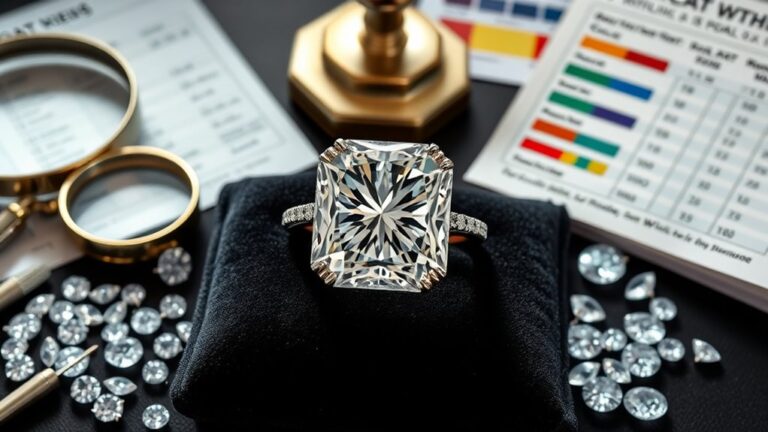
A carat measures a diamond’s weight, not its exact size, so two diamonds with the same carat can look different depending on their cut and shape. The cut affects brilliance and visible surface, making some diamonds appear larger or smaller than their weight suggests.
Shapes like oval or princess can seem bigger face-up, while settings like halos can boost size perception. If you want to understand how cut, shape, and setting influence size, there’s more to investigate.
Key Takeaways
- Carat weight measures a diamond’s mass, not its visual size or dimensions.
- Diameter is the best indicator of a diamond’s actual size, and it varies by carat weight and shape.
- Cut quality affects perceived size because well-cut diamonds appear larger due to better light reflection.
- Different diamond shapes influence size perception. For example, princess cuts often look larger than round diamonds of the same carat.
- Settings like halos or bezels can enhance the diamond’s appearance, making it look bigger than its carat weight.
What Does Carat Weight Mean for Diamond Size?
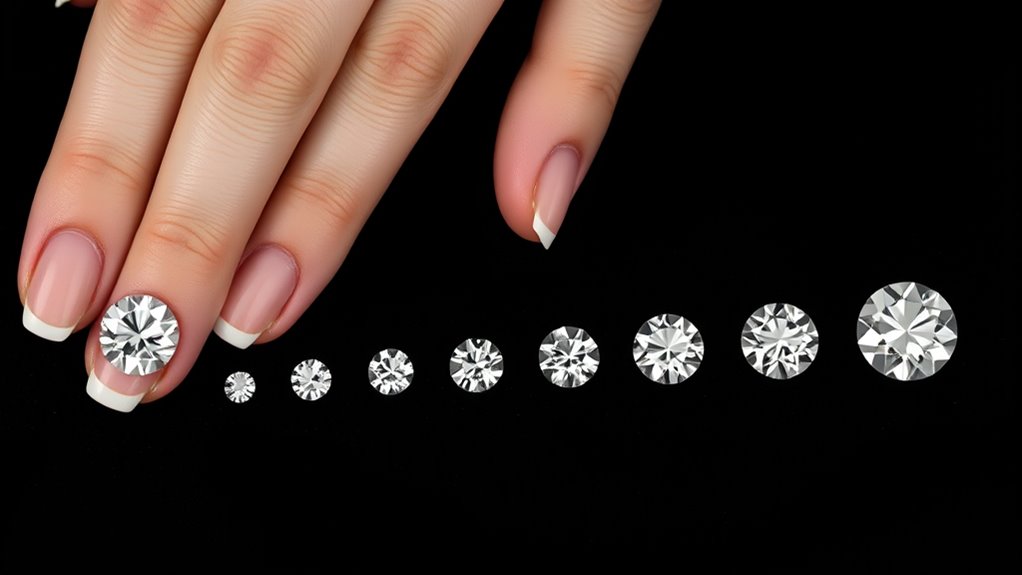
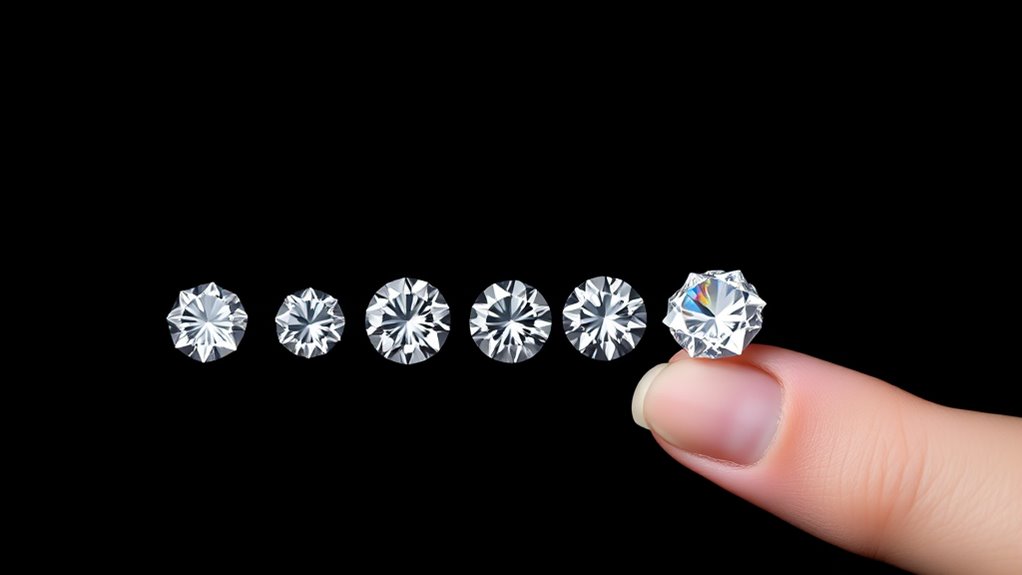
Carat weight measures a diamond’s mass, but it doesn’t directly translate to its size as you might expect. When you hear about carat significance, it’s important to keep in mind that carat refers strictly to weight, not dimensions.
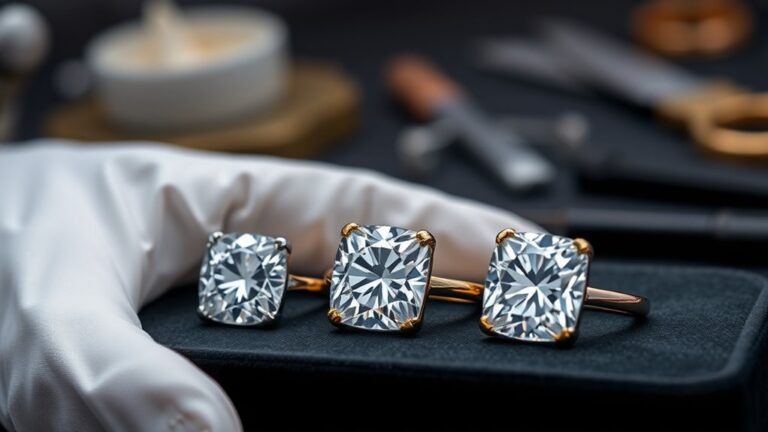
Two diamonds with the same carat weight can look very different in size depending on their shape and proportions. Your perception of a diamond’s size might be influenced by factors like its cut and how it reflects light, but the carat itself only tells you how heavy it is.
How Diamond Cut Affects the Perceived Size of a Carat
While carat weight tells you how heavy a diamond is, it doesn’t fully capture how large it looks when you wear it. The cut quality plays a huge role in the perceived size of a carat diamond.
A well-cut diamond maximizes light performance, making it sparkle more and appear larger than its actual weight. Here’s how the cut affects perception:
- Proportions: Ideal proportions create better light reflection, enhancing brilliance and size appearance.
- Depth: Diamonds cut too deep lose surface area, looking smaller despite the same carat weight.
- Symmetry and Polish: Higher quality in these areas improves light return, boosting sparkle and visual size.
Comparing Carat Size Across Popular Diamond Shapes
When you compare carat sizes, you’ll notice that shapes like Round and Princess can look quite different, even if they weigh the same. It’s pretty interesting how the shape changes the way the size appears. Then, you have Emerald and Oval cuts, which give off a unique size impression because of their elongated forms.
Now, let’s take a closer look at Cushion and Marquise diamonds and see how they measure up when it comes to size perception.
Round Versus Princess
Choosing between a round and a princess cut diamond means balancing brilliance with shape preference. The round cut is famous for its exceptional round brilliance, maximizing light return. Meanwhile, the princess cut offers a unique princess sparkle with its sharp, square edges.
When comparing carat sizes, keep these points in mind:
- Visual Size: Princess cuts often appear larger than rounds of the same carat because of their square shape.
- Depth and Spread: Round diamonds usually have deeper cuts, which can affect their visible size compared to princess cuts that tend to be shallower.
- Setting Impact: The setting style can improve either cut’s sparkle and perceived size, so choose one that complements your diamond’s shape.
Understanding these differences helps you pick a diamond that fits both style and size expectations.
Emerald And Oval Differences
Round and princess cuts each offer distinct visual and size characteristics, but emerald and oval shapes bring their own unique appeal and considerations.
When you choose an emerald cut, you’ll notice its step-cut facets highlight emerald clarity, emphasizing the diamond’s purity and creating a sophisticated, elegant look. It tends to appear larger face-up due to its elongated shape but reveals inclusions more easily.
On the other hand, an oval diamond maximizes oval brilliance with its brilliant-cut facets, giving you more sparkle and a lively appearance. Ovals often look larger than their actual carat weight because of their lengthened shape, making them a great choice if you want noticeable size and shine.
Both shapes offer distinctive beauty, so your choice depends on whether you prioritize clarity or brilliance.
Cushion Compared To Marquise
Although cushion and marquise diamonds both offer unique aesthetics, their carat size often appears quite different due to their shapes. When comparing these two, keep in mind how each shape affects perceived size and light performance.
- Cushion diamonds tend to look larger face-up because of their square-ish shape and rounded corners, enhancing cushion sparkle.
- Marquise diamonds, with their elongated shape, maximize marquise brilliance and create a striking finger-lengthening effect.
- A 1-carat cushion may appear bigger than a 1-carat marquise, but the marquise often looks more dramatic due to its unique silhouette.
When choosing between cushion sparkle and marquise brilliance, consider how the shape complements your style and finger size, not just carat weight alone.
Visual Differences Between 1-Carat and Larger Carat Diamonds
How much bigger does a diamond appear once it surpasses the 1-carat mark? When you do a visual comparison, you’ll notice the jump in size is more noticeable than you might expect.
While a 1-carat diamond has a distinct presence, diamonds above this weight offer a more substantial look on your finger. Your size perception plays an essential role; even a 0.2-carat increase can make the diamond seem considerably larger, especially in well-cut stones.
Larger carat diamonds provide a bolder, more striking visual impact, making them ideal if you want your jewelry to stand out. However, the exact difference also depends on the cut and shape, which influence how the diamond’s surface area appears to the eye.
How Diamond Depth and Table Affect Its Size
Beyond carat weight, the dimensions of a diamond, specifically its depth and table percentages, play a big role in how large the stone looks to your eye. Depth perception affects the diamond’s overall face-up size, while the table percentage impacts the visible surface area. Here’s how you can consider them:
- Depth Percentage: If the diamond is too deep, it may appear smaller from the top because more weight sinks below the surface. Ideal depth ranges between 58% and 62% to maximize size appearance.
- Table Percentage: A larger table percentage means a bigger flat surface, making the stone look larger. Aim for a table percentage around 53% to 58%.
- Balance Both: Proper balance between depth and table percentages guarantees the diamond looks both brilliant and sizable without compromising beauty.
Reasons Diamonds of the Same Carat Look Different
Even when two diamonds share the same carat weight, they can look remarkably different in size and appearance. This happens because cut quality, color grading, and other factors influence how a diamond reflects light and its overall visual appeal.
You might notice one stone sparkling more or appearing larger despite equal weight.
| Factor | Impact on Appearance |
|---|---|
| Cut Quality | Better cuts improve brilliance, making diamonds look bigger |
| Color Grading | Higher grades reduce color tint, increasing sparkle |
| Depth Percentage | Affects how light travels, impacting size perception |
| Table Size | Larger tables can make diamonds appear flatter or wider |
| Shape | Round vs. princess cuts distribute weight differently |
Understanding these elements helps you choose a diamond that looks stunning beyond just carat weight.
Measuring Carat Size: Diameter vs. Weight
When you’re measuring a diamond’s carat size, it’s important to understand the difference between weight and diameter. Carat weight tells you how heavy the diamond actually is. On the other hand, diameter measures the width across the diamond’s widest point.
You might notice that the weight and the visual size don’t always line up perfectly. So, getting to know both aspects can really help you make a smarter choice when picking out a diamond.
Understanding Carat Weight
Although carat weight often gets the most attention, understanding how it relates to a diamond’s diameter can help you better visualize its true size. Carat significance goes beyond just weight; it influences the diamond’s visual perception, which can sometimes be misleading if you only focus on carat numbers.
Here’s what you should keep in mind about carat weight:
- Carat measures a diamond’s weight, not its diameter.
- Two diamonds with the same carat can look different in size due to cut proportions.
- Visual perception of size is impacted more by diameter and cut than by carat alone.
Diameter Measurement Basics
Since carat measures weight but not diameter, you need to focus on diameter to understand a diamond’s actual size. Diameter definitions are essential here—it’s the distance across the widest part of the diamond, usually measured in millimeters.
Accurate measurement techniques include calipers or specialized gauges to guarantee precision. Knowing the diameter helps you visualize the stone’s face-up size, which is often what catches your eye.
Here’s a quick reference table for average diameters by carat weight in round diamonds:
| Carat Weight | Approximate Diameter (mm) | Notes |
|---|---|---|
| 0.25 | 4.1 | Small, delicate look |
| 0.50 | 5.0 | Noticeable sparkle |
| 0.75 | 5.8 | Approaching 1 carat |
| 1.00 | 6.5 | Classic standard size |
| 1.50 | 7.4 | Larger, more impactful |
Weight vs. Visual Size
Understanding the difference between carat weight and visual size is key to choosing the right diamond. Carat weight measures a diamond’s mass, but it doesn’t always reflect the stone’s visual impact. Your carat perception can be influenced more by the diamond’s diameter and cut than by weight alone.
Here’s what to keep in mind:
- Two diamonds can weigh the same but look different in size due to cut proportions.
- Diameter measurement often gives a better sense of how large a diamond appears.
- The visual impact is improved by the diamond’s shape and setting, affecting how big it looks on your finger.
Choosing a Carat Size for Your Budget and Style
Choosing the right carat size means balancing your budget with your personal style. Start by setting clear budget considerations. Decide what you’re comfortable spending before you fall in love with a diamond.
Remember, bigger isn’t always better if it stretches your budget too thin. Next, think about your style preferences. Do you prefer a classic, subtle look or something that stands out?
Smaller carat diamonds can look stunning in modern, minimalist settings, while larger stones often suit bold, traditional designs. Also, consider how often you’ll wear the diamond. Everyday wear might call for a size that’s both practical and stylish.
The Role of Setting in Enhancing a Diamond’s Size Appearance
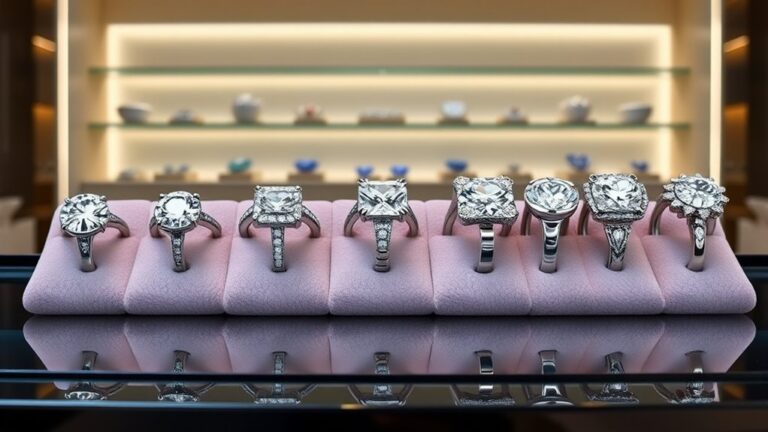
Your choice of setting can dramatically influence how large your diamond appears, often making a smaller stone look much more impressive. Different setting styles can amplify the visual impact, making your diamond stand out more.
Choosing the right setting can enhance your diamond’s size and brilliance, making it truly unforgettable.
Here are three popular setting styles to evaluate:
1. Halo Setting
Surrounds your center stone with smaller diamonds, creating an illusion of a bigger diamond.
2. Bezel Setting
Encases the diamond with a metal rim, highlighting its edges and making it look larger.
3. Three-Stone Setting
Uses side stones to frame the center diamond, increasing its visual presence.
Shopping Tips for Diamond Size Without Losing Quality
Although larger diamonds often catch the eye, you don’t have to compromise quality to get a stunning size. Focus on balancing carat value with quality factors like cut, clarity, and color. Choosing a well-cut diamond can maximize sparkle, making it appear larger.
Here are some tips to help you shop smart:
| Tip | Explanation |
|---|---|
| Prioritize Cut Quality | A better cut improves brilliance and size appearance |
| Consider Slightly Lower Carat | Save cost without a noticeable size difference |
| Check Clarity & Color | Opt for eye-clean stones with near-colorless grades |
Frequently Asked Questions
How Is Carat Weight Measured in the Diamond Industry?
In the diamond industry, you measure carat weight using precise scales that follow standardized measurement standards. One carat equals 200 milligrams, and these scales are calibrated to guarantee accuracy down to hundredths or thousandths of a carat.
When you buy a diamond, the carat weight indicates its size by mass, not just appearance. So, carat weight is all about exact measurement, assuring transparency and consistency in the market.
What Is the History Behind the Carat as a Measurement?
The carat origin dates back to ancient times when traders used carob seeds as a natural weight standard. You’ll find that the historical significance of the carat lies in its consistency and fairness for diamond trading.
Over time, it evolved into a precise unit of 0.2 grams so you can trust it when buying gems. Knowing this history helps you appreciate why carats remain the universal standard for measuring diamonds today.
Can Synthetic Diamonds Have the Same Carat Size as Natural Ones?
Yes, synthetic diamonds can have the same carat size as natural diamonds. When you compare them, both types are measured using the carat unit, so a 1-carat synthetic diamond weighs the same as a 1-carat natural diamond.
You’ll notice no difference in size based on carat alone. The main differences lie in their origin and sometimes clarity or color, but carat weight remains consistent between synthetic and natural diamonds.
How Does Diamond Fluorescence Affect Its Appearance?
Diamond fluorescence can brighten your gem, soften its color, and add a unique diamond glow. It can improve or diminish brilliance depending on the light, and it can make your diamond look icy or hazy.
Understanding fluorescence impact helps you decide if you want a subtle blue glow or prefer a pure sparkle. So, when choosing, consider how fluorescence influences your diamond’s overall appearance and how it matches your style.
What Are Common Misconceptions About Carat Weight and Diamond Value?
You might think carat weight alone determines a diamond’s value, but that’s a common misconception. While carat affects size perception, clarity plays a huge role in value too.
A bigger diamond with poor clarity can be less valuable than a smaller, flawless one. So, don’t just focus on carat; consider clarity and cut to truly gauge a diamond’s worth. Size isn’t everything in determining value.
Conclusion
Now that you know carat weight is just one piece of the diamond puzzle, you can choose a stone that truly shines for you. Remember, a diamond’s size isn’t just about weight; it’s how the cut, setting, and shape work together to make it sparkle like a star.
So, don’t get caught up in numbers alone. Let your style and budget guide you to the perfect gem that feels just right in your hands. When it comes to finding the ideal diamond, understanding the carat diamond size guide will help you make the best choice.