How Much Is a Diamond Worth?
Trying to figure out how much a diamond is worth can feel overwhelming, and you’re not alone. Many people struggle to understand the factors that affect a diamond’s value and worry about making the right purchase or sale. It’s a common challenge, but once you know what to look for, it becomes much easier to navigate.
You determine a diamond’s worth by looking closely at the 4 Cs: cut, color, clarity, and carat weight. A superior cut and higher color and clarity grades usually increase value, while larger carat weights make diamonds rarer and pricier.
Certification guarantees authenticity, and market trends also play a role in price fluctuations. Knowing when to buy or sell can improve your return.
Keep exploring to uncover how to spot fair prices and get accurate appraisals.
Key Takeaways
- Diamond value primarily depends on the 4 Cs: cut, color, clarity, and carat weight.
- Certification from reputable labs ensures authenticity and impacts a diamond’s market worth.
- Market demand, economic factors, and supply fluctuations strongly influence diamond prices.
- Professional appraisals considering the 4 Cs and current market trends provide accurate valuations.
- Comparing certified diamonds across sellers helps identify fair pricing and avoid overpaying.
Understanding the 4 Cs That Determine Diamond Value
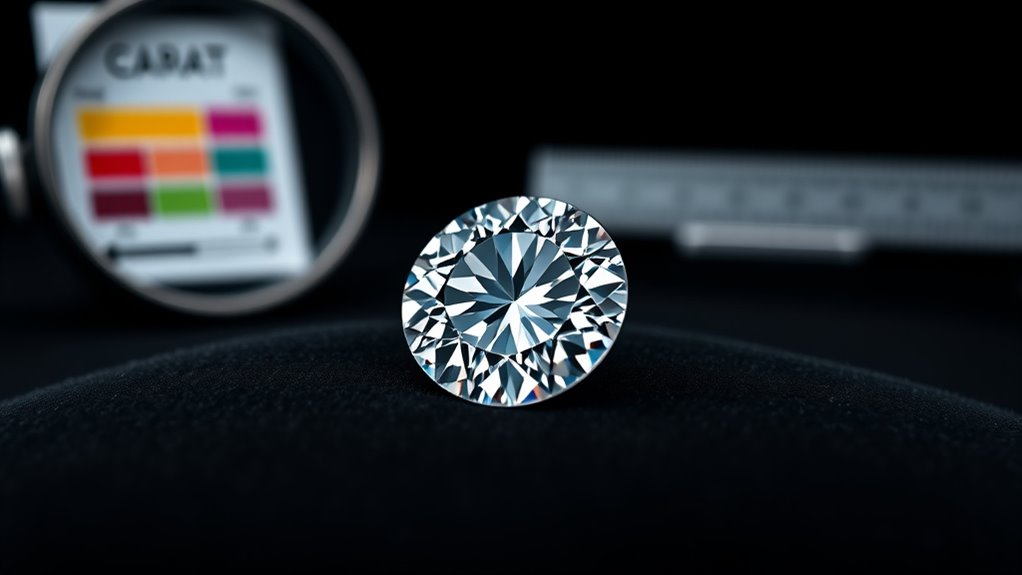
Before you can accurately judge a diamond’s worth, you need to understand the 4 Cs: cut, color, clarity, and carat weight. Each C plays a significant role in diamond grading, which experts use to assess quality and value.
The cut affects how brilliantly the diamond reflects light, while color ranges from colorless to light yellow or brown. Less color generally increases value. Clarity measures the presence of internal flaws or inclusions. Fewer imperfections mean higher worth.
While carat weight impacts size, factors like cut and clarity also respond to market demand, influencing price fluctuations. Knowing these elements helps you make informed decisions when valuing or purchasing diamonds. This way, you understand what truly drives a diamond’s price beyond just its size.
How Carat Weight Influences Diamond Price
While the 4 Cs all shape a diamond’s value, carat weight often grabs the most attention because it directly relates to size. You’ll notice that even a slight increase in carat weight can greatly impact price due to the carat significance in the market.
Larger diamonds are rarer, so their value doesn’t just grow linearly; it often jumps at key weight thresholds. This weight perception influences buyer demand, making bigger diamonds more desirable and expensive.
However, don’t assume that a higher carat always means better value; other factors also play a role. Still, understanding carat significance helps you grasp why two diamonds with similar qualities but different weights can vary widely in price.
Keep this in mind when evaluating a diamond’s worth.
Why Cut Quality Matters for Diamond Worth
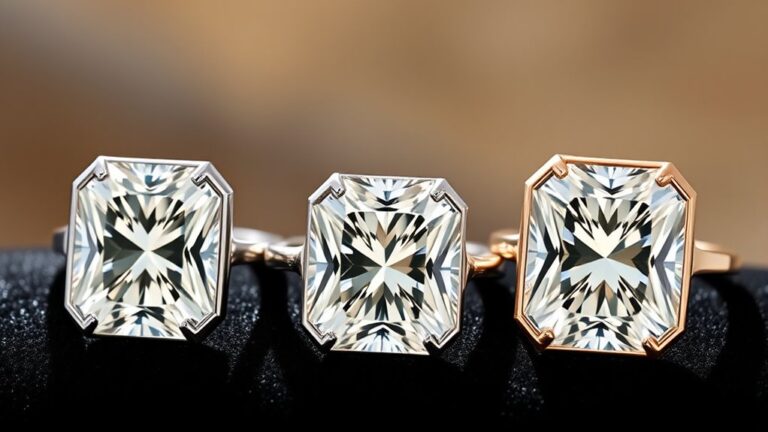
You might think carat weight is the biggest factor, but actually, cut quality is what controls how much your diamond sparkles. When a diamond is well-cut, it reflects light beautifully. This makes it way more eye-catching and valuable. So, understanding this really helps you see why cut quality plays such a key role in your diamond’s worth.
Impact On Sparkle
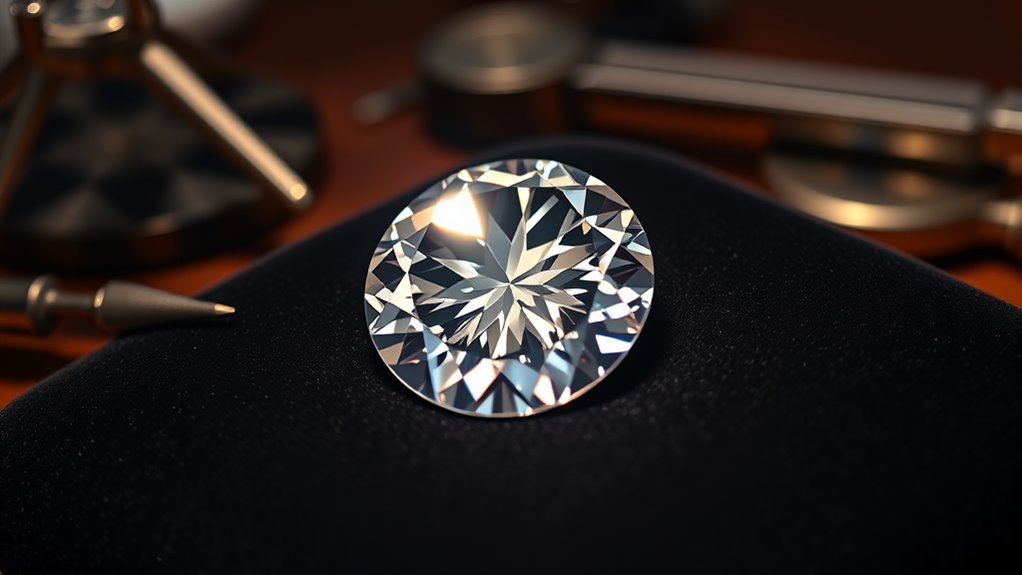
Because cut quality directly influences a diamond’s sparkle, it plays an important role in determining its worth. When you examine sparkle factors, you’ll see how light performance depends heavily on cut depth and facet arrangement.
Proper optical symmetry and a polished surface finish maximize brilliance return, allowing the diamond to shine brightly. Brilliance improvements occur when light enters the diamond, reflects internally, and exits with minimal light leakage.
If the cut is off, light escapes, dulling the sparkle. Fire dispersion, or the colorful flashes seen within the stone, also hinges on precise cuts.
In short, a well-cut diamond delivers the most enchanting sparkle by optimizing these elements, making cut quality vital for anyone who values a diamond’s visual impact.
Influence On Value
Every aspect of a diamond’s cut quality directly affects its market value, and savvy buyers quickly recognize this connection. When you choose a well-cut diamond, you’re tapping into strong market demand, which often drives prices higher.
Historical prices show that superior cut quality consistently outperforms lower grades, regardless of economic factors. Celebrity influence can also boost the value of certain cuts, as trends shift accordingly.
Regional variations matter too; buyers in some markets prioritize cut quality more than others. Brand reputation plays a role, as established names often command premium prices for diamonds with excellent cuts.
Finally, supply chain dynamics impact availability and cost, making cut quality a critical factor in determining a diamond’s true worth.
How Color Grades Affect Diamond Cost
You’ll want to get to know the diamond color scale since it has a direct impact on the stone’s price. Basically, the closer a diamond is to being completely colorless, the more valuable it tends to be. And there’s more—rare color grades can push the cost even higher. So, color really plays a big role in determining your diamond’s worth.
Color Scale Overview
Diamonds are graded on a color scale that ranges from D (colorless) to Z (light yellow or brown). This scale directly impacts their value. Understanding color grading helps you see why even subtle differences in color matter.
The less color a diamond has, the rarer and more desirable it is.
Here’s what to know about the color scale:
- D-F grades are colorless, offering the most brilliance and highest rarity.
- G-J grades show slight color that’s often invisible to the untrained eye.
- K-Z grades display noticeable color, which can affect the diamond’s overall appearance.
Impact On Price
Color plays a significant role in determining a diamond’s price, reflecting its rarity and visual appeal. You’ll find that diamonds with higher color grades, which appear more colorless, generally command higher prices due to their diamond rarity.
Market demand also influences cost; colorless diamonds remain popular, pushing prices up because many buyers seek that classic look. Historical significance adds another layer. Certain color grades have been prized through centuries, making them culturally valuable and sometimes more expensive.
Cultural factors shape preferences too; some cultures favor warmer tones, which can affect market demand and pricing. So, when you’re evaluating a diamond’s worth, keep in mind its color grade isn’t just about beauty. It’s tied to rarity, demand, history, and culture, all of which impact the final cost.
Rare Color Grades
How much more would you pay for a diamond with an unusual hue? Rare colors dramatically influence a diamond’s value because of their color rarity and unique hues. When considering these stones, you’ll notice market demand plays a big role, often driven by collectors looking for vibrant color saturation. These factors can cause significant price swings.
Here’s what impacts cost the most:
- Color saturation: Deeper, more vivid hues usually command higher prices.
- Investment potential: Rare colors often appreciate faster, making them appealing to investors.
- Collector preferences: Unique hues attract niche buyers, boosting demand and value.
How Diamond Clarity Impacts Pricing
Although clarity might seem like a minor factor, it plays an essential role in determining a diamond’s price. You’ll find that clarity grades, which range from Flawless to Included, directly influence value by evaluating internal and external flaws.
Understanding clarity types helps you recognize how these imperfections affect a diamond’s visual appearance. Clarity’s importance lies in balancing beauty and cost, as higher clarity grades often command premium prices.
However, grading standards vary, and clarity vs. price isn’t always linear. Eye clean diamonds, which look flawless to the naked eye, can offer great value despite lower clarity grades.
Don’t fall for clarity misconceptions; a diamond with minor inclusions might still sparkle brilliantly. Clarity is just one piece of the pricing puzzle you should consider.
Why Diamond Certification and Provenance Are Important
When you buy a diamond, its certification and provenance give you confidence in what you’re getting. Certification provides an objective assessment of the diamond’s quality through diamond grading, detailing aspects like cut, color, clarity, and carat weight. Provenance confirms the stone’s ethical sourcing, guaranteeing it comes from conflict-free mines.
By checking certification and provenance, you:
- Verify the diamond’s authenticity and value based on standardized grading.
- Confirm ethical sourcing to support responsible mining practices.
- Avoid counterfeit or misrepresented stones, protecting your investment.
These factors not only affect the diamond’s worth but also your peace of mind. Without proper certification and proven origins, you risk overpaying or inadvertently supporting unethical practices. Always ask for these documents before making a purchase to guarantee transparency and trust.
How Diamond Market Trends Influence Prices
Because diamond prices fluctuate based on supply and demand, understanding market trends can help you make smarter buying decisions. Market demand, economic factors, and consumer preferences all influence retail pricing.
When investment trends favor diamonds, prices often rise. Conversely, disruptions in the supply chain or shifts in global markets can lower costs. Luxury branding also plays a role, as strong brands command higher prices despite similar quality.
Here’s a quick look at key factors influencing prices:
| Factor | Impact on Diamond Prices |
|---|---|
| Market Demand | Drives prices up with increased interest |
| Economic Factors | Inflation or recession affect buying power |
| Supply Chain | Disruptions can cause price spikes |
| Consumer Preferences | Trends shift demand toward styles or sizes |
How to Get an Accurate Diamond Appraisal
Wondering how to get an accurate diamond appraisal? Start by choosing professional appraisers who specialize in diamonds. They understand the nuances and use reliable appraisal methods tailored to your stone. Avoid general jewelers who might lack specific expertise.
Make sure the appraisal includes a thorough assessment of the 4 Cs (cut, color, clarity, carat weight) using standardized tools.
Ensure the appraisal thoroughly evaluates the 4 Cs with precise, standardized instruments for accuracy.
It should also document current market values, reflecting up-to-date pricing trends.
And finally, get a clear, detailed written report that specifies the appraisal’s purpose, whether for insurance or resale.
Timing Your Diamond Purchase and Sale for the Best Price
Getting an accurate diamond appraisal sets a solid foundation, but knowing the right time to buy or sell can make a big difference in the price you pay or receive. You’ll want to study timing strategies that consider market fluctuations, which can greatly impact diamond values.
Typically, prices dip during slower retail periods, like post-holiday months, offering better buying opportunities. Conversely, selling when demand peaks, such as around engagement season, can maximize your return.
Keep an eye on broader economic trends, too. Interest rates and consumer confidence often influence diamond prices. By staying informed and adjusting your purchase or sale timing accordingly, you can capitalize on favorable market conditions.
How to Spot Overpriced or Undervalued Diamonds
How can you tell if a diamond is priced fairly or if you’re about to overpay? Start by understanding diamond grading. Certificates from reputable labs provide unbiased details on cut, clarity, color, and carat weight.
Next, factor in market fluctuations. Prices can vary based on demand, economic conditions, and seasonal trends. To spot overpriced or undervalued diamonds, consider these points:
- Compare similar diamonds’ prices across multiple sellers to identify outliers.
- Check for proper certification and verify the grading report matches the diamond.
- Be wary of deals that seem too good to be true or prices considerably above average.
Frequently Asked Questions
How Do Diamond Fluorescence and Its Intensity Affect Value?
You’ll find that fluorescence effects in diamonds can either improve or diminish value depending on intensity ratings. If the fluorescence is faint or medium, it usually won’t impact the price much and might even make the diamond appear whiter.
But if it’s strong or very strong, it could cause a hazy look, lowering value. So, always check the intensity ratings when evaluating fluorescence effects to understand how it affects worth.
What Impact Does Diamond Shape Have on Price?
Shape is the heartbeat of a diamond’s price. You’ll find that round cuts usually command a premium due to their brilliance and demand. When you consider cut quality alongside carat weight, the shape can either boost or lessen value.
Fancy shapes like pear or emerald might cost less per carat but need excellent cut quality to shine. So, your choice of shape directly influences how much you’ll pay.
Are Lab-Grown Diamonds Valued Differently Than Natural Ones?
Yes, lab-grown diamonds are valued differently than natural ones. You’ll notice their popularity rising because consumers appreciate their lower cost and ethical considerations.
You’ll also find many drawn to lab-grown diamonds due to their smaller environmental impact compared to mined stones. However, consumer perception still places natural diamonds as more prestigious, which affects their market value.
Ultimately, your choice depends on what matters most to you: price, ethics, or tradition.
How Does the Setting Style Influence a Diamond’s Worth?
Diamond settings can boost a stone’s value by up to 20%, depending on aesthetic preferences. When you choose intricate settings like halo or vintage styles, you highlight the diamond’s brilliance, attracting more buyers and raising its worth.
Simpler settings might appeal less, impacting value. So, your choice in diamond settings not only reflects your style but also plays a vital role in enhancing the diamond’s market appeal and overall price.
Can Insurance Affect the Overall Cost of Owning a Diamond?
Yes, insurance can affect the overall cost of owning a diamond. You’ll need to pay insurance premiums regularly, which vary based on coverage options you choose.
These options might include protection against theft, loss, or damage. While insurance adds ongoing expenses, it offers peace of mind and financial security.
Conclusion
When figuring out how much a diamond is worth, remember it’s like reading a story; each “C” reveals a chapter about value. By understanding carat, cut, color, and clarity, plus market trends and timing, you’ll see the full picture.
Don’t rush; getting an accurate appraisal helps you avoid costly mistakes. With this knowledge, you’ll confidently navigate the diamond market, ensuring your investment shines as brightly as the gem itself. Knowing how much a diamond is worth gives you the confidence to make smart choices.