7 Key Factors That Determine How Much a Real Diamond Ring Does Cost
Finding the perfect diamond ring can feel overwhelming. You’re not alone if you’ve ever been confused by the pricing and options available. Many people struggle with understanding what truly affects the cost of a real diamond ring.
When you’re pricing a real diamond ring, consider seven key factors. The 4 Cs—cut, color, clarity, and carat weight—play a major role in determining value.
Metal choices, like gold or platinum, also impact cost. Certification is vital, as it guarantees quality, while brand reputation can boost prices based on luxury perception.
Understanding these elements helps you make informed decisions. Stick around, and you’ll uncover more insights that could improve your buying experience.
Key Takeaways
- 4 Cs: The diamond’s cut, color, clarity, and carat weight significantly influence its overall value and desirability.
- Metal Type: The choice of metal, like gold or platinum, affects the ring’s cost due to varying price points.
- Design Complexity: Intricate designs and craftsmanship can elevate the price of a diamond ring beyond the stone’s value.
- Certification: Certified diamonds from reputable labs ensure quality and value. They’re more desirable compared to non-certified stones.
- Brand Reputation: Established brands often command higher prices due to perceived luxury, emotional connections, and marketing influence.
What Are the 4 Cs of Diamonds and Why They Matter
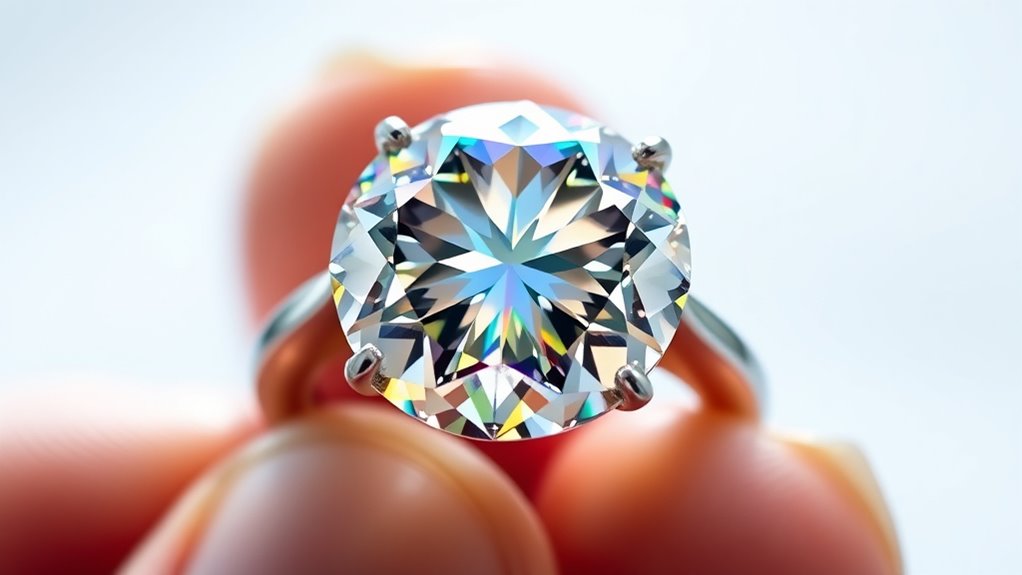
When you’re shopping for a diamond ring, understanding the 4 Cs—cut, color, clarity, and carat weight—can make a significant difference in your decision.
Each of these factors plays a crucial role in diamond grading. They influence not just the ring’s appearance but also its overall value.
The cut determines how well the diamond reflects light. Color and clarity affect its brilliance and uniqueness.
The cut influences light reflection, while color and clarity enhance the diamond’s brilliance and individuality.
Carat weight often has the most immediate impact on price. By grasping these elements, you’ll be better equipped for a value assessment.
This ensures you select a diamond that fits both your aesthetic preferences and budget.
Taking the time to learn about the 4 Cs will ultimately lead to a more informed purchase.
How Diamond Cut Affects Ring Prices
When you’re picking out a diamond ring, the cut really plays a huge role in its price. You see, a higher quality cut not only enhances the diamond’s brilliance but also amps up its sparkle, making it way more desirable.
And let’s not forget about shapes! Some shapes are just more popular than others, and that can definitely affect the price too. So, as you’re shopping around, it’s super important to keep both the cut and the shape in mind. Happy ring hunting!
Cut Quality Impact
Although many factors influence the price of a diamond ring, cut quality stands out as one of the most significant.
The way a diamond is cut affects its brilliance and overall appearance, directly impacting its value.
You’ll want to pay attention to cut craftsmanship, as it determines how well light interacts with the stone.
Ideal cut proportions improve the diamond’s sparkle, making it more desirable and costly.
A well-cut diamond reflects light beautifully, while a poorly cut one can look dull.
This is true regardless of its carat weight or clarity.
Investing in a higher cut quality can enhance your ring, ensuring it not only looks stunning but also holds its value over time.
Choose wisely!
Shape Popularity Influence
While the cut quality of a diamond is essential, the shape you choose also plays a significant role in determining the ring’s price.
Certain shapes, like round and princess cuts, are often in higher demand due to their timeless aesthetic appeal. These shape trends can drive prices up, as popular styles tend to carry a premium.
On the other hand, unique or less common shapes like marquise or pear may be more affordable, but they might not have the same widespread appeal.
Your choice of shape not only affects the ring’s cost but also its overall look.
Brilliance And Sparkle Factors
The cut of a diamond is essential in determining its brilliance and sparkle. It greatly influences the overall cost of a ring.
A well-cut diamond maximizes light performance, allowing it to reflect and refract light beautifully. This not only improves the diamond’s visual appeal but also raises its value.
When you choose a ring, pay attention to the cut quality. Grades like excellent, very good, and good can significantly affect how the diamond interacts with light.
A higher-quality cut can result in a more mesmerizing sparkle, commanding a higher price.
How Diamond Clarity Affects Cost and Value
When you’re selecting a diamond ring, understanding clarity is essential. It directly influences both cost and value.
Clarity grades range from Flawless to Included, with higher grades commanding higher prices. Inclusions, or internal flaws, can impact a diamond’s appearance and desirability.
Clarity grades span from Flawless to Included, directly affecting a diamond’s value and visual appeal. Inclusions play a crucial role in desirability.
The fewer and less visible these inclusions are, the more valuable the diamond tends to be. For example, a diamond with a VS1 clarity grade will be more sought after than one with SI2 clarity.
As you weigh your options, keep in mind that a higher clarity often means a higher price tag. However, it can also improve the ring’s overall aesthetic appeal.
Balancing clarity with your budget is key to finding the perfect diamond.
What Carat Weight Means for Diamond Pricing
Understanding carat weight is vital, as it considerably impacts a diamond’s price. Carat significance lies not just in size but also in perceived value. Larger diamonds often command higher prices due to their rarity.
When you’re shopping, keep in mind that pricing trends show a significant jump as you approach certain carat milestones, like 1, 2, or 3 carats. These weights are highly sought after, leading to larger price differences.
For example, a 1.5-carat diamond can be much more expensive than a 1.4-carat one, even if the difference is barely noticeable. So, consider your budget carefully.
While carat weight is important, other factors like cut and clarity also play vital roles in determining overall value.
How Metal Choices Impact Ring Costs
When you’re picking out a diamond ring, the type of metal you choose can really influence the total cost. It’s not just about the diamond itself; the metal plays a big part too. Different precious metals have varying price points, and their purity levels can make a difference as well.
Plus, the complexity of the ring design also comes into play. So, when you’re considering your options, keep these factors in mind. Understanding how they all tie together will help you make a more informed decision when searching for that perfect ring.
Precious Metal Types
The choice of precious metal plays an essential role in determining the cost of a diamond ring.
Whether you opt for gold alloys, platinum durability, or silver alternatives, each choice impacts your budget.
For instance, rose gold has gained popularity, but its price can vary based on the alloy used.
Ethical sourcing also influences costs, as responsibly mined metals tend to be pricier.
| Metal Type | Cost Impact |
|---|---|
| Gold Alloys | Moderate |
| Platinum | High |
| Silver Alternatives | Lower |
Different metal finishes can also affect the overall look and price of your ring.
Choosing wisely guarantees you get the best value for your investment.
Metal Purity Levels
While selecting a precious metal, you can’t overlook the importance of metal purity levels. They greatly affect your diamond ring’s cost.
Higher metal grades, like 18k or 24k gold, offer more pure gold content but come with a higher price tag. On the other hand, lower grades, such as 10k, contain more alloy types, which can reduce the overall cost.
These alloy types not only alter the metal’s color but also its durability. For instance, white gold, mixed with palladium or nickel, can be more affordable than platinum yet still provide a luxurious look.
Ultimately, your choice of metal purity impacts not just aesthetics but also how much you’re willing to invest in your ring.
Design Complexity Influence
Although you might be drawn to intricate designs, the complexity of a diamond ring’s design greatly impacts its cost. This is closely tied to your choice of metal.
Different design styles can raise the price, especially if they include intricate detailing that requires more craftsmanship. For instance, a ring made from platinum often costs more than one in gold due to the metal’s density and durability.
This affects both the design’s intricacy and overall expense. Furthermore, unique design features like filigree or custom engravings add to the labor involved, further increasing the price.
Why Certification Matters for Your Diamond?
Certification serves as your diamond’s passport, providing essential information about its quality and authenticity.
When you’re investing in a diamond ring, understanding certification types is vital. The most recognized labs, like GIA and AGS, use strict grading standards to assess clarity, color, cut, and carat weight.
This unbiased evaluation gives you confidence that what you’re buying is exactly what it claims to be. Without certification, you risk overpaying for a lower-quality stone or being misled about its features.
Plus, a certified diamond often retains its value better over time, making it a smarter investment. In short, certification not only validates your purchase but also guarantees peace of mind in your significant investment.
How Brand Reputation Affects Diamond Ring Prices
In the domain of buying a diamond ring, brand reputation plays a significant role in determining its price.
When you opt for a well-known brand, you’re often paying for that luxury perception. These companies invest heavily in marketing and quality assurance.
Choosing a renowned brand means investing in luxury perception, backed by extensive marketing and quality assurance efforts.
This brand loyalty can drive prices higher, as customers believe they’re getting superior craftsmanship and ethical sourcing. Well-established brands also create an emotional connection, making you feel more confident in your purchase.
While a lesser-known brand might offer similar quality at a lower price, the allure of a prestigious name can be hard to resist.
Ultimately, you’re not just buying a ring; you’re investing in a symbol of status and trust.
Frequently Asked Questions
Can I Negotiate the Price of a Diamond Ring?
Yes, you can negotiate the price of a diamond ring!
Start by doing your homework on diamond appraisals to understand the ring’s value.
When you’re at the store, don’t hesitate to ask for a better price; many jewelers expect some price negotiation.
If you’ve found similar rings for less, mention those as a bargaining chip.
How Do Seasonal Sales Affect Diamond Ring Prices?
Seasonal sales can greatly lower diamond ring prices.
During holiday promotions, retailers often offer discounts to attract buyers, making it a great time for you to shop.
You’ll find that seasonal trends influence availability and pricing, especially around Valentine’s Day or Christmas.
If you time your purchase right, you could save a good amount while still finding the perfect ring.
What Are Common Financing Options for Diamond Purchases?
When you’re ready to pop the question, financing options can feel like a lifeline.
Many jewelers offer flexible payment plans that let you spread the cost over time, easing that financial burden.
You might also investigate credit options, like store credit cards, which can provide special promotions or interest-free periods.
Just be sure to read the fine print so you don’t get caught in a whirlwind of unexpected fees.
Are Lab-Grown Diamonds Cheaper Than Natural Ones?
Yes, lab-grown diamonds are generally cheaper than natural ones.
Since they’re created in controlled environments, their production costs are lower, impacting the price.
However, you still want to consider diamond quality and certification when making your choice.
Both lab-grown and natural diamonds can receive certifications, ensuring you know what you’re getting.
How Does the Ring Setting Influence Overall Cost?
The ring setting markedly influences overall cost. If you choose high-quality setting materials like platinum or gold, you’ll see a price increase.
Furthermore, the design complexity plays an essential role. Intricate designs with multiple stones or unique shapes can escalate costs.
Conclusion
So, you’ve learned about the 7 key factors that influence diamond ring prices.
But here’s the kicker: the more you know, the more you realize how little you actually need to spend on a ring that sparkles!
With the right choices, you can snag a stunning piece without breaking the bank.
Just remember, a diamond’s value is often in the eye of the beholder.
Sometimes, it’s just a shiny rock, after all!
In the end, you can find a beautiful diamond ring that fits your budget.