Which Example Describes the Use of Gemstones?
Finding the perfect way to use gemstones can be tricky. Whether you want something beautiful, practical, or meaningful, you’re not alone in wanting to make the most of these precious stones. Many people struggle to see beyond jewelry when it comes to gemstones, but there’s so much more to discover.
You use gemstones far beyond just jewelry; their brilliance shines in many areas of your life. For instance, diamonds aren’t only prized gems; they’re vital in cutting tools and industrial machinery because of their unmatched hardness.
Sapphires improve your smartphone screens and LED lights, boosting durability and performance.
Beyond beauty and technology, gemstones also play roles in cultural rituals and healing practices. If you investigate further, you’ll find even more fascinating ways gemstones impact the world around you.
Key Takeaways
- Gemstones are used in jewelry design for their beauty and symbolic meanings, enhancing aesthetic appeal and cultural significance.
- Crystal therapy employs gemstones like amethyst and rose quartz to promote physical, emotional, and spiritual healing.
- Diamonds serve industrial purposes such as cutting, drilling, and polishing due to their exceptional hardness.
- Sapphires are utilized in technology as substrates for LED lights and smartphone screens, improving device durability.
- Gemstones are integral in rituals and spiritual practices, believed to provide protection, blessings, and energy balance.
What Are Gemstones and Their Key Characteristics?
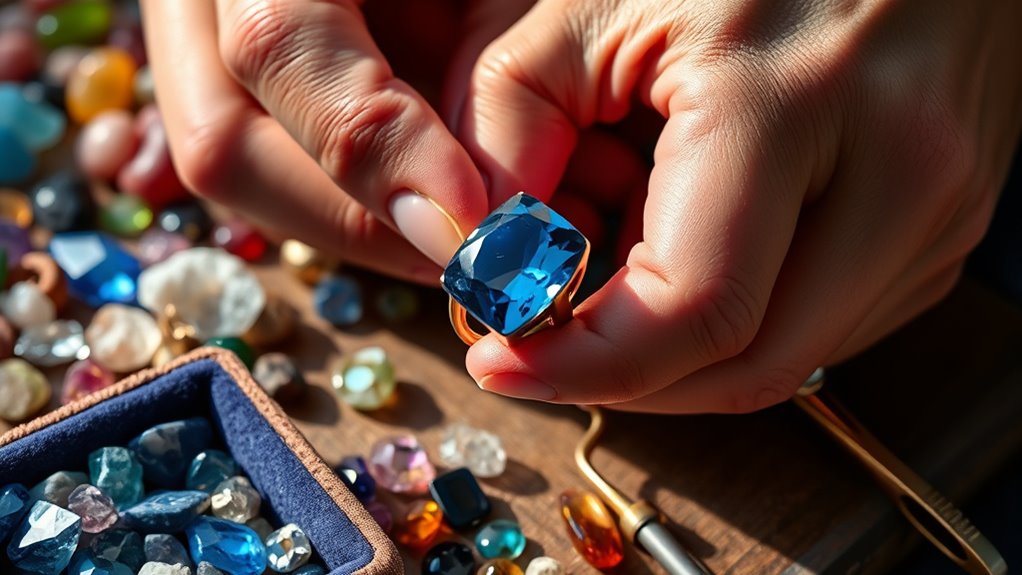
Gemstones are precious or semi-precious minerals that have been cut and polished to improve their beauty. When you investigate gemstone origins, you realize that these stones form naturally deep within the Earth’s crust, influenced by geological processes over millions of years.
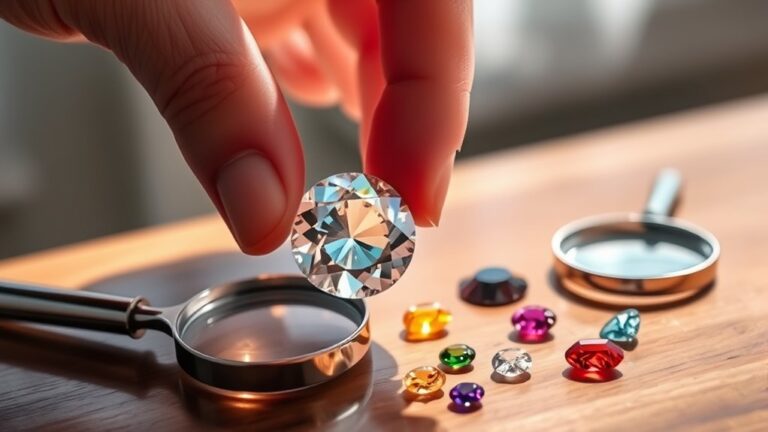
Understanding gemstone classifications helps you identify them based on factors like composition, hardness, and rarity. For example, diamonds, rubies, and sapphires fall under precious gemstones, while amethyst and garnet are semi-precious.
Each classification highlights unique characteristics such as color, clarity, and durability. By knowing these key traits, you can better appreciate the value and uniqueness of each gemstone. This knowledge serves as the foundation before examining how gemstones enrich jewelry design.
How Are Gemstones Used in Jewelry Design?
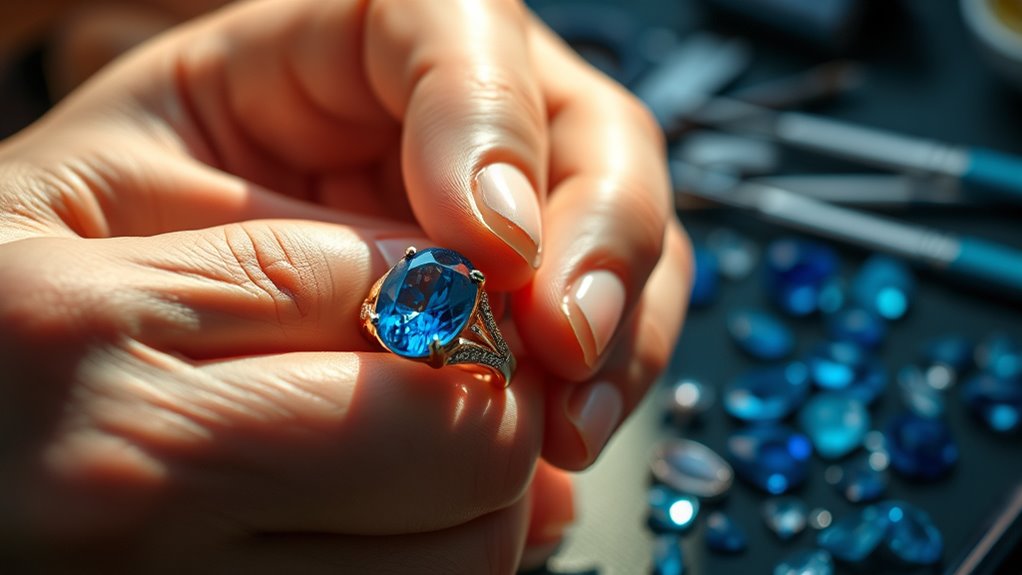
Jewelry designers carefully select stones to enhance their creations’ beauty and meaning. When you choose gemstones, you tap into a vast palette of colors and textures that inspire unique design inspiration.
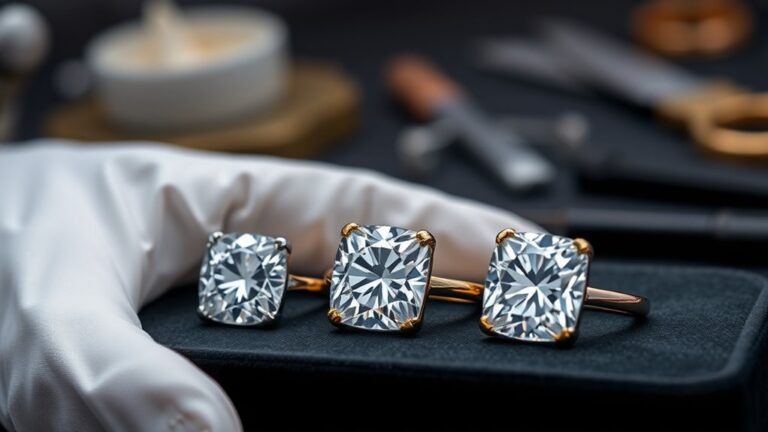
You combine gemstones with various jewelry techniques, such as setting, carving, and polishing, to highlight each stone’s natural brilliance. Whether you’re designing a delicate ring or a bold necklace, the gemstones dictate your approach.
You might use prong settings to maximize light or bezel settings for durability. The cut and clarity influence how you arrange stones, ensuring balance and harmony. By skillfully integrating gemstones, you transform raw materials into wearable art that reflects both creativity and craftsmanship, making each piece truly one-of-a-kind.
How Do Gemstones Feature in Cultural Traditions?
You’ll find gemstones play key roles in cultural traditions. They often symbolize important rituals and beliefs. Plus, they’re passed down as treasured heirlooms, connecting generations. Many cultures also believe gemstones hold spiritual or healing powers that can influence well-being.
Symbolism in Rituals
Although their beauty enchants many, gemstones hold deeper meanings in cultural rituals around the world. When you participate in ceremonies, you’ll notice gemstones often carry ritual significance beyond decoration. They symbolize spiritual power, protection, or connection to deities.
Many cultures use gemstone offerings to honor gods, seek blessings, or mark important life events. For instance, placing specific stones on altars or wearing them during rites can invite positive energy or ward off evil.
Gemstones as Heirlooms
When gemstones pass down through generations, they carry more than just value. They hold stories and cultural significance. You’ll find that heirloom stories often reveal family histories, important milestones, and traditions linked to these precious stones.
By preserving gemstones carefully, you’re not only protecting their beauty but also maintaining a tangible connection to the past. This gemstone preservation guarantees that future generations can appreciate both the gem’s physical allure and the memories it embodies.
In many cultures, gemstones become symbols of legacy and identity, passed from parents to children during significant life events. When you inherit such treasures, you inherit the cultural heritage embedded within them, making gemstones powerful vessels of history and tradition.
Spiritual and Healing Beliefs
Because gemstones have long been believed to possess unique energies, many cultures use them in spiritual and healing practices. You’ll find people wearing or carrying specific stones to tap into their spiritual properties, aiming to balance emotions or improve mental clarity.
For example, amethyst is often used for calmness, while rose quartz promotes love and compassion. When you engage in energy healing, gemstones act as tools to channel or amplify positive energy, helping to clear blockages and restore harmony within the body.
Whether placed on the body or around your space, their presence supports meditation and mindfulness rituals. By understanding these traditions, you can appreciate how gemstones serve as more than jewelry; they’re powerful symbols and instruments in holistic wellness worldwide.
Which Gemstones Have Healing Properties?
You might be wondering which gemstones really have healing properties and how they can actually help you. Well, crystal therapy often uses popular stones like amethyst and rose quartz to encourage wellness and balance. When you understand how these gemstones support your health, it becomes easier to pick the right ones for what you need.
Popular Healing Gemstones
Although scientific proof remains limited, many people swear by the healing properties of certain gemstones. You might find that specific stones resonate with your energy, offering comfort or balance. The idea is that each gemstone emits unique energy that can influence your well-being.
Here’s a quick guide to popular healing gemstones:
| Gemstone | Healing Properties | Gemstone Energy |
|---|---|---|
| Amethyst | Stress relief, calmness | Soothing, spiritual |
| Rose Quartz | Emotional healing, love | Gentle, nurturing |
| Citrine | Energy, creativity | Uplifting, vibrant |
| Clear Quartz | Clarity, amplification | Powerful, cleansing |
| Black Tourmaline | Protection, grounding | Strong, stabilizing |
Try exploring these stones to see which gemstone energy feels right for you.
Benefits of Crystal Therapy
When you incorporate crystal therapy into your routine, you tap into the natural energies of gemstones to support your physical, emotional, and spiritual health. Crystal energy works by interacting with your body’s energy fields, helping to clear blockages and promote healing.
You’ll find that certain stones, like amethyst or rose quartz, are popular for fostering emotional balance, reducing stress, and encouraging calmness. By holding or wearing these gemstones, you actively invite positive vibrations that can elevate your mood and mental clarity.
Crystal therapy also encourages mindfulness, making it easier for you to stay grounded and centered throughout your day. While it’s not a substitute for medical treatment, using gemstones this way can complement your wellness practices and boost your overall sense of well-being.
How Gemstones Aid Wellness
Building on how crystal therapy improves your well-being, it’s helpful to understand which specific gemstones carry healing properties and how they work. Amethyst, for example, is known for its calming energy, often used in wellness practices to reduce stress and promote relaxation.
Rose quartz encourages emotional healing and self-love, while clear quartz amplifies energy, making it a powerful tool in energy healing sessions. You can incorporate these gemstones into your daily routine by wearing them as jewelry or placing them in your environment to balance your energy fields.
Which Gemstones Are Popular in Spiritual Practices?
Why do certain gemstones fascinate those drawn to spiritual practices? You’ll find that many turn to meditation stones like amethyst or clear quartz to deepen focus and calm the mind. These stones aren’t just beautiful; they’re believed to improve energy flow and support chakra alignment.
For example, you might use a rose quartz to open your heart chakra or a lapis lazuli to balance your throat chakra during meditation. These gemstones act as tools that help you connect with your inner self and promote spiritual healing.
How Do Gemstones Symbolize Wealth and Status?
Gemstones have long served as powerful symbols of wealth and status, catching the eye with their rarity and brilliance. When you wear or display these dazzling stones, you tap into a rich tradition of wealth symbolism that transcends cultures and eras.
Gemstones aren’t just beautiful; they represent your achievements, influence, and social standing. Their rarity and value speak volumes about your success and position in society.
You can evoke this powerful status representation by choosing gemstones that:
- Spark admiration and respect from others
- Reflect your personal achievements
- Highlight exclusivity and luxury
- Convey timeless elegance and prestige
How Are Gemstones Valued and Traded?
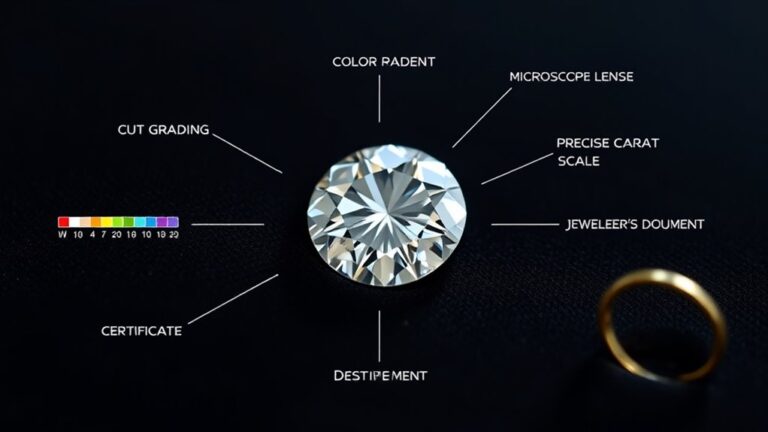
You’ll find that gemstone value depends on factors like color, clarity, cut, and carat weight. When you understand these qualities, it’s easier to navigate the global gemstone market with confidence. So, let’s take a closer look at how these elements shape the way gemstones are valued and traded worldwide.
Factors Affecting Gemstone Value
Several key factors determine the value of gemstones, influencing how they’re priced and traded in the market. When you evaluate a gemstone, color saturation and clarity factors immediately draw your attention, affecting its brilliance and appeal.
Rarity assessment plays a huge role. Rare stones naturally command higher prices. Cut quality improves the stone’s sparkle, making it more desirable.
You should also consider market demand and origin influence. Stones from famous locations often fetch premiums. Treatment effects can either increase or decrease value depending on permanence. Plus, historical significance can add emotional and monetary worth.
Here’s what truly impacts gemstone value:
- Intense color saturation that fascinates you
- Exceptional clarity factors revealing purity
- Rarity assessment that sparks excitement
- Origin influence tied to legendary mines
Global Gemstone Market
Understanding the global gemstone market means looking at how stones are valued and traded across different regions. You’ll find that factors like gemstone sourcing and gemstone sustainability heavily influence pricing and demand. Ethical sourcing boosts value, while sustainability practices attract conscientious buyers.
Trading hubs like India, Thailand, and the UAE play key roles in shaping the market.
| Region | Key Market Activity | Sustainability Focus |
|---|---|---|
| India | Cutting & Polishing | Fair labor practices |
| Thailand | Wholesale & Export | Eco-friendly mining |
| UAE | Retail & Auctions | Conflict-free certifications |
Why Are Diamonds Key to Industrial Use?
Diamonds stand out as the hardest natural material known, making them essential for many industrial applications. When you think about diamond applications, their unmatched durability and precision come to mind.
Diamonds, the hardest natural material, bring unmatched durability and precision to essential industrial applications.
Industrial diamonds aren’t just about luxury; they’re tools that help shape the world around you.
You’ll find industrial diamonds used to:
- Cut through tough materials like concrete and metals with ease
- Polish and grind surfaces to achieve flawless finishes
- Drill deep into the earth for oil and gas extraction
- Improve the longevity of cutting tools and machinery
Because of their strength and resilience, diamonds give you reliability and efficiency in tasks where other materials would fail. When you rely on industrial diamonds, you’re tapping into nature’s most powerful tool for innovation and progress.
How Are Gemstones Used in Technology?
Although gemstones are often admired for their beauty, they play essential roles in various technological applications. You might not realize how important gemstone technology is in areas like electronics, telecommunications, and manufacturing.
For example, sapphires serve as durable substrates in LED lights and smartphone screens due to their hardness and scratch resistance. Diamonds, beyond jewelry, are used in cutting tools and high-precision instruments because of their exceptional strength.
In industrial applications, gemstones help improve device performance and longevity, making them indispensable. When you use devices daily, gemstone technology quietly boosts their reliability and efficiency.
Understanding these roles shows that gemstones aren’t just decorative; they’re critical components driving modern technology forward through their unique physical and chemical properties.
How Are Gemstones Shaping Fashion Trends and Innovation?
While gemstones have long been prized for their natural beauty, they continue to drive innovation and shape fashion trends today. You’ll find designers embracing gemstone sustainability, using ethical sourcing to create stunning pieces that don’t harm the planet. This shift sparks fashion innovation, inspiring unique jewelry that blends tradition with modern style.
By choosing sustainable gemstones, you support a movement that values both beauty and responsibility.
Choosing sustainable gemstones means embracing beauty that honors both style and ethical responsibility.
Feel confident wearing jewelry that respects the environment. Experience the thrill of fresh, bold designs. Connect with the story behind every gemstone. Inspire others by championing ethical fashion choices.
Gemstones aren’t just adornments; they’re catalysts for change, transforming how you express yourself through fashion.
Frequently Asked Questions
How Are Synthetic Gemstones Manufactured?
You manufacture synthetic gemstones using advanced synthetic methods like the Verneuil process or hydrothermal growth. These production techniques recreate natural conditions, allowing crystals to form in controlled environments.
What Environmental Impacts Result From Gemstone Mining?
You’ll notice gemstone mining causes habitat destruction, wiping out essential ecosystems. It also leads to water pollution, as harmful chemicals seep into rivers, affecting communities and wildlife.
When you dig deeper, labor exploitation is common, with workers facing unsafe conditions and low pay. This all contributes to biodiversity loss, as species disappear from disrupted environments.
Can Gemstones Be Used in Scientific Research?
Yes, you can use gemstones in scientific research. Their unique physical and chemical properties make gemstone applications significant for research innovations, especially in materials science and optics.
For instance, diamonds help study high-pressure environments, while quartz is essential in electronics and watches. By exploring these gemstones, you’ll contribute to breakthroughs in technology and industry, showing how natural gems extend beyond decoration into critical scientific tools.
How Do Gemstone Cuts Affect Their Durability?
You might think gemstone cuts are like giving your gem a fancy haircut, but they actually play a serious role in cut durability. If you opt for a delicate cut on a softer stone, you’re basically sending it to a fragile fashion show where chipping is the main event.
Since gemstone hardness varies, tougher stones handle intricate cuts better, while softer ones need simpler shapes to keep their durability intact. Choose wisely, or your gem’s lifespan might be as short as a trend.
What Are the Ethical Concerns in Gemstone Sourcing?
You should be aware that ethical concerns in gemstone sourcing include environmental damage, unsafe labor conditions, and funding conflicts. To guarantee ethical sourcing, you can look for gemstone certification from reputable organizations that verify responsible mining practices.
Conclusion
You might be surprised to learn that over 80% of gemstones are used in jewelry design, showing just how central they are to personal expression and style. Whether you’re drawn to their beauty, cultural significance, or healing properties, gemstones play a unique role in your life.
By understanding their value and impact, you can appreciate not only their sparkle but also their influence across fashion, tradition, and even technology. This example clearly describes the use of gemstones in various aspects of life.