
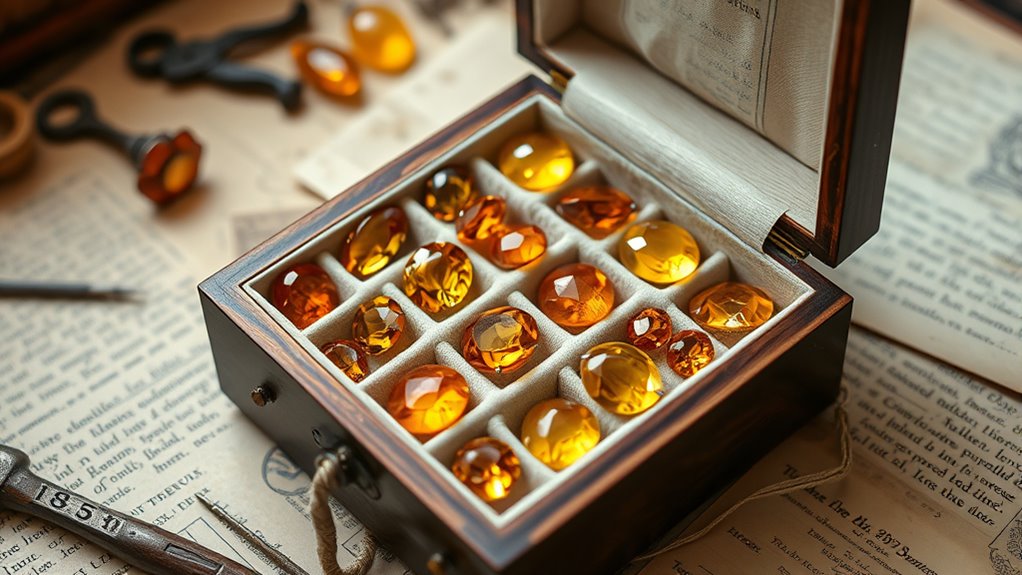
How Would You Find Some Yellow and Golden Gemstones Used in 1865?
Finding yellow and golden gemstones used in 1865 can feel like searching for a needle in a haystack. You’re not alone if you’ve struggled with knowing where to look or how to identify these vibrant gems. Many people face the same challenge, wanting to uncover these treasures but unsure where to start.
To find yellow and golden gemstones in 1865, you’d rely on keen observation for warm, bright earth tones and follow local folklore pointing to rich riverbeds and mineral spots.
Using tools like pickaxes, pans, and shovels, you’d carefully dig and sift sediments, watching for unusual rock colors or gravelly soil.
River panning would separate gems from dirt, guided by tradition and terrain clues.
Keep going to uncover how prospectors combined skill and wisdom to reveal these treasures.
Key Takeaways
- Prospectors used pickaxes, shovels, and pans to dig, break rocks, and separate yellow and golden gemstones from soil and river sediments.
- Keen observation of terrain, like yellowish rock veins and erosion exposing quartz, guided gemstone location efforts.
- River panning involved swirling sediment in shallow pans to separate heavier yellow gems like topaz and citrine.
- Local folklore and oral traditions provided clues to hidden treasure spots and helped guide effective searching.
- Extraction combined traditional tools with knowledge of gemstone colors, terrain indicators, and environmental conditions.
How Did 1865 Prospectors Spot Yellow and Golden Gemstones?
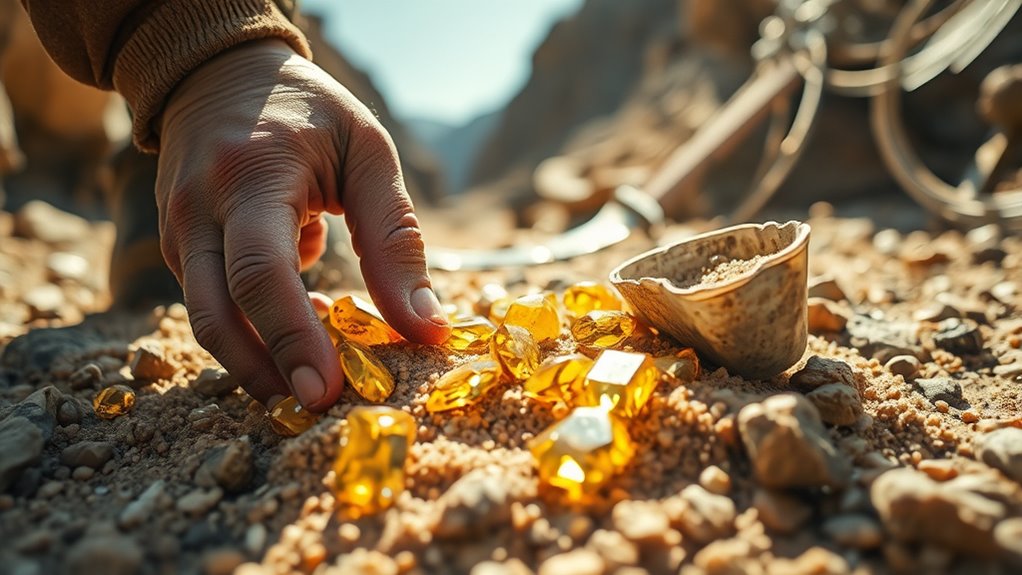
In 1865, prospectors relied on keen observation and natural clues to spot yellow and golden gemstones. You’d closely examine the earth for bright, warm hues reflecting sunlight, using color symbolism to guide your search. Yellow often symbolized wealth and energy, making these stones highly prized.
You’d also listen to gemstone folklore, which suggested certain locations held secret treasures or that specific colors indicated the presence of valuable gems nearby. These stories helped you decide where to look, blending tradition with your own sharp senses.
What Tools Did Prospectors Use to Find These Gems?
You’ll want to know which traditional tools helped prospectors find yellow and golden gemstones. These tools, along with some specific techniques, made it possible to extract those gems. So, let’s take a look at what they used and how everything worked.
Traditional Prospecting Tools
Several essential tools helped prospectors uncover yellow and golden gemstones in the past. You’d rely on natural indicators like quartz veins or specific soil colors, often guided by gemstone folklore passed down through generations. These clues pointed you toward promising spots.
Here’s a quick look at traditional tools you’d use:
| Tool | Purpose | How It Helps |
|---|---|---|
| Pickaxe | Break rocks and soil | Exposes gemstone-bearing rock |
| Pan | Separate gemstones from dirt | Helps identify smaller gems |
| Shovel | Digging and removing debris | Clears overburden efficiently |
| Hand lens | Close inspection of minerals | Confirms gem presence |
| Sluice box | Sort heavier materials | Captures gemstones in flow |
Using these tools, you’d combine skill with natural clues to find those precious yellow and golden gemstones.
Techniques for Gem Extraction
Revealing yellow and golden gemstones requires more than just spotting promising sites. You need effective extraction techniques to retrieve these treasures safely and efficiently.
Prospectors in 1865 relied heavily on panning techniques, swirling water and sediment in shallow pans to separate heavier gems from lighter materials. This hands-on method not only revealed gems but connected you to gemstone folklore, where each find carried stories of luck and fortune.
You’d also use simple tools like picks and shovels to dig carefully around promising deposits, avoiding damage to fragile stones. By mastering these methods, you guaranteed a steady flow of gemstones while respecting the natural environment.
These traditional extraction techniques combined skill, patience, and a touch of the lore that made every revelation meaningful.
How Did Prospectors Use Tools to Locate Yellow and Golden Gemstones?
You’d start off with traditional mining techniques like panning and sluicing to separate gemstones from the sediment. It’s a hands-on way to sift through material and catch anything shiny. After that, you’d use early identification methods to spot the unique colors and shapes of yellow and golden gems. These tools and skills worked hand-in-hand, making it easier for prospectors to find those precious stones they were after.
Traditional Mining Techniques
Prospectors relied on simple but effective tools like pans, picks, and sluices to locate yellow and golden gemstones. You’d use a pan to sift through river sediments, spotting shiny gems by their color and weight. Picks helped break apart rocky soil, while sluices allowed you to process larger amounts of material quickly.
Alongside these tools, you’d often hear gemstone folklore guiding choices about where to dig, as legends passed down tips on promising locations. Mining safety was essential too; you’d stay alert for unstable ground and avoid hazardous areas to prevent accidents.
Early Gemstone Identification
Although gemstone hunting demanded patience, early prospectors quickly learned to rely on their tools to spot yellow and golden gems with greater accuracy. You’d use simple yet effective instruments like magnifying glasses and pans to examine soil and rock samples closely.
These tools helped you distinguish genuine gemstones from fool’s gold or other minerals. Your knowledge of gemstone folklore also guided you, as old tales often hinted at promising locations or specific characteristics of valuable stones.
In historical mining, combining these stories with practical tools sharpened your ability to identify gems in the field. By observing color, clarity, and weight, you improved your chances of finding rare yellow and golden gemstones, turning folklore and tools into a reliable method for early gemstone identification.
Where Were the Best Places to Hunt for Yellow and Golden Gemstones?
When searching for yellow and golden gemstones, knowing the right locations can make all the difference. You’ll want to study gemstone geography closely. Certain regions naturally yield these vibrant stones.
For example, areas with ancient volcanic activity or alluvial deposits often hide rich treasures. Prospecting legends often point to places like the Ural Mountains, parts of Brazil, and the American West. Miners historically struck it rich in these spots.
These locations offer the best odds because the earth’s natural processes concentrated these gems there over centuries. By focusing your efforts on such hotspots, you increase your chances of finding quality yellow and golden gemstones without wasting time. Understanding the geography and tales of past prospectors guides you straight to the most promising hunting grounds.
How Did River Panning Help Discover Yellow and Golden Gemstones?
When you pan river sediment, you’re basically using simple tools to separate the heavier stuff—like yellow and golden gemstones—from the lighter dirt and sand. It’s pretty straightforward once you get the hang of it.
And here’s the trick: knowing how to spot these stones by their color and shine really helps you figure out which finds are valuable, and which ones aren’t worth your time.
This technique has actually helped a lot of people uncover hidden gems that were tucked away in riverbeds all along. It’s a neat way to discover something precious with just a little patience and know-how.
Historical River Panning Techniques
Since rivers naturally carry sediments from various sources, historical river panning techniques allowed prospectors to efficiently sift through these materials and reveal yellow and golden gemstones. You’d use a shallow pan, swirling water and sediment to separate heavier stones from lighter debris.
Understanding river ecosystems helped you identify promising spots where gemstones might settle, like bends or areas behind large rocks. Prospectors relied not only on physical clues but also on gemstone folklore, which suggested certain rivers held hidden treasures.
By combining practical knowledge with these traditional beliefs, you increased your chances of finding valuable yellow gems. This hands-on method made gemstone hunting accessible and effective, especially before modern mining tools existed.
Historical river panning remains a fascinating glimpse into early gem revelation practices.
Identifying Yellow Gemstones
River panning didn’t just help you locate yellow and golden gemstones. It also sharpened your ability to identify them. By closely examining gemstone varieties, you learned to distinguish subtle differences in hue and clarity.
The color significance played a vital role. Each shade of yellow could indicate a specific type of gemstone or its quality. For instance, a deep golden color might hint at citrine, while a pale yellow could suggest yellow sapphire.
| Gemstone Variety | Color Significance |
|---|---|
| Citrine | Warm golden, vibrant |
| Yellow Sapphire | Pale to bright yellow |
| Heliodor | Slightly greenish-yellow |
This hands-on experience made spotting valuable gemstones easier during your search.
River Sediment and Gemstones
Although gemstone deposits can be hidden deep underground, panning through sediment in streams and rivers lets you uncover yellow and golden gemstones that have naturally washed downstream. By understanding river geology, you learn how water currents erode rocks and transport sediments, including precious gems.
When you collect sediment samples, sediment analysis helps identify areas where heavier yellow and golden gemstones settle. The process is simple: you swirl sediment in a pan, washing away lighter material until you reveal dense, colorful stones.
This method has been used since 1865 to locate gems like topaz and citrine without digging deep. River panning combines knowledge of geology and hands-on techniques, making it an effective way to unearth beautiful yellow and golden gemstones hidden in natural waterways.
What Minerals Produced Yellow and Golden Gemstones in 1865?
When you investigate yellow and golden gemstones from 1865, you’ll find that several key minerals were responsible for their vibrant hues. These minerals formed the basis of many yellow gemstone varieties and golden gemstone sources sought after in that era. You’d mainly encounter:
- Citrine, a yellow variety of quartz, prized for its warm, honey-like tones.
- Topaz, especially golden topaz, known for its rich, deep yellow to amber colors.
- Amber, fossilized tree resin, which provided a glowing golden appearance.
These minerals gave the yellow and golden gemstones their distinct colors, making them popular for jewelry and decorative uses in 1865. Understanding these sources helps you identify and appreciate the gemstones’ origins and value during that time.
How Did Local Knowledge Influence Gemstone Hunting Back Then?
Knowing which minerals produced yellow and golden gemstones in 1865 was only part of the story. You had to rely heavily on local folklore and geological mapping to guide your search.
Locals shared stories about where gems were found, while early geological maps highlighted promising areas. Combining both helped you avoid wasting time in barren places.
| Aspect | Influence on Gemstone Hunting |
|---|---|
| Local Folklore | Revealed hidden sites and natural clues |
| Geological Mapping | Identified rock formations with gems |
| Oral Traditions | Passed down practical mining knowledge |
| Landmarks | Helped navigate to gem-rich locations |
What Signs Indicated Yellow and Golden Gemstones in the Terrain?
If you wanted to spot yellow and golden gemstones in the terrain, you’d watch for certain natural signs that hinted at their presence. Experienced hunters relied heavily on terrain indicators to narrow down where gemstone formations might be found. You’d look for:
To find yellow and golden gemstones, watch for natural terrain signs that signal their presence.
- Unusual rock colors or veins, especially ones with a yellowish tint
- Areas where erosion exposed quartz or calcite, often near gemstone formations
- Soil patches with a sandy or gravelly texture, signaling mineral deposits beneath
These terrain indicators helped prospectors zero in on promising spots without modern tools. By reading the landscape carefully, you could predict where yellow and golden gemstones might lie hidden, making your search more efficient and successful.
How Were Yellow and Golden Gemstones Extracted Without Modern Machinery?
Even without modern machinery, people relied on simple yet effective tools and techniques to extract yellow and golden gemstones from the earth. Historical mining often used hand tools like picks and shovels, guided by gemstone folklore about where to dig. You’d carefully break rocks and sift sediments to find these valuable gems.
| Tool | Purpose | Connection to Folklore |
|---|---|---|
| Pickaxe | Breaking rocks | Followed legends of gem veins |
| Shovel | Digging soil | Signs of rich earth from stories |
| Sifting pan | Separating gems | Used near rivers as folklore said |
| Hammer | Crushing rocks | Linked to tales of hidden gems |
| Lantern | Working in darkness | Guided by superstitions |
What Challenges Did 1865 Prospectors Face When Finding These Gems?
While prospectors in 1865 relied on simple tools and local legends to locate yellow and golden gemstones, they faced many obstacles that tested their resolve. The gemstone rarity meant you had to search vast, often treacherous areas with no guarantee of success. You also confronted numerous prospecting hazards that could endanger your life and efforts.
Prospectors in 1865 braved vast, treacherous lands with simple tools and uncertain hope to find rare gemstones.
Some key challenges included:
- Traversing rough, uncharted terrain without maps or guides
- Dealing with unpredictable weather and limited shelter options
- Facing threats from wildlife, illness, and unstable mining sites
These difficulties required patience, physical endurance, and sharp intuition. You couldn’t rely on technology or detailed knowledge, so every finding felt like a hard-won victory against nature’s odds.
Frequently Asked Questions
What Are the Modern Uses of Yellow and Golden Gemstones?
You’ll find yellow gemstone healing popular in wellness circles, as people use these stones to boost energy and positivity. In golden gemstone fashion, designers incorporate them into jewelry to add luxury and warmth to their collections.
You can wear yellow sapphires or citrines for a stylish look that also supports your well-being. These gemstones blend beauty and benefits, making them perfect for both healing and fashion today.
How Are Yellow and Golden Gemstones Valued Today?
Imagine holding sunshine in your hand. That’s how yellow and golden gemstones are valued today. You’ll find their worth depends heavily on market trends and gemstone grading, which assess color, clarity, cut, and carat.
As demand shifts, prices fluctuate, so staying updated is key. When you understand grading standards and watch the market, you can confidently gauge a gemstone’s true value, turning that sparkle into a smart investment.
What Care and Maintenance Do These Gemstones Require?
You’ll want to use gentle cleaning techniques like warm soapy water and a soft brush to keep yellow and golden gemstones sparkling. Avoid harsh chemicals or ultrasonic cleaners that could damage them.
For gemstone storage, keep each stone separately in a soft pouch or lined box to prevent scratches and damage. Regularly inspecting your gemstones helps you catch any issues early.
Taking these steps guarantees your gemstones stay beautiful and vibrant over time.
Can Yellow and Golden Gemstones Be Synthetically Produced?
Yes, you can find synthetic gemstones that replicate yellow and golden hues. These synthetic gemstones mimic the natural gemstone properties like color, clarity, and hardness, making them visually and physically similar to their natural counterparts.
When you choose synthetic options, you get consistent quality and often a more affordable price. You still enjoy the beauty of yellow and golden stones without worrying about rarity or ethical sourcing.
What Are the Historical Significances of These Gemstones?
You might think yellow and golden gemstones were just shiny decorations, but their historical myths reveal much more. These gems symbolized power, wealth, and divine favor, often linked to the sun’s life-giving energy.
You’ll find their gemstone symbolism woven through royal crowns and ancient ceremonies, showing people valued them as talismans of protection and prosperity. So, these stones weren’t just pretty; they were storied icons shaping culture and belief.
Conclusion
If you were hunting yellow and golden gemstones in 1865, you’d rely on keen observation, simple tools, and local wisdom. No smartphones or GPS to guide you. You’d pan rivers, watch for certain terrain hints, and dig carefully by hand.
Though challenges like rough terrain and limited tech made it tough, your persistence would pay off. Just imagine using a metal detector back then—it’d be like magic, but you had to trust your eyes and instincts instead!
In the end, finding yellow and golden gemstones used in 1865 meant combining patience with sharp senses and knowledge passed down through generations.