
How Do Automatic Watches Work Step by Step
Struggling to keep your watch ticking without constantly replacing batteries or winding it manually? You’re not alone. Many people wish for a timepiece that combines the convenience of automatic power with the elegance of traditional craftsmanship.
If you’ve ever wondered how automatic watches work and why they’re such a popular choice, you’re in the right place.
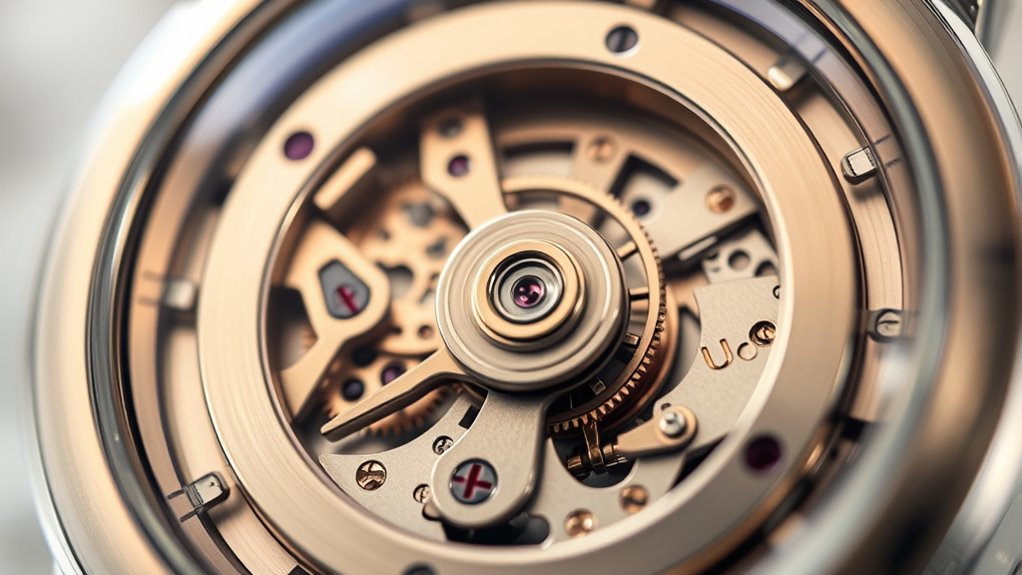
When you wear an automatic watch, your wrist’s movement spins a rotor that winds the mainspring, storing energy to power the watch without batteries. This stored energy slowly releases through a gear train and escapement that drive the hands, while the balance wheel keeps time accurate.
If not worn, you can manually wind it to restart. Understanding these parts and how they work together reveals the precision and craftsmanship behind automatic watches and why maintenance matters.
Key Takeaways
- Automatic watches use a rotor that spins with wrist movement to wind the mainspring. This generates energy without batteries.
- The mainspring stores kinetic energy by coiling tightly. Then it gradually unwinds to power the watch’s movement.
- Energy from the mainspring transfers through the gear train. This drives the watch hands smoothly and accurately.
- The escapement mechanism regulates energy release, with the balance wheel controlling oscillations for precise timekeeping.
- Regular wearing or manual winding keeps the watch running. Maintenance every 3 to 5 years ensures longevity and accuracy.
How Automatic Watches Work: A Quick Overview
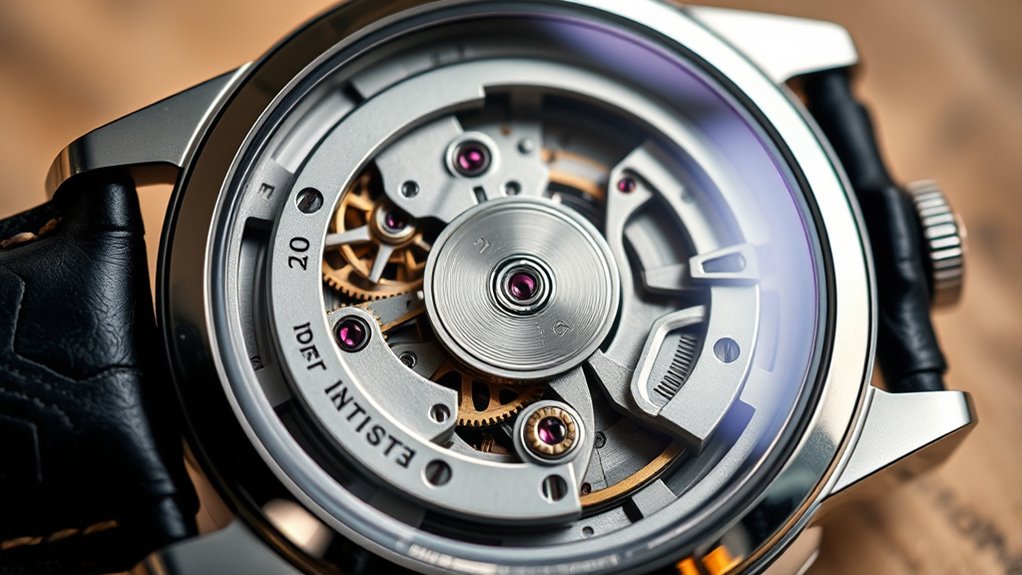
Although automatic watches might seem complex, they work on a straightforward principle: harnessing your natural movements to keep time. Inside, watch movements are powered by a rotor that spins as you move your wrist.
This motion winds the mainspring, storing energy to run the watch without needing batteries. You don’t have to manually wind it daily if you wear it regularly, but knowing proper winding techniques can help maintain accuracy and longevity.
If the watch stops, a gentle shake or manual winding can restart it. Understanding these basics helps you appreciate how your automatic watch combines mechanical precision with your everyday activity, ensuring it stays powered and accurate with minimal effort on your part.
What Is an Automatic Watch and How Does It Differ From Quartz?
You might be wondering what makes an automatic watch tick compared to a quartz watch. Well, automatic watches rely on the motion of your wrist to power their mechanical movement. On the other hand, quartz watches use a battery and an electronic oscillator to keep things running. Understanding these key differences can really help you appreciate how each type keeps time in its own unique way.
Definition Of Automatic Watches
An automatic watch is a type of mechanical timepiece that winds itself using the natural motion of your wrist. Unlike manual watches, which require you to wind them regularly, automatic watches harness your movements to keep the mainspring tight.
This winding technique transformed watch history by offering convenience without sacrificing craftsmanship. Inside, a rotor spins as you move, transferring energy to the mainspring.
This contrasts with older winding techniques where you had to turn the crown manually. Understanding this is key to appreciating how automatic watches combine tradition with innovation.
As you wear it daily, your watch stays powered, reflecting centuries of horological progress designed for effortless use and precise timekeeping.
Quartz Watch Mechanism
Quartz watches operate differently from automatic watches by relying on a battery and a quartz crystal to keep time. The battery sends an electric current through the quartz crystal, causing it to vibrate at a precise frequency. These vibrations regulate the movement of the watch hands, offering impressive quartz accuracy.
Unlike automatic watches that depend on wrist motion, quartz watches require battery replacements, which affects the battery lifespan.
| Feature | Quartz Watch |
|---|---|
| Power Source | Battery |
| Timekeeping Method | Quartz crystal vibrations |
| Accuracy | High quartz accuracy (±15 seconds/month) |
| Maintenance | Battery replacement every 1-3 years |
This mechanism guarantees you get reliable timekeeping with minimal interaction, unlike the self-winding nature of automatics.
Key Differences Explained
While quartz watches rely on batteries and crystal vibrations to keep time, automatic watches use a completely different approach. These watch types differ mainly in their winding methods. Quartz watches need battery power, which sends electrical signals through a quartz crystal to regulate time.
In contrast, automatic watches harness your wrist’s movement to wind the mainspring automatically. This mechanical system eliminates the need for batteries. You’ll notice automatic watches require wearing or manual winding to stay accurate, while quartz watches run consistently until the battery dies.
Understanding these key differences helps you choose the right watch type based on your lifestyle and preferences. Automatic watches offer craftsmanship and tradition, while quartz models provide precision and low maintenance.
How the Rotor Winds an Automatic Watch
Because you wear the watch daily, the rotor inside spins with your wrist’s movement. It converts kinetic energy into the power needed to keep the watch running. Different rotor types, like full-circle or semi-circular designs, impact winding efficiency by how effectively they capture motion.
The rotor swings freely, winding the watch’s internal mechanism as you move. Here’s a simple breakdown:
| Rotor Type | Winding Efficiency |
|---|---|
| Full-circle | High, spins 360° freely |
| Semi-circular | Moderate, limited rotation |
| Micro-rotor | Compact, efficient for slim watches |
Understanding rotor types helps you appreciate how your watch stays powered without manual winding. The rotor’s design directly influences how well your daily movements translate into constant energy.
The Role of the Mainspring in an Automatic Watch
The mainspring acts as the heart of your automatic watch, storing the energy generated by the rotor’s movement. Its mainspring function is vital because it coils tightly as the rotor spins, capturing and holding the energy until it’s needed. Think of it as a tiny, powerful spring wound up and ready to release.
The mainspring is the heart of your watch, storing and releasing energy from the rotor’s motion.
Here’s how the mainspring contributes to energy storage:
- A slender, coiled strip of metal
- Compresses when the rotor moves
- Holds mechanical energy efficiently
- Gradually unwinds to power the watch
- Guarantees consistent energy flow over time
Without the mainspring, your watch wouldn’t have a reliable power reserve. It’s essential for keeping time accurately as you wear it.
How the Gear Train Powers an Automatic Watch
Once the mainspring stores energy, it needs a way to deliver that power to the hands of your watch. This is where the gear train comes into play. The gear train is a series of precisely arranged gears that work together through gear engagement, ensuring smooth torque transfer from the mainspring to the watch hands.
As the mainspring unwinds, it turns the first gear, which meshes perfectly with the next, creating a controlled flow of energy. Each gear reduces the speed while increasing torque, allowing the hands to move at the correct pace.
This carefully calibrated gear engagement maintains consistent power delivery, enabling your watch to keep accurate time without interruption. In short, the gear train acts as the vital link that channels stored energy into the movement of your watch’s hands.
How the Escapement Regulates Timekeeping
Although the gear train delivers power, it’s the escapement that controls how that power is released, regulating your watch’s timekeeping. The escapement function acts like a gatekeeper, allowing energy to pass in precise, controlled bursts. This keeps your watch’s hands moving steadily, not too fast or slow.
Different escapement types, such as the lever or cylinder escapement, achieve this with unique designs but share the same goal.
Picture the escapement working like this:
- The escape wheel releases energy in tiny, timed pulses
- The pallet fork catches and releases the escape wheel’s teeth
- Energy transfers to the balance wheel in rhythmic beats
- The controlled release prevents the gear train from unwinding too quickly
- This steady rhythm maintains accurate timekeeping throughout the day
How the Balance Wheel Controls Accuracy
One essential component you’ll find in every automatic watch is the balance wheel, which plays a key role in controlling accuracy. The balance wheel mechanics involve a tiny weighted wheel oscillating back and forth, regulated by a hairspring.
This oscillation divides time into equal segments, ensuring precise timekeeping. Several accuracy factors influence how well the balance wheel performs, including temperature changes, position variations, and the quality of the hairspring.
When these factors are well managed, the balance wheel maintains consistent oscillations, keeping your watch running smoothly and accurately. Understanding how the balance wheel controls accuracy helps you appreciate the intricate engineering behind your watch’s reliable performance.
How Daily Movement Keeps Your Automatic Watch Wound
As you move your wrist throughout the day, your automatic watch actually uses that natural motion to keep itself powered. Inside the watch, there’s a small rotor that swings with each movement you make, which winds the mainspring automatically. So, you don’t have to worry about manually winding your watch to keep it running—it does the work for you!
Natural Wrist Motion
When you wear an automatic watch, your natural wrist movements power its winding mechanism. Every subtle motion you make triggers an energy transfer inside the watch, keeping it running smoothly without needing a battery. Your wrist motion activates the internal components, ensuring the watch stays wound throughout the day.
Think about the everyday actions that keep your watch energized:
- Typing on a keyboard
- Walking briskly
- Turning a doorknob
- Driving a car
- Gesturing while talking
Each of these movements causes your watch’s winding system to convert kinetic energy into stored power. So, as you go about your day, your watch stays reliably powered, thanks to the seamless connection between your wrist motion and the watch’s mechanism.
Rotor Mechanism Function
Several key components inside your automatic watch work together to keep it wound, with the rotor playing a central role. As you move your wrist, the rotor swings freely, harnessing kinetic energy to wind the mainspring.
Different rotor types, such as full or skeleton rotors, impact rotor efficiency by varying weight and movement range. The more efficient the rotor, the better it converts your daily motion into energy, ensuring your watch stays powered.
| Rotor Type | Description |
|---|---|
| Full Rotor | Covers most movement, heavy |
| Skeleton Rotor | Partial coverage, lighter |
| Micro Rotor | Smaller, less intrusive |
| Bi-directional | Winds in both directions |
Understanding these factors helps you appreciate how your watch efficiently stays wound effortlessly.
Common Mechanical Issues Affecting Automatic Watches
Although automatic watches are designed for durability and precision, they can still encounter mechanical issues that affect their performance. You might notice problems caused by worn gears that hinder smooth movement or lubrication issues that increase friction and wear.
Poor shock resistance can lead to internal damage from everyday impacts, while a reduced power reserve means your watch stops running sooner than expected. Other common issues include:
- Stiff crown or winding mechanism
- Inaccurate timekeeping
- Moisture infiltration causing corrosion
- Broken mainspring affecting energy storage
- Loose or damaged rotor impairing self-winding
Recognizing these issues early helps you understand when your automatic watch needs professional attention to keep it running accurately and reliably.
How to Maintain and Care for Your Automatic Watch
To keep your automatic watch running smoothly, it’s a good idea to clean it regularly and store it properly when you’re not wearing it. Just a little bit of care goes a long way in preventing damage and helping your watch last longer. And hey, don’t forget about routine servicing—it’s key to making sure all those delicate parts stay in great shape.
Regular Cleaning Tips
When you wear your automatic watch daily, dust, sweat, and oils naturally build up on its surface and moving parts. To keep it running smoothly, stick to a regular cleaning frequency. Ideally, clean it every few months.
Use the right watch tools to avoid damage, such as soft brushes and microfiber cloths. Here’s a quick guide to help you clean your watch properly:
- Gently wipe the case and strap with a microfiber cloth
- Use a soft brush to remove dirt from crevices
- Avoid harsh chemicals; use mild soap if necessary
- Dry your watch thoroughly with a clean cloth
- Never open the watch case unless you have specialized tools
Following these tips helps preserve both the look and function of your automatic watch.
Proper Storage Methods
Since your automatic watch relies on delicate mechanical parts, storing it properly is essential to maintain its accuracy and longevity. Proper watch storage minimizes exposure to dust, moisture, and magnetic fields, which can disrupt its performance.
Pay special attention to humidity control. Excess moisture can cause rust and damage.
Here’s a quick guide to effective watch storage:
| Storage Method | Benefits | Tips |
|---|---|---|
| Watch Box | Protects from dust | Choose cushioned interiors |
| Watch Winder | Keeps movement active | Use for daily wear pieces |
| Dry Cabinet | Controls humidity levels | Ideal for long-term storage |
| Soft Cloth Pouch | Portable, scratch-free | Use during travel |
Routine Servicing Importance
Proper storage protects your automatic watch from external damage, but regular servicing keeps its internal mechanics running smoothly. You should never underestimate the value of routine maintenance to guarantee accuracy and longevity. Following recommended service intervals, usually every 3 to 5 years, prevents wear and tear from escalating.
To care for your watch effectively, focus on:
- Cleaning the case and bracelet gently
- Checking water resistance seals
- Lubricating moving parts
- Inspecting the winding mechanism
- Testing timekeeping precision
Frequently Asked Questions
Can Automatic Watches Be Manually Wound if Not Worn Daily?
Yes, you can manually wind your automatic watch if you don’t wear it daily. Using proper winding techniques helps keep the movement running smoothly and guarantees the watch stays accurate.
Manual winding benefits include preventing the lubricants inside from settling and maintaining power reserve. Just turn the crown gently about 20-40 times to fully wind it. This way, your watch stays ready to wear anytime without relying solely on wrist movement.
Are Automatic Watches Water-Resistant by Default?
You might think all automatic watches are water-resistant by default, but that’s not true. Water resistance depends on the quality of the watch seals and their design.
Some automatic watches come with tight watch seals that protect against water, while others don’t offer much protection at all. So, don’t assume yours is water-resistant. Always check the specifications before exposing it to water to avoid damaging your watch.
How Do Temperature Changes Affect Automatic Watch Accuracy?
Temperature effects can cause accuracy variations in your automatic watch. When temperatures rise, the watch’s metal parts expand, and when it gets cold, they contract. This subtle change affects the balance wheel’s oscillation, leading to slight time gains or losses.
While modern watches use materials that reduce these effects, you’ll still notice minor accuracy shifts with extreme temperature changes. So, keep your watch away from sudden temperature swings to maintain its precision.
Can an Automatic Watch Survive Strong Magnetic Fields?
No, your automatic watch usually won’t survive strong magnetic fields without issues. Magnetic shielding helps protect the movement, but intense magnets can still magnetize components, affecting accuracy.
If your watch gets exposed, you’ll need prompt watch maintenance to demagnetize it and restore proper function. To keep things smooth, avoid strong magnets and consider regular servicing to guarantee your watch stays reliable despite everyday magnetic exposure.
What Materials Are Commonly Used in Automatic Watch Movements?
As far as automatic watch movements are concerned, you’ll find materials like brass and stainless steel are the bread and butter. The balance wheel often uses beryllium copper or Glucydur for its durability and precision.
The escapement mechanism typically features synthetic jewels like rubies to reduce friction. These materials work together seamlessly, ensuring your watch keeps perfect time without missing a beat. You’ll appreciate how each part plays its role behind the scenes.
Conclusion
Now that you know how an automatic watch works, you’ll appreciate its intricate design even more. Did you know that a typical rotor can spin thousands of times a day just from your wrist movements?
That constant motion powers the mainspring, keeping your watch ticking without a battery. By understanding these steps, you can better care for your automatic watch and enjoy its timeless craftsmanship for years to come.
Knowing how an automatic watch works helps you truly value the skill and engineering behind it.