

5 Common Payors for Engagement Ring Finances
Finding the perfect engagement ring is exciting, but financing it can often feel overwhelming. You’re not alone—many people struggle with how to pay for such a meaningful yet costly purchase without breaking the bank.
When financing an engagement ring, you’ll typically encounter five common payors: you and your partner pooling savings, parents who may contribute, and jewelers offering payment plans to ease costs.
Sometimes close friends or family pitch in unexpectedly, or you might investigate alternative financing like loans or crowdfunding. Each option helps manage expenses differently, ensuring you find a balance that suits your situation.
Keep searching, and you’ll uncover practical tips to make this important purchase smoother.
Key Takeaways
- The person proposing typically covers the engagement ring cost.
- Couples often pool their savings to share financial responsibility.
- Parents may contribute to help ease the financial burden.
- Jewelers offer payment plans to spread out the cost over time.
- Close friends or family sometimes provide unexpected financial assistance.
Typical Payors for Engagement Rings
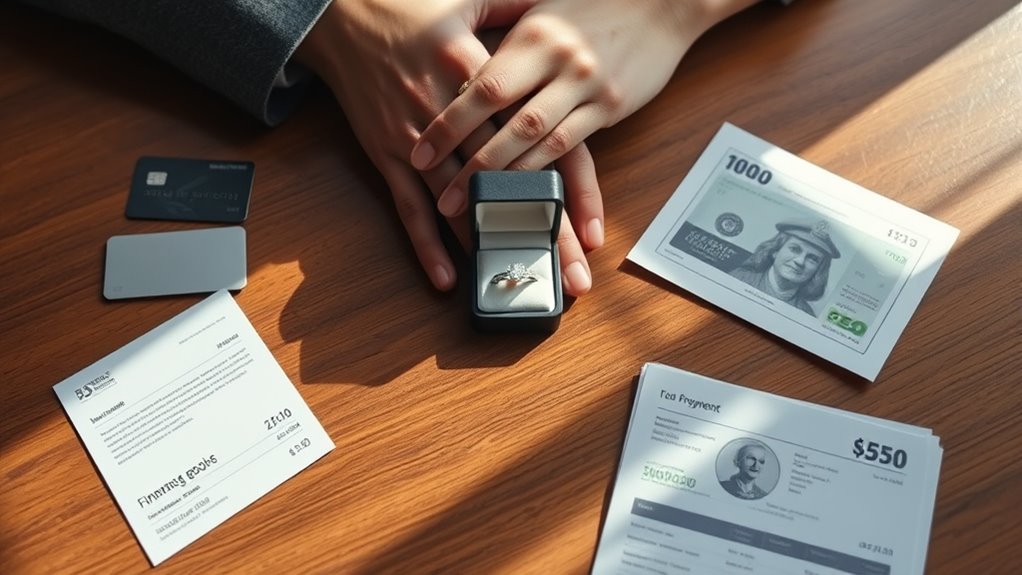
In regards to paying for an engagement ring, you’ll typically see a few common payors involved. Most often, the person proposing covers the cost, carefully setting a ring budget that fits their finances.
Sometimes, family members contribute, especially parents wanting to help with this special purchase. You might find that some jewelers offer payment plans, making it easier to manage expenses without upfront full payment.
Family members often pitch in, and payment plans from jewelers can ease the cost without full upfront payment.
These plans can be a smart choice if your ring budget is tight but you still want a quality ring. Regardless of who pays, it’s key to communicate early about finances and expectations.
That way, you avoid surprises and guarantee that the ring fits both your style and your financial comfort zone.
Couples Pooling Savings for the Ring
Although traditionally one person foots the bill, many couples today choose to pool their savings to buy the engagement ring together. This approach lets you share the financial responsibility and make decisions as a team.
By combining your funds, you can investigate a wider range of options without overstretching your individual budgets. Effective savings strategies, like setting aside a fixed monthly amount, help you stay on track.
Joint budgeting also plays a key role in aligning your financial goals and priorities. When you plan together, you’re more likely to find a ring that fits both your style and budget.
Pooling savings builds a sense of partnership right from the start, ensuring both of you feel similarly invested in this important purchase.
Parents Helping Pay for the Engagement Ring
When parents offer to help pay for the engagement ring, it can ease your financial burden and open up more options. Family contributions often reflect cultural traditions where parents see this as a meaningful way to support your new chapter.
You’ll find that this help can allow you to choose a ring that fits your style and values without stretching your budget. It’s important to have an open conversation with your parents about expectations and boundaries to guarantee everyone feels comfortable.
Accepting their support doesn’t diminish your role in the engagement; instead, it honors the shared excitement and commitment. Embracing this assistance can strengthen family bonds and make the ring-buying process less stressful and more joyful for you.
Financing Options for Your Engagement Ring
Since engagement rings often come with a significant price tag, exploring financing options can make your purchase more manageable. Many jewelers offer payment plans that break down the total cost into smaller, more affordable monthly payments. These plans let you spread out the expense without paying the full amount upfront.
However, it’s important to carefully review the interest rates associated with these plans. Some may have low or zero interest for an introductory period, while others might charge higher rates over time. Comparing offers helps you find the best deal, preventing unexpected costs.
Unexpected Payors for Engagement Rings
Financing your engagement ring can ease the immediate financial burden, but you might not be the only one contributing to the cost. Sometimes, unexpected payors step in. For instance, close friends or family members may offer to help, either by gifting money or participating in shared ownership arrangements.
This approach can spread the investment and create a meaningful bond around the ring. Furthermore, alternative financing options like peer-to-peer loans or crowdfunding platforms allow multiple contributors to assist in purchasing the ring, making it more affordable without relying solely on traditional loans.
Exploring these unexpected payors can give you more flexibility and reduce stress, letting you focus on picking the perfect ring without stretching your budget too thin.
Frequently Asked Questions
How Does Ring Insurance Work and Is It Necessary?
Ring insurance works by protecting your engagement ring against loss, theft, or damage. You’ll choose from various coverage options, like replacement cost or agreed value, based on your needs.
It’s necessary if you want peace of mind, especially for expensive rings. Ring policies often cover repairs or replacements, but always check the fine print. If you’d hate to lose your ring or pay out of pocket, insurance is a smart move.
When Is the Best Time to Buy an Engagement Ring?
The best time to buy an engagement ring is when you’ve considered timing considerations like your personal schedule and budget. Seasonal trends also play a big role. Prices often drop during off-peak months like January or September.
If you wait for holidays like Valentine’s Day or Christmas, prices might be higher. By planning ahead and shopping during slower seasons, you’ll find better deals and more options. This makes your purchase smarter and more affordable.
What Are the Most Popular Engagement Ring Styles?
Did you know 60% of engagement rings feature solitaire settings? You’ll find solitaire settings remain timeless, highlighting a single stunning stone.
Vintage styles bring romantic charm, while halo designs add sparkle around the center gem. Three stone rings symbolize past, present, and future, making them meaningful.
Colored gemstones offer a unique twist, and modern aesthetics appeal if you want sleek, contemporary looks. You’ve got plenty of stylish options to choose from!
How to Determine the Right Ring Size Secretly?
To determine the right ring size secretly, you can use clever sizing techniques like borrowing a ring your partner already wears or tracing its inner circle on paper. Measurement tools like a ring sizer or printable size charts can help you get precise measurements without raising suspicion.
You might also ask a close friend or family member for help. Just make sure to keep everything discreet until the big surprise!
Can Engagement Rings Be Customized or Redesigned?
Regarding engagement rings, you can absolutely make a silk purse out of a sow’s ear by opting for custom design or ring alterations. Whether you want to update an heirloom or create a one-of-a-kind piece, jewelers can reshape, resize, or add new elements to fit your style perfectly.
Don’t hesitate to bring your vision to life. Customizing your ring guarantees it’s as unique as your love story.
Conclusion
You might think only the person proposing pays for the engagement ring, but that’s not always true. Couples often pool their savings, and parents sometimes pitch in, easing the financial load.
Financing options make it even more accessible, while unexpected payors can surprise you. By knowing all these possibilities, you can enjoy the process without stress.
Remember, it’s about love and commitment, not just who pays, that makes the ring special. Understanding the common payors for engagement ring finances helps keep the focus on what truly matters.