How to Tell If Lab Created Gemstones Are Real
Trying to figure out if lab created gemstones are real can feel overwhelming. You’re not alone—many people struggle with telling these beautiful stones apart from natural ones.
Whether you’re shopping for jewelry or just curious, knowing what to look for can save you time and give you confidence in your purchase.
You can tell if lab created gemstones are real by checking for consistent color and fewer inclusions, often gas bubbles, using a loupe or microscope for closer inspection.
Lab gems usually have smoother surfaces and uniform saturation compared to natural stones.
Authentic stones come with certification from trusted labs like GIA or IGI, confirming their origin and quality.
Knowing these traits helps you confidently spot genuine gems.
Keep exploring to uncover more tips on identifying and verifying lab created gemstones.
Key Takeaways
- Examine the gemstone with a 10x loupe for uniform color, fewer inclusions, and possible gas bubbles that indicate lab growth. These bubbles are a key sign of man-made stones.
- Use a refractometer to measure the refractive index and compare it with known values for the specific lab-created gem. This helps confirm if the gem matches expected properties.
- Check for certification reports from reputable labs like GIA or IGI. These reports confirm authenticity and detail the gem’s characteristics.
- Purchase from certified retailers or trusted sellers who specialize in lab-created gemstones. This reduces the risk of buying counterfeits.
- Look for consistent color saturation and smooth surface reflections. Natural stones often show color variations and imperfections, so uniformity can be a clue to lab origin.
What Are Lab Created Gemstones And How Are They Made
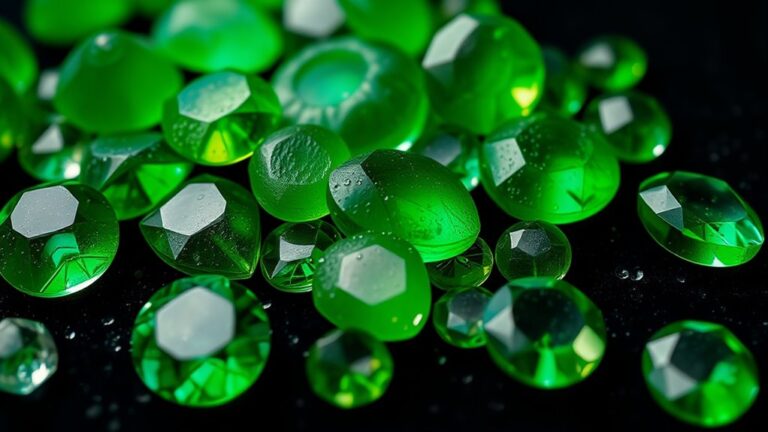
Lab created gemstones are real gems grown in controlled environments rather than mined from the earth. When you investigate their gemstone origins, you’ll find they start with the same chemical and physical properties as natural stones.
The manufacturing processes involve replicating the natural conditions under which gems form, like temperature and pressure. You might encounter methods such as the flame fusion or hydrothermal process, which grow crystals layer by layer.
These techniques guarantee the gems have the same hardness, color, and clarity as their natural counterparts. By understanding these manufacturing processes, you’ll appreciate how lab created gemstones maintain authenticity while offering a more sustainable and consistent option compared to traditional mining.
This knowledge helps you recognize the true nature of these gems.
Key Differences Between Lab Created And Natural Gemstones
While both types of gemstones share the same chemical makeup and physical properties, you’ll notice key differences in their origin, appearance, and value. Lab created gemstones originate in controlled environments, allowing for consistent quality and fewer inclusions.
Natural gemstones come from the earth, shaped by geological processes over millions of years, which often results in unique imperfections. When considering gemstone origins, lab created stones offer the advantage of ethical sourcing, avoiding the environmental damage and labor issues sometimes linked to mining.
You’ll also find natural gems tend to carry higher market value due to their rarity and natural formation. Understanding these distinctions helps you make informed choices about the gemstones you buy, balancing personal preference with ethical and financial considerations.
Common Lab Created Gemstone Imitations To Watch For
How can you spot gemstone imitations that mimic lab created stones? Knowing the common fakes helps you avoid costly mistakes. Here are three to watch for:
- Glass and Cubic Zirconia: These often carry synthetic color meant to imitate popular lab created gems but lack durability.
- Moissanite: Frequently mistaken for diamonds, moissanite’s brilliance follows current market trends as a synthetic color alternative.
- Synthetic Corundum: Lab created sapphires and rubies have imitators made from cheaper synthetic corundum with subtle differences in clarity.
Spotting Lab Created Gemstones By Appearance
When you take a close look at gemstones, you might notice that lab-created stones often have a really consistent color. They usually don’t show the natural variations you’d expect in real gems. Also, keep an eye out for inclusions and clarity—lab gems tend to have fewer imperfections, which can be a big clue. Plus, pay attention to how light bounces off the surface. Lab stones often reflect light in ways that are a bit different from natural ones.
Color Consistency Differences
Because lab-created gemstones are crafted under controlled conditions, they often exhibit unusually consistent color throughout the stone. When you examine a gemstone, pay close attention to these color consistency differences to spot lab-created stones:
- Uniform color saturation: Lab gems usually display even saturation without the subtle shifts natural stones have.
- Minimal hue variations: Natural gemstones show slight hue changes due to varying mineral content, while lab stones tend to maintain one steady hue.
- Lack of color zoning: Unlike natural stones that often have uneven patches or zones of color, lab-created gems typically have smooth, homogeneous color distribution.
Inclusions And Clarity
Although both natural and lab-created gemstones can appear flawless at first glance, you’ll often find that lab gems have fewer inclusions and higher clarity. This is because of their controlled growth environment.
When examining inclusion types, lab gems usually show gas bubbles or metallic flux. Natural stones, on the other hand, have mineral inclusions or fractures. Clarity grades reflect these differences clearly.
| Gemstone Type | Common Inclusion Types | Typical Clarity Grades |
|---|---|---|
| Natural | Mineral, fractures | I1 to VS2 |
| Lab-Created | Gas bubbles, metallic flux | VVS1 to IF |
| Synthetic | Curved growth lines | VVS to IF |
Surface Reflection Patterns
If you examine a gemstone’s surface closely, you’ll notice distinct reflection patterns that can help distinguish lab-created stones from natural ones. Lab-created gems often display a smoother surface texture due to controlled manufacturing, which affects how light interacts with the stone.
Pay attention to these key signs:
- Uniform light dispersion. Lab stones tend to reflect light evenly, creating a consistent sparkle, unlike natural stones that show varied brilliance.
- Mirror-like reflections. The surface of lab gems often appears more polished and flawless, resulting in sharper reflection patterns.
- Lack of natural surface irregularities. Natural stones usually have slight surface roughness or etching, which disrupts reflection patterns.
Test Lab Created Gems With A Loupe Or Microscope
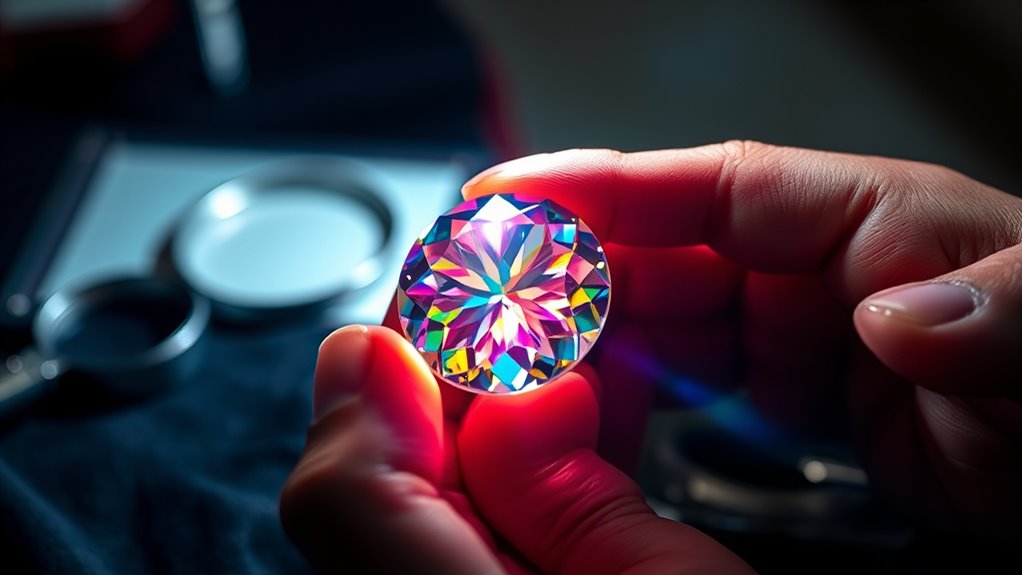
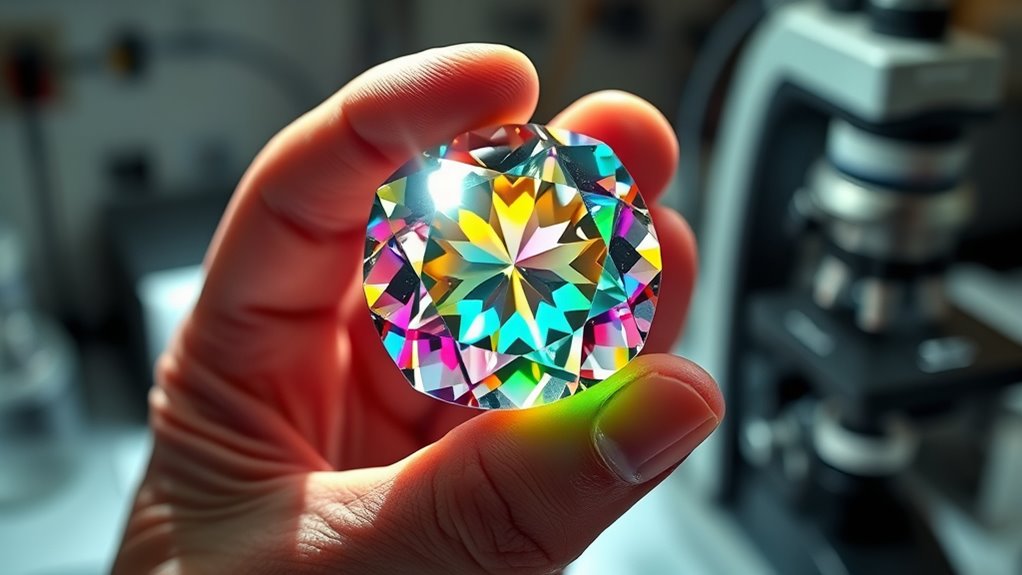
When you examine lab-created gemstones with a loupe or microscope, you can uncover details that reveal their synthetic origins. Using loupe techniques, you’ll often spot telltale signs like curved growth lines or gas bubbles, which natural stones rarely have.
A standard 10x loupe is handy for quick inspections, helping you check inclusions and surface features. Meanwhile, microscope benefits include much higher magnification and better lighting, allowing you to see internal structures clearly.
This can show you the uniformity and patterns unique to lab-grown gems. By combining both tools, you gain a thorough understanding of the gem’s makeup. These close-up views give you a reliable way to distinguish lab-created stones from natural ones without needing complex equipment.
Using A Refractometer To Check Lab Created Gems
After examining a gemstone with a loupe or microscope, you can take your analysis further by using a refractometer. This tool measures the refractive index, a key property that helps distinguish real from lab created gems. Here’s how to use it for gemstone testing:
- Place a drop of refractive index liquid on the refractometer’s prism.
- Position the gemstone on the liquid, ensuring it’s stable and well-seated.
- Look through the eyepiece and read the refractive index value displayed.
Lab created gems often have consistent, known refractive indices. If your measurement matches the expected range for the gemstone type, it’s a good sign it’s genuine or a high-quality lab creation. This method offers quick, reliable insights during your gemstone testing.
How UV Light Reveals Lab Created Gemstone Features
Ultraviolet (UV) light serves as a powerful tool to reveal unique features in lab created gemstones that you might not see under normal lighting. When you expose these gems to UV light, they often exhibit distinct reactions, such as glowing or changing colors.
This happens because lab created stones tend to have different chemical compositions or trace elements compared to natural ones. These differences make UV light a handy way to spot certain characteristics quickly.
Where To Buy Verified Lab Created Gemstones Safely
To make sure you’re getting genuine lab created gemstones, stick to buying from certified retailers or trusted online marketplaces. It’s always a good idea to ask for verification and proper documentation when you make your purchase. That way, you can shop with confidence and not have to worry about whether your gemstone is authentic.
Certified Retailers Only
When you’re ready to buy lab created gemstones, choosing certified retailers guarantees you get verified, high-quality stones. Certified retailers provide assurance of gemstone authenticity through strict verification processes and reliable sourcing. Here’s why you should buy from them:
- Certification Verification They supply gemstones accompanied by recognized certificates proving authenticity and quality.
- Expert Guidance Staff are knowledgeable and can explain the origin, properties, and care of lab created gems.
- Return Policies Certified retailers offer clear return and exchange policies, protecting your purchase.
Trusted Online Marketplaces
Buying from certified retailers gives you confidence in the quality and authenticity of lab created gemstones. When shopping online, focus on trusted sellers who specialize in lab created gems to avoid counterfeit products.
Check marketplace reviews carefully. These provide real feedback about sellers’ reliability, customer service, and product accuracy. Look for platforms that verify their sellers and offer clear return policies to protect your purchase.
Avoid deals that seem too good to be true, as they often indicate lower-quality or fake stones. By choosing reputable online marketplaces with strong reputations, you guarantee you’re investing in genuine lab created gemstones.
This approach saves you time and protects your money, letting you enjoy your purchase worry-free.
Verification And Documentation
Although lab created gemstones are becoming more common, you should always verify their authenticity through proper documentation before making a purchase. Verification methods help ascertain you’re buying a genuine lab created gem rather than a synthetic or treated stone sold without disclosure.
Here’s how to safely buy verified gemstones:
- Request a certification report from reputable gemological labs, such as GIA or IGI, which confirms the gemstone’s origin and quality.
- Check the documentation importance by confirming it includes details like carat weight, cut, and treatment history.
- Buy from trusted sellers who provide transparent verification methods and allow you to review all paperwork before finalizing the sale.
Following these steps protects your investment and guarantees you’re getting authentic lab created gemstones.
How To Use Certification To Confirm A Gem’s Authenticity
How can you be certain that a lab-created gemstone is truly what it claims to be? The key lies in gemstone grading reports issued by trusted certification bodies. These organizations use standardized testing methods to evaluate the stone’s characteristics, such as cut, clarity, color, and carat weight.
When you request certification, you get an independent expert’s confirmation that the gem matches the description and quality claimed by the seller. Always verify that the certification body is reputable. Look for well-known names like GIA or IGI.
This documentation not only confirms authenticity but also provides detailed information about the gem’s origin and treatment. By relying on certification, you protect yourself from misrepresentation and guarantee your lab-created gemstone is genuine.
Smart Tips To Avoid Fake Lab Created Gemstones When Shopping
When you’re shopping for lab created gemstones, make sure to always check the certification—it’s the best way to be sure the gem is genuine. Take a good look at the stone’s visual features, too, and watch out for anything that seems off.
And if you’re ever in doubt, don’t hesitate to reach out to reputable jewelers. They can help steer you toward authentic, high-quality stones.
Verify Certification Authenticity
Where can you find reliable proof that a lab-created gemstone is genuine? Start by verifying its certification authenticity. Genuine gemstones come with certifications issued by trusted certification bodies.
Here’s how you can confirm authenticity:
- Check the certification body: Make sure it’s a recognized authority in gem grading, like GIA or IGI.
- Verify the certificate number: Use the certifier’s online database to confirm the number matches the gemstone.
- Review the gem grading report: Confirm the details align with the stone’s characteristics.
Don’t settle for uncertified stones or vague certificates. Certification bodies provide unbiased verification, giving you confidence in your purchase.
Always ask for official documentation and cross-check it carefully to avoid fake lab-created gemstones. This step is essential before moving on to visual examinations.
Examine Visual Characteristics
Although certification provides essential proof, you’ll still want to examine the gemstone’s visual characteristics carefully to spot any inconsistencies. Start by observing the color saturation. Lab created gemstones usually have vibrant, even hues without dull patches or overly intense spots. Natural stones often show subtle variations.
Next, check the optical properties like brilliance and light reflection. Lab stones tend to have consistent sparkle and clarity under different lighting, while fakes may appear dull or too glassy. Use a loupe or magnifying glass to look for inclusions. Lab gems often have distinct, tiny patterns compared to natural flaws.
Consult Reputable Jewelers
Finding a trustworthy jeweler is one of the smartest moves you can make to avoid fake lab created gemstones. When you consult reputable jewelers, you tap into their expertise on gemstone grading and adherence to industry standards. Here’s what you should do:
- Verify their credentials and experience with lab created stones.
- Ask about their certification process to confirm gemstones meet recognized grading standards.
- Request detailed documentation that proves the gemstone’s origin and quality.
Reputable jewelers won’t hesitate to provide transparent information or allow independent verification. You’ll feel more confident knowing your gemstone meets industry standards, reducing the risk of buying fakes. Don’t settle for less. Always choose jewelers who prioritize honesty and quality to protect your investment.
Frequently Asked Questions
Can Lab Created Gemstones Have the Same Durability as Natural Ones?
Yes, lab created gemstones can have the same durability as natural ones. When you do a durability comparison, you’ll find that many lab created gems match or even exceed natural stones in gemstone hardness.
Since they’re made under controlled conditions, they often have fewer impurities and flaws, which can improve their toughness. So, don’t worry about durability. Lab created gems hold up just as well in everyday wear.
Do Lab Created Gemstones Affect the Resale Value of Jewelry?
Yes, lab created gemstones can affect the resale value of jewelry, often lowering it compared to natural stones. In the resale market, consumer perception plays a big role. Many buyers still prefer natural gems and may be willing to pay more for them.
However, as lab created stones gain popularity for their ethical and affordable qualities, you might see shifting attitudes. This could improve their value over time.
Are Lab Created Gemstones More Environmentally Friendly Than Mined Stones?
You’ll be interested to know lab-created gemstones use up to 90% less water and energy compared to mined stones. That means you get real sustainability benefits when choosing them.
Plus, they offer ethical sourcing since no mining is involved, avoiding environmental destruction and labor issues. So if you care about the planet and fair practices, lab-created gems are definitely a more eco-friendly and responsible choice for your jewelry.
Can Lab Created Gemstones Be Used in All Types of Jewelry Settings?
Yes, you can use lab created gemstones in all types of jewelry settings. Their excellent setting compatibility means they fit well in rings, necklaces, bracelets, and earrings.
Plus, lab gems often offer consistent color variations, so you can find the perfect shade to match your design. Whether you want a classic look or something bold, these gems provide versatility without compromising beauty or durability in any setting.
How Do Insurance Companies Appraise Lab Created Gemstones?
Insurance companies conduct an insurance evaluation by examining your lab created gemstones’ authenticity through certification and professional grading reports. They’ll assess factors like cut, color, clarity, and carat weight, just like with natural gems.
You’ll want to provide detailed documentation to guarantee accurate appraisals. Since lab created gems hold value differently, insurers adjust coverage accordingly, so staying informed helps you get the right protection for your jewelry investment.
Conclusion
Now that you know how lab created gemstones are made, how to spot their key differences, and where to buy them safely, you’re ready to shop smart. You can examine gems with a loupe, check for UV light features, and rely on certification to confirm authenticity.
Don’t just guess; test, compare, and verify. By staying informed, staying cautious, and staying confident, you’ll always choose real, beautiful lab created gemstones.