Is a Lab Grown Diamond Real?
Finding the perfect diamond can feel overwhelming, especially when you want a beautiful stone that’s also ethical and affordable. You’re not alone—many people struggle to choose between natural and lab grown diamonds without knowing the real differences.
Yes, a lab grown diamond is real. You’re getting a genuine diamond made of pure carbon with the same crystal structure and sparkle as natural stones. Created using advanced methods like HPHT or CVD, these diamonds match natural ones in durability and beauty, often with fewer imperfections.
While they can be tough to distinguish without special tools, their ethical and environmental benefits make them a smart choice.
To understand more about their value and uses, keep exploring what sets them apart.
Key Takeaways
- Lab grown diamonds are real diamonds, chemically and physically identical to natural diamonds. They’re composed of pure carbon arranged in the same crystal structure.
- Created using HPHT or CVD methods, lab grown diamonds mimic how natural diamonds form but under controlled conditions.
- Visually, lab grown diamonds look just like natural ones and have the same sparkle, fire, and durability.
- They often have fewer inclusions, which means they usually have higher clarity compared to many natural diamonds.
- Specialized testing can tell them apart, but these differences don’t affect their authenticity or basic diamond properties.
What Is a Lab Grown Diamond and How Is It Made
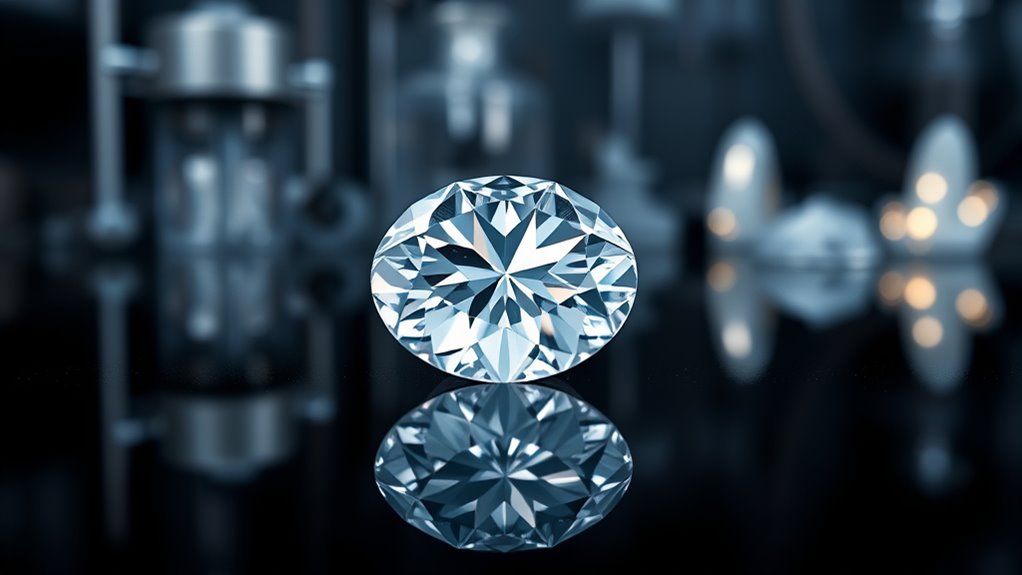
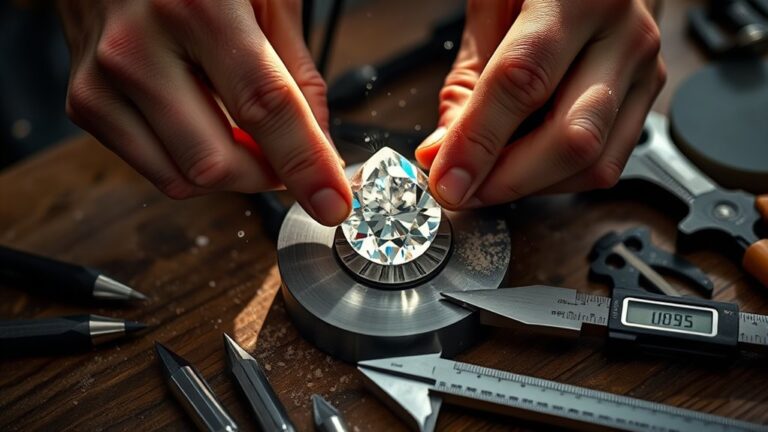
A lab grown diamond is a real diamond created in a controlled environment rather than mined from the earth. You’ll find two main diamond creation methods: High Pressure High Temperature (HPHT) and Chemical Vapor Deposition (CVD).
Both mimic natural conditions but in a lab setting. HPHT uses intense pressure and heat to form the diamond, while CVD builds it layer by layer from carbon-rich gas. These lab diamond types produce stones that match natural diamonds in sparkle and durability.
When you choose a lab grown diamond, you’re getting a genuine gem formed through advanced technology rather than geological processes. Understanding these methods helps you appreciate how carefully crafted and authentic these diamonds truly are.
Are Lab Grown Diamonds Chemically Identical to Natural Diamonds?
You might be wondering if lab grown diamonds are chemically the same as natural ones. Well, the truth is, their chemical makeup is pretty much identical — both are made of pure carbon. That said, there can be some subtle differences in their structure because of the way they form.
Chemical Composition Comparison
Although lab grown diamonds form under controlled conditions, their chemical composition matches that of natural diamonds exactly. You’ll find both contain pure carbon atoms arranged in the same crystal lattice, which means their chemical properties are indistinguishable.
During diamond formation, whether deep underground or in a lab, carbon atoms bond in a tetrahedral structure, giving both types identical chemical signatures. This means you can’t tell them apart by chemical analysis alone.
Structural Similarities and Differences
When you examine lab grown and natural diamonds under a microscope, you’ll find their crystal structures appear nearly identical. Both feature the same tightly bonded carbon atoms arranged in a tetrahedral lattice. This shared arrangement guarantees that lab grown diamonds possess the same structural integrity as natural ones, making them just as durable and resilient.
You’ll also notice that diamond clarity in lab grown stones can be impressive, often surpassing natural diamonds because controlled growth conditions reduce inclusions and imperfections. However, subtle differences in trace elements or growth patterns can sometimes distinguish them under advanced testing. These don’t affect their fundamental structural properties.
Ultimately, whether natural or lab grown, both types of diamonds exhibit the same core structure that defines their brilliance and strength.
How Do Lab Grown Diamonds Compare Visually to Mined Diamonds?
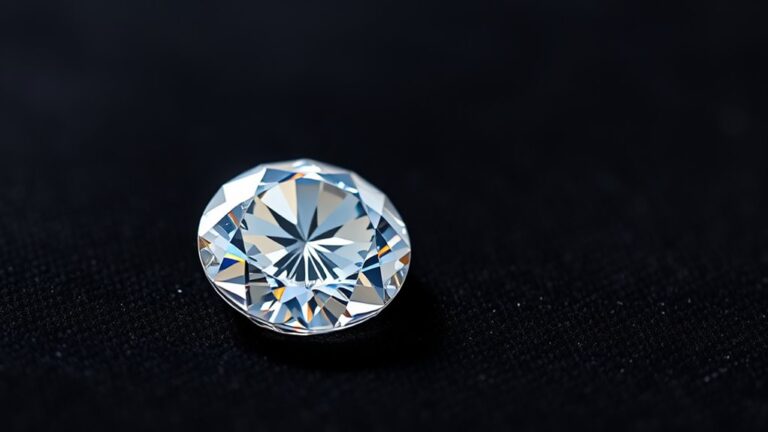
How closely can you tell the difference between a lab grown diamond and a mined diamond just by looking? In most cases, you can’t. Lab grown diamonds match mined ones in visual clarity and aesthetic appeal, often appearing flawless to the naked eye.
Both types reflect light brilliantly, showcasing the same sparkle and fire that make diamonds so enchanting. While minor inclusions might exist, lab grown diamonds are frequently produced with fewer imperfections, enhancing their visual clarity.
When set in jewelry, they offer equal beauty and elegance, making it tough for anyone to distinguish between the two without specialized tools. So, if you’re choosing based on looks alone, a lab grown diamond stands shoulder to shoulder with a natural diamond in every way.
Why Do Some People Doubt Lab Grown Diamond Authenticity?
Why do some people hesitate to accept lab grown diamonds as genuine? It often comes down to perception issues and authenticity concerns. You might notice a societal stigma that favors natural stones, creating a tradition conflict where mined diamonds hold more emotional value.
Marketing strategies sometimes emphasize rarity, which can make lab grown diamonds seem less authentic. Without proper consumer education, you may struggle to understand how gemological standards certify lab grown diamonds just like natural ones. This lack of awareness fuels doubts and skepticism.
While lab grown diamonds are chemically and visually identical to mined ones, the emotional and cultural attachments to natural diamonds often overshadow their scientific equivalence. This causes you and others to question their authenticity despite clear evidence.
How Can You Tell if a Diamond Is Lab Grown or Natural?
Can you easily spot the difference between a lab grown diamond and a natural one? In most cases, you can’t just by looking. Both types share the same physical and chemical properties, making it tricky to distinguish them without specialized tools.
That’s where diamond identification techniques come in. Experts use advanced equipment to analyze growth patterns and trace elements unique to lab-grown diamonds. Lab diamond testing often involves spectroscopy and fluorescence analysis, which reveal subtle differences invisible to the naked eye.
If you want to be sure about your diamond’s origin, asking for lab certification or having it tested by a professional gemologist is essential. These methods provide reliable results, helping you confidently tell whether your diamond is lab grown or natural.
Environmental and Ethical Benefits of Choosing Lab Grown Diamonds
Although lab grown diamonds look just like natural ones, they offer significant environmental and ethical advantages. When you choose lab grown diamonds, you support eco-friendly benefits by reducing mining impacts like habitat destruction and water pollution. You also help promote ethical sourcing, avoiding the human rights issues tied to some mined diamonds.
Here’s a quick look at key benefits:
| Environmental Benefits | Ethical Benefits |
|---|---|
| Less land disruption | Conflict-free sourcing |
| Lower carbon footprint | Transparent supply chain |
| Reduced water use | Fair labor practices |
Lab Grown Diamonds: Market Value and Resale Insights
You’ll want to get a good sense of how lab grown diamonds are valued in today’s market and what can impact their resale price. It’s important to know these factors because they help you figure out whether they’re a smart investment. So, let’s take a closer look at what affects their value and how they hold up over time.
Current Market Trends
Lab grown diamonds have rapidly gained traction, capturing about 10-15% of the diamond market in recent years. You’ll notice that market demand is steadily rising as more buyers prioritize ethical sourcing and affordability.
Consumer preferences are shifting too, with many valuing sustainability and transparency over traditional status symbols. This shift has encouraged jewelers to expand lab grown selections, offering you more variety at competitive prices.
Furthermore, advancements in technology are improving the quality and size of lab grown diamonds, making them even more appealing. If you’re considering a diamond purchase, it’s clear that lab grown options align well with current trends, combining beauty, ethics, and value in a way that’s reshaping the market landscape.
Resale Value Factors
When considering a diamond purchase, understanding resale value factors is essential, especially for lab grown diamonds. You’ll face resale challenges because the market often values lab grown stones lower than natural ones.
Market perceptions still lean toward natural diamonds as more “authentic,” which impacts how much you can resell your lab created diamond for. Consumer preferences also play a big role; many buyers prioritize natural stones, limiting demand for lab grown options.
These factors contribute to potential investment risks, as lab grown diamonds may not hold or increase their value over time like natural diamonds might. Knowing these resale dynamics helps you make an informed choice that aligns with your financial and personal goals.
Investment Potential Analysis
How does the investment potential of lab grown diamonds compare to natural ones? Unlike natural diamonds, lab grown diamonds face higher investment risks due to market instability and rapid technological advancements. Their prices tend to drop more quickly since production costs decrease as technology improves.
If you’re considering lab grown diamonds for investment, be aware that market stability is limited, and resale values can fluctuate greatly. Natural diamonds, in contrast, have a long history of maintaining value because of their rarity and established demand.
While lab grown diamonds offer affordability and ethical appeal, they’re less reliable for long-term financial growth. You should weigh these investment risks carefully and not rely on lab grown diamonds as a primary asset for wealth preservation.
Can Lab Grown Diamonds Be Used in Engagement Rings and Fine Jewelry?
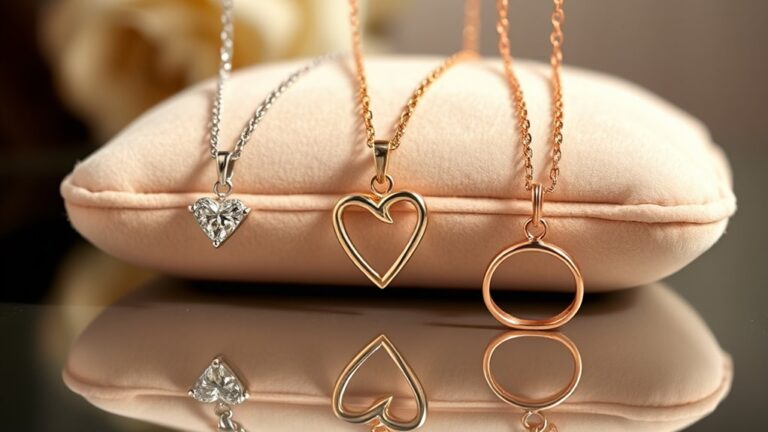
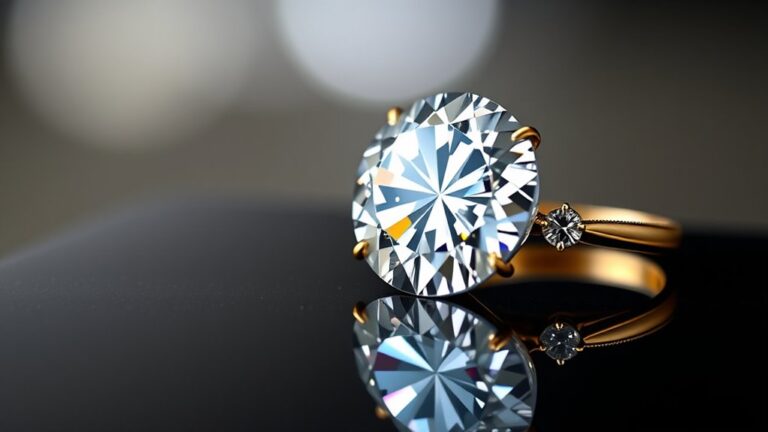
Why choose a diamond grown in a lab for your engagement ring or fine jewelry? Lab grown diamonds fit perfectly with current engagement ring trends, offering you a brilliant, sustainable alternative that doesn’t compromise on beauty or quality.
You can confidently use them in any piece, from classic solitaires to intricate designs. Plus, lab diamonds give you more freedom with jewelry customization, as their lower price allows you to invest in bigger stones or unique settings without stretching your budget.
Whether you want a vintage-inspired ring or a modern pendant, lab grown diamonds provide the versatility and sparkle you expect. So, if you’re aiming for ethical choices and stunning results, these diamonds are an excellent option for your special jewelry pieces.
How to Choose Between Lab Grown and Natural Diamonds
Deciding between lab grown and natural diamonds comes down to what matters most to you, whether it’s budget, ethical considerations, or the unique story behind your stone. Diamond trends and consumer preferences have shifted, making lab grown diamonds an attractive option for many. To help you decide, here’s a quick comparison:
| Factor | Lab Grown Diamonds | Natural Diamonds |
|---|---|---|
| Price | More affordable | Generally more expensive |
| Ethical Impact | Environmentally friendly | Mining concerns |
| Unique Story | Modern creation | Natural origin with history |
Consider what aligns best with your values and lifestyle. Whether you prioritize eco-friendliness or a traditional legacy, understanding these differences will guide you toward the perfect diamond choice.
Tips for Buying Lab Grown Diamonds Online and In-Store
When you’re buying a lab grown diamond, it’s super important to always verify the certification. This way, you can be sure you’re getting the real deal. You’ll also want to take some time to compare prices and quality carefully—after all, you want the best value for your money. And don’t forget to check the return policies before making your final decision. It’s always good to know your options just in case.
Verify Certification Authenticity
How can you be confident that the lab grown diamond you’re considering is truly authentic? Start by checking the certification carefully. Reputable sellers provide certificates from labs that follow strict certification standards, such as IGI or GIA, which confirm the diamond’s origin and quality.
You should verify authenticity by reviewing the certificate’s details, including the diamond’s measurements, clarity, color, and cut. Cross-check the certificate number on the issuing lab’s official website to confirm it matches the stone you’re buying.
Avoid sellers who can’t provide or won’t disclose certification, as this raises red flags. Authenticity verification protects you from counterfeit or misrepresented diamonds and guarantees you’re investing in a genuine lab grown gem. Always demand proper certification before making your purchase.
Compare Price And Quality
Comparing price and quality is essential to getting the best value for your lab grown diamond, whether you shop online or in-store. Start with a thorough price comparison by checking multiple sellers to understand the market range for diamonds with similar characteristics.
Don’t just focus on the lowest price; consider the quality assessment carefully. Look closely at the diamond’s cut, color, clarity, and carat weight since these factors directly impact its appearance and durability.
Online listings often provide detailed grading reports, making quality assessment easier, while in-store shopping lets you inspect the diamond firsthand. By balancing price comparison with a solid quality assessment, you guarantee you’re not sacrificing brilliance or durability for cost.
This approach helps you make an informed decision and get the most value from your purchase.
Check Return Policies
After weighing price and quality, your next step should be to review the return policies of potential sellers. Return policy considerations are essential because they directly impact your customer satisfaction. You want to feel confident that if the diamond doesn’t meet your expectations, you can return or exchange it without hassle. Before purchasing, check for clear terms to avoid surprises later.
Consider these points:
- Duration of the return window. Longer periods offer more flexibility
- Conditions for returns. Whether the diamond must be unused or in original packaging
- Restocking fees or other charges that might apply
- How refunds are processed and the time frame involved
Frequently Asked Questions
Do Lab Grown Diamonds Have Different Hardness Levels Than Natural Diamonds?
You’ll find that lab grown diamonds have the same hardness level as natural diamonds, making the hardness comparison pretty equal. Both score a 10 on the Mohs scale, so you won’t notice a difference in scratch resistance.
When considering durability factors, things like cut quality and setting play a bigger role than whether the diamond is lab grown or natural. So, your durability concerns shouldn’t change between the two.
Are Lab Grown Diamonds Safe to Wear for People With Metal Allergies?
In terms of wearing lab grown diamonds, you’re generally safe if you have metal allergies. These gems themselves won’t cause skin reactions. However, the jewelry materials, like the metal setting, can be the real culprit.
To avoid irritation, choose hypoallergenic options such as platinum or titanium. Don’t let a small detail rain on your parade; picking the right metal guarantees you can enjoy your sparkling diamond without worry.
How Long Do Lab Grown Diamonds Take to Produce?
Lab grown diamonds usually take a few weeks in production time. The manufacturing process involves replicating natural conditions using either High Pressure High Temperature (HPHT) or Chemical Vapor Deposition (CVD) methods.
You’ll find that CVD can take around two to four weeks, while HPHT might be slightly faster. Both processes carefully control temperature and pressure to create high-quality diamonds, so you’re getting a genuine stone in a relatively short amount of time.
Can Lab Grown Diamonds Be Insured Like Natural Diamonds?
Yes, you can insure lab grown diamonds just like natural ones. In fact, 65% of jewelers report that insurance policies now specifically cover lab grown stones because they’re becoming more popular.
When you’re considering insurance, it’s smart to understand the value comparison. Lab grown diamonds often cost less upfront, so your premiums might be lower. Still, make sure your policy reflects the replacement value accurately to protect your investment fully.
Do Lab Grown Diamonds Affect Diamond Grading Reports or Certifications?
Lab grown diamonds do affect grading reports and certification processes, but not negatively. You’ll notice grading differences mainly because labs clearly state whether a diamond is natural or lab grown.
Certification processes now include specific details about origin to maintain transparency. When you get a grading report, it’ll highlight these distinctions, ensuring you know exactly what you’re buying.
Conclusion
Choosing a lab grown diamond means embracing a gem that’s beautifully crafted by science, offering all the sparkle without the traditional baggage. While some may hold onto old-fashioned ideas, you can enjoy a brilliant, ethical choice that shines just as brightly.
Whether for love or style, lab grown diamonds bring a fresh perspective to timeless elegance. It’s proof that sometimes, the heart knows best when it comes to what’s truly real—especially when it’s a lab grown diamond.