6 Countries That Wear Wedding Rings on the Right Hand
Choosing the perfect wedding ring can be confusing, especially when you want to respect cultural traditions but aren’t sure which hand to wear it on. You’re not alone—many people struggle with understanding the significance behind wearing wedding rings on the right hand versus the left.
If you’ve ever wondered why some countries prefer the right hand, this guide will clear things up for you.
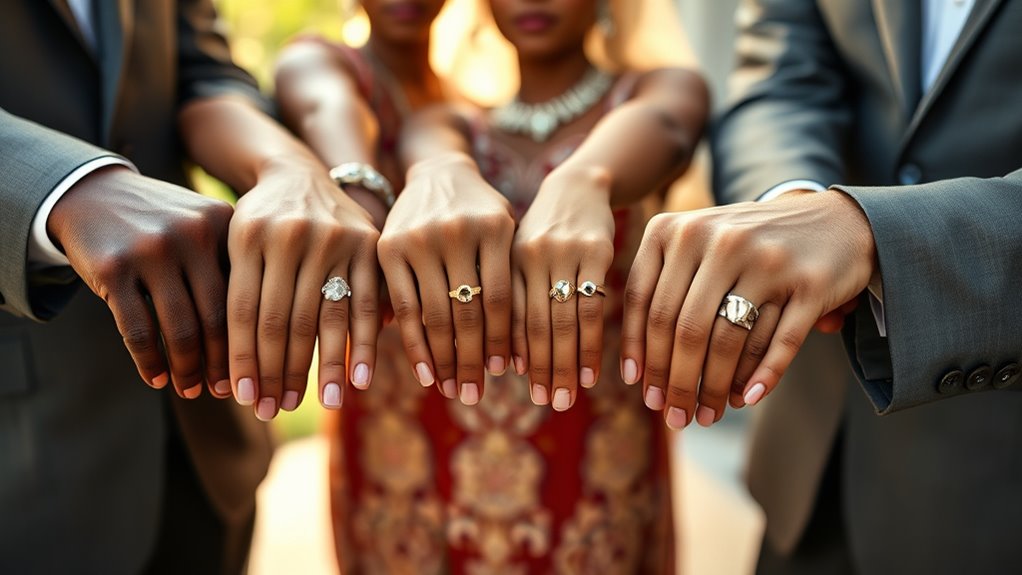
If you’re curious about countries where wedding rings go on the right hand, you’ll find this tradition in Germany, Austria, Spain, Portugal, Russia, and Colombia.
Wearing rings on the right hand symbolizes strength, loyalty, and cultural identity in these places. It reflects deep-rooted customs and unique marital meanings, from Orthodox ceremonies in Russia to engagement practices in Latin America.
Keep exploring, and you’ll uncover even more fascinating stories behind these meaningful traditions.
Key Takeaways
- Germany and Austria traditionally wear wedding rings on the right hand, symbolizing strength, commitment, and cultural heritage.
- Spain and Portugal exchange wedding rings on the right hand, reflecting unity and visible marital status.
- Russia uses the right hand for wedding rings, linked to Orthodox Christian rites and historical customs of protection and oaths.
- Colombia places engagement rings on the right hand before marriage, switching to the left hand after the wedding ceremony.
- Many Latin American countries follow right-hand wedding ring customs, emphasizing commitment and regional cultural identity.
Reasons Some Cultures Use the Right Hand for Wedding Rings
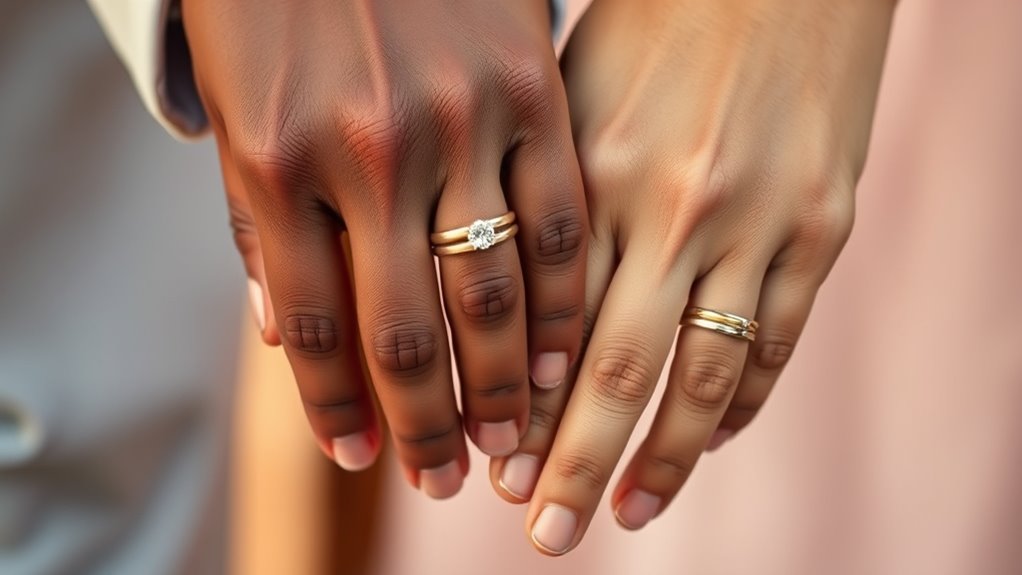
Although many people associate wedding rings with the left hand, several cultures choose the right hand for deep symbolic reasons. When you wear your wedding ring on the right hand, you’re often embracing a strong sense of cultural identity that connects you to traditions passed down through generations.
In some societies, the right hand symbolizes strength, honor, or faithfulness, making it a meaningful choice for a wedding ring. You might also find that wearing the ring on your right hand reflects your personal choice, expressing your values or beliefs rather than following popular trends.
Ultimately, whether you follow cultural customs or make a deliberate personal decision, placing your wedding ring on the right hand can carry powerful significance and affirm your commitment in a unique way.
Wedding Ring Traditions in Germany and Austria
In Germany and Austria, wearing wedding rings on the right hand has a rich cultural meaning that’s deeply rooted in tradition. This isn’t just a random choice — it goes back centuries. These customs have been passed down through generations, carrying a lot of history with them.
When you learn about where this practice started, it’s easier to see why the right hand is preferred over the left. It’s all about symbolism and honoring long-standing cultural values. So, next time you notice someone wearing their wedding ring on the right hand in these countries, you’ll understand the story behind it.
Cultural Significance Explained
When you investigate wedding ring customs in Germany and Austria, you’ll notice they wear their rings on the right hand. This symbolizes strength and commitment. These cultural variations highlight how regional differences influence traditions deeply.
In some areas, the right hand signifies the “true” bond. It reflects personal and social values unique to those cultures.
| Emotion | Meaning |
|---|---|
| Pride | Wearing rings on the right hand shows confidence in the union. |
| Unity | It represents the unbreakable connection between partners. |
| Respect | Shows honor for cultural heritage and family traditions. |
| Strength | Symbolizes the strength and durability of the marriage bond. |
Understanding these nuances helps you appreciate why the right hand holds such significance in these countries.
Historical Origins and Practices
Since wedding rings in Germany and Austria are traditionally worn on the right hand, you might wonder how this custom began. These cultural variations stem from deep historical influences tied to symbolism and regional beliefs. Historically, the right hand represented strength and honor, making it the preferred choice for wedding rings.
This practice also reflects religious and legal traditions unique to these countries. Over time, these influences have solidified the right hand as the norm for wedding rings.
Key historical influences include:
- Roman traditions associating the right hand with oaths
- Christian symbolism emphasizing the right hand’s sanctity
- Legal customs defining marriage contracts
- Regional cultural identity reinforcing the practice
- Resistance to Western European left-hand customs
Understanding these historical origins helps you appreciate the rich cultural variations behind this tradition.
Wedding Ring Customs in Spain and Portugal
Although wedding ring customs vary worldwide, Spain and Portugal share a distinctive tradition of wearing wedding rings on the right hand. When you investigate Spanish engagements, you’ll notice that couples often exchange rings on the right hand during the ceremony, symbolizing commitment and unity. This practice reflects deep cultural roots and is a visible sign of marital status in Spain.
In Portugal, celebrations also emphasize wearing the wedding ring on the right hand, following a similar symbolic meaning. You’ll find that during Portuguese celebrations, the right hand ring signifies the official bond between spouses and honors longstanding customs. By wearing the wedding ring on your right hand, you adopt a tradition that highlights your connection to these rich Iberian cultures.
Wedding Ring Traditions in Russia
In Russia, wedding rings are worn on the right hand, and there’s a deep historical meaning behind this tradition that you might find really interesting. These rings don’t just stand for marital commitment—they also represent important cultural values connected to faith and family. Plus, if you pay attention, you’ll see some unique ceremony customs that really bring these meaningful traditions to life.
Historical Significance Explained
When you investigate wedding ring traditions in Russia, you quickly see why the right hand holds such importance. This practice reflects deep cultural variations and the symbolism evolution tied to history and religion. Over centuries, the right hand became a symbol of strength, honor, and commitment in Russian society.
You’ll notice these key historical factors:
- Orthodox Christian rites emphasize the right hand for blessings
- Medieval customs linked the right hand to oath-taking
- Tsarist era formalized the tradition in marriage ceremonies
- Folk beliefs associated the right hand with protection
- Soviet influences preserved, yet subtly altered, the practice
Understanding this historical significance helps you appreciate why wearing wedding rings on the right hand remains a meaningful tradition in Russia today.
Cultural Symbolism And Meaning
The wedding ring on the right hand in Russia carries more than just ornamental value. It embodies deep cultural symbolism tied to identity, loyalty, and spiritual connection. When you wear your ring on this hand, you’re participating in centuries of cultural expressions that reflect commitment and respect.
The symbolic meanings extend beyond the individual, representing unity and shared values within the community.
| Symbolic Meaning | Cultural Expression | Emotional Significance |
|---|---|---|
| Loyalty | Ring worn on right hand | Trust and faithfulness |
| Spiritual bond | Orthodox Christian tradition | Connection to divine |
| Identity | National customs | Pride in heritage |
Understanding these layers helps you appreciate why the right hand is more than tradition. It’s a living symbol of Russian cultural identity.
Ceremony Practices And Customs
Appreciating the cultural symbolism of wearing a wedding ring on the right hand gives you clearer insight into the wedding ceremonies themselves. In Russia, wedding rituals emphasize the deep ring symbolism tied to commitment and unity.
When you participate in these ceremonies, you’ll notice the right hand serves as a powerful symbol of fidelity. Key practices include exchanging rings during the civil or church ceremony on the right hand, blessing rings by the priest to invoke protection, and wearing the ring on the ring finger, which symbolizes eternal love.
The ring exchange is incorporated into traditional vows and blessings, and celebrations often include family rituals that honor heritage and commitment. These customs highlight how ring symbolism is woven into Russia’s wedding rituals, making the right hand ring a meaningful emblem of marriage.
What Right-Hand Rings Mean in Indian Weddings
Although many cultures favor the left hand for wedding rings, Indian weddings often place significant meaning on rings worn on the right hand. In Indian symbolism, the right hand is associated with strength, honor, and destiny.
When you wear your wedding ring on the right hand, you’re embracing these values, signaling commitment and respect within your marriage. The right hand significance also ties to religious and cultural beliefs, as many Hindu rituals emphasize the right side as auspicious.
Wedding Ring Traditions in Colombia and Latin America
When you attend weddings in Colombia and much of Latin America, you’ll notice couples often wear their wedding rings on the right hand. This tradition reflects deep-rooted Latin American symbolism, where the right hand signifies strength, fidelity, and commitment.
During a Colombian engagement, the groom frequently places the ring on the right hand, symbolizing the promise before moving it to the left after marriage. Understanding these customs helps you appreciate the cultural significance behind the gesture.
Key points about right-hand wedding rings in Colombia and Latin America:
- Right hand symbolizes loyalty and protection
- Colombian engagement rings often start on the right hand
- Rings can shift hands after the wedding ceremony
- Tradition varies slightly by country but shares core symbolism
- Wearing rings on the right hand reflects regional identity and values
Frequently Asked Questions
Do Men and Women Both Wear Rings on the Right Hand?
Yes, both men and women wear rings on the right hand in many cultures. You’ll find this practice carries deep cultural significance, symbolizing commitment or marital status differently across societies.
Historical variations show that while some cultures prefer the left hand, others choose the right to honor tradition or religious beliefs. Understanding these nuances helps you appreciate why the right hand becomes the chosen symbol of love and unity.
How Did the Tradition of Left-Hand Rings Start?
The tradition of wearing wedding rings on the left hand started because of its cultural significance tied to ancient beliefs. People believed the left hand’s ring finger had a vein, called the “vena amoris,” directly connected to the heart, symbolizing love.
Its historical origins trace back to Roman times, where this symbolic gesture represented commitment and affection. So, when you wear a ring on your left hand, you’re continuing a meaningful tradition steeped in history.
Are There Specific Metals Preferred for Right-Hand Wedding Rings?
Imagine Maria from Poland choosing her right-hand wedding ring. You’ll find metal preferences vary widely, often tied to cultural significance.
For example, gold symbolizes wealth and tradition in many cultures, making it a popular choice. However, some prefer silver or platinum for their durability and modern appeal.
When picking your ring, consider what metals resonate with your culture and personal style to honor both tradition and your unique story.
Can Engagement Rings Be Worn on the Right Hand?
Yes, you can definitely wear engagement rings on your right hand. Many people choose this depending on their cultural significance or personal preference.
Engagement ring styles vary widely, from classic solitaires to modern designs, and wearing them on the right hand can highlight your unique style. This choice often reflects traditions or meanings specific to your background, so don’t hesitate to express yourself by wearing your engagement ring where it feels most meaningful to you.
Do Right-Hand Rings Symbolize Different Meanings in Various Religions?
You might recall how a simple ring can tell a thousand stories. Yes, right-hand rings do carry different meanings across religions. Their cultural significance varies. Some see them as symbols of faith, commitment, or protection.
For instance, in Orthodox Christianity, the right hand signifies honor and truth, while in Hindu traditions, it reflects auspiciousness. Understanding these religious variations helps you appreciate how deeply personal and meaningful right-hand rings truly are.
Conclusion
Now that you know why some cultures wear wedding rings on the right hand, you can see it’s more than just tradition. It’s a symbol wrapped in history and meaning.
Whether in Germany, Russia, or Colombia, these customs remind you that love’s expression isn’t one-size-fits-all. So, next time you see a right-hand ring, think of it as a beautiful twist in the story of commitment.
Wearing wedding rings on the right hand shines just as brightly as any left-hand band, showing that love can be celebrated in many meaningful ways.