How Do Wedding Rings Go on the Left or Right Hand?
Choosing which hand to wear your wedding ring on can feel surprisingly confusing. You’re not alone—many people struggle with whether to go left or right, especially when traditions and personal preferences seem to clash.
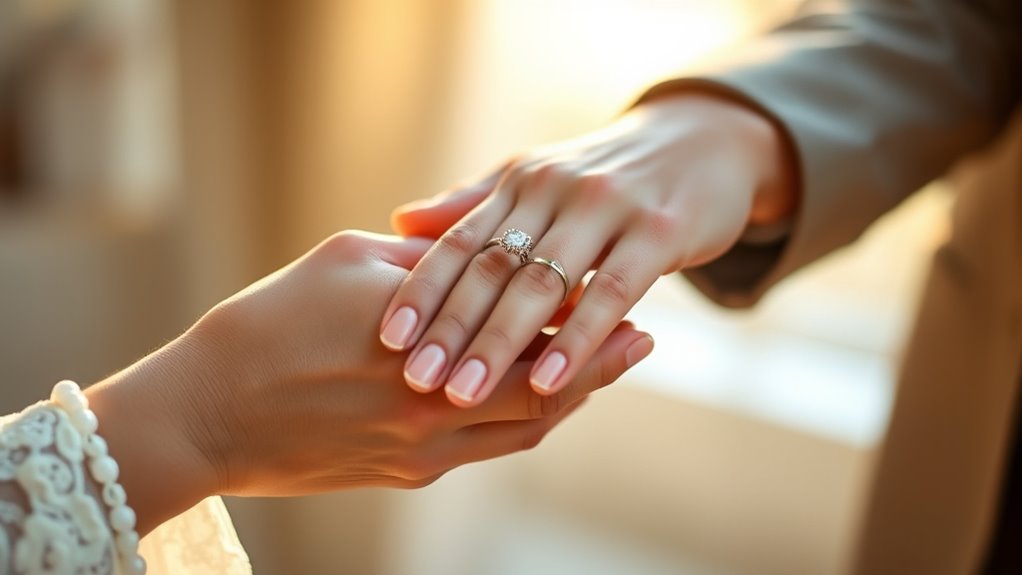
You wear your wedding ring on the left or right hand mainly depending on your cultural background, personal comfort, and the meaning you want to express.
Many Western cultures choose the left hand for love and commitment, while others, like in Eastern Europe or religious traditions such as Judaism and Hinduism, prefer the right hand to symbolize strength and loyalty.
Ultimately, it’s your choice, reflecting your unique bond.
Investigate how traditions influence this meaningful decision.
Key Takeaways
- Wedding rings are worn on the left hand in many Western cultures. This symbolizes love and a vein believed to be connected to the heart.
- In several European, Eastern European, and Latin American cultures, wedding rings are worn on the right hand. This choice signifies strength and commitment.
- Religious customs influence which hand is chosen. Christianity usually favors the left hand, while Judaism and Hinduism prefer the right hand for wedding rings.
- Family traditions, cultural background, and personal comfort all play important roles in deciding which hand to wear a wedding ring on.
- Open communication between partners is key. It helps them choose ring placement that reflects their unique bond and cultural values.
Why Do People Wear Wedding Rings on Different Hands?
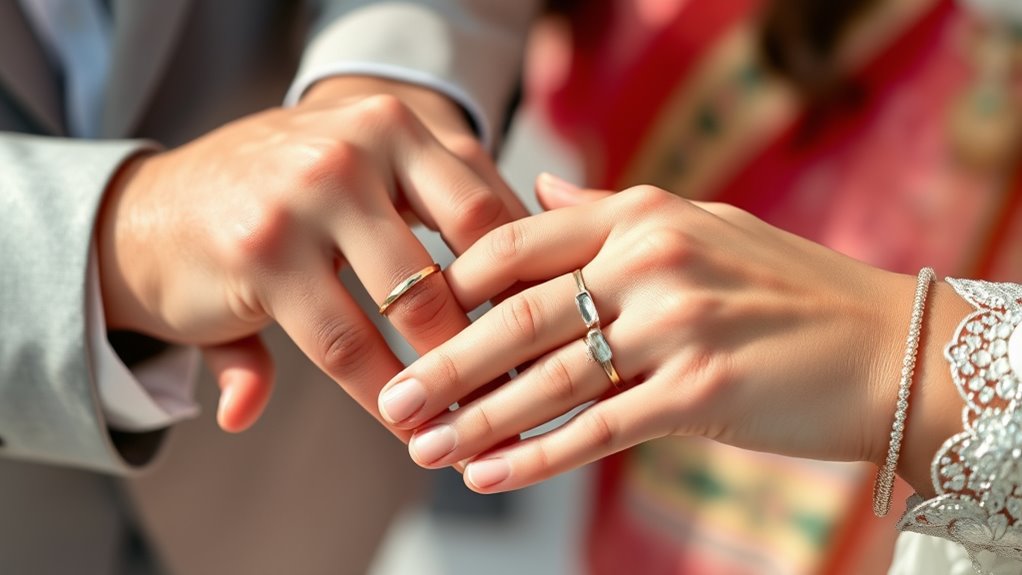
Why do people wear wedding rings on different hands? It largely boils down to cultural significance and personal preference. In some cultures, the left hand symbolizes love and commitment, so people choose to wear their rings there.
Others believe the right hand represents strength and loyalty, making it the preferred choice. You might also find that your family traditions or regional customs influence which hand you wear your ring on.
Beyond culture, your personal preference plays a big role. You might simply feel more comfortable wearing your ring on one hand over the other.
Ultimately, the decision reflects a mix of heritage and your own style, so there’s no wrong choice regarding wearing your wedding ring on the left or right hand.
How Did Left-Hand Wedding Rings Become a Tradition?
Although the tradition of wearing wedding rings on the left hand varies worldwide, it has deep historical roots tied to ancient beliefs about the body. You might find it interesting that the historical significance dates back to the Romans, who believed the “vena amoris” or vein of love ran directly from the fourth finger of the left hand to the heart.
This idea gave the left hand a special romantic meaning. Over time, this belief influenced the cultural evolution of wedding customs in many Western societies. As you examine these traditions, you’ll see how the left-hand ring symbolizes connection and commitment, shaped by centuries of symbolism and cultural shifts.
Understanding this helps you appreciate why the left hand became the preferred choice for wedding rings in many cultures.
Which Cultures Wear Wedding Rings on the Right Hand?
You might notice that in many European countries, people wear their wedding rings on the right hand. This choice is often influenced by long-standing traditions. Plus, religious beliefs also play a big role in deciding which hand gets the ring around the world. So, let’s take a closer look at how these cultural and spiritual factors shape this meaningful custom.
European Countries Traditions
When you explore European wedding traditions, you’ll find that many cultures wear their wedding rings on the right hand instead of the left. This choice reflects deep European customs where the right hand symbolizes strength, honor, and fidelity.
In countries like Germany, Poland, and Russia, the right hand holds significant cultural importance, making it the preferred hand for wedding rings. These traditions emphasize the cultural significance of the ring’s placement, linking it to historical beliefs about the heart and marital commitment.
Even within Europe, the practice varies, but the right hand often represents a proud declaration of marriage. Understanding these customs helps you appreciate how cultural significance shapes wedding ring traditions across diverse European societies.
Religious Influences Worldwide
Since religious beliefs often shape cultural practices, many communities wear wedding rings on the right hand to honor their faith’s traditions. You’ll notice global variations tied to religious significance, where right-hand rings symbolize commitment, purity, or spiritual connection.
For example, Orthodox Christians, Catholics in certain countries, and some Jewish communities prefer the right hand. Understanding these practices helps you appreciate how religion influences ring placement worldwide.
| Religion | Region | Reason for Right-Hand Ring |
|---|---|---|
| Orthodox Christianity | Eastern Europe | Symbolizes spiritual strength and unity |
| Catholicism | Germany, Poland | Tradition linked to religious ceremonies |
| Judaism | Eastern Europe | Reflects ancient customs and faith |
| Hinduism | India | Right hand signifies purity and auspiciousness |
| Protestantism | Some European areas | Local religious customs determine hand |
What Does Wearing a Wedding Ring on the Left Hand Mean?
Wearing a wedding ring on your left hand usually symbolizes love and commitment. It’s a tradition that’s been around for a long time. Many cultures think the left hand is linked directly to the heart, so it makes sense to wear a ring there as a symbol of marriage. Knowing these cultural meanings can help you understand why this practice is still so common around the world.
Symbolism Behind Left Hand
Although customs vary worldwide, wearing a wedding ring on your left hand typically symbolizes a lifelong commitment and romantic devotion. The left hand symbolism carries deep emotional significance that connects you with tradition and love.
When you wear your ring on this hand, it often reflects a bond believed to be linked to the heart through the “vena amoris” or vein of love. It also shows trust and fidelity in your relationship.
Additionally, it serves as a public declaration of your marital status and represents the idea of protection and unity within your partnership.
Cultural Traditions Explained
Wearing a wedding ring on your left hand carries different meanings depending on cultural traditions around the world. In many Western cultures, it symbolizes commitment and love. This is rooted in the historical belief that a vein in the left ring finger led directly to the heart.
However, the cultural significance varies. Some Eastern European and Latin American countries prefer the right hand to represent marriage. Understanding these differences helps you appreciate the rich traditions behind this simple gesture.
| Region | Hand Used | Cultural Significance |
|---|---|---|
| Western Europe | Left | Symbol of love and commitment |
| Eastern Europe | Right | Marriage and fidelity |
| Latin America | Right | Unity and cultural identity |
| India | Varies | Reflects regional customs |
What Does Wearing a Wedding Ring on the Right Hand Mean?
If you place your wedding ring on your right hand, it often reflects cultural traditions or personal beliefs that differ from the more common left-hand practice. Wearing a ring on this hand can carry deep cultural significance or simply be a matter of personal preference. Here’s what it might mean for you:
- It symbolizes commitment in many Eastern European and Latin American cultures.
- It can represent a fresh start or new chapter in your life.
- Some view the right hand as stronger or more dominant, making the ring more prominent.
- For others, it’s about standing out or honoring family traditions that differ from mainstream customs.
Choosing the right hand shows you accept your unique cultural identity or personal style regarding expressing love and marriage.
How Does Religion Influence Wedding Ring Hand Choice?
You’ll find that religion has a big say in which hand you wear your wedding ring on. For example, Christian, Jewish, and Hindu traditions each have their own unique customs that influence this choice. Knowing a bit about these practices can really help you appreciate what your ring’s placement means.
Christian Traditions And Rings
Many Christian denominations choose the left hand for wedding rings because it symbolizes the connection to the heart through the “vena amoris,” or vein of love. This tradition reflects deep Christian symbolism tied to unity and commitment in marriage.
When you exchange wedding vows, the ring on your left hand signifies a spiritual bond and lifelong promise. You’ll notice that:
- The left hand represents emotional connection and devotion.
- Wedding rings remind you of the sacred vows made before God.
- The circular shape symbolizes eternity and unending love.
- Wearing the ring on the left hand aligns with centuries-old Christian rituals.
Jewish Wedding Ring Customs
While Christian wedding ring customs often focus on wearing the ring on the left hand to symbolize emotional and spiritual bonds, Jewish traditions take a different approach. They reflect unique religious beliefs and rituals.
In Jewish weddings, the ring is typically worn on the right hand, which holds deep Jewish symbolism connected to strength and truth. The Ketubah significance also plays a crucial role, as this marriage contract outlines the groom’s commitment and complements the ring’s symbolism.
You’ll notice these customs emphasize legal and spiritual aspects rather than just emotional ones.
| Aspect | Jewish Wedding Ring Custom |
|---|---|
| Ring Hand | Right hand |
| Symbolism | Strength, truth, and commitment |
| Ketubah Role | Formalizes marriage obligations |
| Ceremony Focus | Legal and spiritual bond |
| Tradition Basis | Religious law and symbolism |
Hindu Ring Wearing Practices
Although wedding ring customs vary widely across cultures, Hindu traditions offer a unique perspective on which hand the ring is worn. In Hinduism, the choice of hand carries deep cultural significance tied to Hindu symbolism and traditional customs. You’ll often see the ring on the right hand during ring ceremonies, symbolizing strength and protection. Here’s what you should know:
- The right hand is preferred as it’s considered auspicious and connected to the sun.
- Rings worn on the right hand represent commitment and prosperity.
- Traditional customs emphasize the spiritual connection during the wedding ritual.
- Cultural significance varies by region, but the right hand generally dominates.
Understanding these nuances helps you appreciate the rich meaning behind Hindu ring-wearing practices.
How Do Regional Customs Affect Wedding Ring Placement?
Because cultural traditions shape personal expression, the hand on which you wear your wedding ring often depends on where you live. Regional variations play a big role in this choice, reflecting each culture’s unique history and values.
For example, in many Western countries, you typically wear your ring on the left hand, symbolizing love and commitment linked to an ancient belief about a vein connecting directly to the heart. Meanwhile, in parts of Europe and Latin America, the right hand holds more cultural significance for wedding rings, often representing strength and fidelity.
When you understand these regional variations, you appreciate how deeply cultural significance influences wedding customs, reminding you that your ring isn’t just jewelry. It’s a meaningful symbol shaped by tradition and place.
Can You Choose Your Wedding Ring Hand, No Matter the Tradition?
How freely can you decide which hand to wear your wedding ring on, regardless of tradition? Ultimately, it comes down to personal choice, even though cultural significance often guides this decision. You’re not bound by customs if you wish to express yourself differently.
Consider these points when choosing your ring hand:
Respect traditions but prioritize what feels right to you. Understand the cultural meanings behind each hand’s use. Communicate openly with your partner about your preference. Remember, your ring symbolizes your commitment, not the hand it’s on.
How Should You Choose Which Hand for Your Wedding Ring?
Choosing which hand to wear your wedding ring on involves more than just tradition; it’s about what feels right for you and your relationship. When deciding, consider factors like comfort, cultural background, and daily habits.
For example, if you’re right-handed, wearing the ring on your left hand might feel more natural and avoid interference during tasks. Personal significance also plays a key role—some people choose a hand that holds special meaning in their culture or family.
Ultimately, you should pick the hand that resonates most with you and your partner’s story. Don’t hesitate to discuss your preferences openly, as this choice reflects more than convention. It symbolizes your unique bond and commitment. Trust your instincts when making this meaningful decision.
What Are Some Unique Wedding Ring Traditions Around the World?
While wedding rings are a universal symbol of love, many cultures add their own unique twists to this tradition. You’ll find that cultural meanings and historical practices shape how rings are worn and exchanged worldwide. For example:
In some Eastern European countries, couples wear rings on the right hand to signify commitment. In India, mangalsutras serve as symbolic necklaces instead of rings, representing marital status.
In South Africa, rings are often worn on the right hand, reflecting cultural beliefs about energy flow. In Germany, historical practices have the bride wearing the ring on the right hand, while the groom wears his on the left.
Frequently Asked Questions
What Metals Are Best for Wedding Rings?
You’ll want to choose metals based on durability factors like scratch resistance and daily wear. Traditional options like gold and platinum are popular, but alternative metals such as titanium, tungsten, and stainless steel offer excellent strength and affordability.
If you lead an active lifestyle, alternative metals might suit you better since they resist damage well. Consider your skin sensitivity too. Hypoallergenic metals like titanium can be a great choice for comfort.
How Do You Size a Wedding Ring Correctly?
Sizing a wedding ring perfectly balances precision with comfort. You don’t want it too tight to cause discomfort, nor too loose to risk losing it.
For accurate ring sizing, start with a finger measurement at the end of the day when your fingers are warm and slightly swollen. Use a professional ring sizer or visit a jeweler to guarantee the fit feels snug yet easy to slide on and off without struggle.
What Are Popular Wedding Ring Styles Today?
You’ll find popular wedding ring styles today blend vintage styles with modern designs. Many people love vintage styles for their intricate details and timeless charm, while others prefer sleek, minimalist modern designs that feel fresh and elegant.
You can even combine both by choosing a modern band with vintage-inspired engravings. Ultimately, pick a style that reflects your personality and feels special every time you wear it.
How Do You Care for and Clean Wedding Rings?
To care for your wedding ring, follow simple maintenance tips like removing it during heavy chores or when applying lotions. This helps keep it looking its best and prevents damage.
For cleaning, soak your ring in warm soapy water, then gently scrub with a soft toothbrush. After that, rinse it well and dry with a soft cloth.
Avoid harsh chemicals and ultrasonic cleaners if your ring has delicate stones. It’s also important to regularly check for loose settings.
Whenever you notice any issues, take your ring to a jeweler for professional cleaning and inspection. This keeps your ring safe and sparkling.
Can Wedding Rings Be Engraved?
Yes, wedding rings can definitely be engraved! You can choose personalized messages to make your ring truly unique and meaningful. Whether it’s a special date, initials, or a short phrase, engraving options let you add that intimate touch.
Just make sure to check with your jeweler about the size and font styles available. Engraving turns your ring into a lasting keepsake that reflects your love story perfectly.
Conclusion
Choosing which hand to wear your wedding ring on is like picking the perfect path in a garden. Each route holds its own beauty and meaning. Whether you follow tradition or forge your own way, what matters most is the love and commitment the ring symbolizes.
So, trust your heart, respect your culture, and wear your ring where it feels most meaningful to you. After all, when it comes to how do wedding rings go on the left or right hand, love knows no boundaries.