How to Check if a Diamond Is Real in 7 Simple Steps
If you’ve ever wondered whether the diamond you have is truly real, you’re not alone. Many people struggle with telling genuine diamonds from imitations, especially when buying jewelry or inheriting family pieces.
It can feel overwhelming trying to figure out the truth without professional tools or expertise.
To check if a diamond is real, start by doing the fog test. Real diamonds clear fog quickly. Next, drop it in water; genuine diamonds sink fast.
Use a loupe to inspect sharp edges and clear facets. Under UV light, an authentic diamond often glows blue.
Weigh it and compare size to spot inconsistencies. Try simple physical tests, but when unsure, seek a professional appraisal for certainty.
Keep exploring to uncover detailed ways to confirm your diamond’s authenticity.
Key Takeaways
- Perform the fog test by breathing on the diamond and watching if the condensation clears within 1-2 seconds. This quick clearing usually means the diamond is real.
- Drop the diamond in water. Real diamonds sink quickly because they have a high density, unlike many fakes that might float or sink slowly.
- Use a loupe to inspect the diamond’s sharp edges and clear facets. Make sure there are no bubbles or cloudiness, which can be signs of a fake.
- Check the diamond under UV light. A typical blue fluorescence can indicate authenticity, but absence of this doesn’t always mean it’s fake.
- Consult a certified appraiser for a professional evaluation and official documentation. They can provide the most reliable confirmation of your diamond’s authenticity.
Spot a Real Diamond With the Fog Test

How can you quickly tell if a diamond is real without special tools? You can try the fog test. Hold the diamond close to your mouth and breathe on it, creating breath condensation.
Watch the fog duration carefully. A real diamond disperses heat instantly, so the fog should clear up almost immediately, usually within one to two seconds. If the fog lingers longer, it’s likely not a genuine diamond.
This happens because fake diamonds or other stones don’t have the same thermal conductivity. Keep in mind this test isn’t foolproof, but it’s a simple way to get a quick idea.
See If a Diamond Sinks or Floats in Water
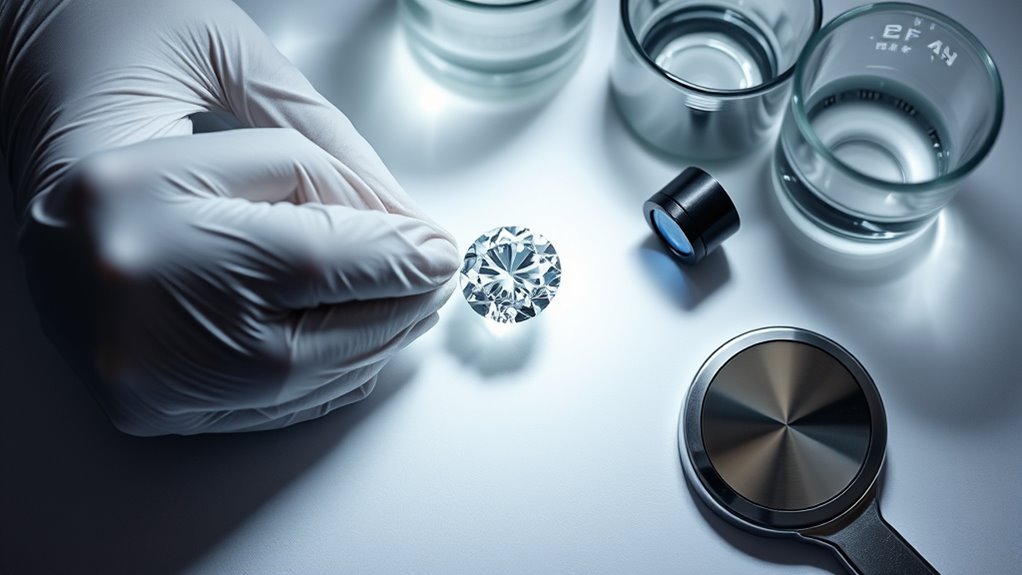
Since diamonds have a high density, they’ll sink when placed in water. To test your diamond, fill a glass with water and gently drop the stone inside. Because of its density, a real diamond will sink quickly to the bottom, unlike many floating objects that stay on the surface due to their lower density compared to water.
Water density plays an essential role here; less dense materials float, while denser ones sink. If your stone floats or hovers near the surface, it’s likely not a genuine diamond. This simple test helps differentiate diamonds from imitations like cubic zirconia, which have lower density and often float or sink slowly.
Use a Loupe to Check Diamond Edges and Facets
Using a loupe to examine your diamond’s edges and facets can reveal important clues about its authenticity. When you look closely, real diamonds typically have sharp and well-defined edges due to their precise cut quality. Fake diamonds often show rounded or blurred edges because they’re made from different materials.
Pay attention to the facets as well. Genuine diamonds have clean, distinct facets that reflect light brilliantly. You can also spot inclusions or imperfections using the loupe, which relate to clarity grades. Flawless clarity is rare, so some minor inclusions usually indicate a real stone.
If you see bubbles or cloudiness inside, it’s likely a fake. By carefully inspecting these details, you can better judge whether your diamond is genuine without needing expensive equipment.
Look for a Diamond’s Glow Under UV Light
You can check a diamond’s authenticity by looking at how it glows under UV light, which is called fluorescence. Real diamonds often give off a blue glow, but the brightness can change depending on the stone. Just remember, if there’s no glow at all or if you see other colors, it might be a synthetic or treated gem.
Diamond Fluorescence Explained
How can you tell if a diamond is genuine by its glow? Diamond fluorescence types reveal how some diamonds emit visible light under UV light. This glow helps you identify real diamonds because synthetic and fake stones often lack this property.
Fluorescence color effects vary, commonly showing blue, but can also be yellow, white, or green.
Here’s a quick guide to common fluorescence types and their typical colors:
| Fluorescence Type | Common Color Effect |
|---|---|
| None | No glow |
| Faint | Light blue |
| Medium | Bright blue |
| Strong | Intense blue or other |
Checking this glow under UV light gives you a simple clue to a diamond’s authenticity.
Identifying Glow Variations
Where exactly should you look when examining a diamond’s glow under UV light? Focus on the stone’s surface and interior, observing how it reacts to the light.
Real diamonds often exhibit subtle color variations in their glow, typically blue or white, caused by their unique chemical structure. Watch for consistent light dispersion patterns; genuine diamonds scatter UV light evenly, creating a soft, steady glow.
If you notice uneven or dull fluorescence, it might signal a fake or treated stone. Remember, some real diamonds show no glow at all, so absence doesn’t always mean a fake.
Compare a Diamond’s Weight and Size for Authenticity
You can check a diamond’s authenticity by comparing its weight and size because diamonds are denser than most imitations. First, measure the carat weight carefully. Then, take a close look at the stone’s dimensions to see if they match what you’d expect for that weight.
If the stone looks too large or too small for its weight, it might not be a real diamond. So, paying attention to these details can help you spot a fake.
Understanding Diamond Density
Diamond density plays an essential role in determining whether a stone is genuine. Because of its unique diamond composition and natural diamond formation, a real diamond has a specific density that you can compare to its size and weight.
If a stone’s weight feels off for its size, it might be fake. You can use this quick reference to understand the emotional value behind these numbers:
| Stone Type | Typical Density (g/cm³) | Feelings Evoked |
|---|---|---|
| Real Diamond | 3.52 | Trust, Authenticity |
| Cubic Zirconia | 5.6 | Doubt, Suspicion |
| Glass | 2.5 | Disappointment |
Measuring Carat Weight
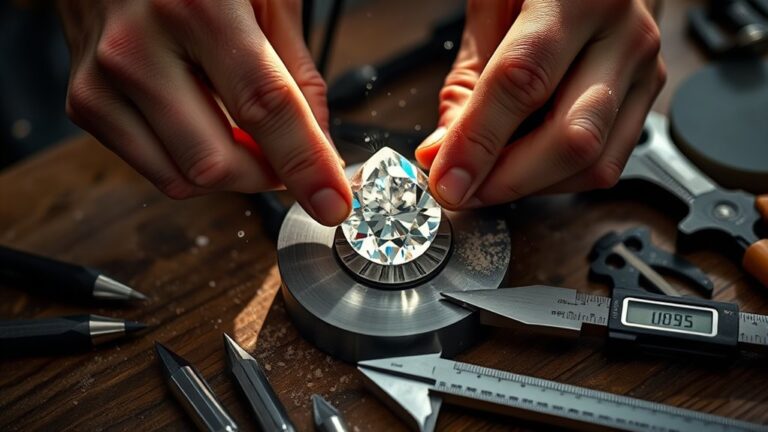
Weight and size go hand in hand when verifying a stone’s authenticity. To measure carat weight accurately, use a precise digital scale designed for gemstones.
Carat measurement reflects the stone’s actual weight, not its size, so it’s essential for identifying real diamonds. Once you have the carat weight, perform a weight comparison with known standards or similar-sized diamonds.
Real diamonds have a specific density, so if your stone’s weight greatly deviates from what you expect based on its size, it could be a fake. Keep in mind that some imitations may match size but fail in weight comparison.
This method helps you confirm whether your diamond’s carat weight aligns with its physical dimensions, supporting your overall authenticity check.
Comparing Size to Weight
Three key factors help you verify authenticity by comparing size to weight: density, proportions, and material composition. When you do a size comparison, a real diamond typically appears smaller than synthetic stones of the same carat weight due to its high density.
If the stone looks unusually large for its weight, it might be a fake or a simulant like cubic zirconia.
Perform a weight analysis using a precise scale to measure the carat weight, then visually assess the stone’s dimensions. Genuine diamonds have specific proportions, so if the size doesn’t match the expected weight, that’s a red flag.
Try Simple Physical Tests to Identify Fake Diamonds
Although some fake diamonds can look convincing, you can often spot them using simple physical tests at home. First, check the diamond clarity by holding the stone under a bright light and observing any imperfections. Real diamonds usually have tiny flaws, while fakes tend to be flawless or overly clear.
Next, test gem hardness by scratching the surface lightly with a material softer than diamond, like glass. If it scratches, it’s likely fake. You can also try the fog test: breathe on the stone and watch how quickly the fog dissipates. Real diamonds clear up almost instantly due to high thermal conductivity.
These straightforward tests help you identify fake diamonds by focusing on key traits like clarity and hardness without needing specialized tools.
When to Get a Professional Appraisal to Confirm Authenticity
Simple at-home tests can give you a good initial sense of whether a diamond is real, but they’re not always definitive. When you want absolute certainty about your diamond’s authenticity, it’s time to consult a certified appraiser.
These professionals use specialized tools and expertise to assess your stone accurately. If you’re buying, selling, or insuring a diamond, a professional appraisal protects your investment by confirming its value and genuineness.
Keep in mind that the appraisal cost varies depending on the appraiser and location, so it’s worth asking upfront. Ultimately, a certified appraiser provides peace of mind you can’t get from DIY methods, ensuring your diamond is truly what it claims to be.
Frequently Asked Questions
How Can I Clean My Diamond at Home Safely?
You can safely clean your diamond at home using simple diamond cleaning methods. Mix warm water with a few drops of mild dish soap to create a gentle home solution.
Soak your diamond for 20-30 minutes, then use a soft toothbrush to gently scrub away dirt. Rinse with clean water and pat dry with a soft cloth.
Avoid harsh chemicals or abrasive materials to keep your diamond sparkling without damage.
What Are the Differences Between Diamond and Moissanite?
You’ll notice diamond characteristics like brilliant sparkle and incredible hardness, making them very durable. Moissanite properties include a higher refractive index, so it often shines more rainbow-like than a diamond.
Diamonds resist heat better, while moissanite can tolerate less. Also, diamonds have a natural origin, whereas moissanite is usually lab-created. Knowing these differences helps you tell them apart and choose the right gemstone for your needs.
How Does a Diamond Grading Report Affect Its Value?
You might not realize it, but a diamond grading report can make or break your stone’s value. It’s your diamond appraisal’s backbone, detailing grading criteria like cut, color, clarity, and carat weight.
Without it, buyers hesitate, unsure of what they’re getting. With a trusted report, you prove your diamond’s quality and authenticity, boosting its market price and appeal.
Can Heat or Chemicals Damage a Diamond?
You don’t have to worry much about heat or chemicals damaging your diamond because diamonds have exceptional durability. Natural diamonds can withstand high temperatures and most chemicals without harm.
However, synthetic diamonds, especially those with treatments, might be more sensitive to extreme heat or harsh chemicals. So, while your diamond is generally safe, you should still avoid exposing synthetic diamonds to harsh conditions to keep them looking their best.
What Are the Best Settings to Protect a Diamond in Jewelry?
You should choose diamond settings that securely hold your stone, like bezel or channel settings, to protect it from knocks and scratches. These settings surround the diamond with protective materials such as metal edges, which shield its edges better than prong settings.
Also, consider using durable metals like platinum or gold, as they add strength and safeguard your diamond in jewelry. This way, you’ll keep your diamond safe while showing it off beautifully.
Conclusion
Now that you know these seven simple steps, you’re better equipped to spot a real diamond with confidence. Remember, about 25% of diamonds sold worldwide are fake or treated, so your vigilance really pays off.
While these tests are handy, don’t hesitate to get a professional appraisal if you want absolute certainty. Trust your instincts and tools. You’ll be shining bright with genuine sparkle in no time when you know how to check if a diamond is real!