What Do Chronograph Watches Do?
Finding a watch that does more than just tell time can be tricky, especially if you’re looking for something precise and functional. You’re not alone—many people struggle with choosing a watch that combines style and practicality. That’s where chronograph watches come in handy.
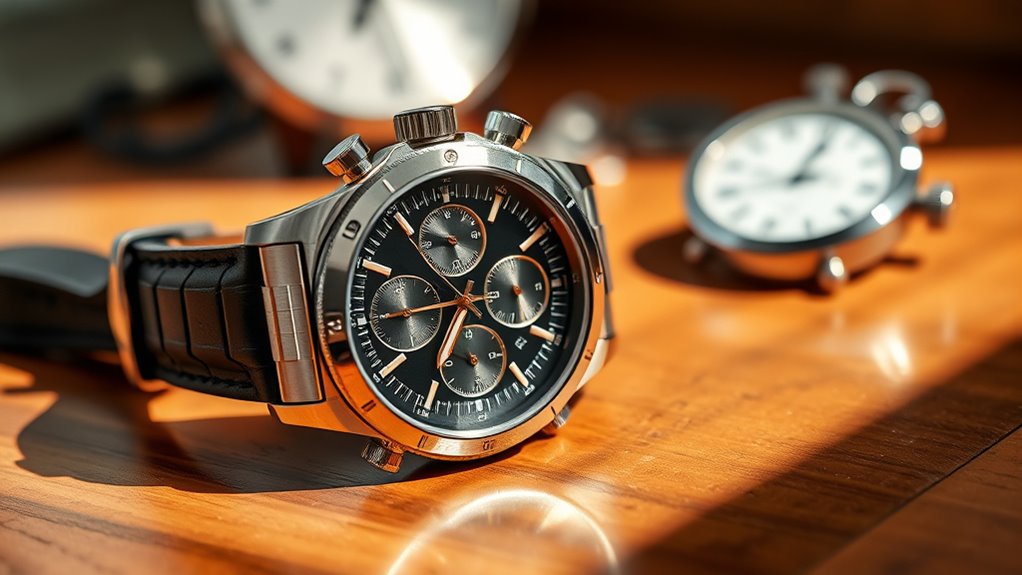
Chronograph watches let you track precise time intervals by combining regular timekeeping with a built-in stopwatch. You start and stop the timer using pushers, then reset it easily all while watching extra dials measure seconds, minutes, and even hours.
These watches also offer features like tachymeters for speed calculation and come in various styles from vintage to modern.
If you want to know how to use them best or pick the perfect model, there’s a lot more to uncover.
Key Takeaways
- Chronograph watches combine regular timekeeping with stopwatch functions to measure elapsed time accurately. They use pushers to start, stop, and reset the stopwatch for timing events.
- Extra sub-dials display elapsed seconds, minutes, and sometimes hours for precise readings. Some models include features like tachymeter scales for speed calculation over distance.
- Chronographs are popular for tracking athletic performance and offer a blend of functionality and style.
What Is a Chronograph Watch and How Does It Work?
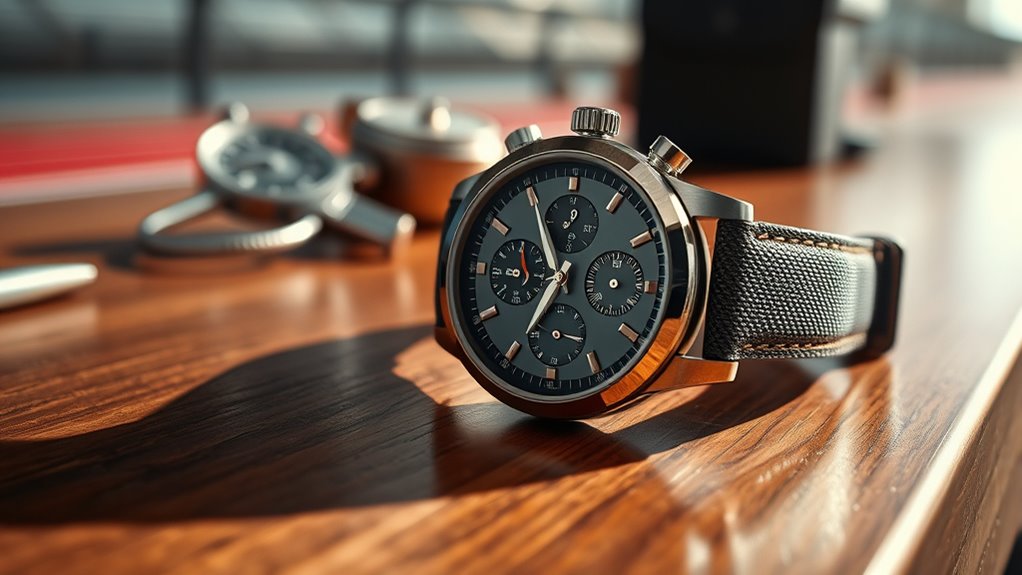
A chronograph watch combines the functions of a regular timepiece with a stopwatch, allowing you to measure elapsed time with precision. Its chronograph history dates back to the early 19th century when inventors sought to create devices for timing events accurately.
Today, you’ll find popular brands like TAG Heuer, Omega, and Breitling leading the market, known for their reliability and style. When you look at a chronograph, you’ll notice extra dials. These subdials track seconds, minutes, and sometimes hours, separate from the main timekeeping function.
You start, stop, and reset the stopwatch using pushers on the watch’s side. This combination of classic timekeeping and stopwatch capability makes a chronograph both functional and stylish for everyday wear.
How Do You Use the Stopwatch Function on a Chronograph Watch?
Using the stopwatch function on a chronograph watch is straightforward once you get familiar with the pushers on its side. Typically, the top pusher starts and stops the stopwatch, while the bottom pusher resets it.
To begin timing, press the top pusher; press it again to pause. If you want to reset the timer settings to zero, hit the bottom pusher after stopping the watch.
For maximum stopwatch accuracy, make sure the watch is fully wound or charged, and avoid pressing buttons too quickly. This helps maintain precise timing.
How Do You Read Elapsed Time on a Chronograph Watch?
To read elapsed time on your chronograph watch, first get familiar with its dials and what they do. You’ll see that one dial measures seconds, while another keeps track of minutes. This setup helps you get a precise reading.
Once you know what each dial represents, it’s pretty easy to see how much time has passed. Just keep an eye on those hands as they move, and you’ll have a clear idea of the elapsed time in no time.
Understanding Chronograph Dials
Reading elapsed time on a chronograph watch involves interpreting multiple dials that track seconds, minutes, and sometimes hours. These chronograph complications add functionality and improve dial aesthetics, making your watch both practical and visually appealing. To understand the dials, focus on:
The central second hand shows elapsed seconds when activated. The sub-dial for minutes is usually positioned at 3 or 9 o’clock. More complex models include an additional hour sub-dial for longer timing.
Pay attention to how each dial’s markings correspond to their specific time unit. This will help you read the chronograph accurately and enjoy its full functionality.
Measuring Seconds And Minutes
A chronograph watch lets you track elapsed seconds and minutes with ease by using its dedicated hands and sub-dials. When you start the chronograph function, the central second hand begins to sweep, counting the elapsed seconds with stopwatch accuracy.
Meanwhile, a smaller sub-dial records the minutes, typically up to 30 or 60, depending on the watch model. To read the elapsed time, check the position of the large seconds hand for seconds and the minute sub-dial for total minutes passed.
This setup guarantees timing precision, letting you monitor events down to the second and minute without confusion. When you stop the chronograph, the hands freeze, showing the exact elapsed time until you reset them.
What Features Make Chronograph Watches Unique?
You’ll notice chronograph watches really stand out because they come with multiple stopwatch functions. This lets you time events with great precision. What’s cool is their distinctive dial layout, which makes reading the elapsed time super easy and intuitive.
And it’s not just about looks—the push-button operation mechanism means you can quickly start, stop, or reset the stopwatch without messing with the watch’s main timekeeping. It’s all designed for convenience and accuracy.
Multiple Stopwatch Functions
Though many watches simply tell time, chronographs stand out because they combine traditional timekeeping with multiple stopwatch functions. You get more than just a basic timer; these watches offer impressive timing accuracy and multi functionality that suit various activities.
When you use a chronograph, you can:
- Measure elapsed time for events or workouts
- Track split times to monitor different segments
- Use a tachymeter scale to calculate speed over distance
- Start, stop, and reset timers independently for multiple tasks
These features make chronograph watches incredibly versatile, helping you manage precise timings without needing extra devices. Whether you’re an athlete, pilot, or simply love precision, the multiple stopwatch functions bring added convenience and performance to your wrist.
Distinctive Dial Layout
Because chronograph watches serve multiple timing functions, their dial layouts stand out with distinct features that you won’t find on regular timepieces. When you look closely, you’ll notice dial variations that include several sub-dials or registers, each measuring seconds, minutes, or hours. These design elements make it easy for you to track elapsed time with precision.
Furthermore, the main dial often integrates clear, bold markers and contrasting hands to improve readability. You might also spot tachymeter or telemeter scales around the bezel or dial edge, adding further functionality. These thoughtful design elements guarantee you can quickly access multiple timing functions at a glance, setting chronograph watches apart from standard watches in both style and utility.
Push-Button Operation Mechanism
Alongside their distinctive dial layouts, chronograph watches stand out thanks to their push-button operation mechanism. This feature lets you control the stopwatch functions with ease and guarantees push-button precision for flawless operation. You’ll appreciate how it improves timing accuracy during any activity.
Here’s what makes the push-button mechanism unique:
- Simple start, stop, and reset functions at your fingertips
- Responsive buttons designed for smooth, immediate action
- Durable construction to maintain consistent timing accuracy
- Ergonomic placement for comfortable, intuitive use
What Are the Different Types of Chronograph Watches?
When you investigate chronograph watches, you’ll find several types designed to suit different needs and styles. Vintage chronographs stand out with their classic mechanical movements and timeless designs, appealing to collectors and enthusiasts who appreciate history and craftsmanship.
On the other hand, digital chronographs offer modern functionality with precise timing and easy-to-read displays, making them ideal for sports and everyday use. You’ll also encounter flyback chronographs, which let you reset and restart the timer with a single push, perfect for pilots or racers.
Moreover, some chronographs come with tachymeter scales to measure speed over distance. Each type serves a specific purpose, so picking the right chronograph depends on whether you value tradition, technology, or specialized features.
How Do Subdials and Pushers Work on Chronograph Watches?
Three main components define how chronograph watches function: the subdials, pushers, and the central chronograph hand. Understanding subdial functions and pusher mechanics helps you use your watch effectively. Subdials typically track elapsed hours, minutes, and sometimes seconds, giving you precise timing details. Pushers, located on the watch case, control these functions with simple presses.
Here’s how they work together:
- Start or stop the central chronograph hand with the top pusher
- Reset all subdials to zero using the bottom pusher
- Monitor elapsed time accurately via subdial functions
- Use pushers to pause or resume timing without affecting regular timekeeping
How Do Chronograph Watches Help in Sports and Fitness Timing?
You can use a chronograph watch to measure precise intervals, which is super helpful when you’re timing workouts or races. Plus, it lets you track multiple activities without losing count, so you can stay organized during your training. By keeping an eye on your performance progress, you’ll know exactly when it’s time to push harder or take a rest.
Precise Interval Measurement
Although tracking precise intervals is essential for athletes, many rely on chronograph watches to meet this need efficiently. These watches deliver exceptional interval accuracy, making them indispensable for various timing applications in sports and fitness.
When you use a chronograph, you can start, stop, and reset the timer instantly for consecutive interval tracking. You can also measure lap times accurately during running or swimming, monitor rest periods to maintain workout intensity, and record split times to analyze performance improvements.
Thanks to their precise mechanics and easy-to-use controls, chronographs keep your timing exact, so you can focus on improving your performance. Whether you’re training for sprints or endurance events, a chronograph watch guarantees you never miss a beat in your interval timing.
Tracking Multiple Activities
A chronograph watch lets you seamlessly track multiple activities in one session, making it an essential tool for athletes who juggle different workouts. With its ability to start, stop, and reset timing functions independently, you can monitor separate exercises without confusion.
This activity tracking lets you switch between running, cycling, or strength training effortlessly, ensuring you capture precise durations for each. The versatile usage of chronograph watches means you don’t need multiple devices; one watch covers all your timing needs.
Whether you’re timing laps, rest periods, or circuit rounds, the chronograph’s design keeps your focus on performance. By using these features, you improve your workout efficiency and maintain accurate records across various activities in a single session.
Monitoring Performance Progress
Beyond tracking multiple activities, chronograph watches give you clear insights into your performance progress over time. They’re invaluable tools for precise performance tracking and effective time management during sports and fitness routines.
By using a chronograph, you can measure lap times to gauge improvement in speed and endurance, record interval training durations for optimized workout sessions, track rest periods to maintain consistent recovery times, and compare past results to identify trends and set new goals.
With these features, you’ll stay motivated and make data-driven decisions to improve your fitness journey. Chronographs let you manage your time efficiently, ensuring every second counts toward your athletic development.
Whether you’re a casual runner or a dedicated athlete, this watch helps you monitor progress and push your limits with accuracy and ease.
Why Do Watch Fans Love Chronograph Watches?
When you plunge into the world of chronograph watches, you quickly uncover their unique blend of functionality and style. You appreciate how these timepieces combine precise stopwatch features with traditional watchmaking, a legacy rooted in chronograph history dating back to the early 19th century. This heritage adds depth to their appeal.
You also notice how popular brands like Omega, TAG Heuer, and Breitling enhance chronographs with innovative designs and reliability, making them coveted by collectors and enthusiasts alike. You love that chronographs aren’t just tools; they’re symbols of technical mastery and timeless elegance.
Whether you’re timing a race or adding flair to your wrist, chronograph watches offer you a perfect mix of practicality and sophisticated charm.
How to Choose the Right Chronograph Watch for You
Since chronograph watches balance both style and function, choosing the right one means thinking about how you’ll actually use it. Start by considering your lifestyle and preferences. Focus on these key aspects:
- Strap styles: Pick leather for elegance, metal for durability, or silicone for sportiness.
- Brand reputation: Choose brands known for quality and reliable chronograph mechanisms.
- Dial readability: Confirm the subdials and markers are clear for easy timing.
- Size and weight: Find a watch that feels comfortable on your wrist without being bulky.
Tips for Maintaining Your Chronograph Watch
Although chronograph watches are built to be durable, you’ll want to take proper care to keep them running smoothly and looking sharp. Start with regular watch care by using gentle cleaning techniques. Soft cloths and mild solutions prevent damage.
Keep an eye on battery maintenance to avoid leaks that can harm the movement. Follow winding methods specific to your model to maintain accuracy. Store your watch in a dry, cool place using proper storage tips to preserve water resistance and prevent moisture buildup.
Replace worn straps promptly with suitable materials. Schedule movement servicing every few years for peak performance. Address part replacement promptly to prevent further damage.
If you encounter troubleshooting issues, consult a professional rather than attempting DIY fixes. This will guarantee your chronograph stays reliable.
Frequently Asked Questions
Can Chronograph Watches Be Used Underwater?
Yes, you can use chronograph watches underwater, but you need to check their water resistance rating first. Not all chronographs are designed for diving, so look for models with specific diving features like screw-down crowns and sealed pushers.
These features help prevent water from entering the watch during underwater activities. If your chronograph lacks proper water resistance or diving features, avoid using it underwater to protect its functionality and durability.
Are Chronograph Watches More Expensive Than Regular Watches?
You’ll notice chronograph watches often come with a higher price tag, and that’s no coincidence. Their chronograph features add complexity, driving the price comparison higher than regular watches.
You’re paying for extra dials, precision, and craftsmanship. While some affordable models exist, most chronographs cost more due to their intricate mechanics. So, if you want those stopwatch functions and added style, expect to invest a bit more than a standard watch.
Do Chronograph Watches Require Special Battery Types?
You don’t necessarily need special battery types for chronograph watches, but some models might require specific batteries because of their advanced functions. It’s a good idea to check your watch’s manual or ask a professional for the correct battery type.
For maintenance tips, replace batteries promptly to avoid leakage. Also, have your watch serviced regularly to keep the chronograph features working smoothly and accurately over time.
How Accurate Are Chronograph Watches Compared to Digital Timers?
You’ll find that chronograph watches offer impressive timing precision, especially high-quality mechanical models. However, they generally can’t match the mechanical accuracy of digital timers, which rely on electronic components for near-perfect measurement.
While chronographs excel in craftsmanship and provide reliable short-term timing, digital timers deliver more consistent results for split-second accuracy. So, if you need precise timing down to fractions of a second, digital timers usually outperform traditional chronograph watches.
Can Chronograph Watches Be Customized With Different Straps?
You can change the strap on a chronograph watch more times than you can count, thanks to a wide range of strap materials like leather, stainless steel, silicone, and nylon. Customization options let you match your watch to any outfit or mood, making it truly yours.
Whether you want a sporty look or something elegant, swapping straps is easy, so you’re never stuck with just one style.
Conclusion
You might think chronograph watches are too complex or bulky, but they’re actually designed for ease and style. Once you get the hang of using the stopwatch function, you’ll see how versatile and practical these watches are for everyday timing and sports.
Plus, their unique features add a cool, functional flair to your wrist. Give one a try; you’ll quickly appreciate why watch fans can’t get enough of chronograph watches.