How Do You Tell If a Diamond Ring Is Real Step by Step
Trying to figure out if your diamond ring is real can feel overwhelming, and you’re not alone. Many people struggle with identifying genuine diamonds because the differences can be subtle and tricky to spot.
Whether you’re buying a ring, checking an heirloom, or just curious, knowing how to tell if a diamond ring is real gives you confidence and peace of mind.
You can tell if a diamond ring is real by first inspecting its sharp facets and quality setting.
Try the water test; real diamonds sink quickly. Breathe on the stone for the fog test; genuine diamonds clear fog fast. Use a loupe to spot natural inclusions, and check scratch resistance and fluorescence under UV light.
A diamond tester can give quick confirmation at home. If you want to confidently verify your ring, there’s more to investigate.
Key Takeaways
- Inspect the diamond’s sharp facets, natural inclusions, and high-quality metal settings for authenticity.
- Perform a water test by dropping the ring in water; real diamonds sink quickly.
- Use a loupe to check for internal flaws and rotate the diamond to view different angles.
- Conduct hardness and UV light tests to observe scratch resistance and fluorescence under dark conditions.
- Use a diamond tester at home by calibrating it and checking thermal conductivity for consistent high readings.
Quick Visual Tips to Spot a Real Diamond Ring
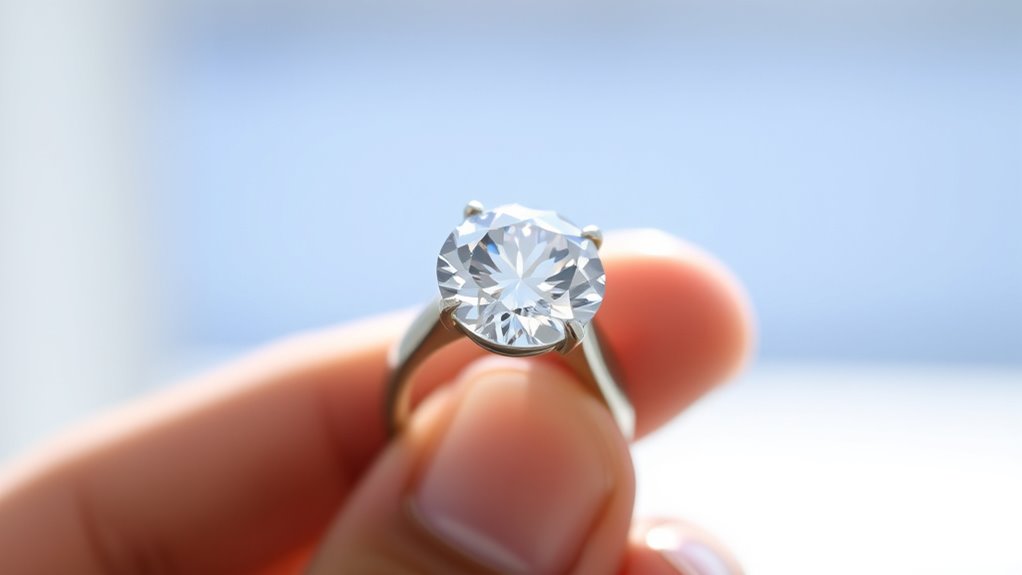
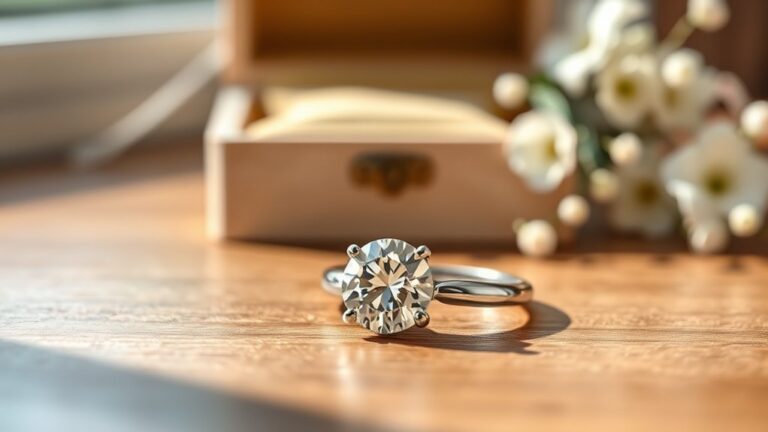
How can you quickly tell if a diamond ring is real? Start by examining the diamond shapes. Real diamonds often have sharp, well-defined facets that reflect light brilliantly. Fake stones might look dull or have rounded edges.
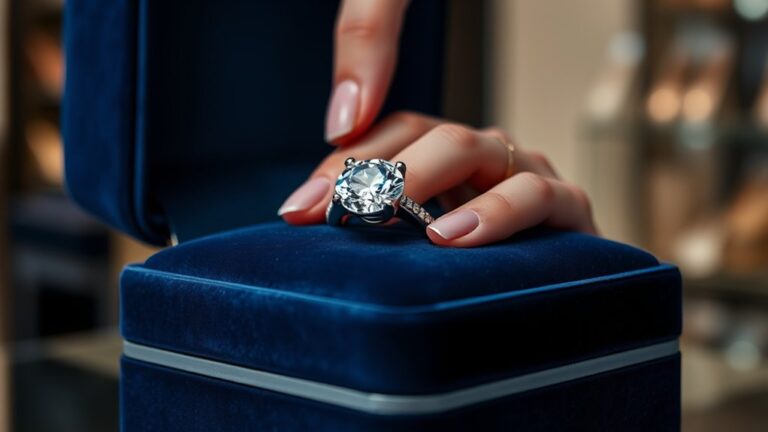
Next, check the ring settings closely. Authentic diamonds are usually set in high-quality metals like gold or platinum, and the setting should feel secure and sturdy. Poor craftsmanship or cheap metal often signals a fake.
Also, real diamonds tend to have a slight natural flaw or inclusion visible under magnification, unlike perfectly clear simulants. By focusing on these visual cues—the precision of diamond shapes and the quality of ring settings—you can make a quick, informed judgment about whether a diamond ring is genuine or not.
How to Use the Water Test to Check Diamond Authenticity
Wondering if a simple test can help you verify a diamond’s authenticity? The water test is a quick way to get clues. Fill a clear glass with water, noting the water clarity before you start.
Looking for a simple way to check if your diamond is real? Try the quick and easy water test.
Gently drop the diamond ring into the glass. A real diamond will sink quickly because of its high density, while fake diamonds or imitations may float or sink slowly. This is fundamentally a buoyancy test.
Pay close attention to how the ring behaves in the water. If it floats or doesn’t sink as expected, it might not be genuine.
Keep in mind this isn’t foolproof but is a handy first step before more detailed tests. Use this method alongside other checks to confirm your diamond’s authenticity confidently.
How the Fog Test Reveals Fake Diamonds
If the water test leaves you unsure, the fog test offers another quick way to check your diamond’s authenticity. Simply breathe on the stone to create a fog from your breath’s moisture. Here’s what to watch for:
Real diamonds disperse heat quickly, so the fog clears almost instantly. A long fog duration signals poor moisture retention, typical in fake diamonds.
If the fog lingers for several seconds, the gem likely isn’t genuine. Avoid touching the stone after fogging to prevent residue that affects results.
Repeat the test a few times to confirm consistent fog duration. This simple fog test helps you spot fake diamonds by evaluating how moisture behaves on the stone’s surface, making it a handy step before moving on to more detailed checks.
How to Use a Loupe to Check Your Diamond’s Flaws
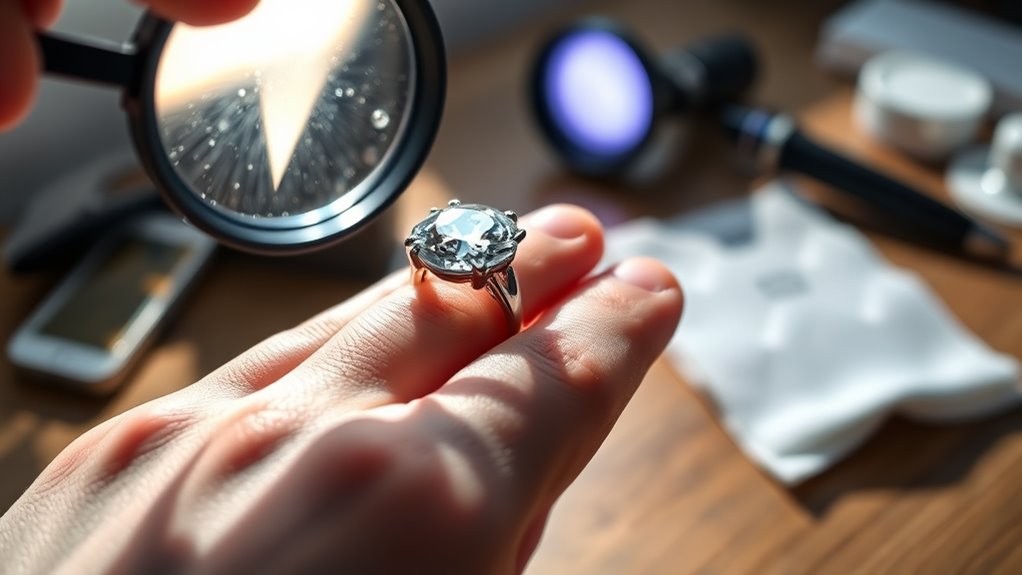
Using a loupe lets you examine your diamond closely to spot imperfections and details invisible to the naked eye. Start by holding the loupe about an inch from your eye and bringing the diamond close to the loupe’s lens. Use a loupe with 10x magnification for the best view.
Look carefully for diamond inclusions, tiny internal flaws or natural characteristics that indicate authenticity. Real diamonds usually have some inclusions, while fake ones often appear flawless or have bubbles. Rotate the diamond slowly to inspect different angles, focusing on clarity and any irregularities.
How the Sparkle Test Helps Spot Real Diamonds
Although it might seem simple, the sparkle test reveals a lot about a diamond’s authenticity. When you examine a real diamond, you’ll notice its unique sparkle intensity and how it handles light reflection. Here’s how the sparkle test helps you spot genuine diamonds:
Real diamonds showcase brilliant, sharp flashes of white light (brilliance). They emit vibrant colors (fire) when light disperses. The sparkle is lively and dynamic, changing as you move the ring.
Fake stones often have dull, muted sparkle or a rainbow glare. Light reflection on a real diamond is crisp, not blurry or hazy.
How to Test Diamond Hardness by Scratching Safely
You’ll want to pick a safe surface to test your diamond’s hardness, like a piece of glass or a metal file. Just gently scratch the surface with the stone and keep an eye out for any marks or damage. If your ring doesn’t get scratched, that’s a good sign you’re dealing with a real diamond.
Choosing Safe Scratch Surfaces
Before testing a diamond’s hardness by scratching, pick safe surfaces that won’t damage the stone or your tools. Using the right safe materials guarantees you don’t accidentally harm your ring or create misleading results. Instead of scratching directly on hard surfaces, consider scratch alternatives that protect both your diamond and testing items.
Here are some safe scratch surfaces and alternatives to use:
- Glass plate (smooth and common)
- Ceramic tile (unglazed for consistent texture)
- Copper coin (soft and less abrasive)
- Wooden block (soft, minimizes risk)
- Plastic ruler (non-abrasive, easy to find)
Choosing these safe materials helps you conduct your test without risking scratches or chips. Always avoid harsh or unpredictable surfaces to keep your ring intact while you verify its authenticity.
Observing Scratch Resistance Levels
Three key scratch resistance levels help you determine a diamond’s authenticity by testing its hardness carefully. Diamonds top the scratch resistance scale, showing unmatched diamond durability compared to other materials. When you test, use a safe, non-damaging method to observe if your ring resists scratching from common objects.
Here’s a simple guide to scratch resistance levels:
| Scratch Resistance Level | Example Material |
|---|---|
| High | Real Diamond |
| Medium | Sapphire |
| Low | Glass or Cubic Zirconia |
If your ring resists scratches like a real diamond, it’s a strong sign of authenticity. Remember, proper testing respects the ring’s durability and avoids damage. This step helps you confirm if your diamond ring is genuine or a look-alike.
How UV Light Can Help You Verify Diamond Authenticity
You can use UV light to check if your diamond shows fluorescence, which is a glow that some diamonds emit under ultraviolet rays. It’s a pretty neat way to tell if your diamond is real because many fake stones won’t react the same way.
Just grab a UV light and shine it on your ring. If you see a bluish glow, that’s usually a good sign your diamond is authentic. It’s a simple test you can do at home to get a better idea of what you’re dealing with.
Diamond Fluorescence Effects
How can ultraviolet (UV) light help you determine if a diamond is genuine? When exposed to UV light, many diamonds emit a visible glow due to their fluorescence. This effect varies based on the diamond’s color and fluorescence intensity, offering clues to its authenticity. Here’s what you should know:
Diamonds with strong fluorescence intensity often glow blue under UV light. The diamond color can influence the fluorescence’s visibility and color.
Fake diamonds may show no fluorescence or display unusual colors. Fluorescence helps identify natural diamonds versus synthetic or simulants.
Understanding fluorescence patterns aids in verifying diamond quality and authenticity.
UV Light Testing Method
A UV light test reveals key details about a diamond’s authenticity by causing it to fluoresce under ultraviolet rays. When you expose your ring to UV light, you’re checking how its ultraviolet properties respond, which helps distinguish real diamonds from imitations.
Genuine diamonds often exhibit a blue fluorescence color, but some might glow in yellow, green, or even show no fluorescence at all. Fake diamonds typically don’t fluoresce or display unusual colors under UV light.
To perform the test, simply shine a UV lamp onto the stone in a dark room and observe the fluorescence colors. Keep in mind, this method isn’t foolproof but offers a quick, non-invasive way to support your diamond’s authenticity before seeking professional verification.
When and How to Use a Diamond Tester at Home
Several moments call for testing your diamond at home, especially when you’re unsure about its authenticity and want quick reassurance before seeking professional help. DIY diamond testing using affordable tester options can save you time and money. Here’s when and how to use a diamond tester effectively:
Confirm the diamond is clean and dry for accurate readings. Turn on the tester and wait for it to calibrate. Then gently touch the tester’s tip to the stone’s surface.
Observe the tester’s indicator: a real diamond usually shows high thermal conductivity. Test multiple points on the stone to confirm consistency.
How Professional Jewelers Confirm Diamond Authenticity
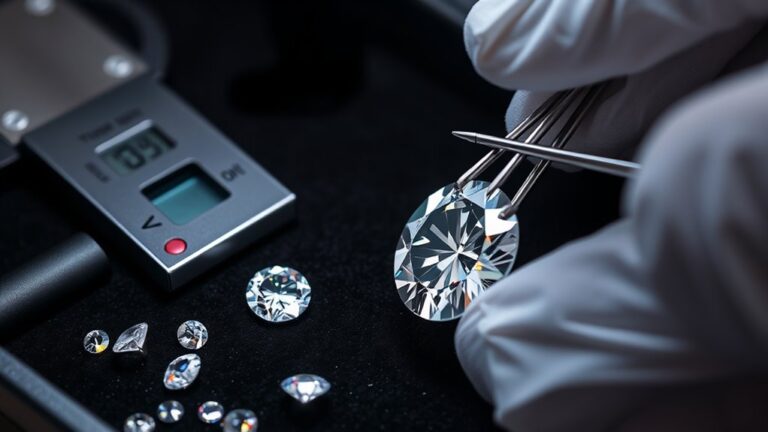
Although home tests can give you a quick idea, professional jewelers use advanced tools and expertise to confirm a diamond’s authenticity with greater accuracy. They perform gemstone identification and authenticity verification through precise methods.
| Tool | Purpose | What It Detects |
|---|---|---|
| Loupe | Magnification | Inclusions, flaws |
| Diamond Tester | Thermal conductivity | Real diamond vs simulant |
| UV Light | Fluorescence | Natural vs synthetic |
| Spectroscope | Light absorption patterns | Chemical composition |
| Refractometer | Refractive index | Confirms gemstone type |
These tools help jewelers accurately distinguish diamonds from imitations by analyzing physical and chemical properties. When you rely on professionals, you get reliable gemstone identification and authenticity verification.
What to Do If Your Diamond Ring Isn’t Real
If professional testing reveals your diamond ring isn’t genuine, don’t panic. Understanding fake diamond characteristics can help you decide your next move. First, identify if the stone is an alternative gemstone, like moissanite or cubic zirconia. These can look similar but differ in value and care.
Here’s what you can do:
- Confirm the test results with another trusted jeweler
- Research alternative gemstones identification to understand your stone better
- Consider selling or trading the ring as costume jewelry
- Investigate upgrading to a real diamond with a reputable jeweler
- Keep the ring if it holds sentimental value despite its authenticity
Frequently Asked Questions
How Can I Insure My Diamond Ring?
To insure your diamond ring, start by getting it appraised through a professional appraisal process to determine its value accurately.
Next, investigate insurance options like adding a rider to your homeowner’s policy or purchasing a specialized jewelry insurance plan.
Make sure to provide your insurer with the appraisal report and any certification. This way, you’ll protect your ring against loss, theft, or damage with proper coverage tailored to its worth.
What Affects a Diamond’s Value the Most?
Imagine you’re comparing two diamonds: one with perfect clarity and color, the other with visible flaws. Diamond grading plays a huge role in value, as buyers pay more for higher grades.
Market demand also affects price. Trends can boost certain cuts. So, the two biggest factors influencing a diamond’s value are its grading and how much buyers want that style or quality at the moment.
You’ll want to take into account both when evaluating worth.
How Often Should I Clean My Diamond Ring?
You should clean your diamond ring about once a week to keep it sparkling. Use gentle cleaning methods like soaking it in warm water with mild dish soap, then brushing softly with a toothbrush.
For maintenance, avoid harsh chemicals and store your ring separately to prevent scratches. Taking these steps regularly guarantees your diamond stays brilliant and your ring remains in great condition over time.
Don’t forget to get professional cleanings every six months!
Can Diamonds Get Damaged Over Time?
Yes, diamonds can get damaged over time, even though they’re known for their incredible durability. You might not expect them to chip or scratch, but rough impacts or improper handling can cause damage.
To keep your diamond looking its best, you need regular diamond maintenance, like gentle cleaning and professional inspections. Taking care of your ring helps preserve its beauty and prevents wear, so don’t skip those routine check-ups!
Are Lab-Created Diamonds Less Valuable Than Natural Ones?
Imagine holding a sparkling gem that catches every ray of light. Whether it’s a lab diamond or natural, it dazzles. Lab-created diamonds share many characteristics with natural ones, like brilliance and hardness.
However, because natural diamond rarity is rooted in millions of years of formation, natural diamonds often carry higher value. You’ll find lab diamonds more affordable but similarly stunning, while natural ones hold a unique allure tied to their rare origin.
Conclusion
Now that you know these tests, you can confidently check your diamond ring’s authenticity. Imagine finding a ring at a garage sale and using the water test—it sinks! Next, the fog test clears quickly, and a loupe reveals tiny inclusions.
You’ve just saved yourself from buying a fake. These simple steps help protect your investment and peace of mind.
When in doubt, remember that professional jewelers can always give you the final word on how to tell if a diamond ring is real.