Why Are Wedding Rings Worn on the Left Hand?
Finding the perfect wedding ring can feel overwhelming. You want something meaningful, beautiful, and timeless, but with so many options, it’s easy to get lost.
If you’re struggling to choose a ring that truly symbolizes your love and commitment, you’re not alone. Many people face this challenge and want to understand the deeper significance behind their choices.
You wear your wedding ring on the left hand because ancient cultures believed that finger had a special connection to the heart, symbolizing love and commitment. The Romans popularized this idea, and it stuck in many Western traditions.
Wearing your ring there serves as a constant reminder of your bond and promises.
While some countries choose the right hand, the left finger remains a powerful symbol of fidelity. Keep exploring, and you’ll uncover how history and culture shaped this meaningful custom.
Key Takeaways
- Wedding rings are worn on the left hand because of an ancient belief in the “vena amoris,” a vein thought to connect directly to the heart.
- The tradition was popularized by ancient Romans. They used the left ring finger to symbolize love, fidelity, and lifelong commitment.
- The cultural and spiritual significance of the left hand, seen in Egyptian and Native American beliefs, also reinforces its link to love and the heart.
- Wearing the ring on the left hand serves as a daily reminder of shared vows, emotional closeness, and exclusivity in a partnership.
- Although it’s common in Western cultures, some countries prefer the right hand, reflecting diverse regional traditions and meanings tied to marriage.
Why Are Wedding Rings Traditionally Worn on the Left Hand?
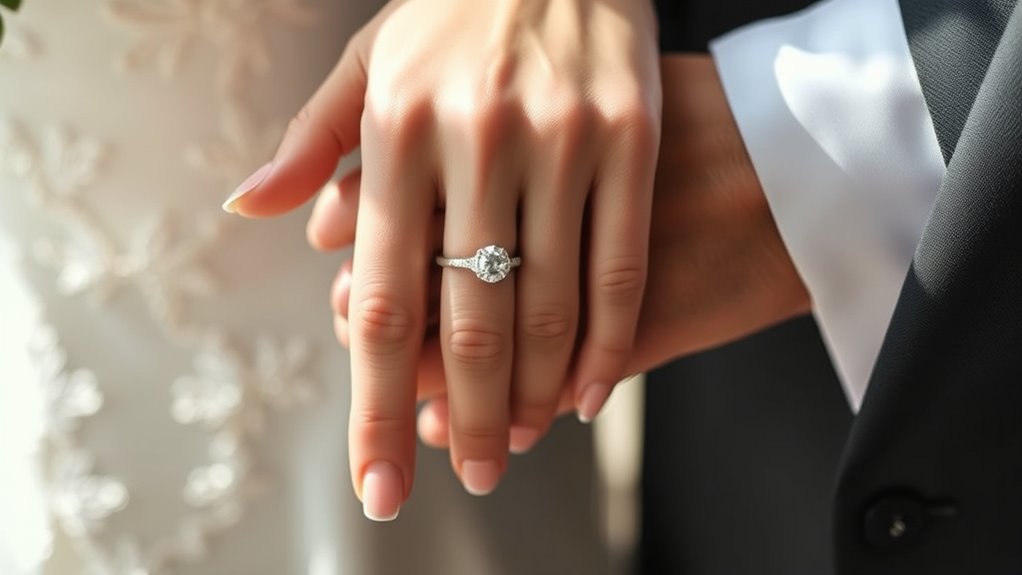
Although customs vary worldwide, wedding rings are traditionally worn on the left hand because many cultures believed the left ring finger contained the “vena amoris,” or the vein of love, directly connected to the heart. When you choose to wear your wedding ring on this finger, you’re tapping into a deep cultural significance that symbolizes love and commitment.
However, personal preferences also play a big role today. You might decide based on comfort, practicality, or even cultural background. Some people prefer the right hand or switch fingers entirely, reflecting their individual style or beliefs.
Ultimately, while tradition guides many, your choice of ring placement is about what feels meaningful and fitting to you. This blend of cultural meaning and personal preference keeps the tradition alive and adaptable.
The History of Wearing Wedding Rings on the Left Hand
Since ancient times, people have worn wedding rings on the left hand to symbolize love and commitment. You’ll find this tradition carries deep symbolic meanings, often tied to the belief that the left hand’s fourth finger contains a vein directly connected to the heart. Over centuries, cultural variations have influenced how and why this practice evolved.
Wearing wedding rings on the left hand symbolizes love, rooted in the belief of a heart-connected vein.
Here are three key points to keep in mind:
- Ancient Romans popularized wearing the ring on the left hand to represent a lifelong bond.
- Some cultures adopted the left hand to distinguish marital status visibly.
- Symbolic meanings varied but consistently highlighted love, fidelity, and emotional connection.
Understanding this history helps you appreciate why the left hand remains the preferred choice for wedding rings today.
What Ancient Cultures Believed About the Left Hand
When you investigate ancient cultures, you’ll find that many believed the left hand held special significance beyond mere practicality. Ancient beliefs often attributed the left hand with mystical or spiritual qualities, linking it to the heart and emotions.
For example, the Egyptians saw the left side as connected to the soul’s journey, while some Native American tribes considered the left hand sacred, associating it with healing and protection. This cultural significance influenced how people expressed commitment and connection, making the left hand a natural choice for symbols like wedding rings.
Understanding these ancient beliefs helps you see why the left hand became more than just a physical tool. It carried deep meaning, shaping customs that persist in modern wedding traditions around the world.
The ‘Vein of Love’ Myth and Its Impact on Wedding Rings
Because many people believed a special vein ran directly from the left ring finger to the heart, they chose that finger for wedding rings to symbolize eternal love. This vein symbolism shaped cultural beliefs around marriage and commitment, making the left ring finger the ideal spot for your wedding band.
Though modern anatomy disproves this myth, its impact remains strong. Here’s why it still matters to you:
- It deepens the emotional meaning of the ring, linking it to your heart.
- It connects you to centuries of tradition, reinforcing cultural continuity.
- It provides a romantic story to share, enhancing the ring’s significance.
Understanding this myth helps you appreciate how cultural beliefs influence why you wear your wedding ring on the left hand.
How Different Countries Wear Wedding Rings on Different Hands
Although many cultures place wedding rings on the left hand, you might be surprised to learn that several countries prefer the right hand instead. These cultural variations reflect deep regional customs that shape how people express marital commitment.
For example, in countries like Germany, Russia, and India, wearing the wedding ring on the right hand is common and symbolizes unity and fidelity. Meanwhile, in much of Western Europe and the Americas, the left hand dominates as the traditional choice.
Understanding these customs helps you appreciate the diverse ways societies honor marriage. So, when you see someone showcasing a wedding ring on their right hand, remember it’s not just a personal preference. It’s a meaningful reflection of their cultural heritage and regional traditions.
The Left Hand’s Symbolism in Wedding Ring Traditions
Symbolism plays a powerful role in why many people choose to wear wedding rings on the left hand. The left hand carries deep cultural significance that connects you to centuries of tradition. Understanding these meanings can deepen your appreciation for this practice:
- Heart Connection: The left hand’s ring finger is believed to have a vein directly linked to the heart, symbolizing love and commitment.
- Accessibility: Wearing the ring on your left hand often means it’s less dominant, which helps protect the ring from damage.
- Cultural Identity: Many cultures associate the left hand with emotions and relationships, reinforcing the ring’s symbolism as a bond.
How Religion Influenced Wedding Ring Traditions
Many wedding ring customs trace their roots back to religious beliefs that shaped how people express love and commitment. When you consider religious symbolism, you see how different faiths assigned unique meanings to the wedding ring, enhancing its cultural significance.
For example, Christianity often views the ring as a symbol of eternal love, while Judaism emphasizes the ring’s unbroken circle representing unity.
| Religion | Symbolism | Cultural Significance |
|---|---|---|
| Christianity | Eternal love & unity | Rings blessed in church |
| Judaism | Unbroken circle of unity | Rings exchanged during ceremony |
| Hinduism | Sacred bond & protection | Use of gold to signify purity |
Understanding these connections helps you appreciate the deep spiritual roots behind wedding ring traditions.
When the Left-Hand Ring Tradition Began in the West
Since ancient times, people have worn wedding rings on their left hands, believing this finger held a special connection to the heart. You’ll find this tradition’s historical significance rooted deep in Western culture. Over centuries, the cultural evolution of ring-wearing evolved, shaping how couples display their commitment today.
Here’s a quick look at when it began:
- Ancient Egyptians linked the left ring finger to the “vena amoris,” the vein of love.
- Romans adopted this belief, making the left hand the symbol of marital fidelity.
- By the Middle Ages, European societies widely accepted this custom, embedding it in wedding ceremonies.
Understanding this timeline helps you appreciate why the left hand became the traditional choice for wedding rings in the West.
Practical Reasons Couples Choose the Left Hand for Wedding Rings
Beyond the historical and cultural reasons for wearing wedding rings on the left hand, practical factors also play a big role in why couples choose this tradition. You’ll find that the left hand is often less dominant, reducing the risk of damage to the ring during daily activities. This practical benefit helps keep the ring looking polished and intact.
Furthermore, since many people wear watches or bracelets on their non-dominant hand, placing the wedding ring on the left hand avoids crowding the dominant hand. The cultural significance of the left hand as the “ring finger” also reinforces this choice, making it easier for others to recognize the symbol of commitment.
When you consider both practical benefits and cultural significance, the left hand truly stands out as the preferred choice.
How Wearing Wedding Rings on the Left Hand Connects Couples Today
Though the tradition dates back centuries, wearing wedding rings on the left hand still connects couples in a deeply personal way today. When you choose to wear your ring on this hand, you’re embracing more than history. You’re strengthening your couple connection through meaningful modern traditions. Here’s how:
- Symbol of Commitment: Your ring visibly showcases your bond, reminding you and others of your promise.
- Daily Touchpoint: Every glance or touch reinforces your connection, keeping your partner close in thought.
- Shared Meaning: Wearing rings on the left hand creates a shared language of love, recognized across cultures.
Frequently Asked Questions
Can Men and Women Wear Wedding Rings on Different Hands?
Yes, you can wear wedding rings on different hands because cultural variations and personal preferences play a big role. In some cultures, men wear rings on the right hand while women choose the left.
You might also decide based on comfort or symbolism that feels right to you. Ultimately, there’s no strict rule. You get to express your love and commitment in a way that suits your style and tradition best.
What Metals Are Best for Left-Hand Wedding Rings?
For left-hand wedding rings, you’ll want metals that balance beauty and ring durability. While gold is classic, gold alternatives like platinum, titanium, and palladium offer excellent strength and resistance to scratches. These metals hold up well to daily wear, especially on your dominant hand.
If you’re after something unique yet durable, consider tungsten or stainless steel. They’re stylish, affordable, and tough enough to last a lifetime on your left hand.
How Do Ring Sizes Differ for Left-Hand Wearers?
You might think ring sizes are the same for either hand, but they often differ due to finger size variations. Regarding ring sizing for left-hand wearers, your dominant hand is usually larger, so your left ring finger might be smaller or differently shaped.
This matters because cultural significance often dictates wearing the ring on the left hand, so getting an accurate left-hand size guarantees comfort and a perfect fit.
Are There Health Concerns With Wearing Rings on the Left Hand?
You generally won’t face health concerns wearing rings on your left hand, but be mindful of tight fits that can restrict circulation or cause skin irritation.
Ring symbolism varies across cultures, so some might wear rings on different fingers or hands, affecting comfort and health differently. If you notice swelling or discomfort, remove the ring promptly.
Always consider cultural variations and personal health to guarantee your ring-wearing experience stays positive and safe.
Can Left-Hand Ring Traditions Change After Marriage?
Absolutely, you can flip the script on left-hand ring traditions after marriage! In fact, cultural variations are like a wild buffet. Some shift rings to the right hand or even switch fingers entirely.
Your personal preferences matter most, so if wearing your ring elsewhere feels right, go for it. Traditions aren’t set in stone. You’re free to make your own meaningful choice that fits your style and story perfectly.
Conclusion
You might be surprised to learn that about 70% of people worldwide wear their wedding rings on the left hand, connecting you to a long-standing tradition. This custom, rooted in ancient beliefs and practical reasons, symbolizes love and commitment.
By wearing your ring on the left hand, you’re part of a shared history that spans cultures and centuries. It keeps the bond between you and your partner strong and meaningful every day, which is why wedding rings are worn on the left hand.