What Is a Black Diamond and How to Identify It
Finding the perfect gemstone that stands out yet feels timeless can be a real challenge. You’re not alone if you’ve struggled to discover something truly unique that combines beauty with durability.
Many people want a stone that’s both striking and practical for everyday wear, but figuring out which one fits the bill isn’t always easy.
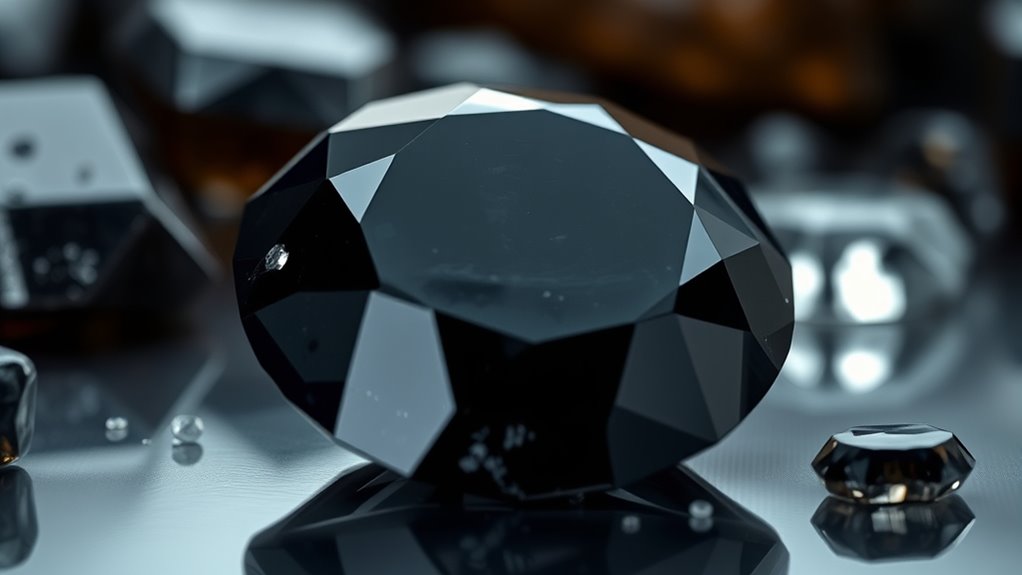
A black diamond is a unique, opaque gemstone formed under intense heat and pressure, packed with inclusions that give it its deep black color. You can identify one by its metallic luster, dense darkness, and resistance to scratches and heat.
Many are treated to improve color, so make sure to verify authenticity with certification.
If you want to know how black diamonds compare to others and how to care for them, there’s plenty more to uncover.
Key Takeaways
- Black diamonds are opaque carbonado diamonds with a deep black color caused by numerous inclusions formed under high heat and pressure.
- They differ from clear diamonds by their metallic luster and are cut to enhance color intensity rather than brilliance.
- Natural black diamonds are authentic, while many market stones are treated with heat or irradiation to enhance color.
- Identification involves checking for opaque black color, resistance to scratches, and heat resistance tests for authenticity.
- Certification from reputable jewelers ensures the black diamond’s natural origin, quality, and value during purchase.
What Is a Black Diamond? How Does It Form?
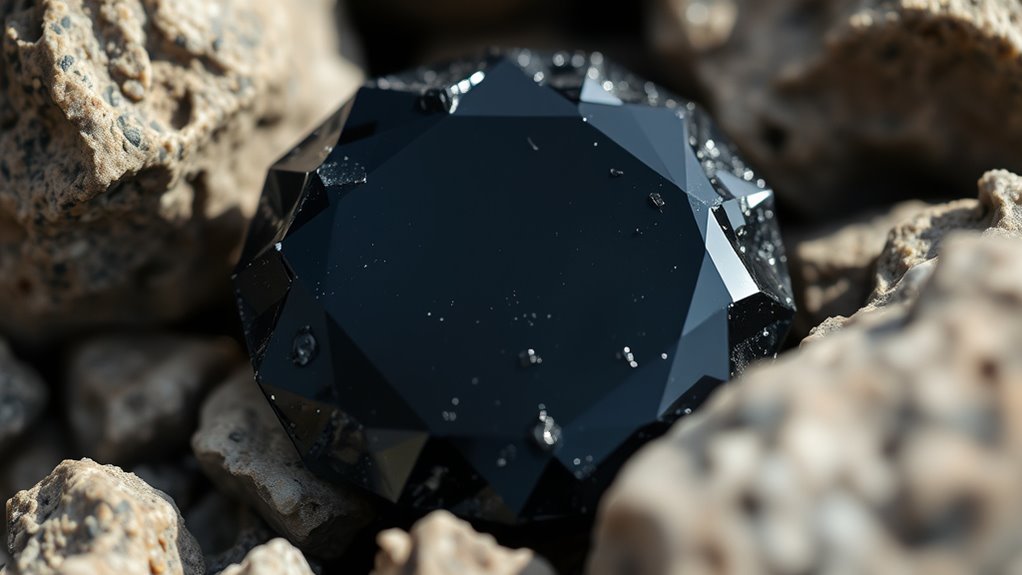
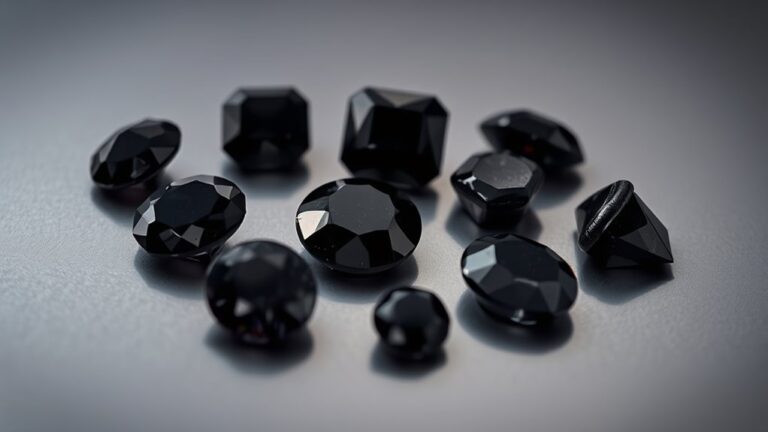
A black diamond is a unique and striking gemstone known for its deep, opaque color. When you investigate black diamond origins, you find that these gems form under intense heat and pressure, much like other diamonds. But they often contain numerous inclusions that give them their distinctive black hue.
You might have heard various black diamond myths, such as beliefs that they carry mystical powers or bring bad luck. In reality, these myths are just stories passed down over time. Instead, black diamonds are simply natural diamonds with a fascinating formation process.
As you learn about them, you’ll appreciate that their dark allure comes from carbon inclusions and treatments. This makes each stone both beautiful and mysterious in its own right.
How Black Diamonds Differ From Clear and Colored Diamonds
Although black diamonds share the same carbon makeup as clear and colored diamonds, their appearance and structure set them apart in striking ways. When you examine black diamond characteristics, you’ll notice key differences:
Black diamonds share carbon makeup with other diamonds but stand out with unique appearance and structure.
- Color Intensity: Black diamonds display a deep, opaque black hue, unlike the transparent or translucent nature of clear and colored diamonds.
- Inclusions: Black diamonds have dense inclusions that create their unique color, while others are prized for clarity.
- Luster: They have a metallic or submetallic luster, contrasting with the glassy sparkle of clear diamonds.
- Cutting Style: Due to their structure, black diamonds are often cut to maximize color intensity rather than brilliance.
Understanding these differences helps you appreciate black diamonds as bold, distinctive gems, not just darker versions of traditional diamonds.
Are Black Diamonds Natural or Treated? What You Should Know
How can you tell if a black diamond is natural or treated? Black diamonds form naturally deep within the Earth under extreme pressure, resulting in a unique natural formation that gives them their dark color.
However, many black diamonds on the market have undergone treatment processes to improve their color and durability. These processes often involve heat or irradiation, which darken or stabilize the stone’s appearance.
If you want a truly natural black diamond, you’ll need to verify that it hasn’t been subjected to such treatments. Jewelers and gemologists use specialized tools to identify whether a black diamond’s color comes from its natural formation or from artificial treatment processes.
Understanding this difference helps you make informed choices when selecting your black diamond.
Key Visual Traits to Identify Black Diamonds
Recognizing black diamonds starts with understanding their distinct visual traits. These gems stand out because of their unique appearance compared to traditional diamonds. Here are four key traits to help you identify them:
Recognizing black diamonds begins with knowing their unique visual traits that set them apart from traditional diamonds.
- Color Variations: Black diamonds range from deep charcoal to jet black. Sometimes they show subtle undertones of green or brown.
- Opaque Appearance: Unlike clear diamonds, black diamonds are mostly opaque due to their carbon inclusions.
- Clarity Grades: They often have lower clarity grades since inclusions are part of their charm and don’t diminish their value.
- Surface Texture: Black diamonds may have a slightly rough or granular surface rather than a smooth, glassy finish.
Knowing these traits helps you spot genuine black diamonds with confidence.
How to Test a Black Diamond’s Authenticity at Home
You can perform a few simple tests at home to check if a black diamond is genuine. First, try the scratch test. Black diamonds are incredibly hard, so they won’t scratch easily.
Use a material with a lower hardness, like glass or a steel file, and gently see if the stone gets scratched. If it does, it’s likely not a real black diamond.
Next, consider heat resistance. Black diamonds can withstand high temperatures without damage, unlike many imitations. Carefully warm the stone with a lighter for a few seconds, then cool it rapidly with water.
A genuine black diamond won’t crack or change, but fakes may shatter or discolor. These simple tests help you verify authenticity before seeking professional confirmation.
Why Certification Matters for Black Diamonds
While home tests can give you a good initial idea about a black diamond’s authenticity, they don’t provide the full assurance that certification does. Certification is important because it guarantees a black diamond meets strict grading standards verified by expert gemologists.
When you rely on certification, you confirm the diamond’s authenticity and natural origin. You also understand its quality, including details like cut, clarity, and color.
Plus, certification helps you feel confident in the diamond’s value whether you’re buying or selling. It also protects you from costly mistakes or deception from synthetic or treated stones.
Common Stones Mistaken for Black Diamonds: And How to Tell Them Apart
How can you tell a real black diamond from other dark stones that look similar? Many black diamond imitations, like black spinel, onyx, and synthetic materials, mimic the deep color but lack key distinguishing features.
Real black diamonds have a unique metallic luster and a slightly rough texture due to natural inclusions, unlike the smooth, glassy surfaces of imitations. Furthermore, black diamonds are much harder, scoring a 10 on the Mohs scale, so they resist scratches that would easily mark other stones.
You can also notice subtle differences in brilliance under light. Black diamonds reflect light differently because of their crystal structure. When identifying stones, focusing on hardness, luster, and surface texture helps you confidently spot genuine black diamonds from common imitations.
Why Black Diamonds Make a Unique Jewelry Statement
Because black diamonds stand out with their bold, mysterious allure, they make a striking choice for anyone looking to express individuality through jewelry. You’ll appreciate their bold elegance and timeless allure, which sets them apart from traditional gemstones.
Here’s why black diamonds make a unique jewelry statement:
- Distinctive Look – Their deep, opaque color gives an edgy yet sophisticated vibe.
- Versatility – They pair beautifully with both casual and formal styles.
- Symbolism – Black diamonds represent strength, passion, and uniqueness.
- Conversation Starter – Their rarity and boldness spark curiosity and admiration.
When you wear black diamonds, you’re not just choosing a gem. You’re embracing a statement of confidence and personal style that stands the test of time.
How to Care for and Maintain Your Black Diamond
Since black diamonds have a unique structure and color, you’ll need to take special care to keep them looking their best. Use gentle cleaning techniques, such as soaking your diamond in warm soapy water and brushing it softly with a soft toothbrush. Avoid harsh chemicals, which can damage the stone’s surface.
After cleaning, rinse thoroughly and dry with a soft cloth to maintain its shine. For storage tips, keep your black diamond separate from other jewelry to prevent scratches. Store it in a soft pouch or a lined jewelry box.
Regularly inspect your diamond’s setting to verify it’s secure. By following these simple care and maintenance steps, you’ll preserve the beauty and durability of your black diamond for years to come.
Where to Buy Certified Black Diamonds Safely
Where can you find certified black diamonds that guarantee authenticity and quality? Start by focusing on reputable sources to avoid disappointment. Here are four reliable options:
1. Authorized online retailers
They offer certification and detailed product descriptions, making your purchase secure and informed.
2. Local certified jewelers
Visiting in person lets you inspect the diamond and verify certification firsthand.
3. Jewelry auctions
These can be great places to find unique certified black diamonds, but research the auction house’s credibility first.
4. Trade shows and gem fairs
These events provide direct access to certified black diamond sellers and experts.
Frequently Asked Questions
Can Black Diamonds Be Used in Industrial Applications?
Yes, you can use black diamonds in industrial applications because of their exceptional industrial durability. Their hardness and toughness make them perfect for cutting, grinding, and drilling tools.
When considering black diamond applications, you’ll find they outperform many materials in harsh conditions, reducing wear and tear. So, if you need materials that withstand extreme pressure and abrasion, black diamonds are a smart choice for boosting efficiency and tool longevity in various industries.
What Is the Historical Significance of Black Diamonds?
You might expect black diamonds to symbolize darkness, yet their historical symbolism contrasts that by representing strength and mystery. Throughout history, you’ll find their cultural significance tied to power and protection, often valued by royalty and warriors.
When you investigate their roots, you see how societies accepted black diamonds not just for beauty but as talismans of resilience, making their legacy as fascinating as their unique appearance.
Are Black Diamonds More Affordable Than Other Colored Diamonds?
Yes, black diamonds are generally more affordable than other colored diamonds because their market demand is lower. While colored diamonds like pink or blue often fetch high prices due to rarity and popularity, black diamond pricing remains relatively accessible.
You’ll find that their unique appearance appeals to niche buyers, but the broader market hasn’t driven prices up as much. So, if you want a striking diamond without breaking the bank, black diamonds are a smart choice.
Do Black Diamonds Have Any Metaphysical or Healing Properties?
Yes, black diamonds are believed to have energy healing and protection properties. When you wear one, it can help you achieve emotional balance by absorbing negative energy and promoting inner strength.
Many people value their spiritual significance, using them as tools for grounding and enhancing resilience during stressful times. If you’re drawn to metaphysical benefits, black diamonds might support your journey toward emotional clarity and protection from harmful influences.
How Do Black Diamonds Perform in Engagement Ring Settings Over Time?
Black diamonds perform well in engagement ring settings over time due to their high durability. However, you should still handle them with care since they can have internal inclusions that might make them more fragile than white diamonds.
To keep your ring looking great, practice regular black diamond care by cleaning it gently and avoiding harsh chemicals or rough impacts. This helps maintain its beauty and strength for years.
Conclusion
So, you’ve learned black diamonds aren’t just mysterious gems hiding in the dark. They’re complex, unique, and sometimes not as black-and-white as they seem. Ironically, their very rarity and allure come with a need for careful scrutiny and care.
But isn’t that just like life? You plunge into the beauty, only to find layers beneath the surface. Now, armed with knowledge, you’re ready to spot and cherish these intriguing stones with confidence. Understanding what a black diamond is makes appreciating its charm even more rewarding.