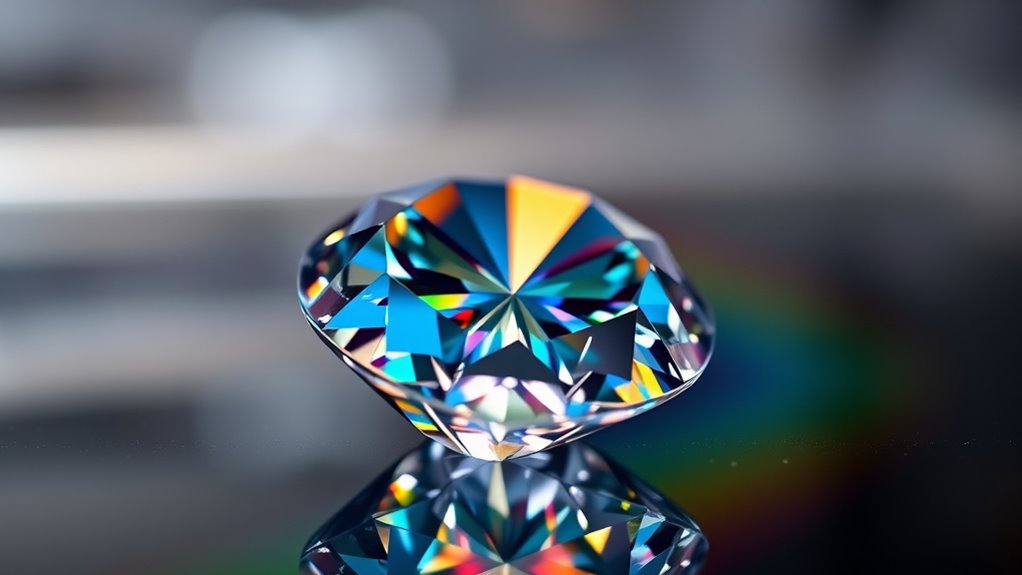
What Is a CZ Diamond and How Is It Made?
Finding the perfect diamond look-alike that won’t break the bank can feel like an impossible task. If you’ve ever been overwhelmed by the high prices of real diamonds, you’re not alone. Many people struggle to find a stunning, affordable alternative that still shines brilliantly.
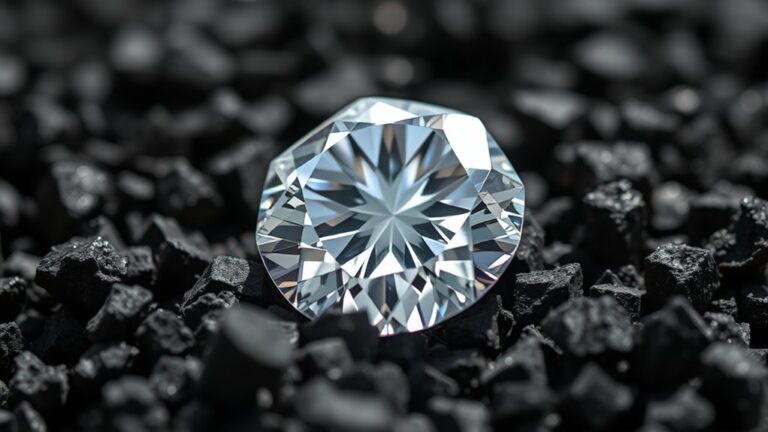
A CZ diamond, or cubic zirconia, is a lab-grown gemstone designed to look like a real diamond but at a fraction of the cost. It’s made by dissolving zirconium oxide powder under high heat and pressure, allowing crystals to slowly form in a controlled environment over several weeks.
This process guarantees clarity and sparkle. If you want to understand how these gems stack up against real diamonds and their uses, there’s plenty more to investigate.
Key Takeaways
- CZ diamonds, or cubic zirconia, are synthetic gemstones resembling real diamonds. They are made from lab-grown zirconium dioxide crystals.
- They are produced using the hydrothermal method, which involves dissolving zirconium oxide powder under high pressure and temperature for several weeks.
- Trace elements like yttrium or calcium stabilize the crystal structure during the manufacturing process.
- CZ diamonds undergo precise cutting and polishing to enhance sparkle and mimic the look of natural diamonds.
- This controlled process ensures excellent clarity, refractive properties, and versatility in color and design.
What Is a Cubic Zirconia (CZ) Diamond?
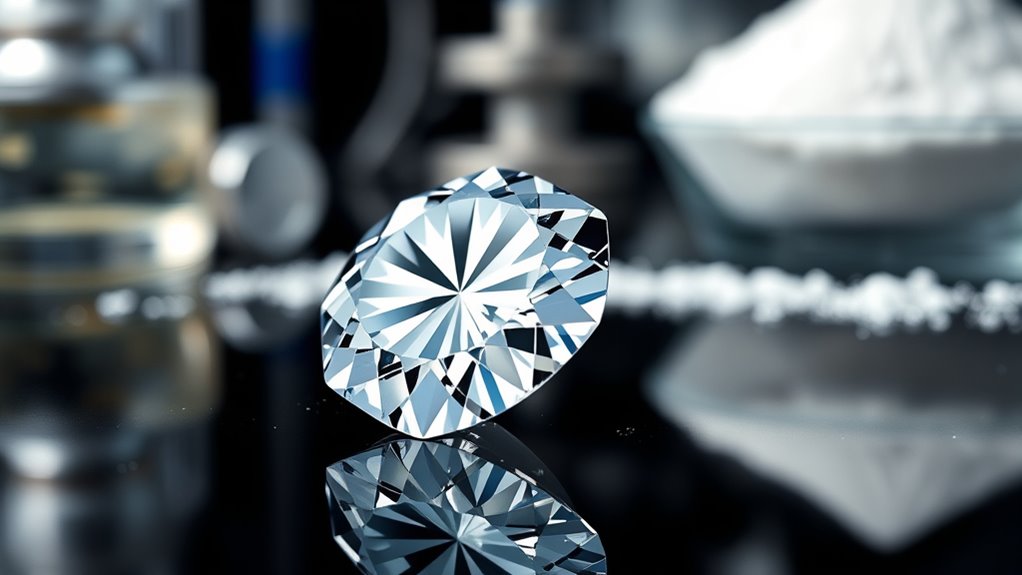
A cubic zirconia (CZ) diamond is a synthetic gemstone that closely resembles a real diamond but costs much less. You’ll find that its origins trace back to the late 1970s, when advances in technology allowed for the creation of this affordable diamond alternative.
The cubic zirconia history begins with scientists developing a way to grow zirconium dioxide crystals in a lab, producing stones with remarkable brilliance and clarity. When you wear a CZ diamond, you’re enjoying a gem crafted through controlled processes rather than mined from the earth.
This synthetic nature makes CZ diamonds accessible to many, offering a visually stunning option without the high price tag. Understanding CZ diamond origins helps you appreciate how science shaped this popular choice in jewelry.
How Do CZ Diamonds Compare to Real Diamonds?
When you look at CZ diamonds, you’ll notice they sparkle brightly, but it’s a different kind of sparkle compared to real diamonds. You might also want to think about how durable each stone is and what kind of value they hold over time. So, let’s take a closer look at these key differences to help you make a smart choice.
Appearance And Sparkle
Sparkle plays a huge role in what draws people to diamonds, and CZ diamonds definitely catch your eye with their brilliance. When you compare CZ diamonds to real diamonds, you’ll notice both shine brightly, but brilliance factors differ.
CZ diamonds have excellent light refraction, which means they bend light well, creating a dazzling sparkle. However, their light refraction index is slightly lower than that of real diamonds, so their fire and scintillation might appear less intense under certain lighting.
You’ll find CZs often look clearer and more flawless, while real diamonds show subtle inclusions and depth. Overall, CZ diamonds offer impressive sparkle that rivals real ones, making them a visually appealing choice if you want brilliance without the high cost.
Durability And Value
Although CZ diamonds look stunning, they don’t match real diamonds in durability and long-term value. When you consider durability factors, CZs are softer and more prone to scratches and chips. Real diamonds, rated 10 on the Mohs scale, endure daily wear much better.
Value retention is another key difference. While CZs are affordable upfront, they don’t hold their worth over time like natural diamonds do.
| Feature | CZ Diamond |
|---|---|
| Durability | Softer, scratches easily |
| Value Retention | Minimal, depreciates quickly |
| Appearance | Sparkly but less brilliant |
| Cost | Much lower initially |
If you want lasting sparkle and investment, real diamonds outperform CZs on durability and value.
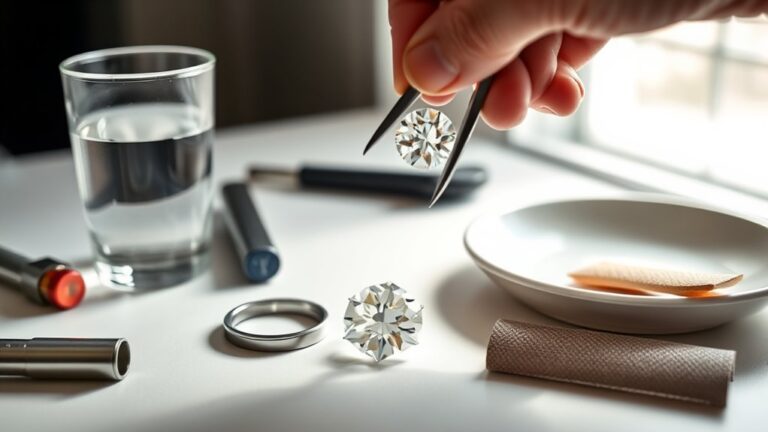
How Can You Tell a CZ Diamond From a Real Diamond?
You can spot differences between CZ diamonds and real ones by taking a closer look at their visual traits, weight, and hardness. Each of these factors gives you clues that help separate the two.
For example, CZ diamonds tend to be a bit heavier than real diamonds of the same size. And when it comes to hardness, real diamonds are much tougher, so they resist scratches better.
Another handy method is the thermal conductivity test. Real diamonds conduct heat quickly, while CZ stones don’t, making this test a reliable way to tell them apart.
Visual Differences
The most noticeable visual difference between a CZ diamond and a real diamond lies in their brilliance and fire. When you look closely, CZ stones often display more colorful flashes of light, making them appear overly sparkly compared to natural diamonds.
Real diamonds have subtle color variations and a unique way of reflecting light that gives them a sharper, more complex sparkle. You’ll also notice clarity grades differ: CZ diamonds tend to be flawless because they’re lab-made, while natural diamonds usually have tiny inclusions.
This means CZs can sometimes look too perfect or glassy. By paying attention to these visual cues, like color variations and clarity grades, you can better distinguish a CZ diamond from a genuine diamond without needing specialized equipment.
Weight And Hardness
Weight and hardness provide key clues for distinguishing a CZ diamond from a real one. When you perform a weight comparison, CZ (cubic zirconia) is particularly heavier than a diamond of the same size. This difference stands out because CZ has a higher density.
On the hardness scale, diamonds score a perfect 10, making them extremely resistant to scratches. CZ ranks around 8-8.5, which means it’s softer and more prone to wear over time.
Here’s how you can tell the difference:
- Check the weight: CZ feels heavier than a diamond of equal size.
- Assess scratch resistance: Diamonds resist scratches much better due to their superior hardness.
- Observe wear over time: CZ may show signs of dulling faster than a real diamond.
These factors help you identify CZ versus real diamonds effectively.
Thermal Conductivity Test
Although it might seem tricky at first, you can quickly distinguish a CZ diamond from a real diamond by using a thermal conductivity test. This testing method relies on the different thermal properties of each stone.
Real diamonds conduct heat exceptionally well, while CZ diamonds don’t transfer heat as efficiently. By placing a thermal tester’s probe on the stone, you’ll get an immediate readout indicating whether it’s a genuine diamond or a CZ.
Since CZ mimics diamond’s optical qualities but lacks its superior heat conductivity, this test provides a reliable way to tell them apart. Using thermal conductivity testing methods is simple, fast, and widely used by jewelers, so you can confidently verify your stone’s authenticity without damaging it.
Why Are CZ Diamonds a Popular Alternative to Real Diamonds?
Because you want stunning sparkle without the hefty price tag, CZ diamonds have become a go-to choice for many. They offer affordable luxury that lets you enjoy brilliance comparable to real diamonds without breaking the bank. Plus, choosing CZs is an ethical choice, as they cause no environmental harm or labor concerns tied to mining.
Here’s why CZ diamonds are so popular:
- Cost-effectiveness: You get eye-catching sparkle at a fraction of the price of natural diamonds.
- Visual appeal: CZs closely mimic the look of real diamonds with excellent clarity and fire.
- Ethical sourcing: Created in labs, CZs avoid the social and environmental issues linked to diamond mining.
This combination makes CZ diamonds a smart, stylish alternative you can feel good about.
Common Uses for CZ Diamonds in Jewelry
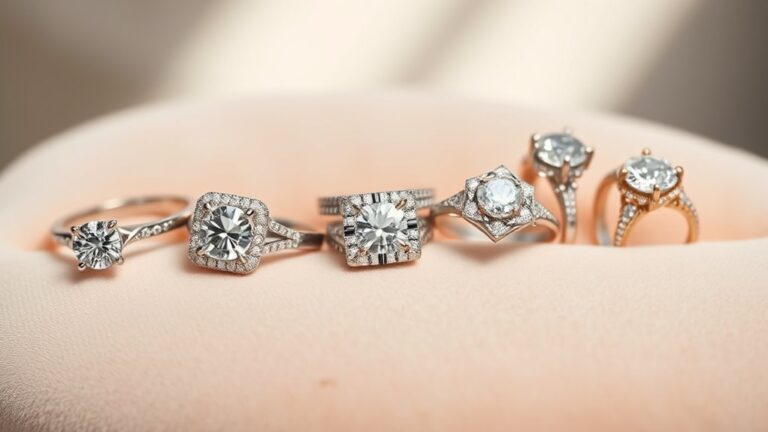
You’ll find CZ diamonds in all kinds of popular jewelry—rings, earrings, necklaces, you name it. Because they’re affordable, it’s super easy to get your hands on stunning pieces without spending a fortune. And the best part? CZ stones are really versatile when it comes to design, so you can pick styles that perfectly match your unique taste.
Popular Jewelry Types
Three of the most popular jewelry types featuring CZ diamonds are rings, earrings, and necklaces. You’ll find CZ diamonds beautifully accentuating various styles, from vintage to minimalist designs. Here’s how these pieces stand out:
- Rings: CZ diamonds add sparkle to engagement and fashion rings, often set in intricate vintage styles or sleek minimalist designs.
- Earrings: Studs and hoops with CZ diamonds enrich everyday looks and special occasions, offering versatile elegance.
- Necklaces: Pendants with CZ diamonds provide a subtle shimmer, perfect for layering or wearing solo in minimalist designs.
Affordability and Accessibility
Although natural diamonds can be costly, CZ diamonds provide a budget-friendly alternative that doesn’t sacrifice sparkle or style. You’ll enjoy significant cost benefits with CZs, making them accessible for everyday wear or special occasions without breaking the bank.
Market trends show a growing popularity for CZ diamonds, especially among younger buyers who want brilliance and affordability combined. Because they’re more affordable, you can experiment with different jewelry pieces like rings, earrings, and necklaces without worrying about high prices.
This accessibility opens up opportunities to own dazzling jewelry that fits your budget and lifestyle. In short, CZ diamonds let you enjoy beautiful, sparkling pieces while staying financially savvy, reflecting the evolving demand for stylish yet affordable options in the jewelry market.
Design Versatility
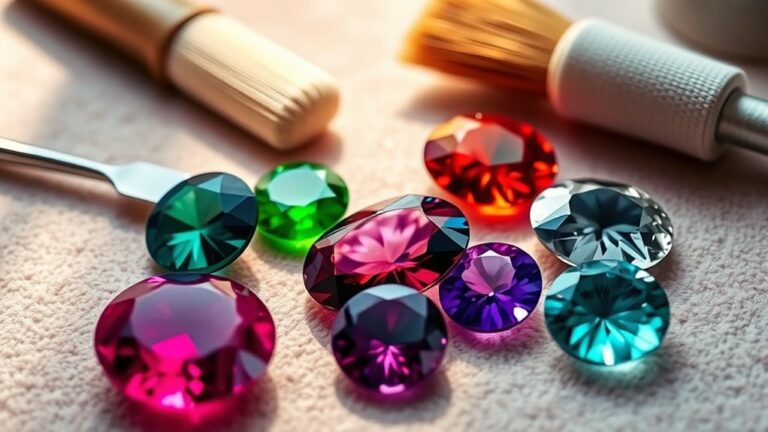
Beyond affordability, CZ diamonds offer remarkable design versatility that makes them a favorite in jewelry creation. When you choose CZ diamonds, you tap into a world of color options that range from classic clear to vibrant hues, letting you customize pieces to your style. Their adaptability to various setting styles means you can experiment without worry.
Here are three common uses for CZ diamonds in jewelry:
- Engagement Rings You can select from solitaire to halo settings, creating stunning, budget-friendly alternatives.
- Fashion Jewelry CZs shine in trendy earrings and bracelets, where playful colors and shapes pop.
- Statement Pieces Bold necklaces and cocktail rings benefit from the wide range of CZ colors and cuts, making them show-stoppers.
With CZ diamonds, your jewelry design possibilities truly expand.
Materials Used in Cubic Zirconia (CZ) Diamonds
Cubic zirconia (CZ) diamonds rely on a specific blend of materials to achieve their brilliant sparkle and durability. At their core, CZ stones are made from zirconium dioxide, a synthetic compound crafted through advanced manufacturing processes.
Thanks to their synthetic origins, these materials are carefully controlled to produce consistent clarity and refractive properties that mimic natural diamonds. You’ll also find trace elements like yttrium or calcium added during production to stabilize the crystal structure and improve toughness.
This precise material composition allows CZ diamonds to maintain their shine and resist scratches, making them a popular, affordable alternative to real diamonds. Understanding these materials helps you appreciate how synthetic origins and refined manufacturing come together to create stunning CZ diamonds.
How Are CZ Diamonds Made?
When you want to understand how CZ diamonds are made, it helps to start with the manufacturing process called the hydrothermal method. This technique is one of the key synthesis methods used to create the perfect cubic zirconia crystal structures. Here’s how it works:
- Raw zirconium oxide powder is placed in a high-pressure vessel with stabilizers.
- The vessel is heated to extremely high temperatures, causing the material to dissolve and recrystallize.
- Over several weeks, the crystal structures grow layer by layer, forming flawless CZ diamonds.
This controlled environment guarantees the cubic crystal lattice forms uniformly, giving CZ diamonds their brilliance and durability. By mastering these synthesis methods, manufacturers produce gem-quality CZ diamonds that closely mimic natural diamonds in appearance and toughness.
How Is Crystal Growth Controlled in Cubic Zirconia Diamonds?
Although the hydrothermal method provides the ideal conditions for CZ diamond formation, controlling the crystal growth requires careful adjustments to temperature, pressure, and chemical composition. You need to monitor growth parameters closely to guarantee the crystal composition remains uniform and free from defects.
By precisely regulating these parameters, you influence the size, clarity, and structure of the cubic zirconia crystal. Small changes in temperature or pressure can speed up or slow down crystal growth, affecting quality.
Moreover, tweaking the chemical composition helps maintain the crystal’s stability and desired optical properties. Staying attentive to these factors lets you produce consistent, high-quality CZ diamonds with the brilliance and durability that make them popular alternatives to natural diamonds.
Cutting and Polishing Techniques for Sparkling CZ Diamonds
Once the CZ crystals have grown with the right clarity and structure, the next step is shaping them to maximize their sparkle. You’ll rely on precise cutting techniques and polishing methods to bring out the brilliance CZ diamonds are known for. Here’s how it works:
- Pre-forming: You cut the rough CZ crystal into a basic shape, removing imperfections while preserving weight.
- Faceting: Using advanced machines, you create multiple facets that improve light reflection and refraction.
- Polishing: Finally, you polish each facet meticulously to eliminate any dullness, achieving a mirror-like finish.
These steps require skill and precision, ensuring your CZ diamond shines with maximum fire and brilliance, mimicking the allure of natural diamonds flawlessly.
How Does the Cost of CZ Diamonds Compare to Other Simulants?
How much you pay for CZ diamonds compared to other simulants can vary widely, but you’ll generally find CZs offer excellent value. When you look at CZ pricing trends, these stones typically cost less than moissanite but more than basic glass or quartz simulants.
This balance makes CZ diamonds a popular choice if you want a convincing sparkle without a high price tag. In a simulant comparison, CZs stand out because they mimic the look of real diamonds closely while remaining affordable.
If you’re shopping on a budget but don’t want to sacrifice appearance, CZ diamonds are a smart pick. Their consistent pricing and impressive brilliance give you more sparkle for less money compared to many other diamond alternatives.
Frequently Asked Questions
Are CZ Diamonds Environmentally Friendly to Produce?
Yes, CZ diamonds are generally more environmentally friendly to produce compared to mined diamonds. When you choose CZs, you support sustainability practices that use less energy and create less waste.
You’ll also appreciate the ethical sourcing, as they don’t involve harmful mining or exploit local communities. By opting for CZ diamonds, you’re making a conscious choice that aligns with eco-friendly values and promotes responsible consumption in the jewelry industry.
Can CZ Diamonds Cause Allergic Reactions?
CZ diamond allergies are quite rare, so you probably won’t experience any issues wearing them. However, if you have sensitive skin or metal sensitivities, you might notice some irritation, especially from the metal settings rather than the CZ stone itself.
To avoid CZ diamond sensitivity, choose hypoallergenic metals like titanium or platinum. Always test new jewelry on a small skin area to see how your skin reacts before regular use.
How Durable Are CZ Diamonds for Everyday Wear?
You know what they say, “Don’t judge a book by its cover,” and that’s true for CZ diamond durability. While CZ diamonds look stunning, they’re not as hard as natural diamonds, so they can scratch or chip more easily with everyday wear.
If you’re careful and avoid rough activities, your CZ will hold up well. Just remember, CZ diamonds need a bit more gentle treatment to keep their sparkle day-to-day.
Do CZ Diamonds Require Special Cleaning Methods?
No, CZ diamonds don’t require special cleaning methods, but you should follow simple cleaning techniques to keep them sparkling. Use warm, soapy water and a soft brush to gently clean your CZ jewelry.
Avoid harsh chemicals or ultrasonic cleaners, which might damage the stone’s surface. For maintenance tips, store your CZ pieces separately to prevent scratches and clean them regularly to maintain their shine and brilliance.
Are CZ Diamonds Available in Different Colors?
Think of CZ diamonds as chameleons, ready to reflect your mood or style through stunning color variations. Yes, you’ll find CZs in a rainbow of hues, from icy whites to vibrant blues and fiery reds.
Unlike natural diamonds, their color grading is consistent, ensuring you get exactly the shade you want without surprises. So, you can confidently pick a CZ that matches your personality or outfit, making every piece distinctly yours.
Conclusion
When you choose a CZ diamond, you’re fundamentally owning a dazzling marvel that outshines expectations without wrecking your wallet. These gems sparkle so brilliantly, they could fool even the most discerning eye and they’re crafted with such precision, it’s like holding a tiny masterpiece.
So, whether you’re chasing luxury or just stunning sparkle, CZ diamonds prove you don’t need a king’s ransom to wear regal brilliance every day. In the end, a CZ diamond lets you enjoy that royal glow without the royal price.