
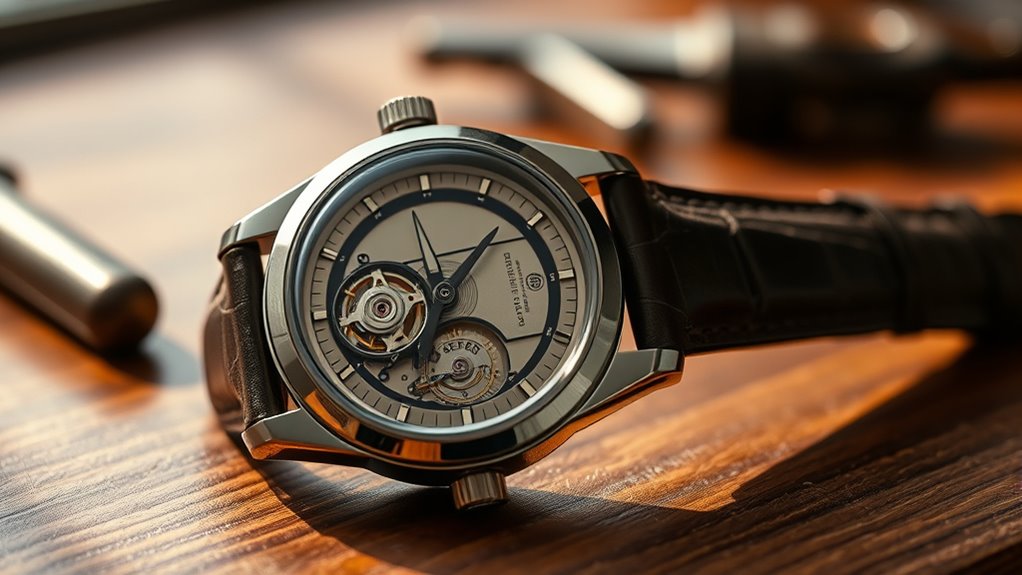
What Are Self-Winding Watches and How Do They Work?
Struggling to keep your watch running without constantly winding it or swapping batteries? You’re not alone. Many people find it frustrating to deal with the hassle of manual winding or the inconvenience of dead batteries.
That’s why self-winding watches have become such a popular choice—they offer a seamless way to keep time without the extra effort.
Self-winding watches, or automatics, keep themselves powered using the natural motion of your wrist. Inside, a rotor spins as you move, converting kinetic energy into winding the mainspring without batteries or manual effort.
Wearing your watch regularly guarantees it stays charged through everyday activities like walking or typing. These watches combine craftsmanship with convenience.
If you want to understand their inner workings, maintenance tips, and top brands, there’s plenty more to uncover.
Key Takeaways
- Self-winding watches use wrist motion to generate kinetic energy, eliminating the need for batteries or manual winding.
- A rotor inside the watch spins with movement, tightening the mainspring to power the watch continuously.
- Regular wearing ensures the rotor captures enough energy to maintain power and accurate timekeeping.
- Power reserves allow the watch to run for hours or days without wrist movement after being fully wound.
- Proper maintenance, including cleaning and professional servicing, ensures optimal performance and longevity of self-winding watches.
What Is a Self-Winding Watch and How Is It Different?
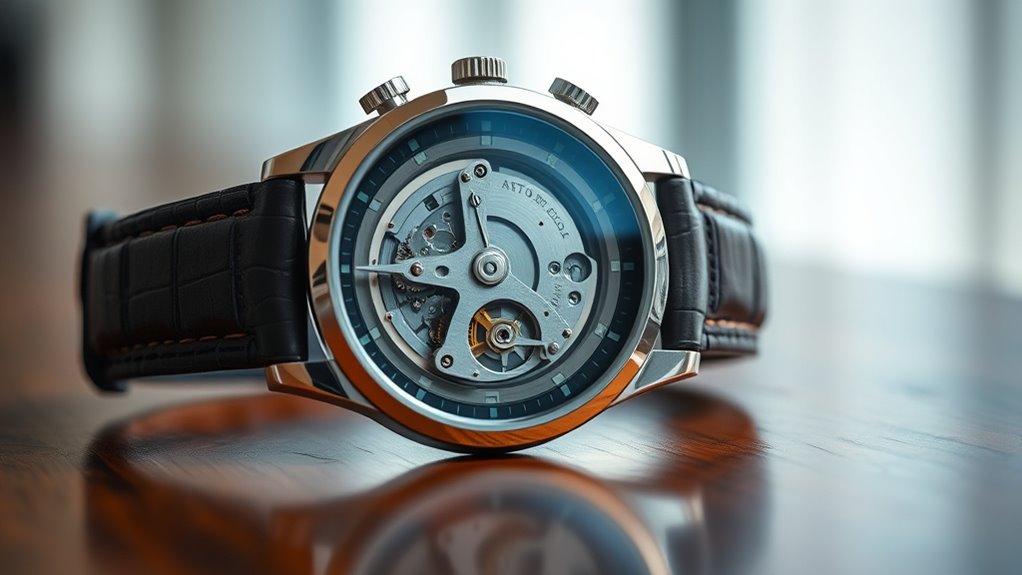
Although you might be familiar with traditional watches that require manual winding, a self-winding watch operates differently by using your natural wrist movements to keep the watch powered. Among various watch types, self-winding watches, also known as automatic watches, stand out because their movement mechanics harness kinetic energy from your motion.
Unlike quartz or manual watches, which rely on batteries or hand-wound springs, these watches contain a rotor that spins as you move, winding the mainspring automatically. This innovative design means you don’t have to remember to wind your watch daily, as long as you wear it regularly.
Understanding this difference helps you appreciate how movement mechanics shape the convenience and functionality unique to self-winding watch types compared to others.
How Does a Self-Winding Watch Movement Work?
You’ll find that a self-winding watch uses a rotor mechanism to capture your wrist’s movement. So, as you move around during the day, the rotor spins and transfers energy to wind the mainspring automatically.
It’s pretty clever because this means your watch stays powered without you having to wind it manually. Let’s take a closer look at how this whole process works to keep your watch ticking smoothly.
Rotor Mechanism Function
The rotor mechanism powers a self-winding watch by converting your wrist’s natural movements into energy. Inside the watch, a semicircular rotor swings freely as you move, winding the mainspring without any effort on your part.
Different rotor types affect how efficiently this happens, from full rotors that spin 360 degrees to micro-rotors embedded within the movement. Rotor materials also play a key role. Heavier materials like gold or tungsten improve winding efficiency by increasing inertia, while lighter ones reduce overall weight.
Here’s how it works:
- Your wrist motion causes the rotor to pivot.
- The rotor’s movement transfers energy to the winding system.
- This energy tightens the mainspring gradually.
- The watch stays powered without manual winding.
This clever mechanism keeps your watch running smoothly just by wearing it.
Energy Storage Process
Energy storage in a self-winding watch relies on the mainspring, which gradually tightens as the rotor moves. When you wear the watch, your wrist’s motion spins the rotor, triggering energy transfer through a series of gears.
This energy transfer winds the mainspring, storing potential energy that powers the watch mechanics. As the mainspring unwinds, it releases this stored energy in a controlled way, driving the gear train and regulating components to keep accurate time.
The efficiency of this process depends on how well the watch converts your movements into stored energy. So, every time you move, you’re actively contributing to the watch’s power reserve, ensuring it runs smoothly without manual winding.
Understanding this energy storage process helps you appreciate the intricate mechanics behind self-winding watches.
The Role of the Rotor in Powering Your Watch
One key component that keeps your self-winding watch running smoothly is the rotor. This semicircular weight rotates freely inside the watch case, converting your wrist’s movements into energy. The rotor design and placement directly impact how effectively it winds the mainspring.
Different rotor types, from full-circle to skeletonized, influence rotor movement and overall rotor efficiency. Manufacturers use various rotor materials like tungsten or gold to maximize weight and durability. Innovations in rotor design have improved winding speed and reduced wear.
Rotor types and materials like tungsten or gold enhance winding efficiency and durability through innovative design.
To keep your watch performing well, rotor maintenance is essential. A damaged rotor can hinder energy transfer. Understanding these factors helps you appreciate how your watch stays powered through clever engineering.
- Rotor design affects winding efficiency.
- Rotor materials balance weight and durability.
- Rotor placement guarantees ideal movement.
- Regular rotor maintenance preserves performance.
How Wrist Motion Powers a Self-Winding Watch
Every time you move your wrist, you’re actually powering your self-winding watch. The natural motion you make generates kinetic energy that drives the watch mechanics inside.
As you go about your day, this energy causes the rotor, a weighted semicircular piece, to spin. That spinning motion transfers energy to the mainspring, winding it and storing power.
This process means your watch remains powered without manual winding as long as you keep wearing it and moving. The efficiency of this system depends on the variety and frequency of your wrist movements.
Simple gestures like walking or typing create enough kinetic energy to keep the watch running smoothly. This seamless conversion of your wrist motion into mechanical energy is what makes self-winding watches so convenient and reliable.
Key Parts Inside a Self-Winding Watch Movement
When your wrist moves, the rotor inside the watch spins, setting a series of components into motion that keep your timepiece running. Here are the key parts inside a self-winding watch movement that you should know:
- Winding Mechanism: Converts the rotor’s movement into mainspring tension, storing energy.
- Mainspring: Stores the energy that powers the watch, maintaining the power reserve.
- Gear Train: Transfers energy from the mainspring to the escapement mechanism.
- Escapement Mechanism & Balance Wheel: Regulate energy release, ensuring accurate timekeeping, aided by jewel bearings that reduce friction.
All these components work inside the watch casing, making your self-winding watch both reliable and efficient without manual winding.
Debunking Common Myths About Self-Winding Watches
How much do you really know about self-winding watches? It’s time for some myth busting to clear up common misconceptions. Many believe self-winding watches stop working if you don’t wear them constantly, but they actually store power for hours or days.
Another myth is that these watches need manual winding every day, which isn’t true if you wear them regularly. Finally, some think self-winding watches are less accurate than quartz watches, but quality automatics can be very precise.
| Myth | Reality |
|---|---|
| Must be worn constantly | Power reserve lasts hours or days |
| Requires daily manual winding | Winding only needed if unworn for long periods |
| Less accurate than quartz | High-quality models offer excellent accuracy |
Understanding these clears up common misconceptions about these elegant timepieces.
Benefits of Wearing a Self-Winding Watch Daily
When you wear a self-winding watch every day, it keeps accurate time because it powers itself through your movements. So, you don’t have to fuss with winding it manually or worrying about changing batteries. This makes taking care of your watch a whole lot easier.
Let’s take a closer look at how these benefits can actually make your daily life better.
Enhanced Timekeeping Accuracy
Although self-winding watches rely on your daily movements to stay powered, they also maintain impressive timekeeping accuracy as a result. Thanks to advanced timekeeping mechanisms and precision engineering, these watches keep consistent time without manual winding.
When you wear one daily, you benefit from continuous motion that optimizes the watch’s energy reserve. You also get stable power delivery, which reduces fluctuations that affect accuracy.
Plus, these watches use high-quality components designed to minimize time deviations. They also have automatic adjustments that keep the watch running smoothly.
Convenience And Maintenance Benefits
Because self-winding watches harness your natural movements, they free you from the hassle of daily manual winding. When you wear your watch every day, its rotor constantly winds the mainspring, maintaining a steady power reserve. This means you won’t have to reset the time or date frequently, saving you time and effort.
Plus, daily wear keeps the lubricants inside the movement evenly distributed, reducing the risk of parts drying out or malfunctioning. You’ll also avoid the inconvenience of your watch stopping unexpectedly if you wear it regularly. Overall, self-winding watches offer convenience and low maintenance, making them ideal if you want a reliable, hassle-free timepiece that works seamlessly with your lifestyle.
How to Care for and Maintain Your Self-Winding Watch
Caring for your self-winding watch involves a few simple but essential steps to keep it running smoothly and accurately. Proper watch cleaning and winding techniques are key. Here’s how to maintain your timepiece:
- Clean your watch regularly with a soft cloth to remove dirt and sweat. Avoid using harsh chemicals.
- Wear it daily or manually wind it if unused for over 48 hours to keep the mechanism active.
- Avoid exposing your watch to magnets and extreme temperatures because they can affect accuracy.
- Have your watch professionally serviced every 3-5 years to ensure all parts function properly.
What to Look For When Buying a Self-Winding Watch
Keeping your self-winding watch in top condition means knowing what features will best suit your lifestyle and preferences while purchasing one. Focus on watch features like water resistance if you’re active outdoors or a transparent case back if you appreciate seeing the movement.
Consider the power reserve. Longer reserves mean less winding when you don’t wear it daily. Look for a reliable automatic movement, as it affects accuracy and durability.
Regarding buying tips, always check the watch’s size and weight to guarantee comfort. Verify the warranty and service options, so you’re covered in case of issues.
Finally, choose a style that matches your wardrobe and daily activities, making your self-winding watch both functional and enjoyable to wear.
Top Self-Winding Watch Brands and Models to Know
When you’re ready to explore the best self-winding watches on the market, knowing which brands consistently deliver quality and innovation can guide your choice. Luxury brands have perfected automatic movements, combining craftsmanship with style. Here are popular models you should check out:
Discover top self-winding watches where craftsmanship meets innovation, guiding your choice among luxury automatic timepieces.
- Rolex Submariner: Iconic for its durability and precision.
- Omega Seamaster: A favorite among divers and collectors.
- Tag Heuer Carrera: Known for sporty elegance and reliability.
- Seiko Presage: Offers great value with classic design and robust mechanics.
Each of these brands and models represents a strong commitment to automatic watchmaking. By focusing on these, you’ll find a self-winding watch that suits your style and meets your expectations for longevity and performance.
Frequently Asked Questions
Can Self-Winding Watches Be Manually Wound if Not Worn?
Yes, you can manually wind your self-winding watch if you’re not wearing it regularly. Manual winding helps keep the watch running smoothly and supports proper watch maintenance.
How Accurate Are Self-Winding Watches Compared to Quartz Watches?
Think of self-winding watches as skilled dancers, their mechanical movements gracefully keeping time, while quartz watches are like metronomes, precise and unwavering. When you look at accuracy comparison, quartz movements usually outshine self-winding ones, losing only a few seconds per month compared to several seconds daily in mechanical types.
What Happens if a Self-Winding Watch Is Overwound?
If you overwind a self-winding watch, you typically won’t damage it because most modern watch mechanisms have a built-in slipping clutch that prevents overwinding effects. This clutch stops the mainspring from tightening too much, protecting the watch.
However, forcing the crown too much on older models without this feature could harm the watch mechanisms. So, you should be gentle and let the automatic system handle winding during normal wear.
Are Self-Winding Watches Water-Resistant by Default?
No, self-winding watches aren’t water-resistant by default. You have to check the specific model’s water resistance rating, which depends on watch materials and construction.
Some use special seals and corrosion-resistant metals to keep water out, but others don’t. If you want to wear your self-winding watch around water, make sure it’s designed for that, or you risk damaging the delicate mechanisms inside.
Can Magnetic Fields Affect the Performance of a Self-Winding Watch?
Yes, magnetic interference can affect your self-winding watch’s performance. Studies show that over 60% of watch malfunctions relate to magnetic fields disrupting the balance spring.
When exposed, your watch may run fast, slow, or stop entirely. To avoid this, you should practice regular watch maintenance and keep it away from strong magnets like speakers or smartphones. Proper care guarantees your watch stays accurate and reliable over time.
Conclusion
So, you want a watch that winds itself while you do nothing? Ironically, you’ve got to keep moving for it to work, no lounging on the couch all day! Self-winding watches cleverly turn your daily hustle into a power source, making manual winding almost a relic.
Just wear it, keep it ticking, and enjoy the blend of tradition and innovation on your wrist. Who knew staying active could be so stylishly rewarding? That’s the magic of self-winding watches.