
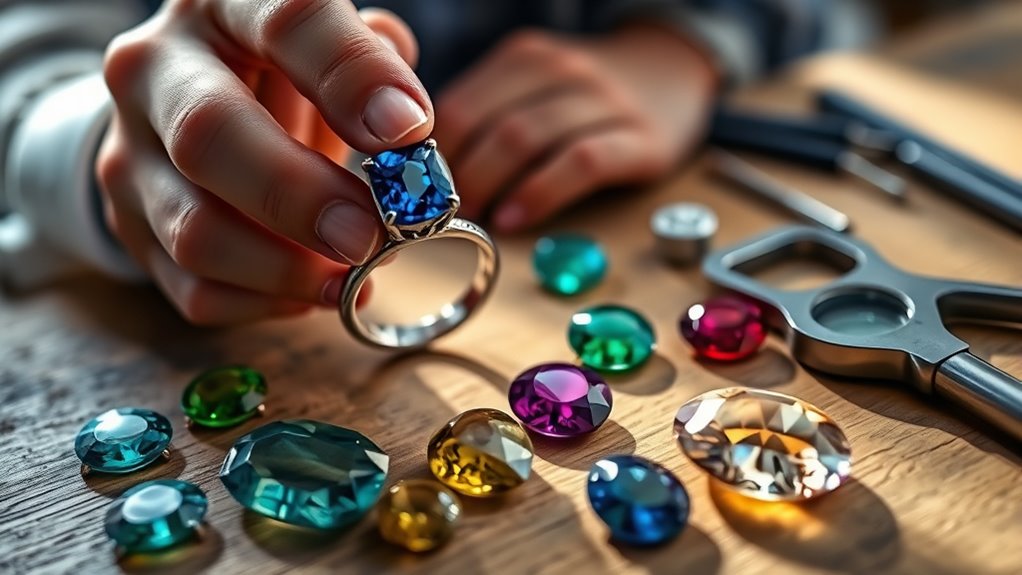
How Are Gemstones Used Practically?
Finding practical uses for gemstones beyond their beauty can be tricky. You’re not alone if you’ve wondered how these precious stones actually fit into everyday life. Many people struggle to see past the sparkle and appreciate their real-world value.
You use gemstones far beyond just wearing them—they keep your electronics running smoothly by stabilizing circuits and making LEDs durable.
Their hardness and clarity guarantee precision in medical tools and instruments you rely on. In industries, they help cut and polish with unmatched accuracy, while synthetic stones offer eco-friendly, cost-effective options.
Plus, gemstones play key roles in scientific study and even promote wellness. If you investigate further, you’ll uncover even more fascinating ways these gems impact your daily life.
Key Takeaways
- Gemstones are used in electronics for timing circuits, durable substrates, and LED manufacturing because of their stable frequencies and crystal quality.
- Their hardness and thermal stability make gemstones perfect for precision instruments, helping ensure durability and accurate measurements.
- In medical tools, gemstones improve surgical blade accuracy and support alternative therapies with their resilience and therapeutic properties.
- Diamonds and other gemstones act as abrasives in cutting, grinding, and polishing industrial tools, often with sustainable sourcing practices.
- Synthetic gemstones offer affordable, consistent alternatives for manufacturing. They help reduce environmental impact while maintaining reliable quality.
Overview: Practical Uses of Gemstones Beyond Jewelry

Although most people associate gemstones with jewelry, they serve many practical purposes beyond adornment. When you investigate gemstone sustainability, you’ll see how responsibly sourced stones reduce environmental impact and support ethical mining practices. Understanding this is essential, and gemstone education helps you appreciate the value of sustainable choices.
Beyond their beauty, gemstones have applications in industries like healing therapies, where their unique properties are believed to promote wellness. You might also find them in scientific instruments due to their hardness and durability. By learning about these practical uses, you recognize that gemstones contribute more than just sparkle; they impact health, science, and the environment.
Embracing gemstone education empowers you to make informed decisions and support sustainability in this fascinating field.
How Gemstones Improve Technology and Electronics
You probably don’t realize it, but you rely on quartz crystals every day in devices like watches and smartphones. That’s because they keep time super accurately. And it’s not just quartz—sapphire is important too. It provides tough, durable substrates that help manufacturers build semiconductors. So, let’s take a closer look at how these gemstones actually make your technology work better.
Quartz in Electronic Devices
When you power on your smartphone or computer, quartz crystals play an essential role behind the scenes. Quartz’s unique property, quartz resonance, allows it to vibrate at a precise, stable quartz frequency. This vibration helps regulate the timing circuits inside your devices, ensuring everything runs smoothly and accurately.
You rely on quartz crystals in watches, clocks, and countless electronic gadgets because they provide consistent signals that coordinate digital processes. Without quartz frequency control, your device’s processor would lack a steady clock signal, causing errors or malfunctions.
Quartz’s reliability and affordability make it indispensable in electronics, helping maintain synchronization and improving performance in technology you use daily.
Sapphire in Semiconductor Manufacturing
Because sapphire offers exceptional hardness and thermal stability, manufacturers use it extensively in semiconductor production. When you work with semiconductors, you need materials that can withstand high temperatures and mechanical stress without degrading.
Sapphire’s unique properties, such as its durability and excellent thermal conductivity, make it ideal as a substrate for growing semiconductor wafers. These sapphire properties guarantee that devices remain stable and efficient during operation.
You’ll also find sapphire used in LED manufacturing because it supports superior crystal growth compared to other substrates. The semiconductor advantages of sapphire include improved device performance, longer lifespan, and resistance to contamination.
How to Choose Gemstones for Precision Instruments
Although selecting gemstones for precision instruments may seem straightforward, it requires careful consideration of factors like hardness, thermal stability, and optical clarity. You need to evaluate gemstone properties that directly impact performance in precision applications.
Hardness guarantees durability and resistance to scratches, which is essential for maintaining accuracy over time. Thermal stability prevents expansion or contraction from temperature changes, keeping measurements reliable.
Optical clarity matters when gemstones are used in lenses or sensors because impurities can distort results. You should also consider chemical inertness to avoid reactions that could degrade the instrument.
Why Gemstones Are Essential in Medical Tools and Treatments
The qualities that make gemstones valuable in precision instruments also improve their role in medical tools and treatments. You’ll find that their hardness and durability make them ideal for surgical applications like scalpel blades and laser components, enhancing accuracy and safety.
Beyond tools, gemstone therapies have gained attention for their healing properties, supporting medical advancements in alternative treatments. By integrating specific gemstones, practitioners aim to promote recovery and overall well-being.
You can see these therapies complement conventional medicine, offering patients holistic options. Whether used in devices or treatments, gemstones contribute greatly to modern healthcare by combining physical resilience with potential therapeutic benefits, making them essential in both surgical and healing contexts.
How Gemstones Help Industrial Manufacturing
You’ll find that gemstones play a vital role in industrial manufacturing, especially when it comes to cutting and grinding tools. Because of their hardness, they make perfect abrasives for shaping and polishing materials. So, let’s take a closer look at how these qualities actually boost efficiency and precision in production processes.
Cutting and Grinding Tools
Gemstones play an essential role in cutting and grinding tools that shape industries today. When you use these tools, you’re benefiting from gemstone applications that provide unmatched hardness and durability.
Diamonds, for example, are a staple in industrial abrasives, enabling precise cutting of tough materials like metals and ceramics. You’ll find gemstones embedded in blades, drill bits, and grinding wheels, enhancing their efficiency and lifespan.
Their natural toughness allows manufacturers to achieve smoother finishes and tighter tolerances while minimizing tool wear. By relying on gemstones in cutting and grinding tools, you can improve productivity and reduce downtime in industrial processes.
These gemstone applications are indispensable for achieving high-quality results in manufacturing and construction.
Abrasive and Polishing Uses
Abrasives play an essential role in refining surfaces and enhancing the appearance of materials in industrial manufacturing. When you use gemstones as abrasive materials, you tap into their exceptional hardness, which helps you efficiently smooth, shape, and finish metals, glass, and ceramics.
Gemstones like diamond and corundum are popular for their durability and cutting power, making them perfect for tough abrasive tasks. You can apply advanced polishing techniques with these gemstones to achieve mirror-like finishes and precise surface textures.
Environmental Benefits of Using Gemstones in Industry
Although many might not realize it, using gemstones in industry can greatly reduce environmental impact. When you choose gemstones from sustainable sourcing, you support eco friendly materials that minimize harm to ecosystems. Gemstones are durable, reducing waste by lasting longer than synthetic alternatives. Plus, their natural properties often require less processing, saving energy and cutting emissions.
| Benefit | Description | Example Use |
|---|---|---|
| Sustainable sourcing | Ethically mined with minimal damage | Conflict-free diamonds |
| Durability | Long-lasting, reducing waste | Industrial abrasives |
| Energy efficiency | Less processing required | Cutting tools |
| Eco friendly materials | Natural, biodegradable components | Optical instruments |
How Synthetic Gemstones Expand Practical Applications
You’ll find synthetic gemstones offer cost-effective material options that fit many budgets. Plus, they deliver improved industrial performance, which makes them ideal for tough applications. When you choose synthetics, you get access to qualities that natural stones sometimes just can’t provide.
Cost-Effective Material Options
When you choose synthetic gemstones, you gain access to cost-effective material options that expand practical applications across industries. These affordable alternatives allow you to enjoy the beauty and functionality of gemstones without the high price tag of natural stones.
Synthetic gems provide reliable quality and consistent properties, making them ideal for various uses where cost efficiency matters. Plus, they support sustainable sourcing by reducing the environmental impact and ethical concerns often linked to mining natural gemstones.
Whether you’re involved in manufacturing, jewelry design, or technology, synthetic gemstones offer a practical solution that balances budget and responsibility. By opting for these materials, you can reveal new possibilities without compromising on quality or your commitment to sustainability.
Enhanced Industrial Performance
Synthetic gemstones don’t just save you money; they also boost industrial performance in ways natural stones can’t match. When you use synthetic gems, you tap into consistent quality and durability that improves precision in cutting, grinding, and drilling tasks.
This reliability drives industrial innovation, allowing you to develop tools that perform better and last longer. Plus, synthetic gems promote gemstone sustainability by reducing the environmental impact of mining natural stones.
You get high-performance materials without depleting natural resources. Whether in electronics, manufacturing, or medical devices, synthetic gemstones expand practical applications by offering tailored properties not found in nature.
Why Gemstones Matter in Scientific Research
Although gemstones are often admired for their beauty, they play an essential role in scientific research that you might not expect. When you investigate gemstone research, you’ll find that these minerals help scientists understand crystal structures and properties.
Crystallography applications, for example, rely on certain gemstones to study atomic arrangements, improving material science and chemistry. You can also use gemstones as durable, precise tools in experiments, thanks to their hardness and stability.
Exploring Gemstones’ Roles in Science and Spirituality
Gemstones don’t just advance science; they also hold deep significance in spirituality and personal growth. You’ll find many cultures value gemstones for their spiritual significance, believing they channel energy and promote balance. People often use them for their healing properties, whether to reduce stress or improve meditation.
Here’s a quick look at how gemstones serve both science and spirituality:
| Role in Science | Role in Spirituality |
|---|---|
| Improve precision tools | Promote emotional healing |
| Enable advanced optics | Support meditation practices |
| Aid in technology | Symbolize protection and energy |
How Gemstone Durability Enhances Their Practical Uses
When you choose a gemstone for practical use, its durability plays a crucial role in how well it performs. You’ll want to take into account gemstone hardness, which measures resistance to scratching and impacts everyday wear.
Durability tests help you understand how a gemstone withstands pressure, heat, and chemicals, ensuring it suits your specific needs. For example, diamonds score high on the Mohs scale, making them ideal for jewelry worn daily.
In contrast, softer stones require gentler handling to avoid damage. By focusing on durability, you can select gemstones that maintain their beauty and function over time, whether in tools, electronics, or decorative items.
This practical approach helps you get the most value and longevity from your chosen gemstone.
Frequently Asked Questions
Can Gemstones Be Used in Everyday Household Items?
Yes, you can definitely use gemstones in everyday household items. You’ll find gemstone home decor pieces like coasters, lamps, and decorative bowls that add a unique sparkle to your space.
Some gemstone cleaning products use crushed gemstones to gently polish surfaces without scratching. By incorporating these items, you not only improve your home’s aesthetic but also enjoy the durability and natural beauty gemstones bring to everyday life.
What Gemstones Are Safest for Children to Handle?
You might worry about sharp edges or toxicity, but safe gemstones like amethyst, rose quartz, and aventurine are child friendly options that you can confidently let kids handle. These stones are durable, non-toxic, and smooth enough to avoid injury.
When your child holds a polished amethyst, imagine them feeling calm energy without any risk. Always choose tumbled or polished stones to guarantee safety, making gemstone exploration a fun, worry-free experience for you both.
Are There Any Cultural Restrictions on Using Gemstones Practically?
Yes, you’ll find cultural restrictions on using gemstones practically, because their cultural significance runs deep. In some cultures, certain gemstones carry strong symbolism tied to spirituality or status, so using them casually might be frowned upon or even forbidden.
You should always respect these traditions, as misusing gemstones could offend beliefs or disrupt cultural practices. Understanding gemstone symbolism helps you appreciate why some communities protect their use carefully.
How Do Gemstones Compare to Other Materials in Cost-Effectiveness?
You might be surprised to learn that the global gemstone market is expected to reach over $23 billion by 2027. When you conduct a cost analysis, gemstones often come with higher upfront costs compared to synthetic materials but can retain or increase value over time.
Market trends show rising demand for natural stones, making them more cost-effective long-term for investment or luxury purposes, unlike cheaper alternatives that may depreciate quickly.
Can Gemstones Be Recycled After Industrial Use?
Yes, you can recycle gemstones after industrial use, which is a smart move for gemstone sustainability. When gemstones serve industrial applications like cutting or grinding, they’re often coated or altered, but they can still be reclaimed and repurposed.
Conclusion
You might think gemstones are just for sparkle, but they’re silent heroes in tech, medicine, and industry. From precision instruments to cutting-edge research, their durability and unique properties make them indispensable.
Don’t underestimate these dazzling stones; they’re the quiet powerhouses shaping innovation every day. So next time you see a gemstone, remember: it’s not just beauty you’re looking at, but brilliance that changes the world of gemstones.