7 Factors That Determine How Much a 1 Carat Diamond Is Worth
Trying to figure out how much a 1 carat diamond is worth can feel overwhelming. You’re not alone—many people struggle with understanding what really drives a diamond’s price.
With so many factors at play, it’s easy to feel confused or unsure if you’re getting the best value.
You determine a 1 carat diamond’s worth by considering seven key factors. Carat weight sets the base price since larger stones are rarer and cost more.
Cut quality affects brilliance and appearance, while color grades influence rarity and demand. Clarity shows flaws that impact value, and certification guarantees authenticity.
Market demand and economic conditions also play big roles, affecting prices seasonally and over time. Understanding these elements helps you make smarter buying decisions and uncover more insights.
Key Takeaways
- Carat weight directly influences price, with even small increases causing significant value jumps due to rarity.
- Cut quality affects brilliance and appearance, making well-cut diamonds more valuable.
- Color grade impacts price, with higher grades (D-F) and rare colors increasing worth.
- Clarity grade determines value by reflecting the number and visibility of imperfections.
- Market demand, economic conditions, and seasonal trends cause price fluctuations for 1 carat diamonds.
What Determines the Price of a 1 Carat Diamond?
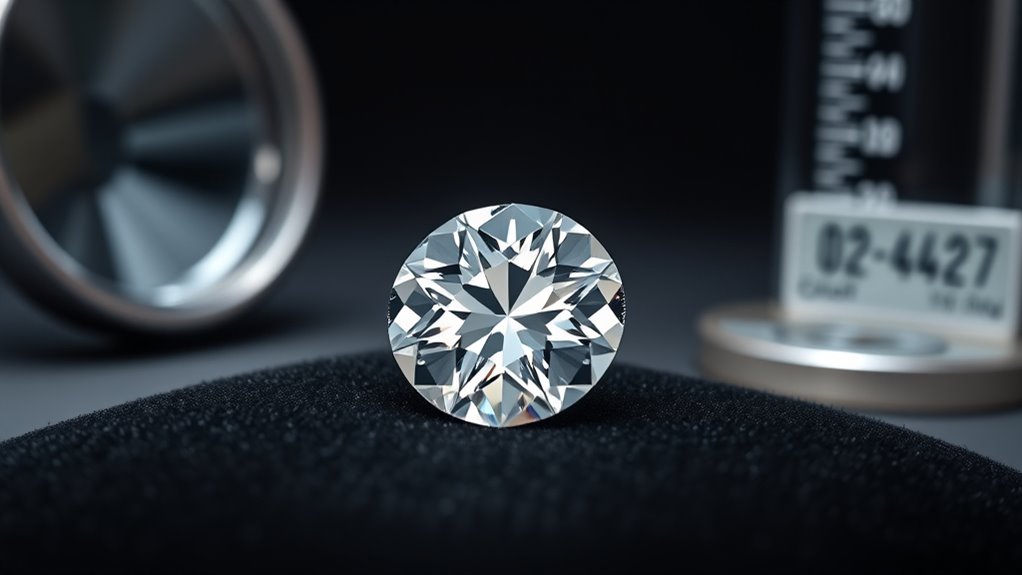
When you’re shopping for a 1 carat diamond, several key factors will directly impact its price. First, the diamond origin plays an essential role. Diamonds from reputable sources or rare locations often command higher prices due to their quality and ethical assurance.
Furthermore, market trends greatly influence pricing. If demand for 1 carat diamonds rises or supply tightens, prices increase accordingly. Conversely, a dip in market interest or new findings can lower costs.
Keep an eye on these trends and origins because they affect not just the base value but also the overall investment potential. Understanding these elements helps you make informed decisions, ensuring you get the best value for your 1 carat diamond without overpaying.
How Carat Weight Shapes Base Price
Carat weight plays a major role in setting the base price of a diamond, as it directly measures the stone’s size and rarity. When you understand the carat significance, you realize that even small increases in weight can lead to significant price jumps.
This happens because larger diamonds are much rarer, making their demand higher. Pricing trends clearly show that diamonds just over popular weight thresholds, like 1.0 carat, command premium prices compared to slightly smaller stones.
As a buyer, you’ll notice that two diamonds with similar color and clarity might differ greatly in cost due to their carat weight alone. So, knowing how carat weight shapes the base price helps you make smarter decisions when shopping for a 1 carat diamond.
Why Cut Quality Matters for 1 Carat Diamonds
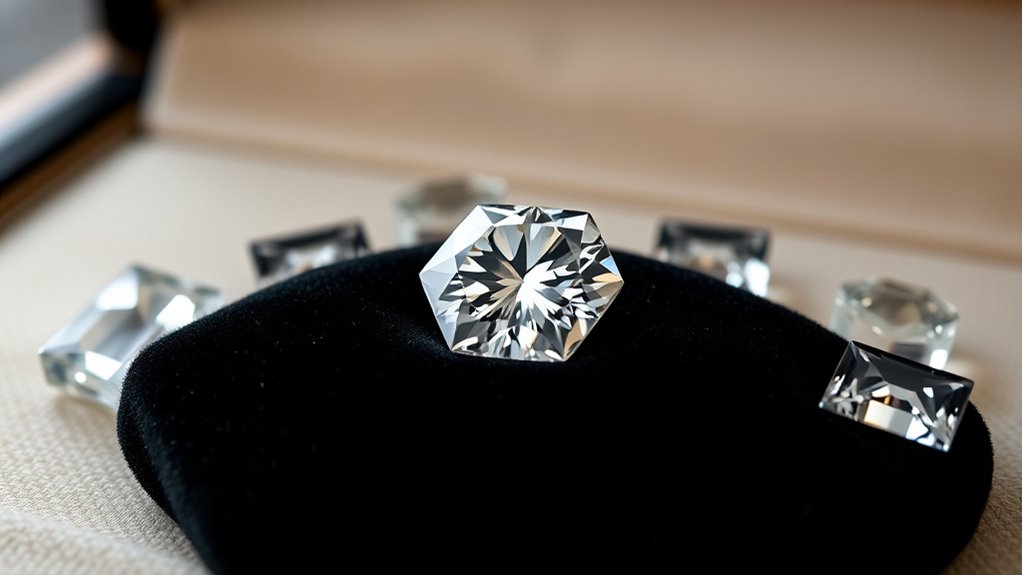
A diamond’s cut quality directly impacts its brilliance and overall appearance, making it one of the most important factors to evaluate for 1 carat stones. When you assess cut characteristics, you’re looking at proportions, symmetry, and polish. All of these influence how light interacts with the diamond.
These brilliance factors determine how much sparkle and fire your diamond will display, which greatly affects its visual appeal. Even a 1 carat diamond with excellent color and clarity can appear dull if the cut quality is poor.
How Color Grades Affect Pricing
You’ll want to get familiar with the diamond color scale—it goes from completely colorless to light yellow or brown. This grading plays a big role in a diamond’s value, since higher grades usually mean a higher price. And it’s not just about the basics; rare colors like blue or pink can really boost the price, sometimes quite a bit.
Color Scale Overview
Understanding the diamond color scale is essential when evaluating how color grades influence pricing. Color grading measures a diamond’s hue and presence of any tint, ranging from D (colorless) to Z (noticeable color). This scale helps you assess visual perception, the way your eyes perceive subtle differences in diamond hues.
Even slight variations can affect how brilliant and attractive a diamond appears. Market trends also play a role; diamonds closer to colorless grades usually command higher demand and prices due to their rarity and appeal. By grasping this scale, you can make informed decisions about the balance between color quality and cost.
Impact On Value
The color grade of a diamond directly influences its market value, often making a noticeable difference in price. When you shop for a 1 carat diamond, you’ll find that slight shifts in color grades can alter the value perception among buyers and sellers.
Market trends also play a role, as demand for near-colorless diamonds tends to boost pricing. Understanding these factors helps you make smarter choices and negotiate better deals.
Here’s how color grades impact value:
- Higher grades (D-F) command premium prices due to rarity and brilliance
- Mid-range grades (G-J) balance quality and affordability
- Lower grades (K-M) often cost less but show visible color
- Value perception varies with buyer preference and market demand
- Current market trends can shift pricing dynamics over time
Rare Colors Premium
Rare colors in diamonds often carry a significant premium because they stand out from the typical near-colorless stones most buyers seek. When you choose a diamond with a rare color, such as blue, pink, or green, you’re investing in premium hues that are naturally scarce.
These unique colors dramatically increase a diamond’s value beyond standard grading scales. Even subtle shifts in color grade can affect pricing, but rare color diamonds command much higher prices due to their exclusivity.
If you want a diamond that truly captures attention and holds its worth, looking for rare color options is a smart move. Keep in mind that while near-colorless diamonds are popular, premium hues often appeal to collectors and connoisseurs willing to pay more for distinctiveness.
How Clarity Impacts 1 Carat Diamond Cost
You’ll want to understand clarity grades because they show how many imperfections a diamond has. These tiny flaws can really make a difference in the price of a 1 carat diamond. So, knowing how clarity impacts cost can help you make a smarter purchase.
Clarity Grades Explained
Although clarity might seem less obvious than carat or cut, it plays an essential role in determining a diamond’s value, especially for a 1 carat stone. Clarity grades reflect the number, size, and position of internal and external flaws, known as clarity characteristics. Understanding these helps you distinguish between genuine imperfections and common clarity misconceptions that can mislead buyers.
Here’s what clarity grades typically assess:
- Presence of inclusions and blemishes
- Visibility of flaws under 10x magnification
- Impact of clarity on brilliance and sparkle
- Differences between grades like VVS, VS, SI, and I
- How clarity characteristics affect overall appearance
Getting familiar with these grades guarantees you make an informed choice when selecting your 1 carat diamond.
Impact On Diamond Price
Clarity plays an essential role in determining the price of a 1 carat diamond, often influencing costs more than you might expect. When you choose a diamond with higher clarity grades, like VS1 or better, you’re paying for fewer inclusions and blemishes, which boosts its appeal and value.
Market trends show that buyers increasingly favor diamonds with exceptional clarity, driving prices up. Conversely, lower clarity grades can considerably reduce a diamond’s cost since visible imperfections affect brilliance. If you plan to resell your diamond, clarity impacts its resale value heavily. Diamonds with high clarity hold value better over time.
Why Certification Matters for 1 Carat Diamonds
Because a 1 carat diamond represents a significant investment, having proper certification guarantees you know exactly what you’re buying. Certification guarantees the diamond has been evaluated by experts using strict grading standards set by reputable certification bodies.
A 1 carat diamond’s certification ensures expert evaluation and clarity about your valuable purchase.
This expert evaluation confirms the diamond’s quality and authenticity, giving you confidence in your purchase. Certification also builds market trust, making it easier to resell or insure your diamond.
Without certification, you risk paying more for a diamond that doesn’t meet quality claims.
When choosing a certified 1 carat diamond, look for:
- Recognition from well-known certification bodies (e.g., GIA, AGS)
- Detailed grading reports outlining cut, color, clarity, and carat weight
- Verification of authenticity and treatments
- Expert evaluations based on consistent grading standards
- Improved market trust and resale value
How Market Demand Affects 1 Carat Diamond Prices
When you shop for a 1 carat diamond, market demand plays a major role in shaping its price. Market trends constantly shift based on what consumers want, influencing how much sellers charge.
For example, if consumer preferences lean toward diamonds with excellent clarity or a specific cut, those stones will command higher prices. Seasonal demand and economic conditions also impact prices; during peak wedding seasons, prices often rise due to increased buying activity.
You’ll notice that when market trends favor certain diamond shapes or quality grades, prices for those diamonds go up. Understanding these shifts helps you time your purchase better and negotiate effectively.
Staying informed about current market demand guarantees you get the best value for your 1 carat diamond investment.
Frequently Asked Questions
How Do Diamond Fluorescence Levels Influence Value?
You’ll find that diamond fluorescence levels influence value because fluorescence effects can either improve or detract from a diamond’s appearance. If a diamond glows blue under UV light, it might look whiter, which buyers often like, boosting value.
However, strong fluorescence can sometimes make a diamond appear hazy, lowering its desirability. Market perceptions vary, so how fluorescence affects value depends on current trends and individual preferences.
Can Diamond Shape Affect the Price of a 1 Carat Stone?
Think of choosing a diamond shape like picking a dance partner at a crowded ball. Some moves catch more eyes than others. Yes, diamond shape can affect the price of a 1 carat stone because cut quality varies by shape, influencing how it sparkles.
Plus, market demand swings like music trends. Round brilliants often lead the dance floor, making them pricier, while fancy shapes might cost less but shine distinctly. You decide which rhythm suits you best.
What Role Does Diamond Origin Play in Pricing?
Diamond origin plays a big role in pricing because when you know about the diamond sourcing, you can guarantee it’s conflict-free and ethically mined. If you care about ethical considerations, you’ll likely pay more for stones certified as responsibly sourced.
Consumers like you often prefer diamonds with transparent origins, which boosts their value. So, diamond origin isn’t just about where it’s from; it impacts trust and price too.
How Does Retailer Reputation Impact Diamond Cost?
Retailer reputation directly affects diamond cost because when you shop with a trusted retailer, you benefit from retailer trust that guarantees pricing consistency. You’re more likely to pay a fair price since reputable sellers stick to transparent pricing and quality standards.
On the other hand, less-known retailers might offer lower prices but risk inconsistent quality or hidden fees. So, choosing a reputable retailer means you’re paying for reliability and peace of mind.
Are There Seasonal Trends in Diamond Pricing?
You know what they say, “Timing is everything.” Yes, there are seasonal trends in diamond pricing. During holiday demand spikes, prices often rise because more people shop for gifts, especially around Christmas and Valentine’s Day.
Market fluctuations also play a role as supply and demand shift throughout the year. If you time your purchase right, you might snag a better deal when demand cools down after these busy seasons.
Conclusion
You might think a 1 carat diamond’s price is just about size, but it’s so much more. Factors like cut, color, clarity, certification, and market demand all play a big role.
Understanding these helps you make a smarter purchase instead of just chasing carat weight. So, don’t get stuck on size alone. Consider the whole picture to find a diamond that’s truly worth your investment and shines brilliantly for years to come.
When choosing a diamond, keep in mind that a 1 carat diamond’s value depends on many factors beyond just carat weight.