What Does Lab Grown Diamond Mean?
Finding the perfect diamond can feel overwhelming, especially with so many options and concerns about ethics, price, and quality. You’re not alone—many people struggle with choosing a diamond that checks all the boxes without breaking the bank or compromising their values.
When you choose a lab grown diamond, you’re getting a real diamond created in a controlled environment with the same physical, chemical, and optical qualities as natural ones. They’re certified, brilliant, and durable, offering an ethical and sustainable choice with fewer inclusions.
Lab grown diamonds usually cost less and come with supply chain transparency. If you want to understand their creation, value, and why they’re so popular now, there’s plenty more to investigate.
Key Takeaways
- Lab grown diamonds are real diamonds created in a controlled laboratory environment. They have the same physical, chemical, and optical properties as natural diamonds.
- They are made using HPHT or CVD methods that replicate natural diamond formation processes.
- Certified by gem labs, lab grown diamonds ensure authenticity and quality identical to mined diamonds.
- Plus, they offer a sustainable, ethical alternative with a lower environmental impact than natural diamonds.
What Is a Lab Grown Diamond?
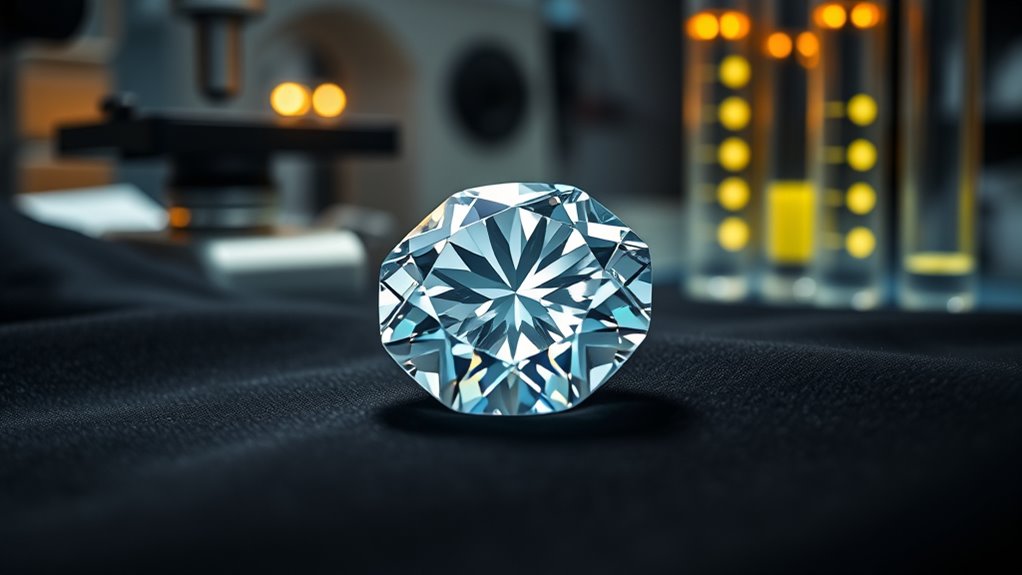
A lab grown diamond is a real diamond created in a controlled environment rather than mined from the earth. When you consider diamond origin, it’s important to know that lab grown diamonds share the same physical and chemical properties as natural ones. You get a genuine gemstone with identical brilliance and durability.
Plus, these diamonds come with gem certification from reputable labs, ensuring their quality and authenticity. This certification helps you verify the diamond’s origin and attributes without any guesswork.
Choosing a lab grown diamond means you’re opting for a sustainable and ethical choice without compromising on beauty or value. So, when you shop for a diamond, understanding what makes lab grown diamonds real can boost your confidence in your purchase.
How Are Lab Grown Diamonds Made?
When you want to understand how lab grown diamonds are made, it helps to know they’re created using advanced technology that mimics natural conditions deep within the Earth. Two primary synthesis methods are used: High Pressure High Temperature (HPHT) and Chemical Vapor Deposition (CVD).
HPHT replicates the intense pressure and heat found in the Earth’s mantle, while CVD grows diamonds layer by layer from carbon-rich gas. Both techniques produce real diamonds with the same physical and chemical properties as natural ones.
These methods have improved over time, influencing consumer perceptions by highlighting sustainability and ethical sourcing. As you investigate lab grown diamonds, recognizing these synthesis methods clarifies how technology shapes this innovative way to create stunning, authentic gems without the environmental and ethical concerns of traditional mining.
How Do Lab Grown Diamonds Compare to Natural Diamonds?
You’ll notice that lab grown and natural diamonds look almost identical to the naked eye—they share the same chemical and physical properties. But when it comes to cost and long-term value, they’re quite different. So, let’s take a closer look at these key differences to help you make an informed choice.
Visual Appearance Comparison
Though lab grown diamonds are created in a controlled environment, they closely match the visual qualities of natural diamonds. When you examine their visual clarity, lab grown diamonds often showcase fewer inclusions, enhancing their sparkle comparison.
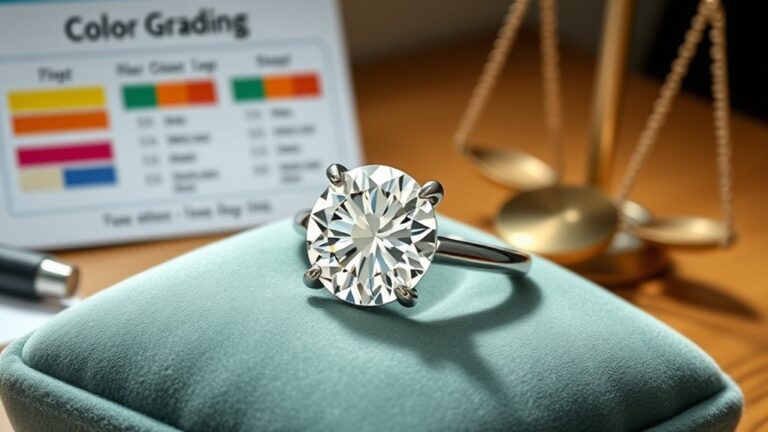
Both types undergo similar color grading standards, so you won’t notice a difference in hue. Cut quality plays a huge role in brilliance factors, and lab grown diamonds are cut to optimize light performance and maximize optical properties.
You’ll find their brilliance and fire comparably impressive, making size perception virtually identical to natural stones. Whether set in jewelry or viewed under light, lab grown diamonds deliver the same dazzling effect, allowing you to enjoy all the visual appeal without compromise.
Chemical And Physical Properties
Diamonds, whether lab grown or natural, share nearly identical chemical and physical properties. This makes them virtually indistinguishable to you and even experts without specialized tools. Their chemical composition is pure carbon, so their optical properties, thermal conductivity, and hardness levels match perfectly.
Both types undergo similar color grading and clarity factors, including fluorescence effects and the presence of inclusions. However, market perception and consumer preferences can differ despite these similarities.
| Property | Lab Grown vs Natural |
|---|---|
| Chemical Composition | Both pure carbon |
| Optical Properties | Nearly identical |
| Thermal Conductivity | Equal |
| Hardness Levels | Same |
| Color & Clarity | Comparable grading standards |
You get the same brilliance and durability from either choice.
Cost And Value Differences
Because lab grown diamonds cost less to produce, they typically come with a lower price tag than natural diamonds. When you’re comparing the two, pricing trends show lab grown options can be 20-40% cheaper while offering similar beauty and durability.
However, value perception plays a big role in how much you’re willing to pay. Natural diamonds often hold higher resale value due to rarity and tradition, whereas lab grown diamonds might depreciate faster.
If you focus on affordability and ethical sourcing, lab grown diamonds offer excellent value for your money. But if long-term investment is important to you, natural diamonds may retain worth better.
Understanding these cost and value differences helps you make an informed choice based on your priorities.
What Types of Lab Grown Diamonds Are There?
How do lab grown diamonds differ from one another? You’ll find variety in several key aspects that affect their appeal and value. These include:
- Color variations: From near-colorless to fancy hues, just like natural diamonds.
- Clarity grades: Ranging from flawless to included, impacting brilliance.
- Cut styles: Classic round, princess, cushion, and more to suit your taste.
- Carat weights: Available in many sizes, so you can pick your perfect fit.
- Ethical implications: Lab diamonds often market themselves as sustainable, influencing consumer perceptions and industry trends.
Understanding these types helps you navigate marketing strategies and make informed choices when selecting your ideal lab grown diamond.
How Can You Tell If a Diamond Is Lab Grown?
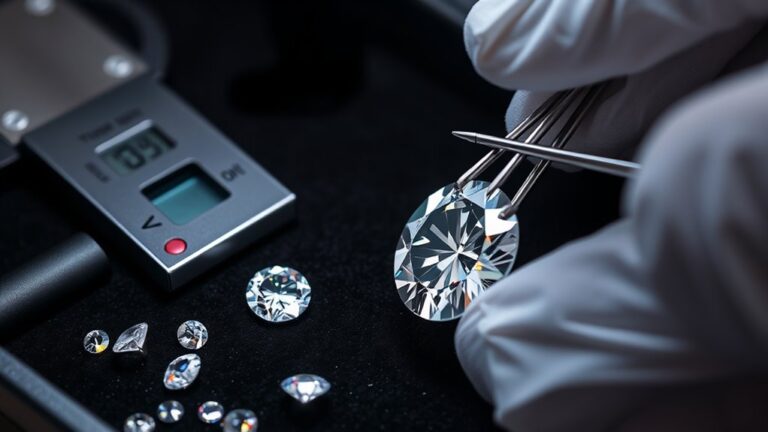
Wondering if that sparkling gem is lab grown or natural? You can’t rely on visual inspection alone. Identification methods often involve gemological tools and expert analysis.
Fluorescence testing helps detect differences, while certification standards verify authenticity. However, traceability issues can complicate matters, especially as market trends evolve.
Here’s a quick overview:
| Method | Purpose | Limitations |
|---|---|---|
| Visual Inspection | Initial look for clues | Not definitive |
| Gemological Tools | Detailed internal study | Requires expertise |
| Certification Standards | Verify origin | Varies by issuer |
Using these methods together gives you the best chance to accurately tell if a diamond is lab grown or natural.
Why Are Lab Grown Diamonds More Affordable?
You’ll notice lab grown diamonds cost less because making them is a lot more efficient and cheaper than mining. The whole process is smoother and involves fewer steps. Plus, the supply chain is shorter, which means fewer middlemen and extra fees to worry about. On top of that, growing demand helps keep prices competitive without any drop in quality. So, you get a beautiful diamond without breaking the bank.
Production Cost Differences
Because lab grown diamonds skip many costly steps involved in mining, their production costs are considerably lower. When you compare production methods, lab grown diamonds use controlled environments that reduce expenses markedly. This shift directly influences pricing trends, making these gems more affordable for you.
Here’s why production costs differ:
- No need for expensive mining equipment
- Reduced labor costs due to automation
- Lower environmental remediation expenses
- Faster production cycles in labs
- Less waste material compared to mining
These factors allow manufacturers to produce high-quality diamonds at a fraction of the cost. When you choose lab grown diamonds, you benefit from these smarter, more efficient production methods that keep prices down without compromising on quality.
Supply Chain Efficiency
Lower production costs certainly set lab grown diamonds apart, but another key factor making them more affordable lies in their streamlined supply chain. You benefit from supply chain transparency, which guarantees traceability standards are strictly followed from creation to sale.
Ethical manufacturing and sustainability practices not only reduce environmental impact but also improve resource efficiency, cutting unnecessary expenses. Production scalability allows manufacturers to meet demand without excessive overhead, while logistics optimization speeds up delivery and minimizes costs.
Waste reduction throughout the process further trims spending, passing savings directly to you. By simplifying and refining every step, lab grown diamonds avoid the complex, costly traditional mining routes, making these gems more accessible without compromising quality or ethics.
Market Demand Impact
As consumer interest in ethical and sustainable products grows, the demand for lab grown diamonds has surged, driving prices down. You’ll notice that market trends now favor these gems due to shifting consumer preferences and stronger social perceptions around sustainability.
Retail dynamics also play a role, as businesses adopt innovative marketing approaches and branding strategies that highlight affordability and ethical value. This influences your purchasing behavior, especially among younger demographics who prioritize transparency over traditional luxury positioning.
The economic impact is clear: increased supply meets evolving demand, reducing costs.
Key factors include:
- Changing consumer preferences toward sustainability
- Effective branding strategies emphasizing ethics
- Retail dynamics favoring accessible pricing
- Demographic influences shaping luxury expectations
- Marketing approaches targeting value-conscious buyers
What Environmental Benefits Do Lab Grown Diamonds Offer?
When you choose lab grown diamonds, you reduce the demand for traditional mining, which often harms ecosystems and depletes natural resources. Lab grown diamonds are created through sustainable practices that minimize environmental impact compared to extracting diamonds from the earth.
This eco friendly production uses markedly less water and energy, cutting down on carbon emissions and waste. You also avoid the soil disruption and habitat destruction caused by mining.
By supporting lab grown diamonds, you promote a cleaner, greener alternative that aligns with your values for environmental responsibility. These diamonds offer the same stunning beauty without the ecological cost, making your choice both ethical and sustainable.
Choosing lab grown means you actively contribute to protecting the planet while enjoying a high-quality gem.
Key Factors to Consider When Buying Lab Grown Diamonds
Although lab grown diamonds share many qualities with natural ones, you should carefully evaluate specific factors to guarantee you get the best value and quality. When buying, pay close attention to:
Lab grown diamonds mirror natural ones, but careful evaluation ensures top value and quality.
- Diamond certifications: Confirm the diamond comes with reliable certification verifying its authenticity and quality.
- Color grading: Check the color rating, as it greatly affects the diamond’s appearance and value.
- Clarity: Look for minimal inclusions to ensure brilliance and durability.
- Cut quality: A well-cut diamond reflects light beautifully, enhancing sparkle.
- Price comparison: Compare prices across sellers to avoid overpaying for similar quality stones.
Is Buying Lab Grown Diamonds a Good Investment?
Understanding the key factors to contemplate when buying lab grown diamonds helps you make an informed choice, but you might still wonder if they make a smart investment. Lab grown diamonds typically have lower resale value compared to natural ones, which affects their investment potential.
While they offer buyer confidence due to consistent quality and ethical sourcing, their long term appreciation remains uncertain. Market stability for lab grown diamonds is still evolving, influenced heavily by industry trends and economic factors. If financial security is your goal, you should weigh these variables carefully.
Unlike traditional diamonds, lab grown stones may not guarantee strong returns over time. Ultimately, buying lab grown diamonds suits personal enjoyment more than pure investment, so consider your priorities before deciding.
Why Are Lab Grown Diamonds Gaining Popularity Today?
You’re probably wondering why lab grown diamonds are becoming so popular these days. Well, for starters, they offer an eco-friendly choice. Plus, they cost less than natural diamonds, which is always a bonus. And on top of that, they come with ethical sourcing you can trust. So, when you put it all together, these benefits make lab grown diamonds a smart pick for many buyers.
Environmental Benefits
Because lab grown diamonds require considerably less water and energy than traditional mining, they offer a much greener alternative that appeals to environmentally conscious buyers. When you choose lab grown diamonds, you’re supporting sustainable practices that help reduce environmental damage.
You’ll also lower your carbon footprint, making a positive impact on the planet. Here’s why lab grown diamonds stand out environmentally:
- Use markedly less water than mining operations
- Consume less energy during production
- Avoid habitat destruction and soil erosion
- Generate fewer greenhouse gas emissions
- Support ethical sourcing with minimal environmental harm
Cost-Effective Alternatives
While traditional diamonds often come with hefty price tags, lab grown diamonds offer a cost-effective alternative without sacrificing quality or beauty. When you choose lab grown diamonds, you’re accessing affordable luxury that lets you enjoy stunning stones at a fraction of the cost.
This means you don’t have to compromise on sparkle or size to stay within budget. Plus, lab grown diamonds fit perfectly with sustainable jewelry values, letting you make a smart, eco-conscious choice that aligns with modern lifestyles.
As their price continues to be more accessible, lab grown diamonds gain popularity among buyers who want elegance and responsibility combined. So, if you’re looking for brilliance and value, lab grown diamonds give you both without the steep price tag.
Ethical Sourcing Appeal
As awareness about ethical practices grows, more people choose lab grown diamonds to avoid the environmental harm and human rights issues linked to traditional mining. You’re likely drawn to their positive sustainability impact and alignment with ethical consumerism values.
Lab grown diamonds offer a conscious choice without compromising beauty or quality. Here’s why they’re gaining popularity:
- Reduce environmental degradation compared to mining
- Support conflict-free sourcing
- Lower carbon footprint during production
- Promote transparency in supply chains
- Encourage responsible consumer habits
Frequently Asked Questions
Can Lab Grown Diamonds Be Insured Like Natural Diamonds?
Yes, you can insure lab grown diamonds just like natural diamonds. However, you should know insurance policies might treat them differently due to valuation differences.
Since lab grown diamonds often cost less, your policy’s coverage and premium could vary. It’s important to get an accurate appraisal and discuss these valuation differences with your insurer to make sure your lab grown diamond is properly protected under your insurance policies.
Do Lab Grown Diamonds Have Resale Value?
Lab grown diamonds do have resale value, but it’s generally lower than natural diamonds due to the resale market’s current consumer perception. You’ll find fewer buyers willing to pay full price, as lab diamonds are seen as less rare.
However, as technology advances and consumer acceptance grows, their resale value could improve. If you plan to resell, be prepared for a smaller return compared to natural diamonds.
Are Lab Grown Diamonds Considered Ethical by All Jewelers?
You’ll find some jewelers praise lab grown diamonds for ethical sourcing, while others remain skeptical, creating a striking contrast. This split happens because consumer perceptions vary.
Some see them as a responsible choice, free from mining issues, while others question their value or authenticity. So, not all jewelers consider lab grown diamonds ethical, but many are embracing them as a way to meet growing demand for transparency and sustainability.
Can Lab Grown Diamonds Be Customized or Engraved?
Yes, you can customize and engrave lab grown diamonds easily. Jewelers offer various customization options, letting you choose shapes, sizes, and settings that fit your style perfectly.
Engraving techniques work just as well on lab grown diamonds as on natural ones, allowing you to add personal messages or symbols. So, whether it’s a special date or initials, you can make your lab grown diamond distinctly yours with these personalized touches.
How Do Lab Grown Diamonds Affect the Traditional Diamond Industry?
Lab grown diamonds shake up the traditional diamond industry by changing market impact and consumer perception. You’ll see more buyers choosing affordable, ethical options, which pushes traditional sellers to adapt pricing and marketing strategies.
As you investigate options, you’ll notice how lab diamonds challenge old norms, making the market more competitive and transparent. This shift helps you find better value and encourages the industry to innovate and become more sustainable.
Conclusion
Choosing a lab grown diamond is like picking a star made just for you, brilliant, ethical, and crafted with care. You get all the sparkle of a natural diamond but with a smaller environmental footprint and often a friendlier price tag.
As you weigh your options, keep in mind that these gems offer both beauty and responsibility. So, if you want a dazzling symbol that shines with modern values, lab grown diamonds might just be your perfect match.