How to Cut Gemstones in 5 Simple Steps
If you’ve ever tried cutting gemstones, you know how tricky it can be to get that perfect shape and shine. You’re not alone—many people struggle with achieving professional-looking cuts without the right guidance.
Whether you’re a hobbyist or just starting out, learning how to cut gemstones in five simple steps can make the process much easier and more enjoyable.
To cut gemstones in five simple steps, start by choosing a quality rough stone with good clarity and shape.
Set up your clean workspace with essential tools like a faceting machine and dop stick.
Shape and preform your gemstone carefully, maintaining symmetry.
Next, facet and refine the surface for balanced, polished facets.
Finally, polish with fine compounds to bring out brilliance without overdoing it.
Follow these steps closely, and you’ll reveal expert tips for each stage ahead.
Key Takeaways
- Select a quality rough gemstone with good hardness, clarity, and a suitable shape for your desired design.
- Prepare a clean, well-lit workspace with essential tools like a faceting machine and dop stick securely set.
- Shape and preform the gemstone using a coarse wheel to create a symmetrical outline that matches the natural form.
- Use faceting tools to cut flat, polished surfaces with consistent angles and facet sizes for balance.
- Polish the gemstone with fine compounds and soft wheels, avoiding over-polishing to enhance brilliance and clarity.
Step 1: Choosing the Right Rough Gemstone
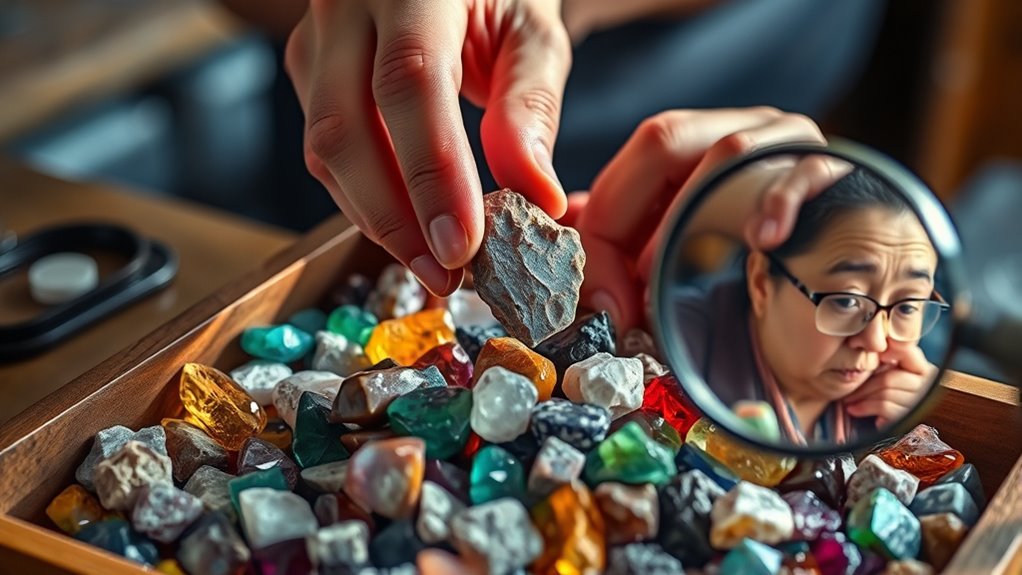
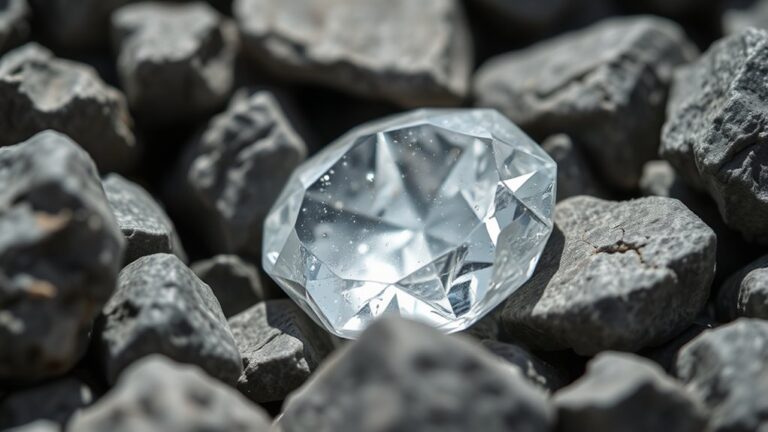
Choosing the right rough gemstone is essential because it determines the quality and value of your final cut. When selecting your stone, consider the gemstone types available. Each has unique hardness, clarity, and color traits that affect your cutting approach.
You’ll want a rough gem with minimal inclusions and a shape that suits your intended design. Understanding cutting techniques helps you visualize how the rough stone will transform.
For example, harder stones like sapphires require precise techniques, while softer ones like opals demand gentle handling. By matching the gemstone type to the appropriate cutting method, you guarantee a better finish and maximize brilliance.
Taking time to choose carefully sets you up for a successful and rewarding gemstone cutting experience.
Step 2: Setting Up Tools and Workspace for Gemstone Cutting
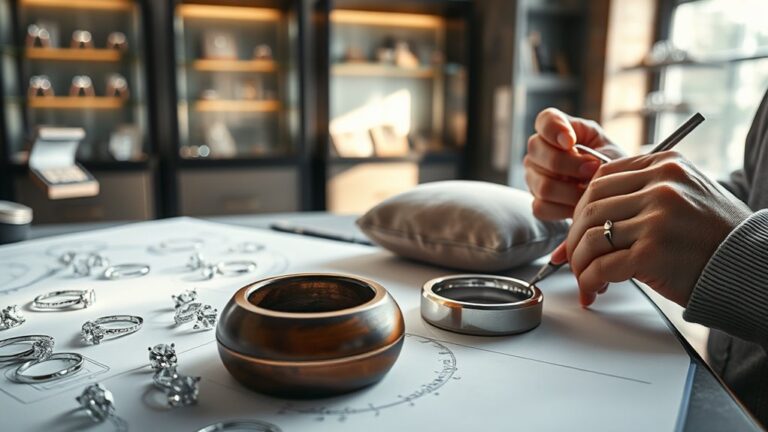
Before you begin cutting, gather at least three essential tools: a faceting machine, a dop stick, and various grits of abrasive wheels. Once you have these, focus on workspace organization.
Set up a clean, well-lit area with a sturdy table to keep everything within easy reach. Proper tool maintenance is vital. Regularly clean your faceting machine and inspect abrasive wheels for wear to guarantee smooth operation.
Secure your dop stick firmly to avoid any movement during cutting. Arrange your tools neatly to prevent accidents and save time. By organizing your workspace and maintaining your tools, you create a safe, efficient environment that allows you to focus on the precision required for gemstone cutting.
This preparation sets the foundation for successful shaping and polishing ahead.
Step 3: Shaping and Preforming Your Gemstone
Begin shaping your gemstone by carefully examining its natural form and deciding on the general outline you want to achieve. Use basic shaping techniques like grinding with a coarse wheel to remove rough edges and create the stone’s initial profile.
Focus on maintaining gemstone symmetry throughout this process, as balanced proportions improve its final appearance and value. Hold the stone steadily and work slowly, checking frequently to verify the outline stays even.
Maintain symmetry by working carefully and checking often to ensure balanced, even outlines for a polished gemstone.
Preforming prepares your gem for detailed cutting by establishing a smooth, well-proportioned shape. Remember, the goal here isn’t perfection but a solid foundation that respects the stone’s natural characteristics.
Mastering these early shaping techniques sets you up for success in the next stage of gemstone cutting.
Step 4: Faceting and Refining Your Gemstone’s Surface
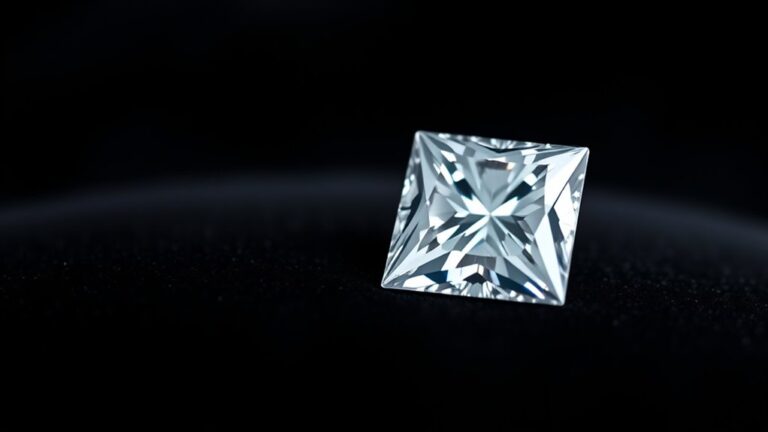
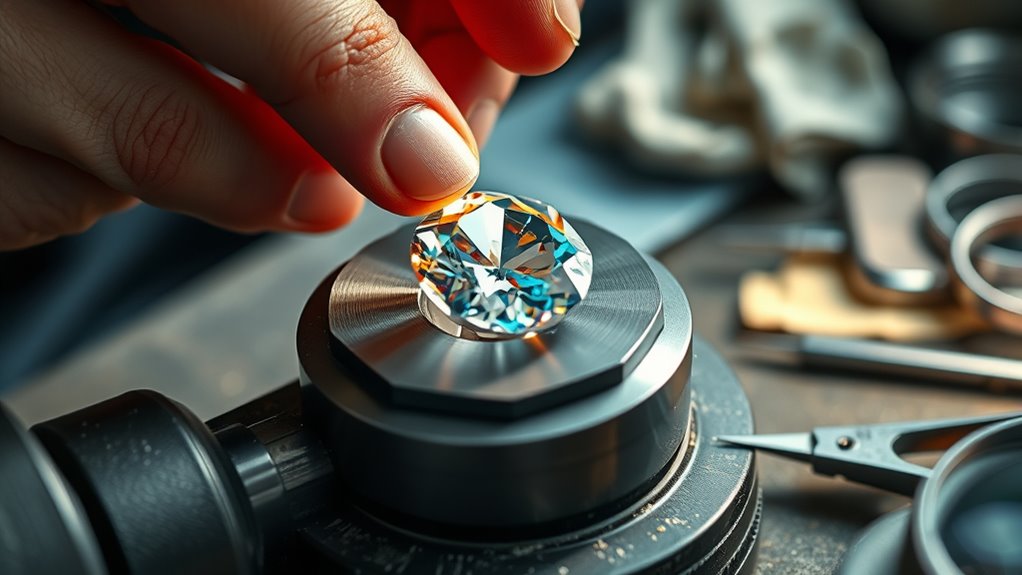
With your gemstone shaped and preformed, you’re ready to bring out its brilliance by faceting and refining its surface. Begin by applying precise faceting techniques to create flat, polished surfaces that reflect light effectively.
Use a faceting machine or hand tools to cut each facet at specific angles, enhancing the gem’s sparkle and symmetry. Focus on consistent facet sizes and alignments to guarantee balance and visual appeal.
After cutting, move to surface refinement by carefully smoothing any rough edges or uneven surfaces. This step prepares your gemstone for the final polishing stage, improving clarity and light reflection.
Mastering these faceting techniques and surface refinement processes is essential to reveal your gemstone’s full potential and beauty.
Step 5: Polishing Your Gemstone for a Brilliant Finish
Achieve a dazzling shine by carefully polishing your gemstone to improve its brilliance and clarity. Polishing techniques are essential finishing touches that bring out the gem’s true beauty. Start with a fine polishing compound and a soft wheel or cloth.
Remember, patience is key to avoid over-polishing, which can dull the facets.
Focus on these key polishing techniques:
- Use progressively finer abrasives to smooth the surface evenly.
- Keep the gemstone cool by polishing in short bursts to prevent heat damage.
- Clean the gem thoroughly between steps to avoid scratching.
Frequently Asked Questions
What Types of Gemstones Are Best for Beginners to Cut?
For beginner friendly gemstones, you’ll want to start with stones like quartz, amethyst, or citrine. These gems are relatively hard yet forgiving, making them ideal as you practice essential cutting techniques.
They’re less likely to chip or fracture, so you can build confidence while mastering your skills. By working with these stones, you’ll get a solid foundation before moving on to more challenging materials like sapphires or emeralds.
How Much Does Gemstone Cutting Equipment Typically Cost?
You know what they say: “You get what you pay for.” Gemstone cutting equipment typically costs between $200 to $2,000, depending on quality and features.
While gemstone pricing might seem steep upfront, investing in reliable tools saves you headaches later. Don’t forget, regular equipment maintenance is key to keeping your tools sharp and efficient.
Can Synthetic Gemstones Be Cut the Same Way as Natural Ones?
Yes, you can cut synthetic gemstones the same way as natural ones because the cutting techniques are quite similar. Both require precision and the right tools to improve their brilliance.
However, synthetic vs natural gems might differ slightly in hardness or internal structure, so you’ll want to adjust your approach accordingly. With careful handling, you’ll achieve stunning results regardless of whether the gemstone is synthetic or natural.
What Safety Precautions Should I Take When Cutting Gemstones?
Don’t try to impress your friends by turning your fingers into gemstone chips! Always wear safety gear like goggles, gloves, and a mask to keep shards and dust away from your eyes, skin, and lungs.
Prepare your workspace by ensuring good lighting and keeping it clutter-free to avoid accidents. Secure your gemstone firmly before cutting so it doesn’t leap off like a startled cat. Safety first, or you’ll cut more than just gemstones!
How Long Does It Usually Take to Cut a Gemstone?
Cutting a gemstone usually takes anywhere from a few hours to several days, depending on gemstone hardness and cutting techniques you use. Harder stones like sapphires require more time and precision, while softer ones cut faster.
Complex techniques, like faceting, demand careful attention and extend the process. You’ll want to be patient because rushing can damage the stone or ruin its brilliance. So, expect the time to vary based on these factors.
Conclusion
By mastering these five steps, you’ll transform a simple rough stone into a dazzling masterpiece that could rival even the crown jewels. Imagine holding a gemstone so brilliantly cut it practically steals the spotlight in any room.
With just a bit of patience and the right technique, you’ll reveal hidden beauty that dazzles like a thousand tiny stars. Cutting gemstones isn’t just a skill; it’s your ticket to creating magic with every stone you shape.