What Is This Necklace Called?
Trying to figure out what your necklace is called can be surprisingly tricky. You’re not alone—many people struggle with identifying different necklace styles and understanding what makes each one unique.
Whether you’re shopping for the perfect gift or just want to know more about your own jewelry, getting familiar with necklace names can make a big difference.
You can identify a necklace by looking at its style, length, and key features like chains, pendants, or lockets. For example, chokers sit tight around the neck with bold designs, while pendants hang from chains and often carry personal meaning.
Material and length also help—matinee necklaces fall above the bust, while rope styles are longer. Knowing these basics lets you quickly name your necklace and understand what makes it unique.
You’ll uncover even more details as you investigate further.
Key Takeaways
- Necklace names depend on style, length, materials, and design features like chains, pendants, lockets, or chokers.
- Historical styles such as Victorian and Art Deco help identify necklace eras and distinct design elements.
- Chain necklaces focus on link patterns, while pendant necklaces highlight attached decorative pieces with personal significance.
- Necklace lengths like matinee, opera, and rope have traditional names based on their positioning and styling uses.
- Online tools, jewelry forums, and expert appraisers provide reliable resources for identifying and naming necklaces accurately.
How to Identify Necklaces by Style and Design
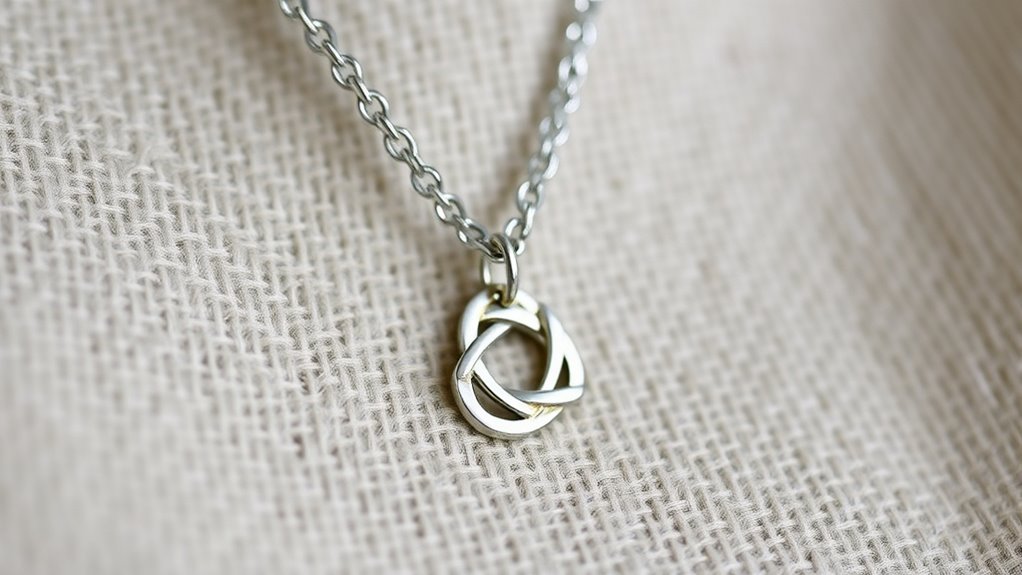
How can you quickly identify a necklace’s style and design? Start by considering the necklace’s history and how certain styles reflect different eras. For example, Victorian necklaces often feature intricate, romantic designs, while Art Deco pieces boast geometric shapes and bold lines.
Understanding the design evolution helps you spot these details and place a necklace within a specific time frame or cultural trend. Pay attention to materials, shapes, and craftsmanship, as these elements shift with fashion movements.
You don’t need to be an expert. Recognizing key features like symmetry, ornamentation, or minimalism can guide you. By linking what you see to necklace history and design evolution, you’ll confidently identify styles and appreciate their unique stories.
Common Necklace Types: Chains, Pendants, and More
Recognizing a necklace’s style sets the foundation for understanding its type. When you examine common necklace types, you’ll find chains, pendants, chokers, and lockets among the most popular.
Chains are simple but versatile, often carrying deep necklace symbolism depending on their link style. Pendants add personality, frequently symbolizing beliefs or memories, reflecting personal or cultural significance.
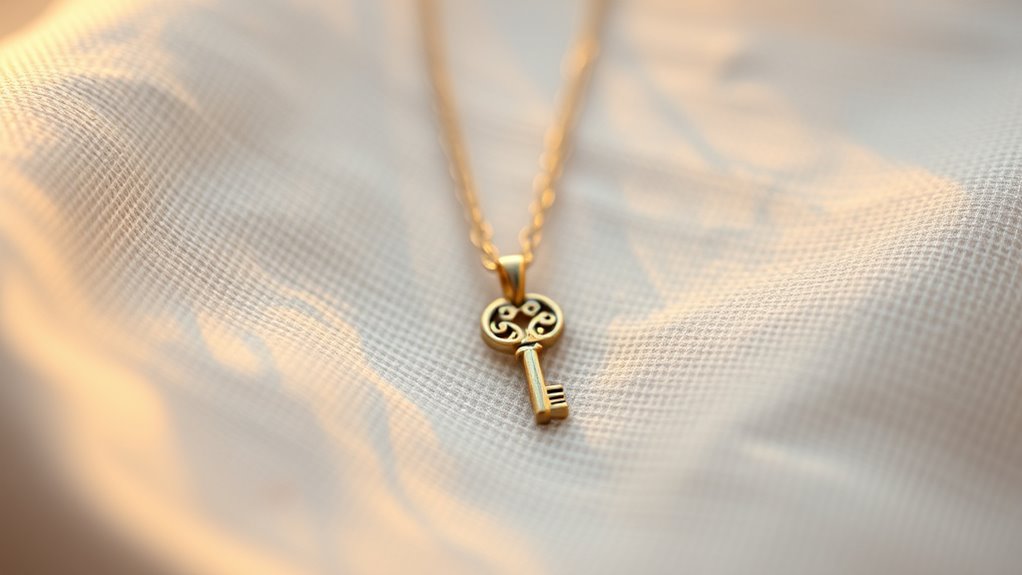
Lockets hold historical significance as keepsakes, sometimes guarding photos or mementos. Chokers, once royal accessories, now make bold fashion statements.
Each type carries its own history and meaning, so knowing these basics helps you appreciate the necklace beyond its look. As you spot these styles, you’ll see how necklace symbolism blends with function, shaping your understanding of what a necklace truly represents.
Chain vs Pendant Necklaces: Key Differences
Necklaces come in many forms, but understanding the key differences between chain and pendant necklaces helps you choose the right style for any occasion. Chain necklaces primarily focus on the chain styles themselves. Think curb, rope, or box chains, where the design’s beauty lies in the links.
Understanding chain versus pendant necklaces guides you to the perfect style for any occasion.
Pendant necklaces, however, feature a decorative piece hanging from the chain. Pendant designs steal the spotlight, adding personality or symbolism.
Here’s what sets them apart:
- Chain necklaces emphasize link patterns and texture
- Pendant necklaces highlight the charm or ornament attached
- Chains can be worn alone for a subtle look
- Pendants add focal interest and often carry meaning
- Chain styles vary in thickness and flexibility, affecting comfort and style
Knowing these differences helps you pick the perfect necklace every time.
Popular Necklace Lengths and Their Traditional Names
Although choosing the right necklace style is important, selecting the proper length can make all the difference in how it complements your outfit and neckline. Necklace history reveals that certain lengths carry traditional names tied to their function and era.
For example, the “matinee” length usually measures around 20-24 inches, hitting just above the bust and often favored in vintage styles for its elegant versatility. The “opera” length extends to 28-34 inches, perfect for layering or dramatic looks.
Longer lengths, sometimes called “rope” necklaces, can exceed 36 inches, allowing you to wrap them or wear them loose. Knowing these classic terms helps you choose a necklace length that suits your style and pays homage to timeless trends.
Collar, Choker, and Princess Necklaces Explained
Choosing the right length sets the foundation, but understanding specific necklace styles like collar, choker, and princess can refine your look even more. These styles reflect a rich necklace history and design evolution, each bringing unique flair.
The collar necklace sits snugly around your neck, often 12-13 inches, making a bold statement. Chokers, slightly longer at 14-16 inches, offer a versatile and trendy edge. Princess necklaces, usually 17-19 inches, rest just below the collarbone, blending elegance with everyday wear.
- Collar necklaces highlight your neckline dramatically
- Chokers add a modern, youthful touch
- Princess length suits most necklines and occasions
- Each style evolved from historical and cultural influences
- Your choice reflects personal style and design trends
Understanding these helps you pick the perfect necklace every time.
Recognizing Beaded and Statement Necklaces
Anyone can instantly improve an outfit by adding beaded or statement necklaces, which capture attention with their bold designs and vibrant colors. When recognizing beaded necklaces, look for strands of small to large beads made from materials like glass, wood, or gemstones.
These often follow current beaded trends, featuring unique shapes and color combinations that reflect personal style or cultural influences. Statement necklaces, on the other hand, stand out with oversized elements, intricate patterns, or mixed materials designed to create a focal point.
You’ll notice how statement styles often play with scale and texture, making them perfect for dressing up simple outfits. By understanding these characteristics, you can easily identify and choose necklaces that suit your look and occasion.
Identifying Lockets, Charms, and Medallions
How do you distinguish between lockets, charms, and medallions when browsing necklaces? Understanding their unique features helps. Lockets, with a rich locket history, open to reveal a hidden space for photos or mementos.
Charms are small, decorative pendants often carrying charm symbolism, representing memories or beliefs. Medallions are larger, usually flat discs engraved with images or inscriptions, often worn for religious or commemorative purposes.
Here’s what to look for:
- Lockets: Hinged with a compartment inside
- Charms: Small, symbolic, often on charm bracelets or necklaces
- Medallions: Flat, round, engraved or embossed
- Purpose: Lockets hold keepsakes; charms tell stories; medallions honor events or faith
- Size: Lockets and medallions are generally bigger than charms
Knowing these makes identifying necklaces easier and more meaningful.
How Materials Affect Necklace Styles and Names
You’ll notice that the material of a necklace really shapes its style and even what it’s called. Whether it’s made from different metals, beads, or fabrics, each material changes not only the look but also how long the necklace lasts. So, getting to know these materials can help you choose the perfect necklace that fits your style and holds up well for everyday wear.
Common Necklace Materials
Although the style of a necklace often catches your eye first, the material it’s made from plays an equally significant role in defining its look and name. Different metal types like gold, silver, and platinum offer unique durability and shine, influencing the necklace’s classification.
Gemstone properties such as color, clarity, and hardness also impact the necklace’s appeal and terminology. Understanding these materials helps you identify and appreciate various necklace types.
Common necklace materials include:
- Gold: classic and versatile, often used in chains and pendants
- Silver: affordable with a bright, cool tone
- Platinum: rare and durable, ideal for fine jewelry
- Gemstones: add color and value based on their properties
- Leather or fabric: casual and flexible, used in boho and statement pieces
Each material shapes the necklace’s style and name distinctly.
Material Impact On Design
Because materials influence both appearance and function, they play an essential role in shaping necklace styles and names. When you choose a material, you’re directly impacting the design aesthetics, whether it’s the warm glow of gold, the cool sheen of silver, or the vibrant hues of gemstones.
Each material brings its own character, helping define styles like chokers, pendants, or statement pieces. Material versatility lets designers experiment with texture, weight, and form, creating unique necklaces that stand out or complement specific looks.
Durability And Wearability
When selecting a necklace, consider how its material affects durability and wearability. These factors often determine the style’s practicality and name. Different materials influence how often you can wear a necklace and how much care it needs. Understanding wearability helps you choose a piece that fits your lifestyle and reduces the need for frequent repairs.
Keep these necklace maintenance tips in mind:
- Metal chains like gold and silver resist tarnish but may scratch.
- Leather necklaces offer flexibility but can degrade with moisture.
- Beaded styles require careful handling to avoid breakage.
- Stainless steel provides durability for everyday wear.
- Fabric cords are lightweight but may fray over time.
Cultural Necklaces: Names and Origins Explained
How do cultural necklaces reflect the heritage and traditions of different communities? When you investigate these pieces, you uncover rich stories tied to their cultural significance and historical context. For example, a Maasai beaded necklace isn’t just decorative; it symbolizes social status and age group within the tribe.
Likewise, Native American turquoise necklaces carry spiritual meaning and connect you to ancestral beliefs. Understanding the origins of these necklaces helps you appreciate their craftsmanship and the values they represent. Each design, material, and color choice tells a unique tale passed down through generations.
Where to Find Trusted Necklace Identification Resources
If you want to identify your necklace accurately, a great place to start is with reliable online identification tools. These often have detailed images and descriptions that can help you narrow things down.
You might also consider reaching out to expert jewelry appraisers. They have the experience and knowledge to pinpoint specific styles and origins, which can be really helpful.
Reliable Online Identification Tools
Where can you turn to confidently identify a necklace online? You can rely on several trusted online tools that offer clear identification tips and detailed databases. These resources help you match styles, materials, and makers quickly.
Using them, you can avoid guesswork and get accurate results from the comfort of your home.
Here are five reliable online tools to get you started:
- Google Lens: Snap a photo and find visually similar necklaces instantly.
- Pinterest Visual Search: Investigate styles and related pins for identification.
- Jewelry-specific forums: Ask enthusiasts and experts for insights.
- Etsy and eBay: Search listings for similar designs and names.
- Gemological Institute of America (GIA) website: Provides educational identification tips.
These platforms combine community knowledge and technology to simplify necklace identification.
Expert Jewelry Appraisers
Wondering who can give you a definitive answer about your necklace’s origin or value? Expert jewelry appraisers are your best bet. These professionals use advanced appraisal techniques to assess your necklace’s materials, craftsmanship, and historical context.
They follow strict valuation standards to guarantee accurate and trustworthy evaluations. You can find trusted appraisers through reputable jewelry stores, certified appraisal organizations, or professional associations like the American Society of Appraisers.
When choosing an expert, look for credentials and positive reviews to assure reliability. By consulting an expert appraiser, you not only get precise identification but also a clear understanding of your necklace’s worth. This helps you make informed decisions whether you’re buying, selling, or insuring your treasured piece.
Frequently Asked Questions
How Do I Care for and Clean Different Types of Necklaces?
You should care for your necklaces based on their necklace materials. For gold or silver, use gentle cleaning solutions like mild soap and warm water, then dry thoroughly.
Avoid harsh chemicals on pearls or delicate gemstones; instead, just wipe them with a soft cloth. Store each necklace separately to prevent tangling and scratches.
Regularly check clasps and chains for damage, and clean your necklaces carefully to keep them looking their best.
What Are the Best Necklace Styles for Sensitive Skin?
About 10% of people experience skin irritation from certain jewelry metals. If you have sensitive skin, you should choose hypoallergenic materials like surgical stainless steel, titanium, or platinum.
Gold alternatives such as rose gold or gold-filled pieces are also great since they’re less likely to cause reactions. Avoid nickel and opt for lightweight styles to reduce contact.
This way, you’ll enjoy your necklaces without discomfort or redness.
How Can I Tell if a Necklace Is Handmade or Machine-Made?
You can tell if a necklace is handmade by looking for handmade indicators like slight irregularities, unique patterns, or subtle tool marks. These details show craftsmanship.
On the other hand, machine-made characteristics include perfect symmetry, uniform links, and consistent finishes. Machines produce flawless, identical pieces.
If you notice small imperfections or variations, it’s likely handmade. But if everything looks too perfect and mass-produced, it’s probably machine-made.
What Are Common Necklace Repair Techniques and Costs?
You’ll find common necklace repair techniques include necklace resizing, clasp replacement, and chain soldering. If your necklace feels too tight or loose, resizing adjusts its length to fit you perfectly.
Clasp replacement is handy when the clasp breaks or wears out, ensuring your necklace stays secure. Costs vary by material and complexity, but expect $20-$100 for basic repairs.
Always choose a skilled jeweler to keep your necklace looking great.
How Do I Store Necklaces to Prevent Tangling and Damage?
You might think tossing necklaces in a jewelry box works, but it often leads to tangling and damage. To keep them neat, use necklace organization solutions like hanging organizers or individual compartments.
Soft pouches also protect delicate chains. When traveling, compact travel storage cases with separate slots prevent knots and scratches. By investing a bit of effort in proper storage, you’ll save time and keep your necklaces looking their best.
Conclusion
Now that you know how to identify necklaces by style, length, and materials, isn’t it easier to find the perfect name for that piece? Whether it’s a delicate choker, a statement pendant, or a cultural treasure, understanding these details helps you appreciate and choose jewelry confidently.
Next time you spot a necklace, you’ll know exactly what it’s called and maybe even its story. Ready to investigate your collection with fresh eyes and discover what that necklace is called?