10 Factors That Affect How Much a 2.5 Carat Diamond Ring Costs
Shopping for a 2.5 carat diamond ring can feel overwhelming. You’re not alone if you find yourself confused by the many factors that affect the price. Many people struggle to understand why two rings with the same carat weight can have very different costs.
When buying a 2.5 carat diamond ring, you’ll find its price hinges on factors like the carat weight itself, cut quality, clarity, color, and shape.
The setting style and metal used also play roles, along with retailer pricing strategies, discounts, and current market trends. Customization can add to the cost, too.
These elements all work together to influence what you ultimately pay, and understanding each will give you a clearer picture of your best options.
Key Takeaways
- Carat weight drives price, with 2.5 carat diamonds being rare and highly sought after. This significantly increases their cost.
- Diamond cut quality impacts brilliance and value. Excellent or Ideal cuts usually command premium prices.
- Clarity and color grades affect cost because higher clarity and near-colorless diamonds are more valuable and desirable.
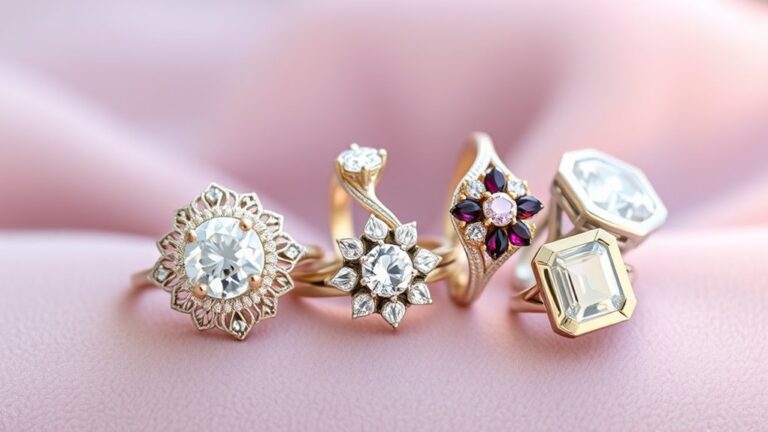
- Setting style influences price and diamond visibility. Halo and vintage designs often cost more than simple solitaire settings.
- Metal choice and craftsmanship affect ring cost. Durable metals like platinum and intricate designs increase the overall price.
How Carat Weight Affects the Price of a 2.5 Carat Diamond Ring
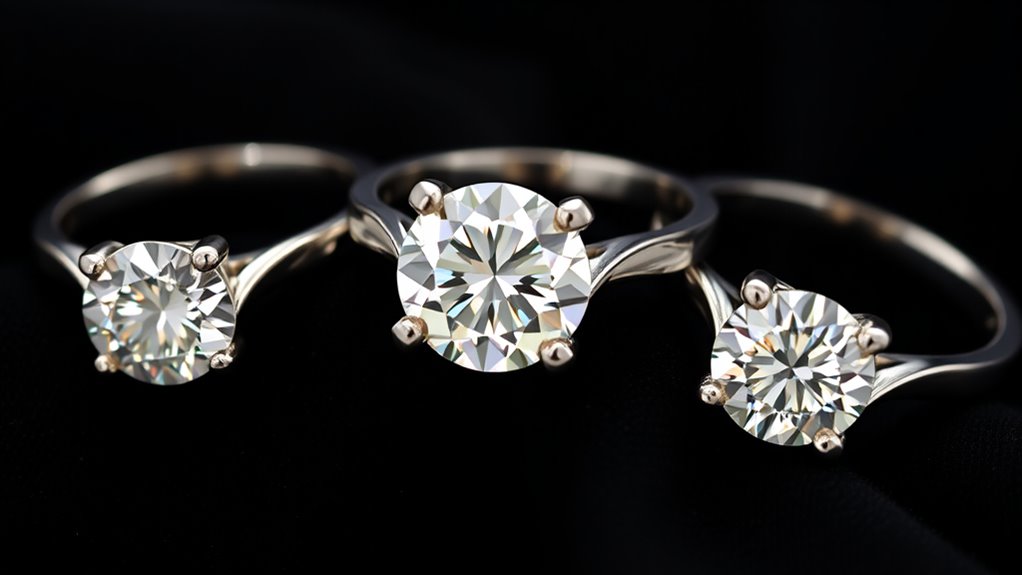
Although carat weight is just one factor, it plays a major role in determining the price of a 2.5 carat diamond ring. When you consider carat perception, the size comparison with smaller diamonds highlights the rarity factor, which drives up the price range.
Market demand for this size remains strong due to its striking visual impact and appeal to buyer preferences favoring noticeable stones. You’ll find that purchasing trends show increased interest in diamonds around 2.5 carats, enhancing both investment value and resale potential.
Understanding these dynamics helps you make a confident choice, balancing what you want with what the market values. Ultimately, the carat weight directly influences how much you’ll pay, reflecting the diamond’s uniqueness and desirability.
How Diamond Cut Quality Influences Your 2.5 Carat Diamond Ring Cost
You’ll want to understand how cut grades affect your 2.5 carat diamond’s brilliance and overall appearance. See, a higher cut quality means more sparkle, which can really drive up the price. So, let’s take a closer look at how different cut grades can create cost variations for your ring.
Cut Grades Explained
When choosing your 2.5 carat diamond ring, understanding cut grades can greatly impact the final cost. Cut quality reflects how well a diamond’s facets are shaped and aligned, affecting its ideal proportions.
Diamonds with excellent cut grades offer superior sparkle performance through optimal light return and fire brilliance. Symmetry ratings also play a role, as precise facet alignment improves overall visual appeal.
Expert recommendations often favor “Ideal” or “Excellent” cuts for maximizing beauty and value, but your personal preferences matter too. Some may prefer a “Very Good” cut to balance cost and appearance.
Impact on Sparkle
Understanding cut grades sets the stage for appreciating how a diamond’s sparkle directly affects its price. When you choose a 2.5 carat diamond, the sparkle factors primarily depend on cut quality, influencing light performance and overall visual appeal.
Superior diamond symmetry and precise facet arrangement create optical illusions that elevate brilliance levels. Here’s what you should consider:
- Light refraction maximizes the diamond’s brightness.
- Color dispersion improves fire attributes, adding vibrant flashes.
- Facet arrangement impacts how light bounces within the stone.
- Diamond symmetry guarantees balanced light return for ideal sparkle.
Since sparkle is a key factor in your ring’s allure, higher cut quality means a more dazzling diamond, which naturally raises its cost.
Cost Variations by Cut
Diamond cut quality plays one of the most significant roles in determining the cost of your 2.5 carat ring. Different cut types and styles influence how light interacts with the diamond, affecting its brilliance and value.
You’ll notice that diamonds with ideal cut proportions, like balanced cut depth, precise cut angles, and excellent cut symmetry, tend to cost more because they maximize cut performance. Conversely, diamonds with poor cut proportions can appear dull and are priced lower.
Your cut preferences also affect cost. For example, round brilliant cuts often command higher prices than fancy cuts due to their superior light performance.
Understanding these factors helps you choose a cut that balances beauty and budget, ensuring your 2.5 carat diamond ring shines brilliantly without overspending.
How Clarity Grades Impact the Price of a 2.5 Carat Diamond Ring
You’ll notice that clarity grades can vary quite a bit, from flawless all the way to included. Each level changes how the diamond looks in its own way. And these differences really have a big impact on the market value of a 2.5 carat diamond ring. So, knowing how clarity affects price can help you make a much smarter purchase.
Clarity Grade Differences
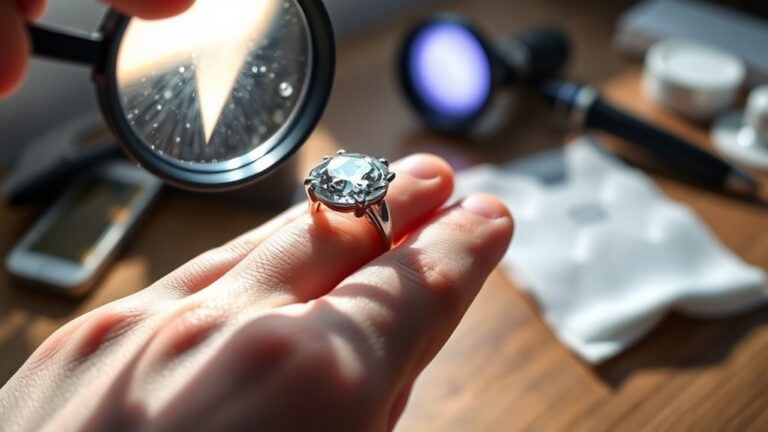
Although carat weight often grabs the spotlight, clarity plays an essential role in determining the price of a 2.5 carat diamond ring. Understanding clarity grade differences helps you grasp how inclusion types and grading standards affect clarity impact and visual perception. Expert evaluations and clarity certification provide reliable clarity comparison, guiding your purchase.
Here’s what you should consider:
- Clarity grading ranges from Flawless to Included, each influencing clarity versus price distinctly.
- Inclusion types vary in size, number, and location, affecting the diamond’s brilliance.
- Market demand shifts pricing, with higher clarity grades commanding premium costs.
- Clarity certification confirms authenticity and grading accuracy, which is vital for trust.
Knowing these factors lets you balance quality and cost confidently.
Impact On Market Value
Since clarity grades directly reflect a diamond’s internal quality, they greatly influence the market value of a 2.5 carat ring. When you choose a higher clarity grade, rarity considerations and luxury trends boost its desirability, increasing market demand.
Economic factors and geographical influences can shift consumer preferences, affecting how much you’ll pay. Brand reputation also plays a role, as trusted names often command higher prices regardless of clarity.
The supply chain impacts availability, so limited high-clarity stones push prices up. Industry standards guide grading, ensuring you understand value differences clearly.
Finally, clarity affects resale value; higher grades typically retain worth better. By considering these factors, you can make an informed decision that aligns with both market realities and your personal preferences.
How Diamond Color Changes What You Pay for a 2.5 Carat Diamond Ring
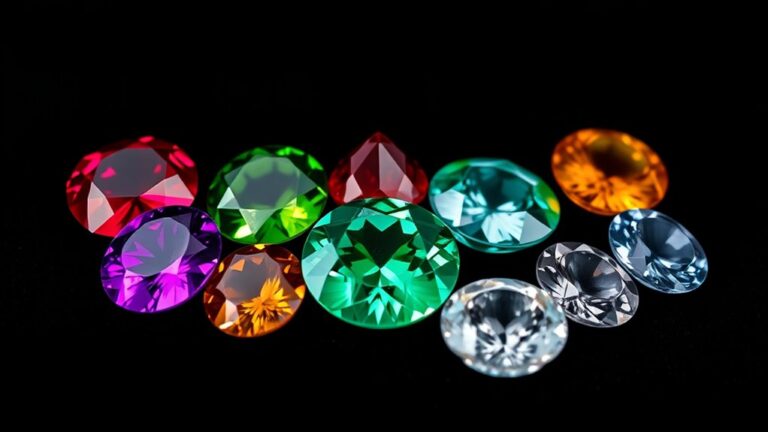
When choosing a 2.5 carat diamond ring, the color grade plays a crucial role in determining the price you’ll pay. Diamond hue affects visual appeal and market demand, influencing cost considerably. Color grading ranges from colorless to faint yellow or brown shades, with rarer hues commanding higher prices.
Here’s what impacts your price:
- Color rarity: More colorless diamonds are scarce, raising their value.
- Consumer preferences: Buyers often favor near-colorless grades, balancing price and appearance.
- Price comparison: Small shifts in color grading can mean big price differences.
- Color improvements: Treated diamonds may lower costs but affect resale value.
Understanding these factors helps you make a savvy choice that fits your budget and style.
How Different Diamond Shapes Affect the Price of a 2.5 Carat Diamond Ring
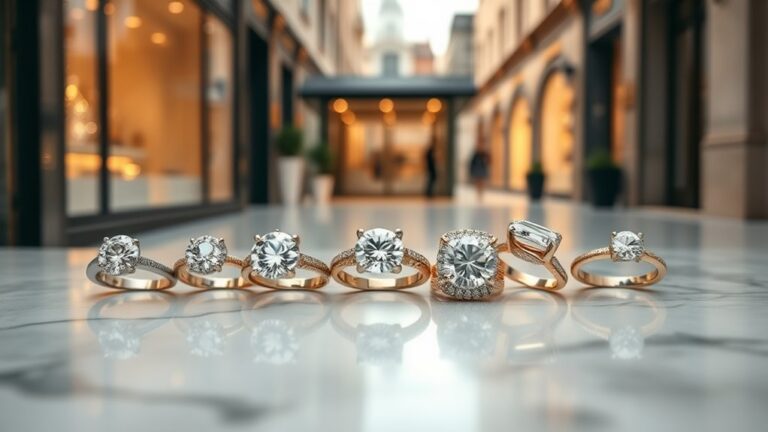
Choosing the shape of a 2.5 carat diamond ring directly impacts its price, as different cuts require varying amounts of rough diamond and craftsmanship. Diamond shape affects price variation due to factors like shape rarity and market demand.
Popular shapes often carry higher price tags because of their widespread appeal and shape trends. Your shape preferences influence cost, as unique or less common cuts may offer better value. Here’s a quick look:
| Diamond Shape | Price Impact |
|---|---|
| Round | Highest due to demand |
| Princess | Moderate, popular |
| Cushion | Slightly less costly |
| Emerald | Rare, often pricier |
Understanding shape appeal helps you balance style with cost effectively.
Why Certification Matters When Pricing a 2.5 Carat Diamond Ring
Although a 2.5 carat diamond’s size and shape catch your eye, its certification plays an essential role in determining its true value. Certification provides quality assurance by verifying diamond origins, ethical sourcing, and grading standards.
Different certification types from reputable certification bodies influence market credibility and buyer confidence. When pricing your ring, consider these key points:
- Certification types vary, with GIA and AGS offering strict grading standards.
- Certifications confirm diamond origins and ethical sourcing, boosting trust.
- Appraisal importance lies in validating the diamond’s true characteristics.
- Certified diamonds generally hold higher resale value due to verified quality.
How Setting Style Can Raise or Lower Your 2.5 Carat Diamond Ring Cost
Your choice of setting style directly affects both the look and cost of your 2.5 carat diamond ring. Popular styles like prong, bezel, or halo can change how much of the diamond is visible, which influences its overall appearance.
And it’s not just about style—the materials used for the setting also play a big role. Depending on what you pick, the final price you pay can go up or down quite a bit. So, it’s worth thinking about both the look and the budget when choosing your setting.
Popular Setting Styles
Three popular setting styles, solitaire, halo, and pavé, can considerably impact the cost of your 2.5 carat diamond ring. Solitaire styles offer modern minimalism and often lower costs because of simpler designs. Halo settings feature pavé accents that surround the center stone, raising both sparkle and price.
Pavé settings embed small diamonds into the band, adding ornate details that increase cost. Beyond these, consider bezel settings and tension mounts for sleek, secure designs with varied price points. Three stone designs and cluster arrangements add complexity and value.
Vintage inspirations include intricate metalwork, which often costs more. The balance between modern minimalism and elaborate details determines the overall cost. Choosing your setting style wisely helps control your ring’s final price.
Impact on Diamond Visibility
When choosing a setting style, remember it directly affects how much of your 2.5 carat diamond is visible. This in turn influences the ring’s perceived size and cost. Your setting choice impacts diamond brightness by controlling light performance, which improves or diminishes the stone’s sparkle.
Proper diamond placement within the setting can create an optical illusion, making your diamond appear larger or smaller. Ring proportions also play a role; a well-designed setting balances the diamond’s clarity and size, enhancing overall visual appeal.
For example, prong settings expose more of the diamond, maximizing brilliance, while bezel settings may hide parts of the stone, reducing brightness but offering protection. Understanding these factors helps you choose a setting that highlights your diamond’s best features without unnecessarily increasing costs.
Setting Material Costs
Although setting style primarily influences your 2.5 carat diamond’s appearance, it also plays a significant role in determining the ring’s overall cost through the materials used. Different setting materials affect price fluctuations due to metal durability, design intricacies, and artisan craftsmanship.
When choosing, consider:
- Metal durability. Stronger metals like platinum cost more but last longer.
- Design intricacies. Complex settings require skilled craftsmanship, raising costs.
- Gemstone compatibility. Some metals suit your diamond better, impacting maintenance requirements.
- Ethical sourcing. Responsibly sourced metals may increase price but guarantee quality and sustainability.
How Retailer Pricing and Discounts Affect 2.5 Carat Diamond Ring Prices
Retailer pricing strategies play a significant role in determining the final cost of a 2.5 carat diamond ring. You’ll notice prices vary due to retailer competition and different markup practices.
Some jewelers use discount offers during promotional events or specific sales cycles to attract buyers like you. Whether you shop online or offline also impacts price, as online retailers often have lower overhead costs and can pass savings on.
Customer perceptions of brand reputation influence pricing too. Premium brands usually charge more. Effective inventory management lets retailers adjust prices based on stock levels, so timing your purchase can save you money.
Understanding these factors helps you make smarter decisions and find the best value without compromising quality.
How Customization Options Influence the Final Price of Your 2.5 Carat Diamond Ring
Because customization lets you tailor every detail of your 2.5 carat diamond ring, it directly impacts the final price you pay. Customization benefits include creating unique designs that reflect your personal preferences, which often come with higher customization costs due to custom craftsmanship. These personalized touches add emotional significance and improved value, setting your ring apart from standard options.
Consider these factors influencing price brackets when customizing:
- Complexity of design trends you choose
- Materials and settings tailored to your taste
- Labor intensity involved in custom craftsmanship
- Rarity and market demand for specific styles
Ultimately, customization offers you a one-of-a-kind ring but expect prices to vary based on these elements.
How Market Trends and Seasonal Demand Affect 2.5 Carat Diamond Ring Prices
When you shop for a 2.5 carat diamond ring, market trends and seasonal demand can greatly influence the price you pay. Market fluctuations tied to economic indicators affect luxury spending, often causing prices to rise or fall.
During holiday shopping seasons, retailers offer seasonal promotions that can lower costs, while supply shortages may push prices up. Consumer preferences and jewelry trends also impact demand, making certain styles more expensive.
Online sales platforms can offer competitive pricing but vary based on brand reputation. Understanding these factors helps you time your purchase better, balancing between peak demand periods and off-season opportunities.
Staying aware of how market and seasonal dynamics affect 2.5 carat diamond ring prices guarantees you get the best value for your investment.
Frequently Asked Questions
How Do Maintenance and Cleaning Affect the Long-Term Cost of a Diamond Ring?
You might not know that regular cleaning can boost your diamond’s sparkle by up to 40%. By sticking to a consistent cleaning frequency, like monthly gentle washes, and following maintenance tips such as checking prongs and avoiding harsh chemicals, you’ll prevent damage and costly repairs.
Taking care of your ring now saves you from expensive fixes later, keeping your diamond dazzling and your long-term costs way down.
What Insurance Options Are Recommended for a 2.5 Carat Diamond Ring?
You should investigate insurance providers specializing in valuable jewelry to protect your 2.5 carat diamond ring. Look for coverage options that include loss, theft, damage, and mysterious disappearance.
Many providers offer replacement cost coverage, so you won’t be stuck with a lower payout. Also, consider a rider on your homeowner’s or renter’s policy for added protection.
Always compare policies to find one that fits your needs and budget best.
Can the Resale Value of a 2.5 Carat Diamond Ring Be Predicted?
You can’t precisely predict the resale value of a 2.5 carat diamond ring, but you can make educated guesses based on diamond trends. Did you know diamonds typically resell for about 30-50% of their original retail price?
The resale market fluctuates with demand, fashion, and economic factors. Staying updated on diamond trends helps you understand when to sell and how much you might realistically expect to get back.
How Does the Origin or Ethical Sourcing of Diamonds Influence Price?
The origin and ethical sourcing of diamonds directly influence price because conflict diamonds are avoided by most buyers. When you choose ethically certified diamonds, you guarantee sourcing transparency, which often comes with a higher cost.
Sellers invest more in verifying ethical practices, so you’ll see price variation compared to uncertified stones. If you care about responsible sourcing, expect to pay extra for peace of mind and supporting fair labor and environmental standards.
Are There Financing Options Available for Purchasing a 2.5 Carat Diamond Ring?
Yes, you’ll find plenty of financing options when buying a 2.5 carat diamond ring. Many jewelers offer flexible payment plans that let you spread out the cost over time, making such a significant purchase more manageable.
Some plans come with low or zero interest if you pay within a set period. Always read the fine print to choose the best option that fits your budget and credit situation.
Conclusion
When shopping for a 2.5 carat diamond ring, keep in mind that every factor, from cut and clarity to setting and market trends, plays a part in the final price. It’s like tuning an instrument: each detail must be just right to create the perfect harmony between beauty and cost.
By understanding these influences, you’ll strike the perfect note, ensuring your ring dazzles without breaking the bank. Choose wisely and let your dream ring shine with the perfect 2.5 carat diamond ring.