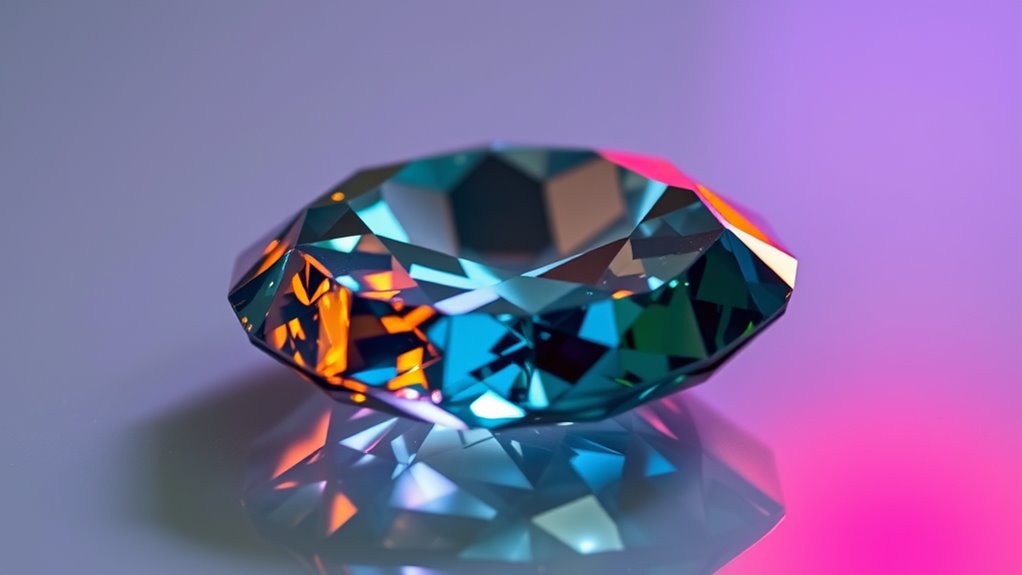
What Do Gemstones Look Like in Different Lights?
If you’ve ever admired a gemstone only to feel disappointed when it looks different under various lights, you’re not alone. Many people struggle to understand why their favorite stones don’t always sparkle the same way.
It can be frustrating trying to find the perfect gem that shines beautifully no matter where you are.
You’ll notice gemstones change in color, sparkle, and brilliance depending on the light you view them in. Natural sunlight reveals their full spectrum, making colors vibrant and bright.
Under incandescent light, warm tones deepen, while cooler fluorescents can give gems a bluish or greenish glow.
LED lights improve sparkle but may cast cooler hues. These shifts impact how you perceive and value each stone.
Keep exploring to uncover how lighting reveals even more about gemstones’ unique beauty.
Key Takeaways
- Gemstones display varied brightness, hue, and saturation as light bends, reflects, and disperses inside them under different lighting conditions.
- Natural sunlight reveals the fullest color spectrum, enhancing brilliance and uncovering hidden tones in gemstones.
- Incandescent light warms gemstone colors, enriching reds and yellows while softening cooler hues like blues and greens.
- Fluorescent light imparts bluish or greenish tints, sometimes causing gemstones like diamonds and rubies to fluoresce distinctly.
- LED lighting intensifies sparkle and can shift colors cooler, creating vibrant reflections but sometimes muting natural fire.
How Light Influences Gemstone Color and Appearance
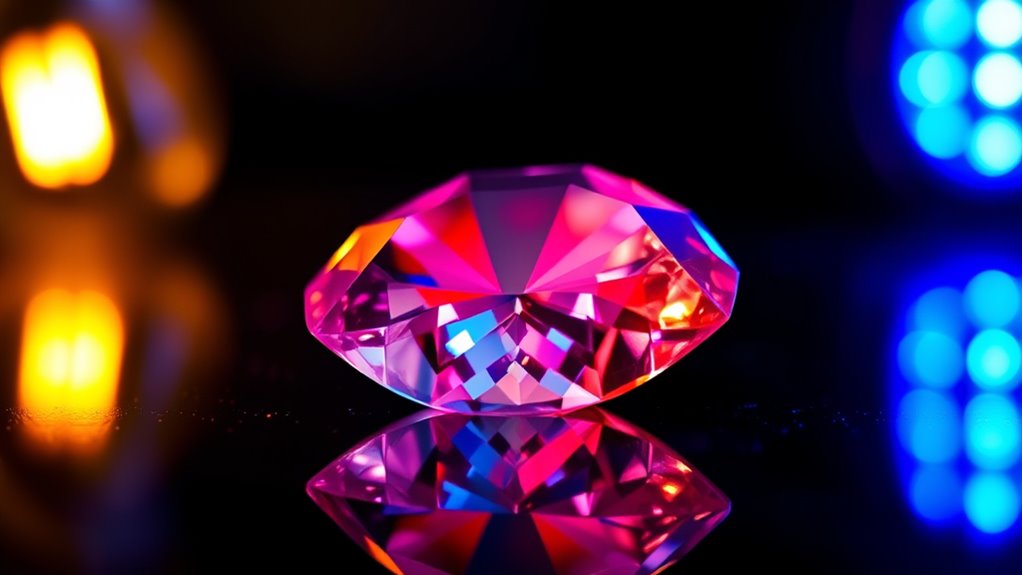
Although you might not always notice it, the way light interacts with a gemstone dramatically changes its color and appearance. When light enters a gemstone, it bends, reflects, and disperses inside, altering how you perceive its color.
This light interaction influences which wavelengths reach your eyes, shaping your color perception of the stone. Different gemstones have unique internal structures that affect light differently, meaning the same gem can appear vivid or subdued depending on the light’s angle and intensity.
As you move the gemstone or change the light source, you’ll see shifts in brightness, hue, and saturation. Understanding this helps you appreciate why gemstones can look so dynamic and enchanting, revealing their true beauty through the complex dance of light interaction and color perception.
Why Do Gemstones Look Different in Natural Sunlight?
You’ll notice gemstones often look different in natural sunlight, and that’s because of how the full spectrum of sunlight interacts with the stone. See, sunlight has a wide range of wavelengths, and these affect how gemstones absorb and reflect light. So, when you take a closer look, it makes sense why the colors seem to shift when you step outside.
Sunlight Spectrum Effects
Sunlight contains a full spectrum of colors that interact distinctly with gemstones, making them appear different than under artificial light. When you view a gemstone outdoors, the sunlight intensity boosts its natural brilliance and sparkle.
The broad range of wavelengths in sunlight excites the gem’s internal structure, revealing colors and flashes you might not see indoors. Your gemstone’s clarity also plays a crucial role. Stones with fewer inclusions allow sunlight to penetrate deeply, amplifying their vibrant hues.
Conversely, gems with lower clarity might scatter light more, softening their overall appearance. By understanding how sunlight’s full spectrum and intensity work with your gemstone’s clarity, you’ll appreciate why your jewelry can look more lively and dynamic in natural light compared to artificial sources.
Gemstone Light Absorption
Because gemstones absorb and reflect different wavelengths of light, they can look strikingly different under natural sunlight compared to artificial lighting. When you hold a gemstone in sunlight, its transparency reveals how light penetrates and bends within, a process called light refraction.
This bending causes the stone’s internal colors and brilliance to shift, making it appear more vibrant. In contrast, artificial light sources emit a narrower spectrum, so some wavelengths get absorbed rather than reflected, dulling the gemstone’s appearance.
Your perception changes because each gemstone’s unique chemical makeup dictates which wavelengths it absorbs, affecting its hue and brightness. Understanding gemstone light absorption helps you appreciate why the same stone can dazzle outdoors but seem muted indoors, highlighting the importance of lighting when showcasing your gems.
How Incandescent Light Changes Gemstone Colors
When you look at gemstones under incandescent light, you’ll see a warm glow that can actually change how they look. It’s pretty interesting because this type of light often shifts the color saturation. So, some colors might appear richer, while others could seem a bit duller. Just keep an eye on how the gemstone’s colors change compared to how they look in natural sunlight.
Warm Glow Effects
Incandescent light can dramatically transform how you see a gemstone’s true color. When illuminated by this light, many gemstones reveal a warm glow that you might miss under daylight. This warm glow amplifies the gemstone warmth, making reds, oranges, and yellows appear richer and more inviting.
You’ll notice that stones like garnets and citrines take on a cozy, almost fiery quality, while even cooler-toned gems can seem softer and more approachable. This effect happens because incandescent bulbs emit light with more red and orange wavelengths, which interact differently with the gemstone’s internal structure.
Color Saturation Shift
Although gemstone colors can appear vibrant under natural light, you’ll notice they often shift in saturation under incandescent lighting. This change happens because incandescent bulbs emit warmer, yellowish light that affects your color perception.
Under these lighting conditions, some gemstones appear richer and more intense, while others may seem muted or dull. Understanding how color saturation shifts helps you appreciate gemstones in various environments.
| Gemstone | Natural Light Saturation | Incandescent Light Saturation |
|---|---|---|
| Ruby | High | Very High |
| Sapphire | Medium | Low |
| Emerald | High | Medium |
| Amethyst | Medium | Low |
This table highlights how incandescent light can either amplify or reduce the saturation you see.
Gemstone Hue Variations
Because light impacts how you see colors, gemstones often display noticeable hue changes under incandescent bulbs. This type of light, rich in warm tones, improves red and orange hues in a gemstone’s color, making them appear deeper and more vibrant.
You’ll notice how the light reflection softens cooler colors like blues and greens, sometimes muting their intensity. When you view a sapphire or emerald under incandescent light, their usual vividness might shift, showing warmer undertones or less brilliance.
Understanding this helps you appreciate how gemstone color isn’t fixed but varies with lighting conditions. So, when you choose or admire gemstones, keep in mind that incandescent light can dramatically alter their appearance, revealing different aspects of their beauty through subtle hue variations.
How Fluorescent Light Affects Gemstone Appearance
When you view gemstones under fluorescent light, you’ll notice their colors can shift noticeably compared to natural daylight. This happens because fluorescent lighting emits a cooler, bluish tone that interacts distinctly with each stone.
Some gemstones exhibit a distinct fluorescent glow, causing their colors to appear more vivid or even slightly altered. This gemstone fluorescence is especially apparent in diamonds, rubies, and some sapphires, where ultraviolet rays in fluorescent light trigger a glowing effect.
You might see a bluish or greenish tint emerging, which isn’t visible under other lighting conditions. Understanding how fluorescent light affects gemstone appearance helps you appreciate their true color diversity and avoid surprises when shopping or showcasing your gems indoors.
How LED Lighting Affects Gemstone Sparkle and Color
You’ll notice that LED lighting can make gemstones sparkle more intensely because of its bright, focused rays. It really brings out that extra sparkle you might not see in other lights. But, on the flip side, LED lights can sometimes cause subtle color shifts, which means the stone might look a bit different compared to how it appears in natural light. Knowing these little differences helps you appreciate your gems no matter where you’re admiring them.
LED Light Impact
Although LED lighting has become popular for its energy efficiency and brightness, it can dramatically change how gemstones appear. When you view a gemstone under LED light, factors like LED color, intensity, and spectrum influence its sparkle and hue.
LED brightness and temperature affect how reflections play across facets, improving or muting the gem’s natural fire. You’ll notice LED effects differ greatly when you make an LED comparison to other light sources, revealing unique visual traits.
| LED Aspect | Impact on Gemstone Appearance |
|---|---|
| LED Color | Alters perceived gem hue |
| LED Intensity | Enhances or softens sparkle |
| LED Spectrum | Influences color richness |
| LED Reflection | Modifies light return and brilliance |
| LED Temperature | Changes warmth or coolness of colors |
Color Shift Effects
LED lighting’s influence goes beyond just brightness and warmth. It can cause noticeable color shifts in gemstones that change how they sparkle and appear. When you view a gemstone under LED light, the color shift can be quite dramatic due to the light’s specific spectrum.
This shift alters your light perception, making some hues pop while muting others. For example, a sapphire might look more vivid or slightly altered in tone, depending on the LED’s temperature. Because LEDs emit focused, cooler light, they often improve the sparkle but can also create a cooler color cast.
Understanding these color shift effects helps you appreciate how versatile gemstones are and why their appearance can change so much from one light source to another.
Why Do Some Gemstones Change Color in Different Lights?
How does the same gemstone appear so different under various lighting conditions? It all comes down to color perception and gemstone clarity. The way light interacts with a gem’s internal structure causes changes in the colors you see.
Different light sources emit varying wavelengths, which affect how a gemstone absorbs and reflects light. Your eyes pick up these shifts, making color changes noticeable.
| Light Source | Effect on Color | Reason |
|---|---|---|
| Daylight | True color visible | Balanced spectrum |
| Incandescent | Warmer tones | More red/yellow wavelengths |
| Fluorescent | Cooler tones | More blue wavelengths |
| LED | Variable effects | Depends on LED type |
| Candlelight | Deepened hues | Soft, warm light |
Understanding this helps you appreciate a gem’s dynamic beauty.
Identifying Gemstones by How They React to Light
Three key lighting reactions can help you identify gemstones: color change, pleochroism, and fluorescence. When you use gemstone identification techniques, these reactions reveal a lot about a stone’s nature.
Color change occurs when a gemstone shifts hues under different light sources, a trait unique to certain gems like alexandrite. Pleochroism lets you see distinct colors from different angles, helping you spot stones like tanzanite.
Fluorescence causes some gems to glow under UV light, an essential factor in light-based testing. By observing these responses carefully, you can distinguish between similar-looking stones and verify authenticity. Using these light-based testing methods improves your ability to identify gemstones accurately without relying solely on appearance.
Tips for Viewing Gemstones to See Their True Colors
Why does a gemstone look different under various lighting conditions? It’s all about color perception and how different light sources affect the gem’s appearance. To see true colors, use proper viewing techniques: examine gemstones under natural daylight or standardized lighting environments for accurate color consistency.
Avoid harsh or mixed light sources that alter visual contrast. When displaying gems, choose neutral backgrounds and controlled display methods to reduce distractions. For gemstone grading, consistent lighting is essential to evaluate color accurately.
Don’t forget gemstone care. Clean your gems regularly to prevent dullness that skews color perception. If photographing gemstones, follow photography tips like using diffused lighting and avoiding direct flash to capture authentic colors.
Common Gemstones and Their Unique Light Reactions
Although gemstones may appear similar at first glance, each type reacts distinctly to different light sources. This reveals distinctive colors and effects that make each stone unique. When you observe gemstones under varying lights, you’ll notice fluorescence and other optical phenomena.
For example, some stones glow under ultraviolet light, while others show color shifts or intense sparkle.
Here are three common gemstones and their unique light reactions:
Diamond: Exhibits strong brilliance and fire, scattering light into vivid colors.
Alexandrite: Displays a dramatic color change from green in daylight to red under incandescent light.
Ruby: Shows vibrant red fluorescence under ultraviolet light due to chromium content.
Recognizing these traits helps you appreciate the true beauty of each gem.
How Lighting Impacts Gemstone Value and Buyer Choices
Because lighting can dramatically change how a gemstone looks, it plays an essential role in determining its value and influencing buyer decisions. You’ll find that lighting technologies directly impact color grading and gemstone appraisal, making accurate evaluation challenging without proper conditions.
Lighting profoundly influences gemstone appearance, value, and accurate appraisal, making proper evaluation essential.
As gemstone trends evolve, buyer preferences increasingly favor stones that appear vibrant under various lights. This shift affects market demand and pushes sellers to emphasize visual aesthetics in their displays.
When you shop for gemstones, understanding how different lighting affects appearance helps you make informed choices. Consumer education on lighting’s role is crucial, so you don’t overpay or miss out on quality.
Ultimately, knowing how lighting influences gemstone value empowers you to align your selections with current trends and personal taste confidently.
Frequently Asked Questions
How Should I Clean My Gemstone to Maintain Its Appearance?
You should clean your gemstone gently using proper cleaning techniques to maintain its appearance. Avoid harsh chemicals; instead, use warm soapy water and a soft brush to remove dirt. Rinse thoroughly and pat dry with a soft cloth.
Regular gemstone maintenance includes storing your stones separately to prevent scratches and avoiding exposure to extreme heat or chemicals. This way, you’ll keep your gemstone looking vibrant and beautiful over time.
Can Artificial Lights Damage Gemstones Over Time?
Artificial lights can be a double-edged sword for your gemstones. While brief exposure to common indoor lighting usually won’t harm them, prolonged UV exposure, especially from certain light spectrums like intense sunlight or specialized bulbs, can fade or alter colors over time.
To keep your gems vibrant, avoid continuous exposure to harsh lights and store them in a cool, shaded place. Think of it as giving your gems a gentle, protective hug.
What Gemstones Are Best for Everyday Jewelry Wear?
For everyday jewelry wear, you should choose gemstones with high durability factors like sapphires, diamonds, and rubies since they resist scratches and impacts. These stones also maintain their beauty despite color variations caused by different lighting.
You’ll want gems that stay vibrant and strong daily, so avoid softer stones like opals or pearls for constant use. Picking durable gems guarantees your jewelry looks stunning and lasts longer without frequent repairs.
Do Different Cuts Affect How Gemstones Reflect Light?
Yes, different cuts definitely affect how gemstones reflect light. When you choose a gemstone, the cut angles play a huge role in light dispersion, which creates that dazzling sparkle you love.
If the angles are precise, light bounces inside the stone and disperses beautifully, showing off vibrant colors. Poorly cut gemstones can look dull because light escapes instead of reflecting.
How Can I Tell if a Gemstone Is Natural or Synthetic?
Telling if a gemstone is natural or synthetic is like spotting a single star in a crowded sky. You need sharp observation. You can start with synthetic identification tools like magnification to check for unnatural bubbles or inclusions.
Natural characteristics, such as irregular growth patterns or tiny mineral traces, often reveal a real gem. Trust your eyes and a gemologist’s expertise to confirm what you’re holding truly shines with nature’s touch.
Conclusion
You won’t believe how dramatically gemstones transform under different lights. It’s like watching a magical light show right in your hand! One moment, they glow with fiery brilliance; the next, they whisper soft, mysterious hues.
If you want to truly appreciate their beauty, you’ve got to see them in all their lighting moods. Trust me, once you do, you’ll never look at gemstones the same way again. They’re pure enchantment in every sparkle and shine of gemstones in different lights!