5 Factors That Determine How Much a 4 Carat Diamond Is Worth
Figuring out how much a 4 carat diamond is worth can feel overwhelming. You’re not alone—many people struggle with understanding what really drives the price of these stunning stones.
Whether you’re shopping for a special gift or investing in a timeless piece, knowing what to look for can save you from confusion and costly mistakes.
When you’re determining the worth of a 4 carat diamond, you’ll want to evaluate five key factors.
Carat weight drives price up since bigger stones are rarer. Cut quality affects sparkle and brilliance, making well-cut diamonds more valuable. Color grade impacts rarity and appeal, with clearer stones costing more. Clarity reveals flaws that can lower value, especially in large diamonds.
Finally, shape influences price through popularity and trend. Understanding these factors reveals deeper insight into diamond pricing.
Key Takeaways
- Carat weight heavily influences price due to the rarity and prestige associated with larger 4 carat diamonds. Bigger stones are just harder to find, so they tend to cost more.
- Cut quality affects brilliance and sparkle. Well-cut diamonds really catch the light, making them more desirable and often more expensive.
- Higher color grades, especially those closer to D, increase value. These diamonds are rarer and visually more appealing, which drives up the price.
- Clarity impacts worth because fewer inclusions and blemishes make a diamond more attractive and valuable.
- Shape also influences price. Round diamonds usually cost more than fancy shapes, based on current market trends.
How Carat Weight Affects 4 Carat Diamond Prices
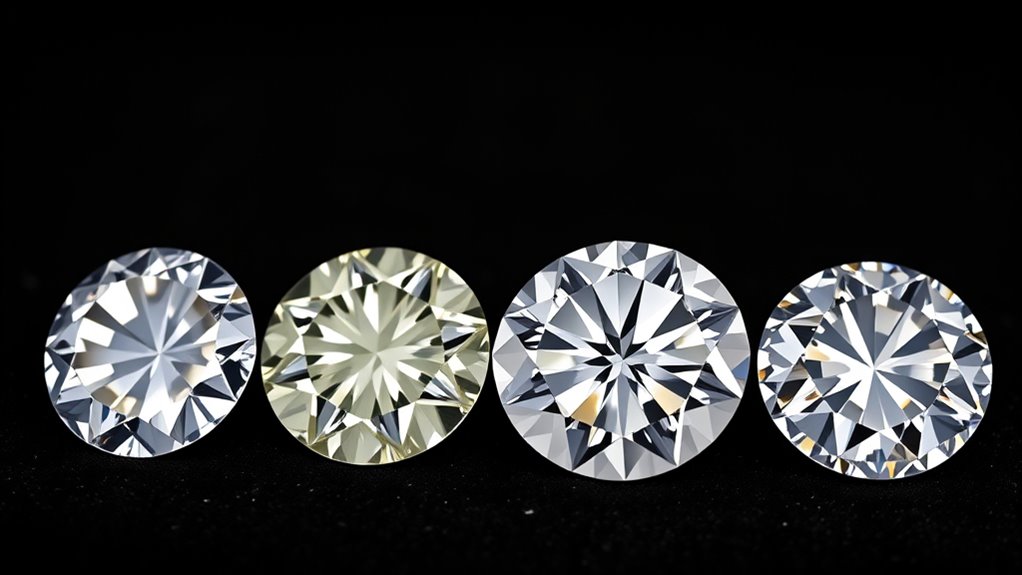
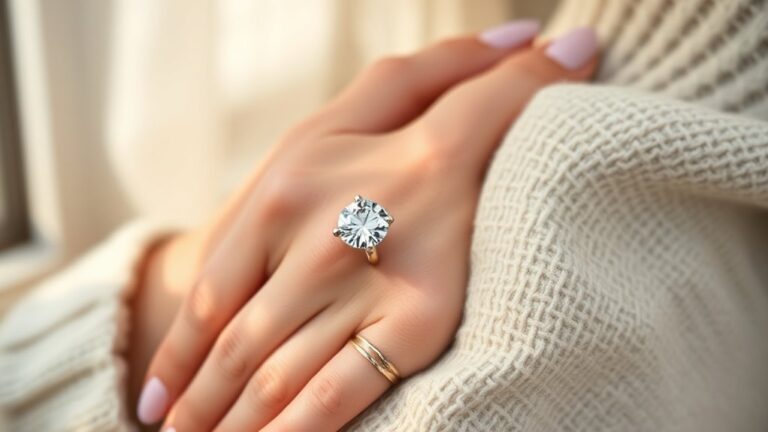
Although carat weight is just one factor in diamond pricing, it plays a major role in how much a 4 carat diamond will cost you. Carat pricing doesn’t increase linearly; larger diamonds like 4 carats are rarer, which drives up their value considerably.
You’ll notice that as carat size grows, market demand shifts because buyers often perceive bigger diamonds as more prestigious and valuable. This buyer perception directly impacts how sellers price these gems.
Since 4 carat diamonds are uncommon, their rarity adds an exclusivity premium that you won’t find in smaller stones. Understanding this helps you see why even small changes in carat weight can cause big price differences.
How Cut Quality Impacts a 4 Carat Diamond’s Price
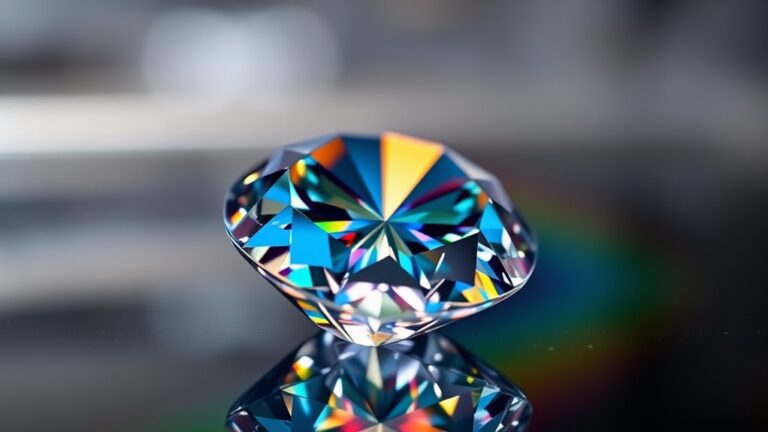
When you choose a 4 carat diamond, the cut quality greatly influences its price because it determines the stone’s brilliance and overall appeal. The cut styles you pick, like round, princess, or cushion, affect how light interacts with the diamond.
Cut symmetry plays a significant role too. Even slight misalignments can reduce the stone’s sparkle, lowering its value. Cut proportions, including depth and table size, directly impact how much light reflects inside the diamond, enhancing or dulling its brilliance.
A well-cut diamond maximizes brilliance, making it appear more radiant and desirable. Since a 4 carat diamond is already rare, investing in superior cut quality guarantees you get the best visual impact and a price that reflects that exceptional beauty.
How Color Grades Influence 4 Carat Diamond Value
Since color is one of the most noticeable characteristics of a diamond, it plays an essential role in determining the value of a 4 carat stone. You’ll find that diamonds with less color saturation typically command higher prices because they’re rarer. The more colorless and rare the diamond, the more valuable it becomes.
Here’s a quick look at how color grades influence value:
| Color Grade | Description | Impact on Value |
|---|---|---|
| D | Absolutely colorless | Highest color rarity, highest value |
| E-F | Colorless | Very rare, slightly less value than D |
| G-H | Near colorless | Moderate color saturation, good value |
| I-J | Faint color | Noticeable saturation, lower value |
| K and below | Very faint to light yellow | Higher color saturation, lowest value |
Choosing a higher color grade means investing in rarity and brilliance.
How Clarity Affects the Price of a 4 Carat Diamond
Because clarity reveals a diamond’s internal flaws and external blemishes, it directly impacts the price you’ll pay for a 4 carat stone. When you evaluate clarity grades, you’ll notice that diamonds with fewer inclusions and blemishes command higher prices.
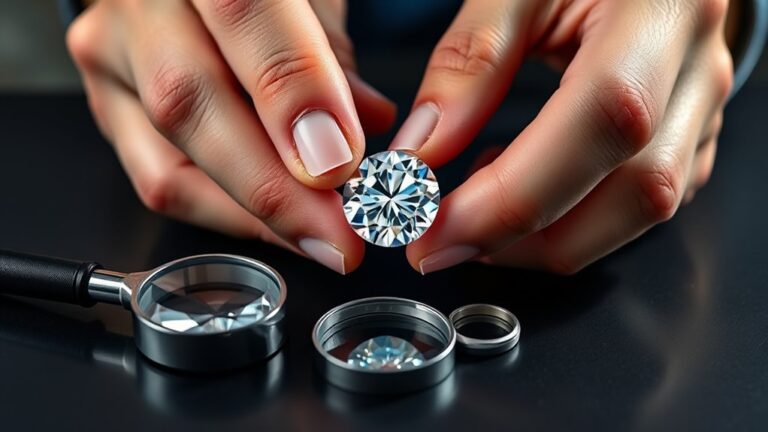
Inclusions impact not only the diamond’s beauty but also its structural integrity, so stones with visible inclusions are less valuable. Clarity grades range from Flawless (no inclusions visible under 10x magnification) to Included (inclusions easily seen).
As clarity decreases, the price drops considerably, especially for large stones like 4 carats where imperfections are more noticeable. When shopping, prioritize clarity grades that balance appearance and budget, since even minor inclusions can affect the stone’s brilliance and ultimately its worth.
How Shape Changes the Cost of a 4 Carat Diamond
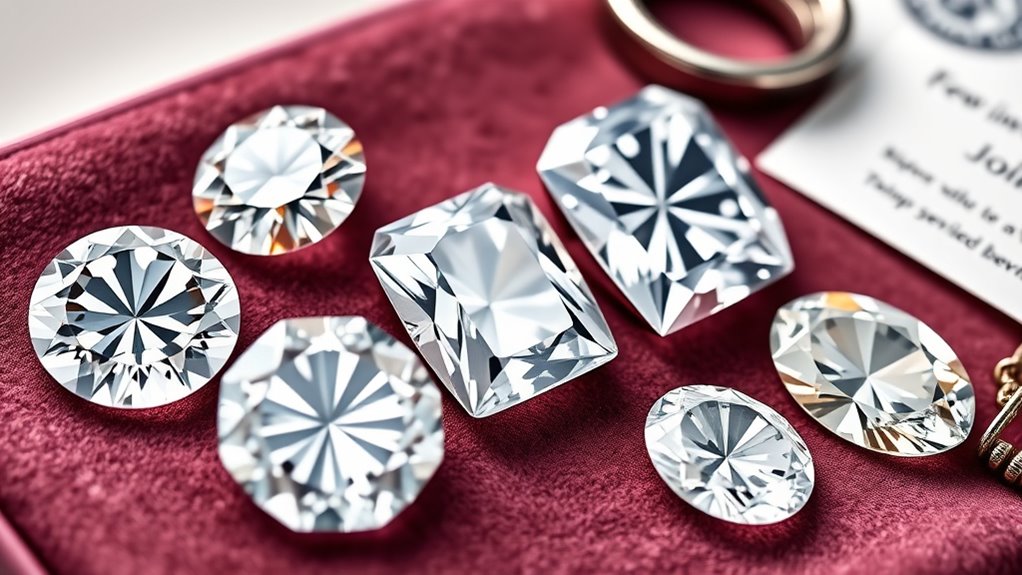
Different diamond shapes can greatly influence the price you’ll pay for a 4 carat stone. When you choose a shape, you’re not just picking a style, you’re also responding to shape preferences that affect demand and cost.
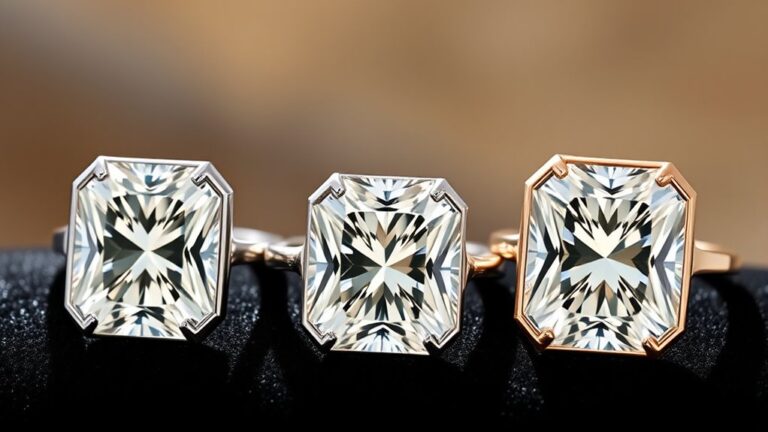
For example, round diamonds usually command higher prices because they’re the most popular and have better market trends supporting their value. On the other hand, fancy shapes like emerald, pear, or cushion cuts might cost less per carat, but their prices can vary depending on current trends and buyer interest.
Understanding these market trends helps you anticipate which shapes hold value better. So, when selecting your diamond, consider how shape preferences and market demand impact cost, ensuring you get the best value for your investment.
Frequently Asked Questions
How Does Diamond Certification Affect the Value of a 4 Carat Diamond?
Diamond certification directly impacts your 4 carat diamond’s value because it verifies quality through trusted grading standards. When you have certification grades from reputable labs, buyers trust the diamond’s authenticity and characteristics, boosting its worth.
Without certification, you risk undervaluing or overpaying. So, you’ll want a diamond with clear, reliable certification grades to guarantee you’re investing in a genuine, accurately assessed gem that holds its value.
What Role Does Diamond Fluorescence Play in Pricing a 4 Carat Stone?
You know the saying, “Don’t judge a book by its cover”? Fluorescence effects in a 4 carat diamond can be tricky like that. When you spot strong fluorescence, it might make the stone appear hazy or oily under certain lights. This can lower its appeal.
Because of these fluorescence effects, pricing implications vary. Diamonds with strong fluorescence often sell for less, while those with faint or no fluorescence usually command higher prices.
How Do Market Trends Influence 4 Carat Diamond Prices Over Time?
You’ll notice market trends directly impact 4 carat diamond prices through market demand shifts. When demand spikes, prices often rise, and during slower periods, pricing fluctuations occur as sellers adjust to buyer interest.
Economic conditions and fashion trends also play roles, so staying updated helps you time purchases or sales better. Understanding these dynamics guarantees you make smarter decisions about when to invest in or sell a 4 carat diamond.
Can the Origin or Ethical Sourcing Impact a 4 Carat Diamond’s Price?
You’ll find that the origin significance of a 4 carat diamond can really tip the scales on its price. Ethical implications play a big role too. Diamonds sourced responsibly often carry a premium because they’re like a shining symbol of conscience in a murky market.
When you choose ethically sourced stones, you’re not just paying for beauty. You’re investing in peace of mind and supporting fair practices.
How Do Setting and Jewelry Design Affect the Overall Cost of a 4 Carat Diamond?
Setting styles and design complexity can greatly affect the overall cost of a 4 carat diamond. If you choose intricate settings or custom designs, expect to pay more because they require skilled craftsmanship and more materials.
Simple settings cost less, but complex designs improve the diamond’s appearance, sometimes justifying the higher price. So, when picking your jewelry, consider how the style and design work with your budget and personal taste.
Conclusion
So, you might think a 4 carat diamond’s price is just about its size. After all, bigger should mean pricier, right? But surprise! It’s not that simple.
Cut, color, clarity, and shape all sneak in to play their parts, making the final price a fascinating puzzle. If you thought weight was the whole story, you’ve just uncovered diamond shopping’s ironic little secret.
Who knew size wasn’t everything when it comes to how much a 4 carat diamond is worth?