How Long Do Solar Watches Last and How Durable Are They
Finding a watch that combines reliability, eco-friendliness, and durability can feel like a challenge. If you’ve ever struggled with replacing batteries or worrying about your watch breaking easily, you’re not alone. Many people want a timepiece that lasts long without constant upkeep or unexpected failures.
You can expect your solar watch to last between 7 to 15 years with proper care, thanks to efficient light-powered batteries and durable materials like stainless steel and sapphire crystal.
Regular exposure to light keeps it charged and running smoothly, while avoiding extreme temperatures and impacts helps maintain its longevity.
If you keep up with maintenance and watch for performance changes, your solar watch will serve you well. Uncover what else affects their lifespan and durability next.
Key Takeaways
- Solar watch batteries typically last 7 to 15 years, with most models operating efficiently for 10 to 15 years before replacement.
- Regular exposure to light, especially sunlight, is essential for maintaining optimal charging and consistent timekeeping performance.
- Durable materials like stainless steel, sapphire crystal, and reinforced resin enhance resistance to scratches, impacts, and corrosion.
- Extreme temperatures, moisture beyond resistance levels, and physical impacts can degrade battery life and damage components.
- Proper maintenance, including cleaning and professional servicing every 2-3 years, maximizes the lifespan and durability of solar watches.
How Solar Watches Work
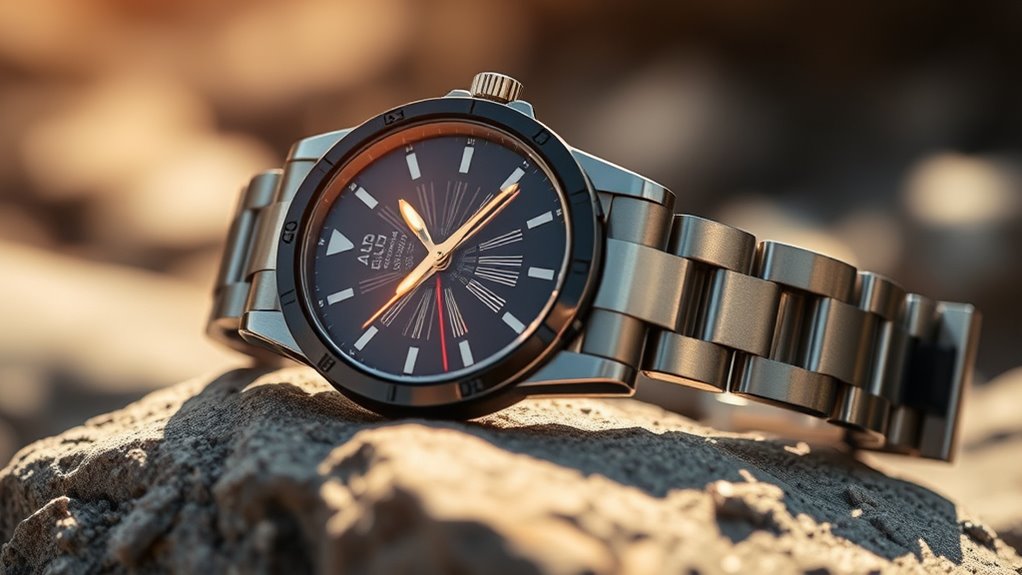
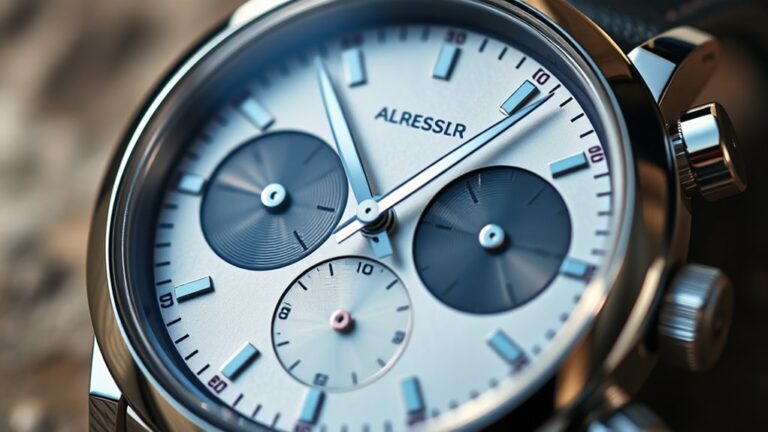
Solar watches use light to keep running, converting it into energy through a small solar panel beneath the dial. When you expose your watch to any light source, the solar technology captures and transforms it into electrical energy, which powers the watch’s movement.
This process guarantees energy efficiency, allowing your watch to function without frequent battery changes. You don’t have to worry about direct sunlight either; indoor lighting can also keep your watch charged.
The energy is stored in a rechargeable cell, so your watch continues running even when it’s in the dark for some time. By relying on solar technology, these watches offer a reliable and eco-friendly alternative to traditional timepieces, making them great for everyday use.
Typical Lifespan of a Solar Watch Battery
You can expect a solar watch battery to last anywhere from 7 to 15 years, depending on how you use and care for it. It really comes down to factors like how much light it gets and the temperatures it’s exposed to, which can affect its lifespan over time.
Battery Lifespan Expectations
Most solar watch batteries can last between 10 to 15 years before needing replacement. Thanks to advanced solar technology, these batteries recharge continuously with exposure to light, drastically extending their lifespan compared to traditional watch batteries.
When you eventually face battery replacement, you’ll find that it’s less frequent and often simpler because the battery type is designed for durability. Solar watches store energy efficiently, so you don’t have to worry about sudden power loss.
Factors Affecting Battery Life
Battery lifespan can vary widely depending on several key factors that influence how long your solar watch performs at its peak. First, battery capacity plays a vital role; higher capacity batteries generally last longer between charges.
Light efficiency affects this too. Watches exposed to ample, consistent light charge faster and maintain battery health better. Environmental impact, including temperature effects, can degrade battery performance. Extreme heat or cold shortens lifespan.
Your usage habits matter as well. Frequent use and charging frequency keep the battery active. Long storage without light can reduce effectiveness. Proper storage conditions, such as avoiding damp or overly hot places, help preserve battery life.
Finally, regular maintenance practices like cleaning solar cells guarantee ideal light absorption. This directly supports battery longevity.
Signs of Battery Degradation
Although solar watches are designed to last for many years, you’ll eventually notice signs that their rechargeable batteries are losing capacity. Recognizing battery warning signs early helps you avoid unexpected failures.
The typical lifespan of a solar watch battery ranges from 5 to 10 years, depending on usage and care. When degradation starts, you might experience charging issues or see your watch losing power faster than usual.
Here are common battery warning signs to watch for:
- Your watch requires more frequent exposure to light for a full charge.
- The power reserve drops quickly, even after a full charge.
- The watch stops functioning during low-light conditions more often than before.
If you notice these signs, it’s time to contemplate battery replacement or professional servicing.
How Light Exposure Affects Solar Watch Performance
Since solar watches rely on light to recharge, the amount and type of light you expose them to directly impact their performance. Light intensity and exposure duration play key roles in charging efficiency.
Sunlight sources offer the strongest light, making outdoor exposure ideal. Artificial lighting can recharge your watch but at a slower rate.
Sunlight provides the most effective charging, while artificial light recharges your watch more slowly.
Seasonal variations affect how much natural light your watch receives, causing performance fluctuations during shorter days or cloudy weather. Watch placement matters too. Keeping it near windows or under direct light boosts charging.
Environmental factors like shade or indoor positioning can reduce effective exposure, limiting your watch’s ability to store power. By understanding these elements, you can guarantee your solar watch maintains reliable performance and stays charged longer.
Key Factors That Affect Solar Watch Durability
When you invest in a solar watch, you want it to last as long as possible. Several factors play a crucial role in its durability. Understanding these key elements helps you make the most of your purchase and keep your watch functioning well over time.
Materials impact: High-quality materials like stainless steel or titanium resist scratches and corrosion. This extends your watch’s lifespan.
Environmental influences: Exposure to extreme temperatures, moisture, and chemicals can degrade seals and internal components. So, be mindful of where you wear your watch.
Impact resistance: Watches designed to absorb shocks protect delicate solar cells and circuits from damage caused by drops or bumps.
Comparing Solar Watch Brands by Longevity
You’ll notice that some solar watch brands outlast others because of differences in build quality and battery life. It really comes down to how well they’re made and how long their batteries can keep going. When you understand how durability varies across brands, it’s easier to pick a watch that fits what you need. So, let’s take a look at the key factors that set these brands apart in terms of longevity.
Brand Longevity Comparison
Durability plays an essential role when choosing a solar watch. Comparing brands can help you find one that lasts. When evaluating solar watches, focus on brand reputation and customer reviews to gauge longevity.
Trusted brands often invest in quality materials and technology. That usually translates to longer-lasting watches.
Here are three key points to bear in mind when comparing brand longevity:
- Brand Reputation: Established brands usually have a proven track record for durability and reliability.
- Customer Reviews: Real user feedback highlights common issues or praises related to watch lifespan.
- Warranty and Support: Brands that offer strong warranties and responsive customer service often back their product’s durability.
Durability Across Brands
Exploring how different solar watch brands hold up over time gives you a clearer picture of what to expect regarding longevity. Brand reputation and consumer reviews highlight how technology advancements and design innovations impact durability.
Warranty policies and maintenance practices also play essential roles in preserving your watch’s lifespan. Price comparisons can guide you to a balance between cost and quality.
User experiences often reveal real-world durability beyond marketing claims.
| Brand | Key Durability Factors |
|---|---|
| Seiko | Strong warranty, innovative tech, solid design |
| Citizen | Excellent consumer reviews, reliable maintenance |
| Casio | Affordable pricing, rugged build, good user feedback |
Battery Life Variations
Although solar watches share a common power source, their battery life can vary considerably depending on the brand and model you choose. Advances in battery technology and energy efficiency play a key role in how long your watch will last between charges. Some brands invest more in optimizing these aspects, giving you longer-lasting performance.
Here’s what to evaluate when comparing solar watch longevity:
Battery technology: Some brands use advanced lithium-ion batteries that hold charge better over time.
Energy efficiency: Watches with efficient energy use require less frequent exposure to light.
Power reserve: Different models offer varying power reserve durations, from several months to over a year without light.
Durable Materials Used in Solar Watches
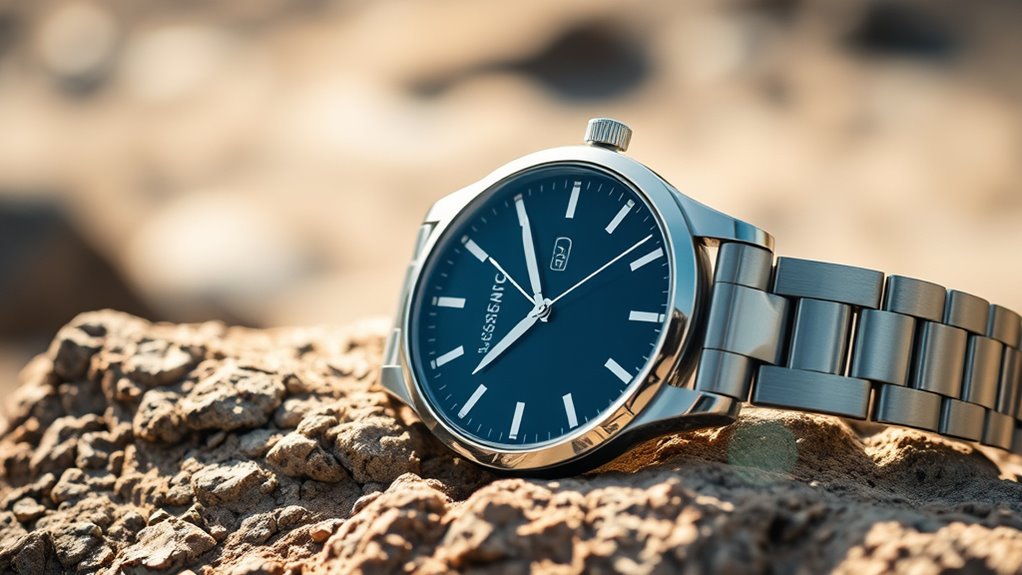
Solar watches often rely on tough materials like stainless steel, sapphire crystal, and reinforced resin to withstand daily wear and tear. You’ll appreciate the material strength these components offer, ensuring case durability and strap longevity even in active use.
Sapphire crystal provides excellent scratch resistance and lens protection, keeping your watch face clear. Water resistance and corrosion resistance are essential, especially if you wear your watch near water or in humid conditions.
Designers balance weight considerations with design robustness, so your watch feels comfortable without compromising toughness. High component quality guarantees that each part works seamlessly, enhancing overall durability.
Choosing a solar watch made from these durable materials means you get a reliable timepiece built to last, ready for whatever your day throws at it.
Common Problems That Reduce Solar Watch Durability
While solar watches are designed to be durable, certain issues can still shorten their lifespan if you’re not careful. Understanding common solar watch issues helps you avoid durability concerns and keep your watch running smoothly.
One major problem is exposure to extreme temperatures. This can damage the battery and internal components. Another issue is water damage, especially if your watch isn’t rated for high water resistance.
Physical impacts like drops or heavy knocks can also crack the solar panel or damage the casing. In conclusion, watch out for these key factors:
- Extreme temperature fluctuations harming battery life
- Water exposure beyond the watch’s resistance level
- Physical shocks causing cracks or internal damage
When to Repair or Replace Your Solar Watch
Damage from temperature extremes, water exposure, or impacts can cause your watch to lose functionality over time. Watch for repair indicators like inconsistent timekeeping, dim or unresponsive solar cells, and reduced battery life despite regular charging.
If you notice these issues, it’s wise to take your solar watch to a professional for assessment. Replacement signs include persistent malfunctions after repairs, cracked or severely scratched glass, or corrosion inside the watch case.
When repairs become too frequent or costly, replacing your solar watch may be the better option. By paying attention to these repair indicators and replacement signs, you can decide the best course of action to keep your timepiece reliable and functional.
Tips to Maximize Your Solar Watch’s Lifespan
To get the most out of your solar watch, make sure you charge it properly by exposing it to natural or artificial light regularly. It’s pretty simple, but keeping up with this habit really pays off. Also, don’t forget to stay on top of regular maintenance to keep all the parts in good shape. Just a little care goes a long way. Following these simple steps can really help your watch last much longer.
Proper Charging Practices
How often should you charge your solar watch to keep it running smoothly? Consistent charging is key, but avoid overexposing it to intense light. Use effective solar charging techniques to maintain battery health and guarantee longevity. Aim for ideal sunlight exposure rather than artificial light, which often charges slower.
To properly charge your solar watch: place it under direct sunlight for about 2-3 hours daily, avoiding harsh midday sun to prevent damage. When indoors, position it near a bright window to utilize natural light efficiently. Avoid leaving your watch in complete darkness for extended periods, as this drains the power reserve.
Following these simple practices helps you maximize your solar watch’s lifespan and maintain reliable performance.
Regular Maintenance Tips
Maintaining your solar watch regularly guarantees it stays accurate and efficient for years. To guarantee peak solar watch care, clean the watch face and strap gently with a soft cloth every few weeks. This prevents dirt buildup that can block sunlight, reducing charging efficiency.
Check seals and gaskets during maintenance to keep water resistance intact. This usually means scheduling professional servicing every 2-3 years. Don’t ignore unusual performance changes; they often signal it’s time for a battery or component check.
Pay attention to maintenance frequency based on your usage and environment. If you’re in harsh conditions, more frequent checks are a good idea. By staying proactive with these simple steps, you’ll maximize your solar watch’s lifespan and enjoy reliable timekeeping without surprises.
Are Solar Watches Worth It for Everyday Wear?
Why choose a solar watch for everyday wear? You’ll appreciate its everyday practicality and cost effectiveness. Solar watches charge using light, so you won’t need to replace batteries often, saving you money and hassle.
Solar watches offer practical, cost-effective everyday wear by charging with light, reducing battery replacements and hassle.
They’re designed to be durable and reliable, making them perfect for daily use.
Here’s why they’re worth it:
- Low Maintenance: Solar technology means fewer battery changes and less upkeep.
- Eco-Friendly: Using renewable energy reduces your environmental impact.
- Long-Lasting: High-quality solar watches often last for years without losing accuracy.
If you want a dependable watch that keeps ticking with minimal effort and expense, solar watches offer excellent value. Their blend of convenience, durability, and sustainability makes them a smart choice for everyday wear.
Frequently Asked Questions
Can Solar Watches Charge Indoors or Only Under Direct Sunlight?
You can definitely charge solar watches indoors, not just under direct sunlight. They have light sensitivity that allows them to absorb artificial light, like from lamps or fluorescent bulbs.
While indoor charging is slower compared to sunlight, it still keeps your watch powered. Just make sure your watch gets enough exposure to light regularly, and it’ll stay charged without needing to be outside all the time.
Do Solar Watches Require Special Maintenance Compared to Regular Watches?
Oh sure, you’ve got to pamper your solar watch like it’s royalty except you don’t. Solar watches don’t need special maintenance compared to regular ones.
Their battery lifespan is impressively long since they recharge with light, reducing replacement needs. Just follow basic maintenance tips: keep the solar panel clean and avoid prolonged darkness.
Are Solar Watches Waterproof or Water-Resistant?
Solar watches often come with water resistance, but it varies by model, so you should check the specific rating before exposing yours to water. The solar technology inside doesn’t affect water resistance directly, but manufacturers usually seal the watch well to protect the solar cells and internal components.
You can confidently wear it in rain or while washing hands, but avoid deep diving unless your watch explicitly states it’s designed for that level of water resistance.
How Accurate Are Solar Watches Compared to Traditional Quartz Watches?
They say, “Don’t judge a book by its cover,” and that applies here. You’ll find solar watches just as accurate as traditional quartz watches because both rely on quartz crystals for watch precision.
Solar technology powers the watch using light, but it doesn’t affect timekeeping accuracy. So, you can trust your solar watch to keep time reliably, just like any quartz watch, while enjoying the eco-friendly benefits of solar energy.
Can Solar Watches Be Recycled or Are They Environmentally Friendly?
Yes, you can recycle many solar watches, especially those using solar technology with rechargeable batteries. They’re generally more environmentally friendly than traditional watches since they reduce battery waste and energy consumption. However, you should check with local recycling programs to properly dispose of components.
Conclusion
If you want a watch that practically never dies, solar watches are your best bet. They soak up light like a sponge and keep ticking for years. Just remember, daily care and proper light exposure can make your solar watch last longer than a superhero’s mission.
So, whether you’re an everyday adventurer or just want hassle-free timekeeping, solar watches are worth every second on your wrist. You’ll barely ever need to think about replacing it! Solar watches last long and stay durable, making them a smart choice for reliable timekeeping.