What Is in a Diamond and How to Identify Its Key Components
If you’ve ever tried to understand what makes a diamond truly valuable, you’re not alone. Many people struggle with identifying the key features that set diamonds apart. It can feel overwhelming to know what to look for and how to assess quality without expert help.
A diamond is made entirely of carbon atoms arranged in a strong, three-dimensional lattice, giving it unmatched hardness and shine. You can identify key components by examining its crystal shape, facets, and any inclusions, tiny internal flaws that affect clarity.
Surface blemishes and fluorescence under UV light also reveal its quality. Using simple tools like a magnifying loupe and UV lamp helps you assess these features.
Understanding these basics opens the door to uncovering much more about your diamond’s true nature.
Key Takeaways
- Diamonds are made entirely of carbon atoms bonded in a tetrahedral crystal lattice, giving them hardness and brilliance.
- Key diamond shapes include octahedral and cubic crystals. Their facets affect how light reflects and sparkles.
- Inclusions like feathers and crystals, plus surface blemishes, impact clarity and value. You can identify these under 10x magnification.
- Diamond color ranges from colorless to faint hues. Fluorescence, visible under UV light, influences their appearance.
- Tools like a loupe, diamond tester, and UV lamp help identify authenticity, inclusions, fluorescence, and whether a diamond is natural or synthetic.
What Diamonds Are Made Of Chemically
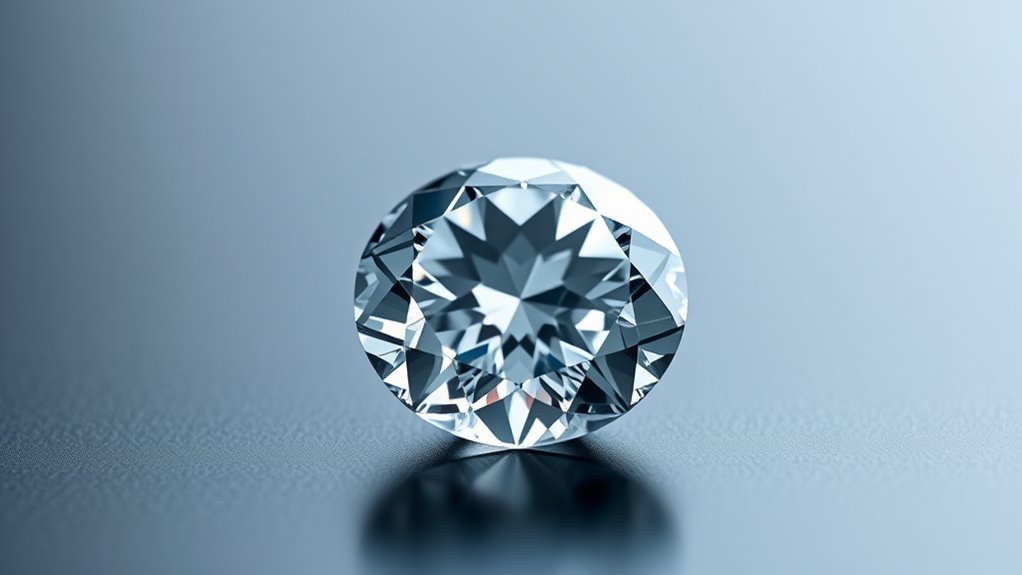
Although diamonds may look simple, they’re made entirely of carbon atoms arranged in a unique crystal structure. When you focus on diamond composition, you realize it’s all about carbon bonding.
Each carbon atom bonds strongly with four others, creating a rigid and incredibly stable framework. This bonding is what gives diamonds their unmatched hardness and brilliance.
Each carbon atom bonds with four others, forming a strong, stable structure that gives diamonds their hardness and brilliance.
Unlike other forms of carbon, like graphite, the way these atoms connect defines the diamond’s exceptional properties. So, when you examine a diamond, you’re really seeing the result of carbon atoms locked in a precise pattern, thanks to intense carbon bonding.
Understanding this chemical makeup helps you appreciate why diamonds are so valuable and distinct from other carbon-based materials.
How Carbon Atoms Create Diamond Structure
When carbon atoms bond in a diamond, they form a three-dimensional network that creates the stone’s remarkable strength. This network, known as the diamond lattice, consists of each carbon atom covalently bonded to four other carbon atoms in a tetrahedral arrangement.
You can think of this atomic bonding as a rigid framework, where every bond reinforces the structure, making diamonds incredibly hard and durable. Unlike other forms of carbon, such as graphite, the diamond lattice’s atomic bonding doesn’t allow layers to slide past each other, giving diamonds their unique toughness.
Understanding this atomic bonding helps you appreciate why diamonds maintain their shape and brilliance even under extreme conditions. The diamond lattice is truly the foundation that defines a diamond’s exceptional physical properties.
Diamond Crystal Shapes And Facets Explained
You’ll notice diamonds come in all sorts of crystal shapes, each with its own unique facets that affect how light plays around inside the stone. When you understand these different facet types and what they do, it’s easier to appreciate how they influence a diamond’s brilliance. So, let’s take a closer look at how these elements work together to make diamonds sparkle.
Common Diamond Crystal Shapes
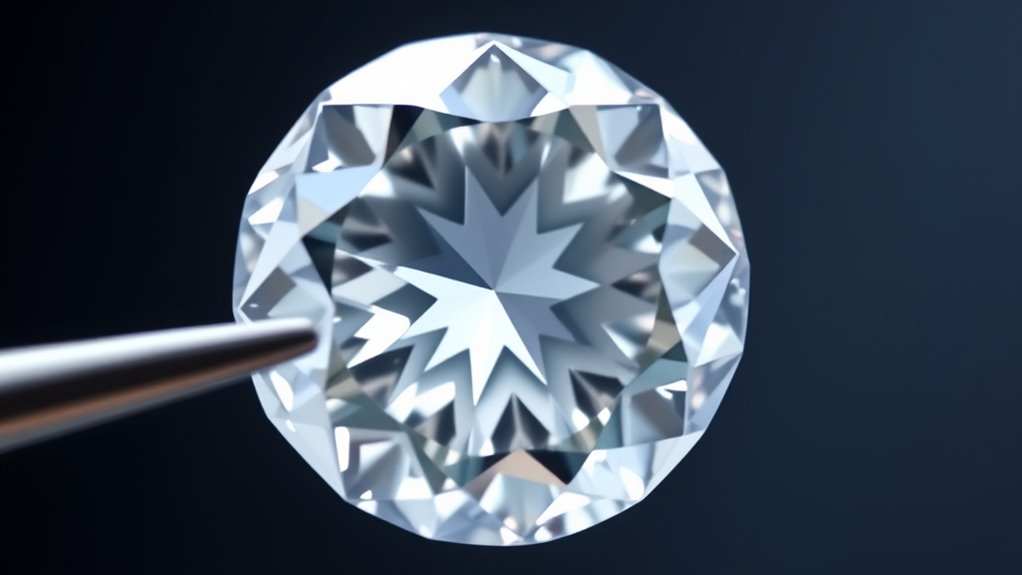
Diamond crystals come in a variety of shapes that reveal their natural growth patterns and influence how they’re cut and polished. You’ll often find octahedral shapes, which exhibit perfect crystal symmetry, reflecting the diamond’s internal atomic arrangement.
Another common shape is the cubic form, less frequent but still important, showing different growth patterns. You might also encounter dodecahedral crystals, with twelve faces that highlight unique symmetry aspects.
Understanding these shapes helps you appreciate how diamonds form deep within the Earth. The distinct crystal symmetry in each shape guides cutters in maximizing brilliance while preserving weight.
Facet Types And Functions
Facets shape how light interacts with a gem, directly affecting its sparkle and brilliance. Understanding facet types helps you appreciate the craftsmanship techniques behind each cut.
Brilliant cuts maximize sparkle effect through optical precision, while step cuts emphasize clarity with broad facets. Mixed cuts combine both styles for balanced light performance.
Fancy shapes offer unique facet designs beyond traditional cuts, reflecting personal style. Perfect proportions in facet design guarantee peak light return and brilliance.
| Facet Type | Function |
|---|---|
| Brilliant Cuts | Improve sparkle with multiple facets |
| Step Cuts | Highlight clarity with broad facets |
| Mixed Cuts | Blend sparkle and clarity |
| Fancy Shapes | Express individuality in design |
| Perfect Proportions | Maximize light performance |
Impact On Diamond Brilliance
How a diamond’s brilliance shines depends largely on its crystal shape and facet arrangement. When you look closely, these elements control how light enters, reflects, and exits the stone. This directly influences its light performance.
The diamond’s optical properties, like how it bends and disperses light, are optimized by precise facet cuts and angles. If the facets are well-aligned, you’ll notice intense sparkle and fire because more light is reflected internally before escaping through the top.
Conversely, poor facet arrangement causes light leakage, dulling the brilliance. Understanding these impacts helps you identify quality diamonds that dazzle.
Common Inclusions Inside Diamonds
When you take a closer look at a diamond, you’ll spot tiny imperfections known as inclusions. These little details can actually impact the stone’s clarity and overall value. So, it’s pretty important to know what the common types are.
You might be wondering how experts can tell these inclusions apart. Well, they use some specialized techniques to identify them with great precision. It’s all part of what makes diamond grading so fascinating!
Types Of Diamond Inclusions
Inclusions are natural marks that tell a diamond’s unique story, and you’ll find several common types inside these gems. When learning about inclusion types, you’ll notice features like crystals, feathers, clouds, and needles.
Each inclusion holds inclusion significance, affecting how experts assign clarity grades through careful inclusion identification. Understanding common characteristics helps you see why some inclusions have more impact on value than others.
While some inclusions are minor and barely visible, others can influence a diamond’s durability. You should also know that treatment effects can alter the appearance of inclusions, sometimes masking them or making inclusion removal possible.
Impact On Diamond Clarity
Because clarity is a key factor in determining a diamond’s value, the presence and type of internal marks directly influence its grade. When you understand how different inclusion types affect clarity grading, you’ll better grasp why some diamonds cost more than others.
These internal features impact visual perception, often diminishing light performance and brilliance. Expert evaluations use standardized grading scales to assess how inclusions affect a diamond’s overall appearance and durability.
With informed consumer education, you can distinguish subtle differences in clarity and make smarter purchasing decisions. Remember, even minor inclusions can affect diamond pricing considerably, so knowing how clarity grading works helps you appreciate the balance between beauty and value in any stone you choose.
Identifying Inclusions Techniques
Although spotting internal features might seem tricky at first, you can learn to identify common inclusions inside diamonds with the right techniques. Start by familiarizing yourself with various inclusion types like feathers, crystals, and clouds.
Use a jeweler’s loupe or microscope to carefully examine the diamond’s interior, focusing on spots where light behaves differently. Inclusion identification helps you understand a diamond’s clarity and overall quality.
Remember, each inclusion has significance, affecting not only the gem’s appearance but also its value. By recognizing inclusion implications, you can make informed decisions when buying or grading diamonds.
With practice, you’ll quickly spot internal characteristics and appreciate their role in revealing a diamond’s unique story.
Surface Features: Blemishes And Chips Explained
When you examine a diamond closely, you’ll notice tiny imperfections on its surface called blemishes and chips. Blemish types vary and include scratches, pits, and polish lines. Each affects the diamond’s clarity differently.
These blemishes often result from the cutting and polishing process or natural wear over time. Chips, on the other hand, are small breaks or fractures on the diamond’s edges or surface.
Chip causes typically involve accidental knocks, improper handling, or setting issues that leave the diamond vulnerable. Understanding these surface features helps you evaluate a diamond’s overall quality and durability.
How Color Variations Affect Diamond Appearance
You’ll notice diamonds come in a range of hues—from colorless to faint yellows and beyond. These color grades really make a difference in how your diamond catches the light and appeals to the eye.
Getting a handle on this color spectrum can help you pick a stone that truly shines just the way you want it to.
Diamond Hue Spectrum
How does a diamond’s color influence its overall beauty? Understanding the diamond hue spectrum is key. When you look closely, you’ll see subtle variations in color. These hues range from icy whites to faint yellows or browns.
Hue significance lies in how these slight tints affect the diamond’s sparkle and appeal. Even within the same color grading, diamonds can display different underlying hues. This impacts how they catch light and complement settings.
Color grading evaluates these differences, but the hue itself plays a unique role in defining the diamond’s personality. By recognizing the hue variations, you can better appreciate the diamond’s character and select one that matches your style and preferences perfectly.
Impact of Color Grades
Color grades play an essential role in shaping a diamond’s appearance, influencing its brightness and overall allure. When you understand grading standards, you see how subtle color variations affect what you perceive.
Diamonds are graded on a scale from colorless to light yellow or brown, impacting your color perception directly. Your aesthetic preferences guide which grade feels right. Some prefer near-colorless stones, while others welcome faint hues for uniqueness.
These grades also affect the diamond’s market value, with higher grades typically commanding higher prices. Knowing how color impacts value and appeal helps you make an informed choice, ensuring the diamond you select matches both your taste and budget effectively.
Influence on Visual Appeal
Subtle shifts in a diamond’s hue can dramatically change how it catches your eye. When you look closely, even slight color variations influence your visual perception, affecting how vibrant and lively the diamond appears.
For example, a faint yellow tint might warm the stone, while a near-colorless diamond delivers a crisp, icy look. These nuances directly impact the diamond’s aesthetic appeal, guiding your overall impression.
You’ll notice that certain colors improve brilliance and fire, making the diamond sparkle more intensely. Understanding these subtle differences helps you choose a stone that matches your style and preference perfectly.
Ultimately, color variations play a significant role in shaping the diamond’s allure, affecting both how you see it and how others admire it.
What Is Diamond Fluorescence: And Why It Matters
Although you might not notice it at first, diamond fluorescence can considerably affect a diamond’s appearance under certain lighting conditions. When exposed to ultraviolet (UV) light, some diamonds emit a visible glow, usually blue, due to fluorescence effects.
This glow can make a diamond appear hazy or oily in strong UV environments, but in some cases, it can improve the stone’s color by counteracting yellow tones. Understanding fluorescence is essential because it carries grading significance; gemologists assess and report it as part of a diamond’s certificate.
While fluorescence doesn’t always impact beauty or value, knowing how it behaves helps you make informed decisions. Recognizing these effects guarantees you choose a diamond that looks stunning in everyday light and special settings alike.
Tools To Examine Diamond Features At Home
To truly appreciate a diamond’s unique qualities, you’ll need the right tools to examine its features at home. Using proper magnifying glass techniques can reveal details invisible to the naked eye, helping you assess clarity and cut.
Discover a diamond’s hidden beauty by using the right tools to examine clarity and cut at home.
Home testing becomes easier with simple, effective tools that highlight a diamond’s key components. Here are four essential tools to get you started:
- 10x Magnifying Loupe The industry standard for inspecting inclusions and surface details.
- Diamond Tester Quickly confirms if your stone is a real diamond by measuring thermal conductivity.
- Black Light (UV Lamp) Helps observe diamond fluorescence under ultraviolet light.
- White LED Light Provides consistent illumination to evaluate brilliance and fire.
Using these tools, you can confidently investigate your diamond’s characteristics right at home.
Differentiating Natural Vs. Synthetic Diamonds
When you look closely at a diamond, it can be challenging to tell if it’s natural or synthetic just by sight. Diamonds with synthetic origins are created in labs and mimic the physical and chemical properties of natural diamonds. However, their formation process differs, which affects their internal structures and sometimes their inclusions.
Identifying these subtle differences usually requires specialized equipment, like spectrometers or UV light. This distinction matters because natural diamonds generally hold a higher market value due to their rarity and geological history.
Synthetic diamonds, while often more affordable and ethically sourced, tend to have lower market value despite their identical appearance. Understanding these differences helps you make informed decisions when buying or evaluating diamonds, so you know exactly what you’re investing in.
Why Knowing Diamond Components Helps You Choose
Because every diamond’s components influence its appearance and durability, knowing what makes up a diamond helps you choose one that fits your needs and budget. Understanding these elements boosts your buyer confidence and guides you through diamond grading reports. This way, you ensure you make an informed decision.
Knowing a diamond’s components empowers confident choices tailored to your needs and budget.
Here’s why knowing diamond components matters:
- Appearance: Components like cut and clarity affect brilliance and sparkle.
- Durability: Knowing hardness and inclusions helps predict wear over time.
- Value: Grading details reveal true worth, preventing overpaying.
- Personal Preference: You can select a diamond that matches your style and lifestyle.
Frequently Asked Questions
How Should I Care for and Clean My Diamond Jewelry?
To care for and clean your diamond jewelry, use gentle cleaning techniques like soaking it in warm water with mild soap. Then brush softly with a soft toothbrush. Avoid harsh chemicals that can damage the metal or stone.
Rinse thoroughly and dry with a soft cloth. For jewelry storage, keep your pieces separate in a lined box or pouch to prevent scratches and tangling. Regular cleaning and proper storage keep your diamonds sparkling.
What Are the Most Popular Diamond Cuts for Engagement Rings?
You’ll find the most popular diamond cuts for engagement rings shine brighter than a thousand stars! The round brilliant cut tops the list, loved for its sparkle.
The princess cut offers a modern, sharp look, while the cushion cut blends vintage charm with softness. The emerald cut highlights clarity with its step-cut facets, and the oval cut elongates your finger elegantly.
Don’t forget the asscher cut, which boasts a unique, art deco vibe you’ll adore.
How Does Diamond Certification Impact Its Value?
Diamond certification directly impacts your diamond’s value by providing trusted diamond grading from independent labs. When you have certification, you know the diamond’s cut, color, clarity, and carat weight are accurately assessed. This transparency boosts buyer confidence and often increases resale value.
Without certification, it’s harder to prove quality, which can lower your diamond’s worth. So, don’t overlook certification importance when investing in a diamond.
Can Diamonds Be Insured and How?
Can you really protect your investment without diamond insurance? Yes, you can! Insuring your diamond offers peace of mind against loss, theft, or damage.
You’ll find various coverage options, from standalone policies to endorsements on your homeowner’s insurance. Make sure you get your diamond appraised and provide certification when applying.
This way, you’re covered properly and can quickly recover your diamond’s value if anything happens.
What Are the Environmental Impacts of Diamond Mining?
Diamond mining can cause deforestation, soil erosion, and water pollution, impacting local ecosystems and communities. To reduce these effects, you should look for diamonds from sustainable mining operations that prioritize environmental care and community well-being.
Ethical sourcing guarantees the diamonds are mined responsibly, minimizing harm. By choosing ethically sourced diamonds, you support sustainable mining practices that protect the planet and promote fair labor standards throughout the supply chain.
Conclusion
Now that you’ve peeked beneath a diamond’s sparkling surface, you see it’s more than just a pretty face. It’s a masterpiece of nature’s craft.
Understanding its hidden quirks, from tiny “character marks” to its secret glow, helps you choose a gem that truly speaks to you. So, go ahead and investigate these treasures with confidence.
Each diamond tells a story, and knowing its language makes your choice all the more brilliant. Understanding what is in a diamond is key to finding the perfect gem for you.