Can All Minerals Be Gemstones?
Choosing the perfect gemstone can feel overwhelming, especially when you’re not sure which minerals actually make the cut. You’re not alone—many people struggle to understand why some stones sparkle while others fall flat. If you’ve ever wondered what separates true gemstones from ordinary minerals, this guide is here to clear things up.
You can’t turn every mineral into a gemstone because only those with the right mix of beauty, durability, and rarity truly shine. Minerals need vibrant colors, good clarity, toughness, and an ability to be polished well.
Many minerals are too brittle, cloudy, or dull to work as gems. Plus, rarity affects value and desirability.
If you want to understand why some minerals fail and others sparkle, there’s more to uncover about what makes a true gemstone.
Key Takeaways
- Not all minerals qualify as gemstones because they need to meet certain requirements like rarity, durability, and aesthetic appeal.
- Minerals that have dull colors, are brittle, or appear cloudy usually don’t have the qualities needed to be gemstones.
- Hardness and transparency are key for a gemstone’s durability and visual brilliance.
- Only minerals that can be precisely cut and polished to enhance how they play with light become gemstones.
- Economic factors and rarity also limit which minerals are commonly used as gemstones in jewelry.
What Defines a Mineral as a Gemstone?
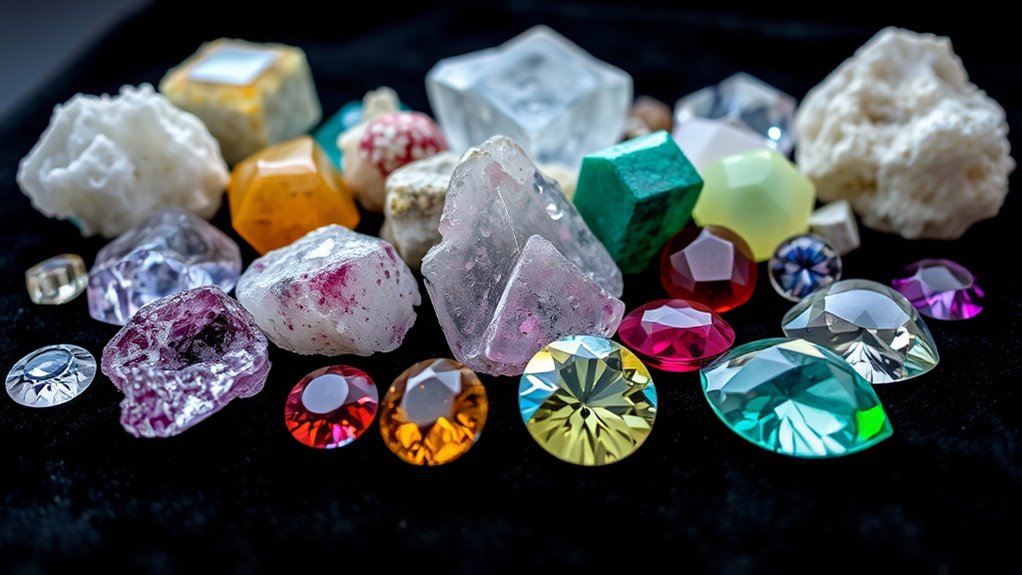
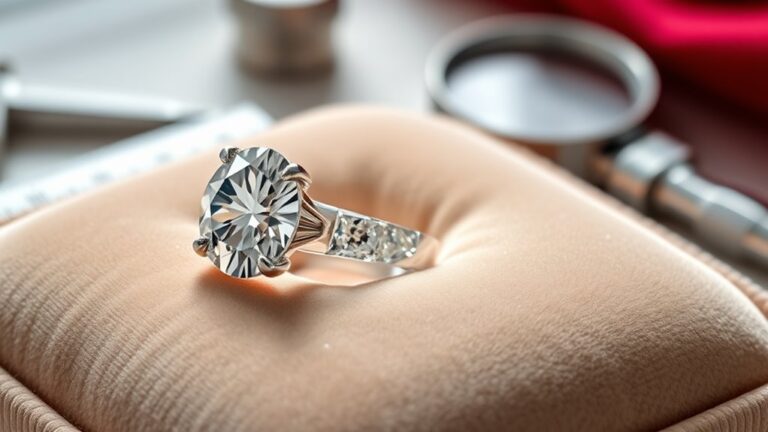
Although many minerals exist, only some qualify as gemstones based on specific qualities. When you investigate gemstone classification, you’ll find that a mineral’s rarity, durability, and especially its aesthetic appeal play essential roles.
You want a mineral that not only looks stunning but also withstands wear and tear since gemstones often become jewelry. Color, clarity, cut, and brilliance heavily influence aesthetic appeal, making certain minerals more desirable.
You classify gemstones into categories like precious and semi-precious based on these factors. So, when identifying a gemstone, you’re really evaluating how well it combines beauty with physical properties.
This careful classification helps you distinguish true gemstones from ordinary minerals, ensuring you appreciate only the most remarkable stones for adornment or collection.
Why Don’t All Minerals Make Good Gemstones?
Because minerals vary widely in their properties, not all of them suit use as gemstones. When you look for a gemstone, you want one that stands out in color, clarity, and brilliance. These qualities are tied directly to gemstone aesthetics.
Some minerals have dull or uneven colors, which can make them less appealing as gems. Also, the mineral composition plays an essential role. Certain elements can cause undesirable cloudiness or brittleness, reducing a stone’s visual appeal and practicality.
You might find a mineral with interesting colors but lacking the consistency or transparency needed to highlight its beauty. So, while many minerals exist, only those with the right balance of gemstone aesthetics and stable mineral composition truly make good gemstones you’d cherish or wear.
How Hardness Affects Gemstone Durability
You need to understand how a gemstone’s hardness impacts its durability, especially when it comes to everyday wear. The Mohs Scale is what measures this hardness, and it basically shows how well a stone can resist scratches. Knowing this is really helpful because it lets you pick gems that can handle daily life without losing their beauty. So, when you’re choosing a gemstone, keeping hardness in mind can make a big difference in how long it stays looking great.
Mohs Scale Importance
When choosing a gemstone, you’ll want to evaluate its hardness, which directly impacts how well it withstands daily wear. The Mohs scale is a key tool in this process, providing a clear mineral classification based on hardness from 1 (talc) to 10 (diamond).
By using the Mohs scale, you can quickly determine if a gemstone is durable enough for your lifestyle. Softer stones may scratch or chip more easily, while harder ones resist damage better.
Understanding where a mineral falls on this scale helps you pick gemstones that maintain their beauty over time. So, the Mohs scale isn’t just a number; it’s your guide to selecting gems that combine brilliance with lasting toughness.
Scratch Resistance Impact
Although gemstones fascinate with their beauty, their hardness directly influences how well they resist scratches and everyday wear. When you choose a gemstone, understanding its mineral hardness is essential because it determines the stone’s scratch resistance.
The harder the mineral, the less likely it is to get scratched during daily use. For example, diamonds score a 10 on the Mohs scale, making them incredibly scratch resistant and durable for jewelry.
Softer minerals, even if visually stunning, may easily show signs of wear and lose their luster over time. So, by considering mineral hardness, you guarantee your gemstone not only looks beautiful but also maintains its durability, protecting your investment and keeping your jewelry looking great for years.
The Role of Rarity in Gemstone Value
Few factors influence a gemstone’s value as much as its rarity. When you consider rarity perception, you realize it’s not just about how scarce a mineral is but how unique and desirable it appears to buyers.
Rarity valuation directly affects price. Rare stones often command higher prices, but that value depends on market demand and cultural trends.
Here’s a quick comparison of rarity levels and their impact:
| Rarity Level | Typical Value Impact |
|---|---|
| Common | Low |
| Uncommon | Moderate |
| Extremely Rare | High |
Understanding rarity helps you grasp why some minerals turn into prized gemstones while others don’t. So, rarity isn’t just about scarcity; it’s about how you and the market perceive and value that scarcity.
Why Transparency and Color Matter for Gemstones
Since gemstones catch your eye primarily through their appearance, transparency and color play essential roles in their appeal and value. You’ll notice that both color significance and transparency factors directly influence how a gemstone dazzles. Here’s why they matter:
- Color significance: The hue, saturation, and tone determine a gem’s uniqueness and desirability.
- Transparency factors: Clarity allows light to pass through, enhancing brilliance and sparkle.
- Visual impact: A transparent, richly colored gem appears more vibrant and life-like, attracting attention.
- Market value: Gemstones with ideal color and high transparency often command higher prices because they’re rarer and more beautiful.
Understanding these elements helps you appreciate why not every mineral qualifies as a gemstone. It’s the perfect balance of transparency and color that truly counts.
How a Mineral’s Crystal Structure Affects Gem Quality
You’ll find that a mineral’s crystal lattice directly impacts its durability and how well it holds up as a gemstone. Plus, the symmetry within that structure plays a big role in how brilliant and sparkly the gem looks. When you understand these factors, it’s easier to see why some minerals make better gemstones than others.
Crystal Lattice and Durability
Although many minerals catch your eye with their color or brilliance, it’s their crystal lattice that truly determines if they can become durable gemstones. The crystal structure and mineral composition define how tough a gemstone is, affecting its resistance to scratching, chipping, or breaking.
When you examine a mineral’s durability, consider these factors:
- Bond Strength – Stronger atomic bonds in the lattice mean higher hardness.
- Cleavage Planes – Minerals with fewer or less perfect cleavage planes resist fracturing better.
- Lattice Defects – Fewer defects lead to greater toughness and stability.
- Crystal System – Some systems inherently provide more structural integrity.
Understanding these aspects helps you appreciate why not all minerals make lasting, wearable gemstones.
Symmetry’s Role in Brilliance
Many factors influence a gemstone’s brilliance, but symmetry within its crystal structure plays a crucial role. When you examine symmetry types like cubic, hexagonal, or tetragonal, you’ll see how they affect light reflection and refraction inside the gem.
Symmetry effects determine how evenly light bounces within the stone, influencing its sparkle and fire. If the crystal structure is highly symmetrical, light disperses more uniformly, creating greater brilliance.
On the other hand, lower symmetry types can cause uneven light paths, dulling the gem’s appearance. So, when you choose a mineral as a potential gemstone, consider its symmetry types carefully.
Understanding symmetry effects helps you predict the gem’s optical performance, ensuring you select stones with maximum brilliance and visual appeal.
How Cutting and Polishing Turn Minerals Into Gemstones
Cutting and polishing transform rough minerals into dazzling gemstones by enhancing their natural beauty and brilliance. When you take a raw mineral, the right cutting techniques shape it to maximize light reflection. Polishing methods smooth its surface to boost sparkle.
Here’s how you can see this process unfold:
- Assess the mineral’s natural form to choose the best cutting style.
- Apply precise cutting techniques to create facets that optimize light play.
- Polish each facet carefully using specialized polishing methods to remove scratches and increase luster.
- Inspect the final gemstone to confirm symmetry and brilliance meet quality standards.
Common Minerals That Become Gemstones
Gemstones come from a variety of minerals, each with unique colors, hardness, and optical properties that make them stand out. When you investigate common minerals that become gemstones, you’ll quickly encounter quartz, beryl, corundum, and garnet.
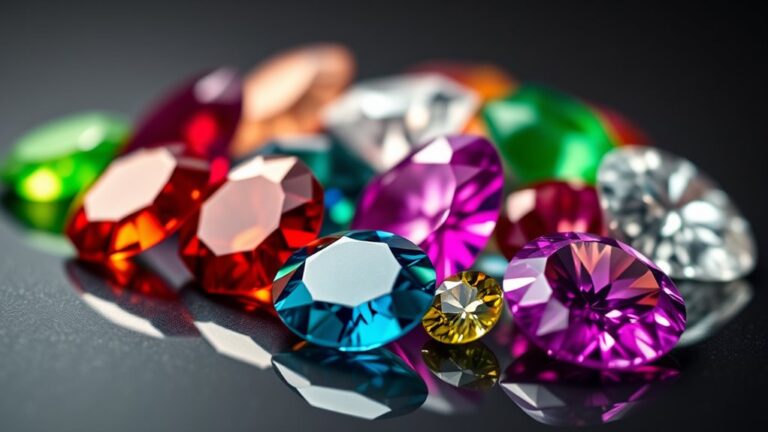
Quartz includes amethyst and citrine, prized for their vibrant hues. Beryl offers emerald and aquamarine, known for their rich greens and blues. Corundum forms sapphires and rubies, renowned for their exceptional hardness. Garnet shows up in many colors, making it versatile in jewelry.
Understanding mineral classification helps you grasp why some minerals are preferred as gemstones. Hardness and clarity are key. When you practice gemstone identification, you’ll rely on these traits to distinguish between stones, appreciating how each mineral’s properties contribute to its gem-quality appeal.
Minerals Rarely Used as Gemstones
You might not realize it, but some minerals rarely become gemstones because of their physical traits or scarcity. It’s often about properties that make cutting or polishing a real challenge. Or sometimes, they just aren’t found in gem-quality forms.
When you understand these factors, it’s easier to see why not every mineral ends up as a stunning gem. It’s not just about beauty—there’s a lot behind the scenes that decides if a mineral can shine as a gemstone.
Commonly Overlooked Minerals
Although many minerals can become beautiful gems, some rarely make it into jewelry because of their physical properties or scarcity. You might be surprised to discover these hidden gems, each showing unique mineral beauty despite being overlooked.
Here are four commonly overlooked minerals:
- Serpentine has rich green hues and a smooth texture that offer subtle charm but often go unnoticed.
- Sphene (Titanite) displays exceptional brilliance and fire but is fragile.
- Andalusite is known for pleochroism, showing different colors from various angles.
- Epidote exhibits a deep green color that’s appealing but is rarely cut as a gemstone.
Physical Properties Limiting Use
When minerals have physical traits like softness, brittleness, or poor clarity, jewelers often steer clear of using them as gemstones. These limitations stem from the mineral composition and optical properties that affect durability and appearance.
For example, a mineral might be too soft to withstand daily wear, or its optical properties might result in dullness rather than sparkle. Understanding these factors helps you recognize why some minerals, despite their beauty, rarely become gemstones.
| Mineral Trait | Limiting Factor | Impact on Gem Use |
|---|---|---|
| Softness | Low hardness | Scratches easily |
| Brittleness | Fragile structure | Breaks or chips |
| Poor clarity | Inclusions/opacity | Dulls brilliance |
| Optical flaws | Lack of refraction | Reduced sparkle |
Economic and Availability Factors
Because some minerals are scarce or costly to extract, they rarely appear as gemstones in jewelry. You might find a mineral fascinating, but if the market demand is low or resource extraction is too expensive, it won’t become a common gemstone. Here are key economic and availability factors affecting their use:
- Limited geographic deposits make mining difficult and costly.
- Low market demand discourages investment in cutting and polishing.
- High extraction costs reduce profitability, deterring commercial interest.
- Competition with more accessible gemstones limits their appeal.
Key Reasons Some Minerals Are Unsuitable as Gemstones
Since not every mineral meets the demanding criteria for gemstones, you’ll find some simply aren’t suited for jewelry or decoration. Mineral characteristics like hardness, clarity, and stability heavily influence gemstone classification.
For example, minerals that are too soft or brittle can scratch or break easily, making them impractical for everyday wear. Others may lack the necessary transparency or vibrant color that people expect in gemstones.
Some minerals might react negatively to light, heat, or chemicals, which diminishes their appeal and durability. Furthermore, minerals with irregular crystal structures often resist cutting into attractive shapes.
Understanding these key reasons helps you appreciate why only select minerals qualify as gemstones, ensuring your jewelry remains both beautiful and lasting.
Frequently Asked Questions
How Can Synthetic Gemstones Be Distinguished From Natural Minerals?
You can distinguish synthetic gemstones from natural minerals using synthetic identification through advanced gemological techniques. By examining inclusions, growth patterns, and fluorescence under specialized microscopes, you’ll spot differences that aren’t visible to the naked eye.
Techniques like spectroscopy and refractive index measurements also help you confirm whether a gem’s origin is natural or synthetic. With these tools, you’ll confidently identify synthetic gems and avoid confusion with natural minerals.
What Historical Significance Do Gemstones Hold in Different Cultures?
You might see gemstones as mere decoration, but their cultural symbolism runs deep, contrasting their beauty with profound ancient beliefs. In many cultures, they weren’t just pretty stones; they embodied power, protection, and spiritual connection.
For example, Egyptians believed lapis lazuli guarded the dead, while Indians saw diamonds as divine blessings. When you wear or study gemstones, you’re tapping into rich histories that shaped rituals and identities across time.
Are There Any Environmental Impacts of Mining Gemstone Minerals?
Yes, mining gemstone minerals can impact the environment considerably. You’ll find that some mining methods cause habitat destruction, soil erosion, and water pollution.
However, responsible miners now focus on ecological restoration to repair damaged areas by replanting vegetation and managing waste properly. If you care about sustainability, supporting companies that prioritize eco-friendly methods can help reduce the environmental footprint of gemstone mining.
How Are Gemstones Appraised and Certified for Authenticity?
When you hold a gemstone, think of Sherlock Holmes scrutinizing clues. Appraisal methods like microscopic analysis and refractive index tests reveal its true nature.
Experts follow strict certification standards from labs like GIA or AGS to confirm authenticity and quality. These reports detail carat, cut, clarity, and color, giving you confidence in your gem’s value.
What Are the Most Popular Gemstones Used in Jewelry Today?
The most popular gemstones used in jewelry today include diamonds, sapphires, rubies, and emeralds. You’ll also see rising gemstone trends like morganite and spinel gaining attention.
People love choosing stones based on birthstone meanings, connecting personal significance with style. Whether you prefer classic or trendy gems, understanding these meanings can help you pick jewelry that’s both beautiful and meaningful, perfectly matching your personality and tastes.
Conclusion
Not all minerals can become gemstones, and that’s because only about 200 out of over 5,000 known minerals have the right qualities. You’ll find that hardness, rarity, color, and transparency all play a big role in turning simple minerals into sparkling treasures.
So next time you admire a gemstone, remember how special it really is. Only a small fraction of minerals make the cut, making each gem a unique marvel to cherish as a genuine gemstone.