How Are Gemstones Formed Step by Step?
If you’ve ever wondered how those stunning gemstones in jewelry get their dazzling colors and sparkle, you’re not alone. Many people struggle to understand the magic behind their formation and the unique qualities each stone holds.
Whether you’re a gem enthusiast or just curious, knowing how gemstones form step by step can make appreciating them even more exciting.
You’ll find gemstones form through a step-by-step process starting with minerals dissolving in fluids where atoms arrange into crystal lattices. Heat and pressure deep inside the Earth speed up and shape their growth, while hydrothermal fluids deliver key elements that help crystals grow larger and stronger.
Over millions of years, these forces create unique colors and clarity in each stone. Keep exploring, and you’ll uncover how different gemstones take on their distinct qualities.
Key Takeaways
- Gemstones form through geological processes involving heat, pressure, and mineral-rich fluids over millions of years.
- Crystallization begins with nucleation, followed by mineral growth in supersaturated fluids under specific temperature and pressure.
- Heat and pressure from magma and metamorphism shape gemstone structure, density, and appearance through recrystallization.
- Hydrothermal fluids transport and deposit minerals, causing precipitation and stable crystal formation under changing conditions.
- Trace elements and inclusions influence gemstone color, clarity, and quality through natural geological and environmental factors.
What Are Gemstones and How Do They Form?
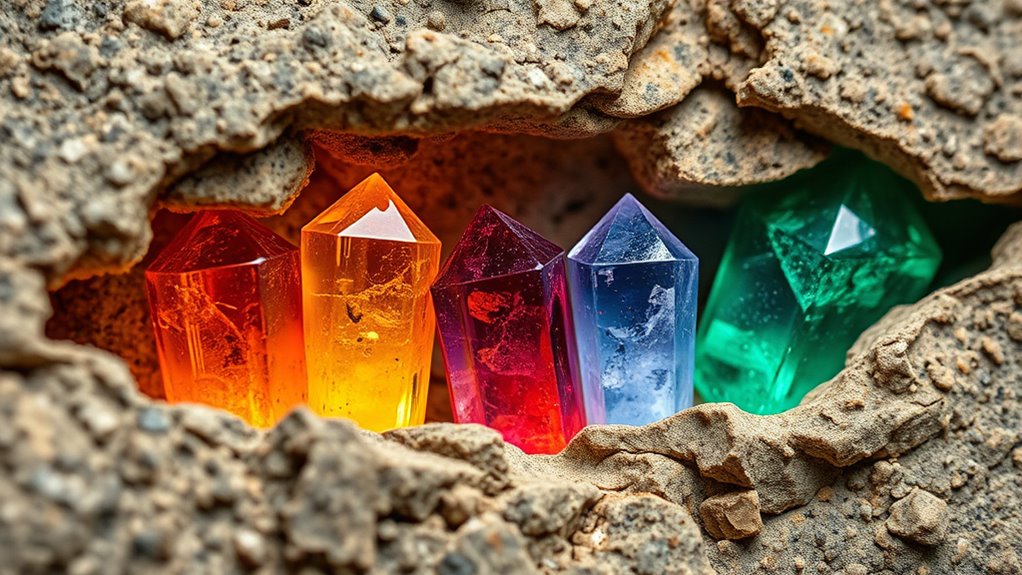
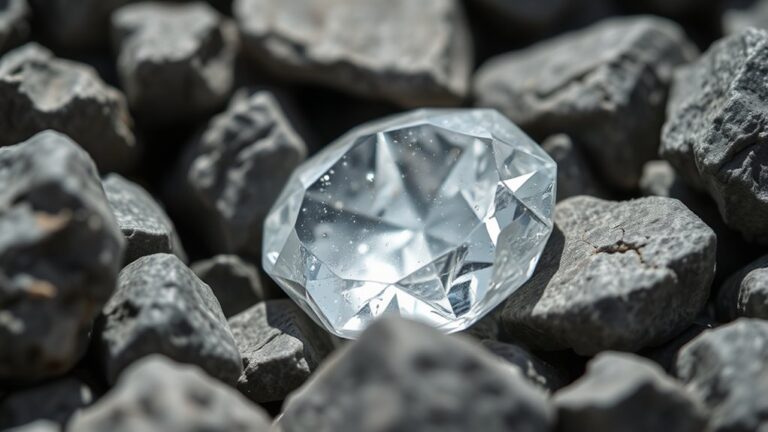
Gemstones are natural minerals prized for their beauty and rarity, and they form through various geological processes deep within the Earth. When you investigate gemstone origins, you’ll find they develop under specific conditions involving heat, pressure, and mineral-rich fluids.
These conditions affect the crystal types that emerge, such as cubic diamonds or hexagonal sapphires. Each crystal type has a unique internal structure that defines its hardness, color, and clarity.
Understanding these origins helps you appreciate why some gemstones are rarer or more valuable than others. So, when you look at a gemstone, you’re seeing the result of millions of years of Earth’s dynamic processes, crafting intricate crystal types that make each stone distinct and beautiful.
How Minerals Crystallize to Create Gemstones
You’ll see, gemstones start forming when minerals crystallize under specific conditions. The way crystals grow depends on a few factors like temperature, pressure, and the space available for them to expand. When you understand these elements, it’s easier to grasp how unique gemstones take shape.
Crystal Formation Basics
Although minerals can form in many ways, the process of crystallization is key to creating the stunning structures you see in gemstones. When atoms arrange themselves in a repeating pattern, they form a crystal lattice. This ordered structure defines the mineral’s shape and its mineral symmetry, which impacts how light interacts with the gemstone.
| Step | Description |
|---|---|
| Nucleation | Atoms cluster to start a crystal |
| Growth | Crystal lattice expands uniformly |
| Symmetry | Mineral symmetry shapes form |
| Cooling | Crystal stabilizes and hardens |
| Completion | Crystal reaches final form |
Understanding these basics helps you appreciate how nature’s precise atomic patterns create the beauty and uniqueness of each gemstone.
Mineral Growth Conditions
Several key factors influence how minerals crystallize to form gemstones, including temperature, pressure, and the chemical environment. You’ll find that mineral solubility plays a vital role. Minerals must dissolve in fluids before they can grow.
As conditions change, these dissolved minerals become supersaturated, prompting crystals to form. The specific growth environments, such as hydrothermal veins or magma chambers, provide the right settings for crystals to develop distinct shapes and sizes.
In these environments, elements combine under the right conditions, allowing orderly atomic arrangements to build solid crystals. By understanding these mineral growth conditions, you can see how nature carefully crafts each gemstone’s unique structure, setting the stage for their beauty and durability.
Factors Affecting Crystallization
Understanding the conditions where minerals grow helps explain how they actually crystallize into gemstones. When you look at crystallization, temperature variations play a major role. Rapid cooling can speed up crystallization rates but may produce smaller crystals, while slow cooling allows larger, well-formed crystals to develop.
Mineral composition is another key factor; the elements present determine the crystal structure and color of the gemstone. Environmental factors like pressure, fluid presence, and space availability also influence how crystals form and grow.
As you observe these combined effects, you’ll see that even slight changes can alter crystal size, shape, and clarity. By grasping these factors, you understand how nature carefully crafts each gemstone through a delicate balance of conditions.
The Role of Heat and Pressure in Gemstone Formation
You’ll notice that heat changes how crystals form by speeding up their growth and shaping their appearance. And at the same time, pressure pushes minerals closer together. This helps them develop stronger and more defined structures. When you understand these forces, you can really appreciate how gemstones gain their unique beauty deep within the Earth.
Heat’s Impact on Crystals
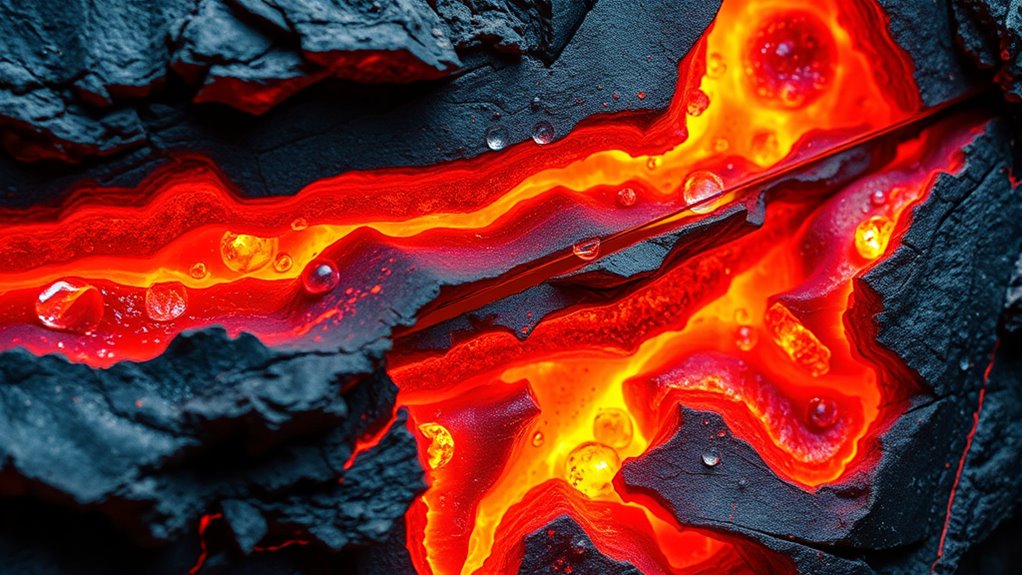
Although heat and pressure often work together deep within the Earth, heat plays an essential role in shaping the crystals you see in gemstones. Heat sources like magma and geothermal energy influence crystal stability, allowing atoms to rearrange and form beautiful, structured patterns.
When you observe a gemstone, keep in mind that heat’s impact is vital during its formation. Here’s how heat affects crystals:
- It melts surrounding rock, creating a mineral-rich environment.
- It increases atomic movement, helping atoms bond in organized ways.
- It improves crystal growth by providing energy for atoms to align.
- It stabilizes crystal structures, preventing weak or unstable formations.
Without heat, the dazzling crystals in gemstones wouldn’t develop their unique brilliance and strength.
Pressure’s Role in Growth
While heat energizes atoms to arrange themselves into crystals, pressure plays an equally important role by compacting these atoms tightly together. You’ll find that different pressure types, such as lithostatic pressure, which is uniform, and directed pressure, which is uneven, affect how gemstones grow.
During the early growth stages, moderate pressure helps atoms bond steadily, forming a stable crystal lattice. As growth progresses, increasing pressure can influence the gemstone’s shape, color, and internal structure by pushing atoms into denser configurations.
If pressure fluctuates too much, it might cause fractures or inclusions instead of smooth crystal growth. Understanding these pressure types and how they interact during each growth stage helps you appreciate how nature carefully crafts each gemstone’s unique properties.
How Hydrothermal Fluids Help Gemstones Grow
Because hydrothermal fluids carry essential minerals deep within the Earth, they play an important role in gemstone formation. These hot, mineral-rich solutions move through cracks and cavities, depositing minerals as they cool.
Through hydrothermal processes, you witness how gemstones grow layer by layer, fed by the constant flow of mineral solutions.
Here’s how hydrothermal fluids help gemstones form:
- They dissolve minerals from surrounding rocks, creating rich mineral solutions.
- These solutions travel through rock fractures, reaching open spaces.
- As temperature and pressure change, minerals precipitate out of the solution.
- Over time, these deposits build up, forming crystals that become gemstones.
How Different Gemstone Types Form
Hydrothermal fluids set the stage for gemstone creation, but each type of gemstone forms through its own unique process. Understanding gemstone origins reveals the mineral diversity that shapes their beauty.
Some crystals grow in cavities. Others form under pressure or through chemical reactions.
| Gemstone Type | Formation Process | Key Minerals |
|---|---|---|
| Quartz | Cooling of silica-rich fluids | Silicon dioxide |
| Emerald | Hydrothermal deposits with beryllium | Beryllium aluminum silicate |
| Garnet | High-pressure metamorphism | Calcium, iron, magnesium |
How Gemstones Form in Igneous Rocks
When magma cools and solidifies beneath the Earth’s surface, it creates igneous rocks that can host a variety of gemstones. You’ll find that these igneous formations provide the perfect environment for gemstones to form through mineral transformations as the magma changes its chemical makeup.
Here’s how it happens:
- Magma starts to cool slowly, allowing crystals to form.
- Different minerals begin to separate and crystallize based on temperature and pressure.
- Mineral transformations occur as elements bond and rearrange, creating gem-quality crystals.
- Over time, these crystals grow larger and develop into the gemstones you recognize.
How Metamorphic Processes Shape Gemstones
You’ll see that heat and pressure play a big role in shaping gemstones during metamorphic processes. These forces cause minerals to recrystallize, which changes their structure and appearance. When you understand this, it’s easier to appreciate how unique gems form deep within the Earth.
Heat And Pressure Effects
Although heat and pressure operate deep within the Earth’s crust, they play a crucial role in shaping gemstones through metamorphic processes. Over vast geological time, these forces transform minerals, enhancing their beauty and durability.
When you imagine the power involved, consider these key effects:
- Heat softens minerals, allowing atoms to rearrange and form new, stable crystal structures.
- Pressure compacts the minerals, increasing density and often changing color and clarity.
- Combined, heat and pressure can create unique internal patterns that make each gemstone one of a kind.
- They also eliminate flaws and impurities, making the gem more valuable and visually stunning.
Understanding these effects helps you appreciate the incredible journey gemstones endure before reaching your hands.
Mineral Recrystallization Process
Because minerals undergo intense heat and pressure during metamorphism, they often recrystallize into new forms that define a gemstone’s character. You’ll find that recrystallization mechanisms reorganize atoms, allowing minerals to grow larger or change shape without melting.
This process improves mineral stability by forming more stable crystal structures under changing conditions. As you observe, unstable minerals break down and recrystallize into stable ones, which boosts the gemstone’s durability and appearance.
How Gemstones Get Their Unique Colors and Clarity
When you examine a gemstone closely, its color and clarity tell a story shaped by its unique formation process. Color variations arise from trace elements and structural changes within the mineral, giving each gem its distinct hue. Clarity impact comes from how impurities and microscopic fractures form or heal during growth.
A gemstone’s color and clarity reveal its unique journey through nature’s intricate formation.
Here’s what influences their enchanting appearance:
- Trace elements like chromium or iron add vivid colors.
- Radiation exposure alters crystal structure, shifting shades.
- Tiny inclusions affect transparency and brilliance.
- Natural healing processes reduce visible flaws, enhancing clarity.
Natural Factors That Affect Gemstone Quality
While many factors contribute to a gemstone’s beauty, natural conditions play an essential role in determining its overall quality. You’ll find that geological processes like tectonic activity shape the environment where gemstones form, influencing their mineral composition.
Environmental conditions, including climatic factors such as temperature and pressure, affect crystal growth and clarity. Organic influences, such as the presence of certain elements or impurities, also impact color and transparency.
Over a long time scale, erosion effects can alter the gemstone’s surface and purity. Understanding these natural factors helps you appreciate why some gemstones are more vibrant or durable than others.
Each stone’s unique quality results from a complex interplay of these forces beneath the Earth’s surface.
How Gemstones Are Brought Closer to the Earth’s Surface
The natural forces that shape gemstone quality also play a role in moving these precious stones closer to the Earth’s surface. That’s where they become accessible for exploration. You witness how dynamic processes work together, making gemstone revelation possible. Here’s how it happens:
- Geological Uplift raises deep rock layers, pushing gemstones upward.
- Tectonic Activity shifts and fractures Earth’s crust, exposing gemstone-bearing rocks.
- Volcanic Activity brings gemstones closer through magma movement and eruption.
- Surface Erosion and Sedimentary Processes wear down overlying material, revealing gemstones near the surface.
Frequently Asked Questions
How Are Gemstones Ethically Sourced and Mined?
You guarantee gemstones are ethically sourced and mined by following strict sourcing standards that prioritize environmental protection and fair labor practices. Ethical mining means you work with companies committed to transparency, avoiding conflict zones and supporting local communities.
You also look for certifications verifying responsible extraction. By choosing suppliers who adhere to these standards, you help promote sustainability and fairness throughout the gemstone supply chain, making your purchase more conscientious.
What Are the Common Treatments to Enhance Gemstone Appearance?
You’ll often see gemstones improved through heat treatment, which improves color and clarity by changing the stone’s internal structure.
Another common method is oil infusion, especially for emeralds, where oils fill surface-reaching cracks to make them less visible and elevate brilliance.
These treatments help gemstones look more vibrant and appealing, but it’s important you ask sellers about any enhancements since they affect value and care requirements.
How Can You Identify Synthetic Versus Natural Gemstones?
You can spot synthetic gemstones faster than a lightning bolt by focusing on synthetic identification techniques. You’ll want to examine natural characteristics like inclusions, growth patterns, and color zoning under magnification.
Synthetic stones often have perfect clarity and uniformity, unlike natural gems, which show unique flaws and irregularities. Using tools like a loupe or spectroscope helps you detect these subtle differences, making it easier for you to distinguish between real and lab-created gems.
What Are the Most Valuable Gemstones in the Market Today?
The most valuable gemstones today include diamonds, with diamond prices often soaring due to their demand and quality. You’ll also find rare gemstones like alexandrite, red beryl, and jadeite fetching high prices because of their scarcity.
If you’re investing or collecting, focus on these rare gemstones and top-quality diamonds. They hold value well and attract serious buyers. Always check authenticity to avoid synthetic imposters that could affect your investment.
How Should Gemstones Be Cared for and Cleaned Properly?
You should store gemstones separately in soft pouches or lined boxes to prevent scratches. For cleaning, use gentle techniques like warm soapy water and a soft brush. Avoid harsh chemicals or ultrasonic cleaners on delicate stones.
Always dry them with a soft cloth. Regular gemstone storage and proper cleaning techniques keep your gems sparkling and damage-free. This way, they last longer and maintain their value.
Conclusion
Now that you know how gemstones form, you can appreciate the incredible journey each one takes, like a hidden treasure forged by Earth’s own hands. From intense heat and pressure to the gentle flow of hydrothermal fluids, every step shapes these sparkling wonders.
Next time you see a gem, remember it’s not just a stone. It’s a story of nature’s patience and power, waiting for you to uncover its shimmering secrets about how gemstones are formed.