10 Factors That Affect How Much a Gold Necklace Does Cost
Shopping for a gold necklace can feel overwhelming, especially when you’re trying to figure out why prices vary so much. You’re not alone—many people struggle with understanding what really affects the cost of these beautiful pieces.
Whether you’re buying for yourself or as a gift, knowing what influences price can help you make a smarter choice.
When you shop for a gold necklace, several factors affect its cost. Purity and certification guarantee authenticity and quality, while the necklace’s weight and size directly impact price.
Market fluctuations can raise or lower costs at any time.
Craftsmanship and design complexity add value through skill and uniqueness. Brand reputation and customization also boost price, with certified, solid gold pieces costing more than gold-plated ones.
Keep exploring to get a clearer picture of what shapes your necklace’s price.
Key Takeaways
- Gold purity levels (24k, 22k, 18k) directly influence price, with higher purity costing more, especially when certified for authenticity.
- Necklace weight, length, and thickness determine the amount of gold used, which significantly affects the overall cost.
- Market price fluctuations impact gold necklace costs daily, depending on global economic conditions.
- Intricate craftsmanship, design complexity, and customization increase labor costs and necklace value beyond just the gold content.
- Brand reputation and certification boost price by ensuring quality, exclusivity, and resale value.
Gold Purity and Gold Necklace Price
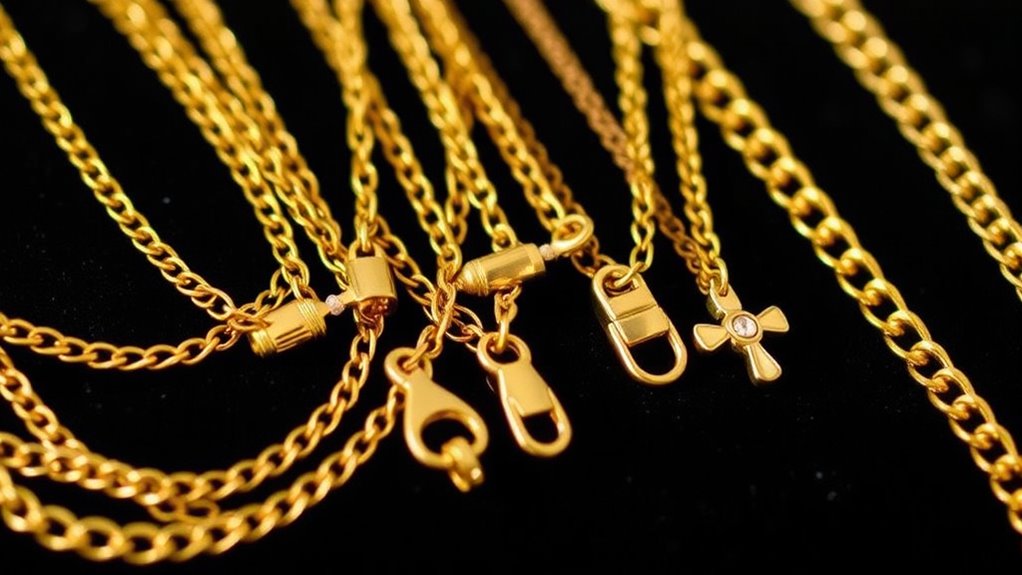
Gold purity plays an essential role in determining the price of a gold necklace. When you shop for gold necklaces, you’ll notice various gold types, such as 24k, 22k, 18k, and 14k, each representing different purity levels.
The higher the purity level, the more gold content the necklace contains, which usually means a higher price. For example, a 24k gold necklace is nearly pure gold, making it more expensive than an 18k necklace, which has 75% gold mixed with other metals.
Understanding these purity levels helps you make better decisions based on your budget and preferences. You’ll also find that different gold types offer varying durability and color, influencing both cost and style.
Why Weight Matters for Gold Necklace Cost
The weight of a necklace directly influences its cost because you’re fundamentally paying for the amount of precious metal it contains. Heavier necklaces use more gold, making them pricier. But it’s not just about total weight; you should also consider how that weight is spread. Proper weight distribution guarantees the necklace balance feels comfortable around your neck, which can affect the design and amount of gold used.
Here’s why weight matters for the cost:
- Uneven weight distribution might require extra gold to maintain necklace balance.
- Heavier chains need more craftsmanship to guarantee durability.
- Designs with balanced weight often use gold more efficiently, impacting price.
Understanding these factors helps you see why weight plays a key role in determining the value of your gold necklace.
How Market Gold Prices Affect Gold Necklace Costs
Since prices fluctuate daily, you might notice the cost of a gold necklace changing even if its design and weight stay the same. This happens because the gold market constantly reacts to global economic factors, supply and demand, and geopolitical events.
When gold prices rise, jewelers adjust necklace costs to reflect the increased value of raw materials. Conversely, if the gold market dips, you may find necklaces priced lower. Understanding these price fluctuations helps you time your purchase better or recognize why your favorite necklace’s price varies.
Why Craftsmanship Raises Gold Necklace Prices
When you choose a gold necklace, the skill and time artisans invest profoundly impact its price. The craftsmanship techniques they use aren’t just about shaping gold. They guarantee durability and a refined finish that mass production can’t match.
The skill and time artisans invest ensure a gold necklace’s unmatched durability and refined finish.
You’ll notice that artisan skills influence the necklace’s overall quality, making each piece unique and worth the investment. Even with quality materials, it’s the hands-on work that truly raises the piece.
Consider these factors that increase costs:
- The precision required to execute intricate designs without flaws
- The time spent perfecting every detail, reflecting artisan skills
- The use of advanced craftsmanship techniques to improve durability and shine
This expert craftsmanship means you’re paying for more than gold. You’re paying for artistry.
Why Design Complexity Raises Gold Necklace Price
Although you might focus on the gold’s purity, the complexity of a necklace’s design greatly impacts its price. When you choose pieces with intricate patterns or artistic influences, you’re paying for more than just gold. You’re investing in creativity and skill.
Design intricacies require extra time and expertise, making the necklace more valuable.
| Design Feature | Impact on Price |
|---|---|
| Intricate Patterns | Higher labor cost |
| Artistic Influences | Unique, limited editions |
| Fine Detailing | Increased craftsmanship |
| Complex Shapes | More materials & time |
You’ll notice that these elements enhance the necklace’s appeal and cost, reflecting the artistry behind each piece.
Necklace Length, Thickness, and Price
You’ll notice that the length and thickness of a gold necklace directly affect its weight. And weight plays a big role in the price. So, longer and thicker necklaces use more gold, which makes them more expensive. Understanding how size impacts cost really helps you pick the right necklace within your budget.
Impact Of Necklace Length
Since the length of a gold necklace directly influences the amount of material used, it plays an essential role in determining the final price you pay. Longer necklaces require more gold, naturally increasing the cost. You’ll also find that current design trends affect how length impacts price, with popular chain styles often available in specific lengths that can vary in cost.
Consider these factors when choosing necklace length:
- Longer chains generally cost more due to added material.
- Shorter lengths might fit trends better but use less gold.
- Certain chain styles look better or are only made in specific lengths, influencing availability and price.
Understanding how length ties into design trends and chain styles helps you pick a necklace that matches your budget and style.
Thickness And Gold Weight
Thickness plays an essential role in determining the overall weight of a gold necklace, which directly affects its price. When you choose a thicker necklace, you’re opting for more gold, increasing the weight and, naturally, the cost.
While thicker necklaces tend to be heavier, design simplicity can balance the price; a minimalist, thick chain might cost less than a thinner one with intricate detailing. Also, keep market demand in mind. Some thicknesses are more popular, influencing price fluctuations.
If a particular thickness aligns with current trends, you might pay a premium. Ultimately, understanding how thickness impacts weight helps you make informed choices, ensuring you get a necklace that fits your style and budget without surprises.
Price Variation By Size
Several factors influence the price of a gold necklace, with size being one of the most significant. When you consider size variations, you’ll notice clear cost differences tied to the necklace’s length and thickness.
Here’s what affects the price:
- Length: Longer necklaces use more gold, increasing the price.
- Thickness: Thicker chains require more material, driving up costs.
- Weight: Heavier necklaces naturally cost more due to the gold content.
Understanding these size variations helps you predict how much a gold necklace will cost. If you want a longer or thicker necklace, expect to pay more. On the other hand, a shorter, thinner necklace usually comes with a lower price tag.
Always balance your style preferences with your budget to find the perfect fit.
Solid Gold vs. Gold-Plated: Which Costs More?
When deciding between solid gold and gold-plated necklaces, you’ll notice a significant difference in cost. Solid gold offers higher gold quality and better resale value, making it pricier upfront but more valuable long-term. Gold-plated necklaces are more affordable but lack durability and have little to no resale value.
| Feature | Solid Gold |
|---|---|
| Gold Quality | High (14K-24K) |
| Durability | Long-lasting |
| Resale Value | Significant |
| Initial Cost | Higher |
| Maintenance | Low |
| Feature | Gold-Plated |
| Gold Quality | Thin gold layer |
| Durability | Prone to wear |
| Resale Value | Minimal |
| Initial Cost | Lower |
| Maintenance | Frequent upkeep |
Choose solid gold if you want lasting value.
Brand Reputation and Gold Necklace Prices
Understanding the difference between solid gold and gold-plated necklaces helps you make an informed choice, but the brand behind the necklace also plays a big role in its price. When you pick a well-known brand, you’re paying for more than just the gold. Brand loyalty often drives you to choose trusted names that guarantee quality and style. This trust allows brands to charge premium pricing.
Here’s how brand reputation affects cost:
- Established brands invest in superior craftsmanship and design, increasing value.
- Popular brands maintain customer trust, encouraging repeat purchases despite higher prices.
- Limited edition or luxury brand necklaces command a higher price due to exclusivity and status.
How Customization Increases Gold Necklace Price
Because customization lets you tailor a gold necklace to your exact tastes, it naturally adds to the cost. When you choose a custom design, the jeweler invests extra time and skill to create a unique piece just for you.
Personalization options like engraving initials, adding birthstones, or altering chain length also contribute to higher prices. These choices demand specialized craftsmanship and materials beyond standard designs.
Plus, custom orders often require more detailed consultations and adjustments, which increase labor costs. While customization raises the price, it guarantees your gold necklace truly reflects your style and meaning.
How Certification Affects Gold Necklace Price
When you pick a certified gold necklace, you’re basically making sure its authenticity has been checked and verified by trusted authorities. It’s like having a seal of approval that tells you the necklace is the real deal. Now, not all certifications are created equal—different types can impact the price because some hold more weight and credibility in the market.
Authenticity Verification Importance
Although a gold necklace’s design and weight influence its price, certification plays an essential role in determining its true value. When you verify a necklace’s authenticity, you guarantee it’s genuinely made of the gold claimed.
Authenticity methods and verification techniques protect you from counterfeit or substandard pieces, giving you confidence in your purchase. These techniques often include assaying, which tests the metal’s purity, hallmark inspection to confirm official stamps, and advanced scanning technologies for detailed analysis.
Certification Types Impact
Verification methods set the stage for understanding how different types of certification impact a gold necklace’s price. When you choose a certified necklace, you rely on established certification standards and grading systems that verify purity, weight, and craftsmanship.
These certifications assure quality and authenticity, often increasing the necklace’s value. Different organizations use varied grading systems, so knowing which certificate you trust is key.
| Certification Type | Impact on Price |
|---|---|
| Hallmark Certification | Confirms metal purity, raises trust and price |
| GIA Certification | Detailed grading, boosts value considerably |
| IGI Certification | Recognized grading system, moderately affects price |
| Local Assay Marks | Basic verification, slight price influence |
| No Certification | Higher risk, lowers price due to uncertainty |
Choosing the right certification directly affects how much you’re willing to pay.
Market Value Influence
Since certifications confirm a gold necklace’s authenticity and quality, they directly influence its market value. When you buy a certified piece, you’re assured it meets industry standards, which boosts its resale value and appeal.
Certifications also help you navigate shifting market trends and gold demand, giving you confidence in your purchase. Here’s how certification affects price:
- Certified necklaces often fetch higher prices due to verified purity and craftsmanship.
- Market trends favor certified gold during times of fluctuating gold demand, stabilizing prices.
- Certifications reduce the risk of counterfeit or substandard pieces, making your investment safer.
Frequently Asked Questions
How Does the Country of Purchase Affect Gold Necklace Prices?
The country you buy a gold necklace in can really affect its price. You’ll face import tariffs that raise costs, and currency fluctuations might make the necklace cheaper or pricier depending on your home currency.
Local demand also plays a big role. High demand can push prices up. Plus, if gold holds cultural significance there, prices tend to be higher because people value it more. So you’ll want to shop wisely.
Do Seasonal Sales Impact Gold Necklace Costs?
Yes, seasonal sales definitely impact gold necklace costs. You’ll find that during certain seasonal trends, retailers offer promotional discounts to attract buyers.
These discounts can considerably lower the price you pay, especially around holidays or special events. By timing your purchase during these sales, you can get a great deal on a gold necklace without compromising on quality.
Keep an eye on seasonal trends to maximize savings.
How Does the Return Policy Influence Gold Necklace Value?
You might not realize it, but the return policy can make or break your gold necklace’s value in your eyes. A generous return policy boosts your consumer confidence, making you more willing to invest.
When you know you can return or exchange the necklace hassle-free, you feel secure, increasing the perceived value. On the flip side, a strict return policy might make you hesitate, lowering how much you’re willing to pay.
Are There Differences in Price Between Online and Physical Stores?
Yes, you’ll often find differences in price between online and physical stores. Online pricing tends to be lower because sellers avoid high retail markup costs from maintaining physical locations.
When you shop online, you usually pay less for the same gold necklace compared to a brick-and-mortar store, where overhead expenses push prices up. However, always check for authenticity and return policies before buying online to guarantee you get a good deal.
How Do Care and Maintenance Affect the Long-Term Cost of a Gold Necklace?
Think of your gold necklace like a delicate garden. Without proper care techniques, it can quickly lose its shine. You’ll want to follow simple maintenance tips, like cleaning it gently and storing it properly, to prevent scratches and tarnish.
Conclusion
When choosing your gold necklace, remember it’s more than just metal. It’s your modern-day treasure, like King Midas’s touch. Each factor, from purity to craftsmanship, shapes its true value.
So, don’t just chase shine. Consider weight, design, brand, and certification. By understanding these elements, you’ll wear not only a beautiful piece but also a wise investment.
Your gold necklace will reflect your unique story and timeless elegance. Choose wisely and let your gold necklace truly glow.