What Are Purple Gemstones Called and How to Identify Them
Finding the perfect purple gemstone can be tricky, especially with so many options that look similar at first glance.
If you’ve ever felt overwhelmed trying to pick the right stone or unsure how to tell them apart, you’re not alone. Many people struggle with identifying purple gemstones and choosing one that truly fits their style and needs.
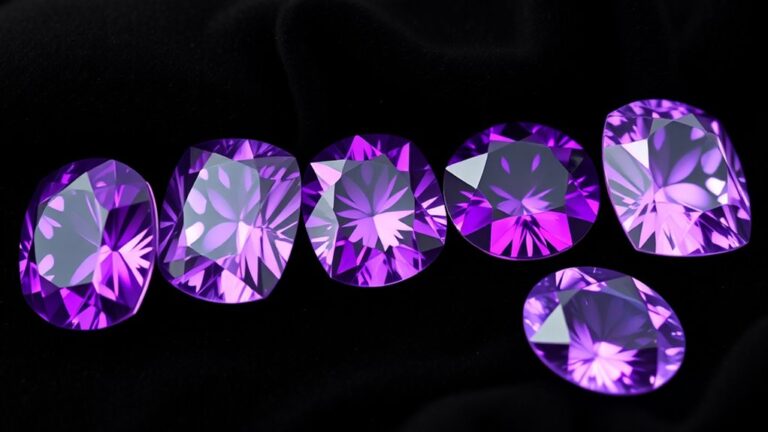
Purple gemstones, like amethyst, tanzanite, iolite, charoite, sugilite, spinel, and sapphire, each have unique colors and traits that help you identify them.
For instance, amethyst ranges from light lilac to deep violet with a hexagonal crystal, while tanzanite shows bluish-purple hues, and iolite exhibits color shifts.
You can spot differences by checking hardness, luster, and inclusions.
Keep exploring, and you’ll uncover which stones suit your style and how to care for them.
Key Takeaways
- Popular purple gemstones include amethyst, tanzanite, iolite, charoite, sugilite, purple spinel, and purple sapphire.
- Amethyst is identified by its hexagonal crystal structure, deep violet hues, and common natural inclusions.
- Purple spinel is distinguished by its brilliant sparkle, glassy luster, hardness of 8, and lack of pleochroism.
- Purple sapphire features vivid hues, high hardness of 9, and origin-based quality differences from Sri Lanka or Madagascar.
- Authenticity tests involve inspecting inclusions, hardness tests, and observing subtle color shifts under natural light.
What Are the Most Popular Purple Gemstones?
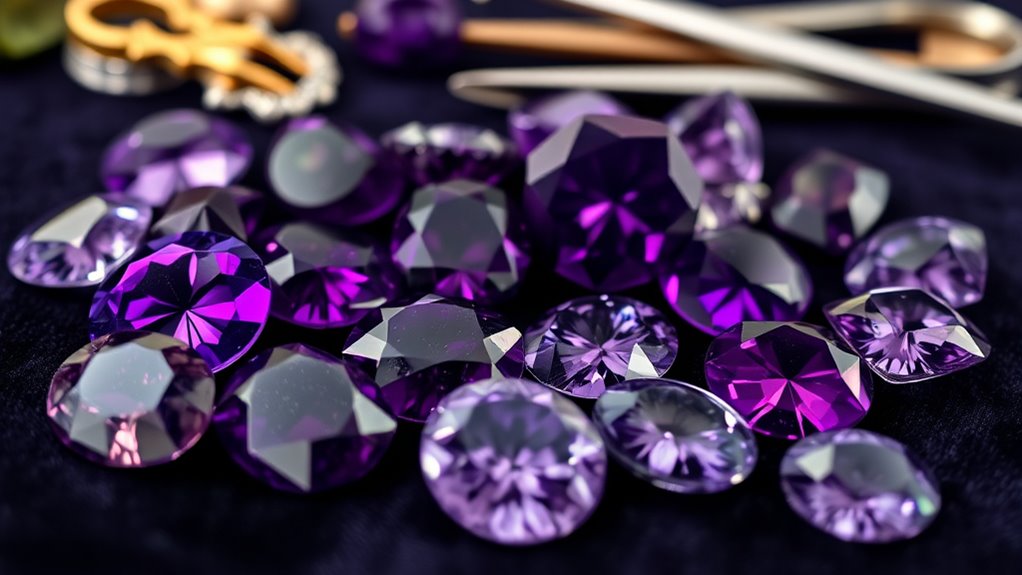
Wondering which purple gemstones stand out the most? You’ll find amethyst, tanzanite, and iolite topping the list. Amethyst symbolizes calm and clarity, making it a favorite for its spiritual and emotional balance.
Tanzanite represents transformation and intuition, while iolite is linked to vision and creativity. Knowing the purple gemstone symbolism helps you connect personally with each stone.
Regarding purple gemstone care, handle them gently and avoid prolonged exposure to sunlight, as this can fade their vibrant hues. Also, clean them with mild soap and water, steering clear of harsh chemicals.
How to Identify Amethyst: Key Features to Know
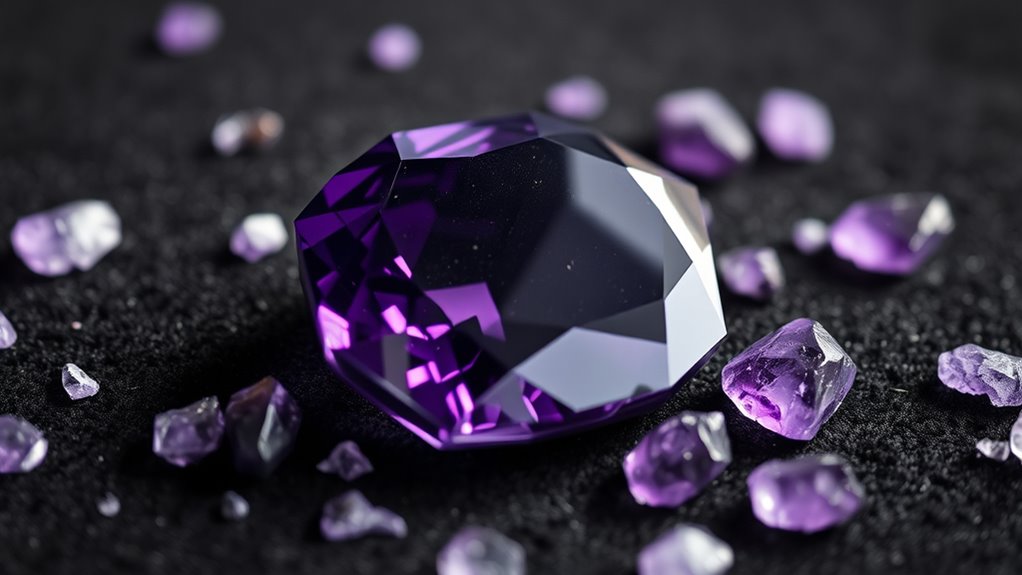
To identify amethyst, you’ll want to focus on its range of purple hues, which can vary from light lilac to deep violet. It’s pretty interesting how the colors can shift, giving each stone a unique look. Also, take a close look at its crystal structure—amethyst usually forms in hexagonal shapes, which is a neat way to spot it.
Another thing to keep in mind is the presence of common inclusions. These little internal features can actually help you tell amethyst apart from other purple gemstones. So, paying attention to these details makes identifying amethyst a lot easier.
Color Variations Overview
Amethyst displays an enchanting range of purple hues that can help you identify it with confidence. When examining amethyst, pay close attention to its color grading, as this greatly affects gemstone rarity and value. Here’s what to look for:
- Light Lavender – Soft and subtle, this shade is common but less valuable.
- Deep Violet – Rich and intense, this color indicates higher quality and rarity.
- Red or Blue Tints – Some amethysts show secondary hues, adding complexity to their appearance.
Crystal Structure Characteristics
The crystal structure offers essential clues when identifying this purple gemstone. Amethyst’s crystal lattice is trigonal, part of the quartz family, which influences its unique optical properties. When you examine the stone, look for its hexagonal prism shape, a direct result of this lattice arrangement.
This structure affects how light passes through, giving amethyst its distinct brilliance and subtle color zoning. You’ll notice its optical properties include a vitreous luster and a refractive index typically between 1.544 and 1.553, helping distinguish it from other purple stones.
Common Inclusions Identification
Understanding the crystal structure gives you a solid foundation for recognizing amethyst, but spotting its common inclusions can further confirm its identity. Inclusions affect the gemstone’s clarity and reveal clues about its natural origin.
Here are three key inclusion types and their effects to look for:
1. Needle-like Rutile Inclusions
These fine, hair-like crystals create a silky sheen and increase value when arranged attractively.
2. Liquid Inclusions
Small pockets of fluid can cause slight distortions but are typical in natural amethyst.
3. Color Zoning
Uneven purple shades, often in bands, highlight natural formation and distinguish amethyst from synthetics.
Recognizing Purple Gemstone Charoite: Colors & Patterns
When you spot charoite, you’ll notice its distinctive purple hues, which can range from soft lavender to deep violet. It’s pretty easy to recognize once you get the hang of it. Plus, those unique swirling patterns really make each stone one of a kind. You can’t help but be drawn to them.
Also, keep an eye on its texture and transparency. These little details add to charoite’s unmistakable appearance and make it stand out even more. It’s definitely a gemstone that catches your eye!
Distinctive Purple Hues
Charoite enchants with its swirling purple hues that range from soft lavender to deep violet. When you examine this gemstone, focus on its distinctive color variations that set it apart. Here’s what to look for:
- Lavender shades that give a gentle, calming effect, perfect if you love lighter purples.
- Royal tones that add richness and depth, making the stone appear luxurious and bold.
- Subtle shifts between these hues, creating a dynamic interplay of light and color.
Unique Swirling Patterns
Although purple hues catch your eye first, the swirling patterns within this gemstone truly make it stand out. When you examine Charoite closely, you’ll notice its unique swirling aesthetics, patterns that resemble flowing, wispy waves or twisted ribbons.
These intricate designs create a sense of movement and depth, making each piece one-of-a-kind. The gemstone origins in Siberia play a key role in these patterns, formed through complex geological processes over millions of years.
Texture and Transparency
A smooth, almost silky texture often defines this enchanting purple gemstone, giving it a tactile appeal you can feel as well as see. When you examine Charoite’s surface finish, you’ll notice it’s polished to a soft sheen, enhancing its unique patterns.
Its transparency varies from translucent to nearly opaque, affecting how light interacts with the stone. Light refraction within the gem creates a subtle glow that’s key to its charm.
To identify Charoite by texture and transparency, consider these points:
- Feel for a smooth, almost fibrous surface finish that’s not glassy or rough.
- Observe the translucency—notice how light softly penetrates rather than sharply passes through.
- Watch for internal light refraction that produces a gentle shimmer or chatoyancy effect.
This tactile and visual combo makes Charoite unmistakable.
Why Sugilite Stands Out Among Purple Gemstones
When you investigate purple gemstones, you’ll quickly notice that sugilite captures attention with its rich, vibrant hues and unique composition. Sugilite properties include its striking deep purple color, often mixed with black or pink, making it visually distinct from other purple stones.
Its hardness and durability suit various jewelry uses, while its metaphysical reputation adds to its appeal. Sugilite origins trace back primarily to South Africa, where it was first uncovered in the 1940s and later gained popularity for its rarity and beauty.
Unlike more common purple gems, sugilite’s combination of color intensity, mineral structure, and limited sources makes it stand out. When you pick up sugilite, you’re holding a gemstone with a fascinating story and unmistakable presence.
How to Spot Purple Gemstone Iolite: Identification Tips
Sugilite’s bold purple presence sets a high bar, but iolite offers its own unique charm that’s worth recognizing. To spot iolite, focus on these key identification tips grounded in its distinct Iolite Characteristics and Iolite Coloration.
- Check the Color Shift: Iolite displays pleochroism, meaning its color changes from violet-blue to a pale yellow or gray depending on the angle you view it from.
- Look for Deep Blue-Violet Hues: The primary Iolite Coloration leans toward a medium to dark blue-violet, often with a slightly smoky tint.
- Examine Clarity and Cut: Iolite usually appears transparent to translucent with few visible inclusions, and it’s often cut in shapes that maximize its color play.
These tips help you confidently identify genuine iolite gemstones.
How to Tell Purple Spinel Apart From Other Gemstones
Although purple spinel can resemble other vibrant gemstones, you can distinguish it by focusing on its unique brilliance and hardness. Spinel characteristics include an exceptional sparkle and a glassy luster that often outshines similar stones.
When you look closely, spinel’s clarity is usually high, with fewer inclusions compared to other purple gems. Spinel hardness rates an impressive 8 on the Mohs scale, making it tougher than many alternatives like amethyst or iolite.
This durability means spinel resists scratches better and maintains its polish longer. To tell purple spinel apart, observe its sharp facets and vibrant, saturated color without the pleochroism (color change) common in gemstones like iolite.
Tips for Identifying Purple Sapphire and Its Variations
Purple sapphire offers a distinct set of features that help separate it from other purple gemstones like spinel. To identify purple sapphire and its variations, focus on these key points:
Purple sapphire stands out with unique traits distinguishing it from other purple gemstones like spinel.
- Check the origins: Purple sapphire origins can give clues about its quality. Look for sapphires from reputable sources like Sri Lanka or Madagascar, known for producing high-quality stones.
- Examine hardness: Purple sapphires rank 9 on the Mohs scale, making them harder than most purple gemstones. You can test this with professional equipment or by observing scratch resistance.
- Assess value: Purple sapphire value depends on color intensity, clarity, and cut. Variations with vivid purple hues and minimal inclusions tend to be more valuable.
How Color and Inclusions Help Identify Purple Gemstones
Color and inclusions play an essential role in identifying purple gemstones because they reveal unique characteristics that set one stone apart from another. When you examine a purple gem, its hue and saturation can tell you a lot about its type and quality.
For example, amethyst often shows a rich violet color linked to calmness in color psychology, while tanzanite’s bluish-purple hue hints at rarity in gemstone lore. Inclusions, or internal features, act like fingerprints; certain stones display specific inclusions that help you distinguish natural gems from synthetics.
How to Test Purple Gemstones for Authenticity at Home
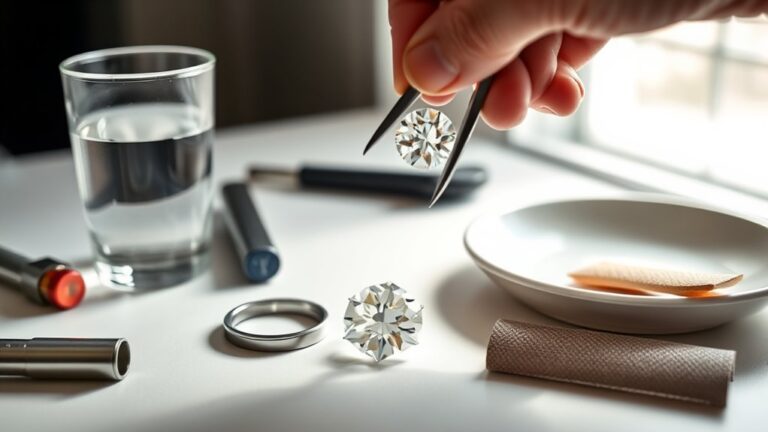
Testing gemstones for authenticity at home can be straightforward if you know the right techniques. To perform effective gemstone testing using simple home methods, follow these steps:
- Visual Inspection: Use a magnifying glass to look for natural inclusions or flaws. Genuine purple gemstones usually have tiny imperfections, while synthetic ones appear flawless.
- Hardness Test: Try scratching the gemstone gently with a material of known hardness, like a steel nail. Authentic stones like amethyst are harder and resist scratches better than glass or plastic imitations.
- Light Test: Hold the gemstone under natural light and observe how it refracts and disperses colors. Real stones create subtle color shifts, unlike fake ones, which often look dull or overly uniform.
These gemstone testing home methods help you quickly gauge authenticity before seeking professional evaluation.
How to Choose the Perfect Purple Gemstone for Your Jewelry
How do you find a gemstone that truly complements your style and stands the test of time? Start by considering gemstone clarity. Clear stones with minimal inclusions catch light beautifully and boost your jewelry’s elegance.
Next, think about jewelry settings that not only improve the stone’s color but also suit your lifestyle. For example, bezel settings offer protection for daily wear, while prong settings highlight sparkle.
Choose settings that enhance color and fit your lifestyle—bezel for durability, prong for maximum sparkle.
Match the purple gemstone’s shade to your wardrobe and personal taste. Amethyst’s vibrant hue suits bold looks, while lavender spinel offers subtle charm.
Finally, make sure the gemstone’s size balances comfort and statement. By focusing on clarity, appropriate settings, and your unique style, you’ll pick a purple gemstone that’s both stunning and enduring.
Frequently Asked Questions
What Is the Historical Significance of Purple Gemstones?
Purple gemstones have long symbolized royalty, so you’ll find they were often worn by kings and queens to show power and wealth. You’ll also see their spiritual significance in many cultures, where they’re believed to boost intuition and protect against negativity.
When you wear or study purple gems, you tap into centuries of tradition linking them to nobility and mystical energy, making them more than just beautiful stones.
Are Purple Gemstones Believed to Have Healing Properties?
Did you know over 70% of people who use crystals believe in their healing powers? Yes, purple gemstones like amethyst are thought to offer amethyst healing benefits, including stress relief and emotional balance.
You’ll find many people use them for spiritual benefits, helping with meditation and enhancing intuition. So, if you’re seeking calm or spiritual growth, you might want to keep a purple gemstone close for its reputed healing energy.
How Do Purple Gemstones Compare in Price to Other Colors?
You’ll find purple gemstones often vary in price compared to other colors, mainly due to price factors like color rarity and demand. Purple shades, especially deep, vivid hues, tend to be rarer, which can drive prices up.
However, some colors like red or blue might be pricier because of higher demand or availability. So, when you shop, always consider how unique the purple tone is and other factors that influence its value.
What Cultural Meanings Are Associated With Purple Gemstones?
When it involves purple gemstones, you’ll find they carry deep spiritual symbolism across cultures. Wearing them is often seen as a way to connect with higher domains and wisdom. Truly a feather in your cap.
People associate purple gemstones with royalty, luxury, and creativity, making them powerful talismans. So, if you want to tap into spiritual strength and inspire creativity, these gems are your go-to choice.
Can Purple Gemstones Change Color Under Different Lighting?
Yes, purple gemstones can show color change under different lighting due to lighting effects. When you view them in natural daylight versus incandescent light, the hue can shift, sometimes appearing more blue or red.
This color change happens because of the gemstone’s unique chemical composition and how it absorbs light. So, when you’re examining purple stones, always check them under various lighting to appreciate their full beauty and identify any color shifts.
Conclusion
Choosing the perfect purple gemstone is like finding a rare flower in a vast garden. It’s all about knowing what to look for. By understanding key features, colors, and patterns, you’ll spot amethyst, charoite, or sugilite with ease.
Don’t forget to test for authenticity and consider inclusions to guarantee quality. With these tips, you’ll confidently select a stunning purple gem that truly shines in your jewelry collection.
When it comes to purple gemstones, knowing their unique traits helps you make the best choice. Keep these points in mind to pick the perfect purple gemstone every time.