10 Factors That Determine How Much Diamond Engagement Rings Cost
Finding the perfect diamond engagement ring can feel overwhelming, especially when you’re trying to balance beauty, quality, and price. You’re not alone—many people struggle with understanding what really drives the cost of these rings. It’s a big decision, and knowing what to look for can make all the difference.
When you shop for a diamond engagement ring, expect the price to reflect factors like carat weight, cut quality, clarity, and color, all of which shape the diamond’s beauty and value.
The metal type and setting style influence durability and cost, while brand prestige and certification assure quality and authenticity.
Customizations add personal flair but raise the price, and market trends plus resale value also play roles. Understanding these can help you choose wisely as you investigate your options further.
Key Takeaways
- Diamond carat weight significantly impacts price because of rarity and how much people prefer bigger stones.
- Higher diamond cut quality boosts sparkle and value thanks to better craftsmanship.
- Clarity and color grades affect price by showing how many inclusions there are and how intense the color is.
- Metal type and setting style influence the ring’s durability, design complexity, and overall cost.
- Brand reputation and diamond certification build trust, improve resale value, and explain why prices might be higher.
How Carat Weight Affects Engagement Ring Prices
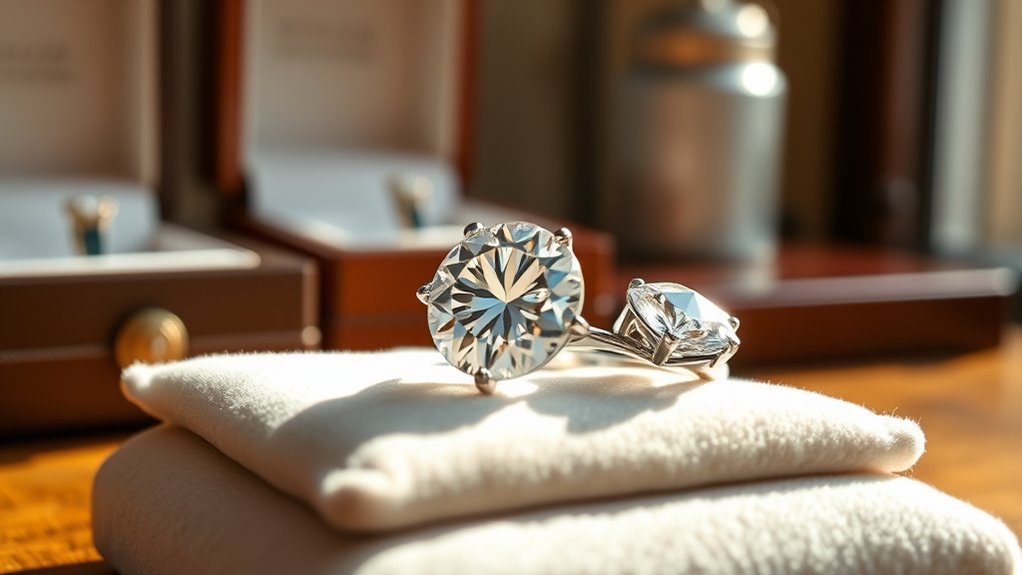
Although many factors influence the cost of a diamond engagement ring, carat weight plays a crucial role. When you shop for a ring, you’ll notice how carat significance directly impacts the price. Larger carat weights usually cost more because the diamond itself is rarer and heavier.
You might also realize that size perception affects your choice; a ring with a slightly higher carat can look noticeably bigger, which often appeals more. However, it’s not just about the number on the scale. How you perceive the diamond’s size matters too.
That’s why understanding carat significance helps you balance your budget and desired appearance, ensuring you pick a ring that feels both stunning and affordable without compromising on size perception.
How Diamond Cut Quality Affects Engagement Ring Price
You’ll notice that the precision of a diamond’s cut plays a huge role in its overall sparkle and brilliance. When the cut quality is higher, the diamond reflects light better, making it more eye-catching and valuable. So, a well-cut diamond often costs more because it offers superior beauty and shine.
Cut Precision Impact
When you choose a diamond for an engagement ring, the cut quality plays an essential role in determining its price. The precision of cut techniques used directly affects how light interacts with the diamond, influencing its brilliance and overall appeal.
Precision grading evaluates aspects like symmetry, proportions, and polish, all important in evaluating cut quality. Diamonds with top-tier precision grading command higher prices because they maximize visual impact, showcasing expert craftsmanship.
Conversely, diamonds with less exact cut techniques may appear duller and cost less. Understanding how cut precision impacts price helps you make informed decisions, ensuring you invest in a diamond that delivers both beauty and value.
Ultimately, the finer the cut precision, the more you’ll pay for that exceptional sparkle and craftsmanship.
Sparkle And Value
The precision of a diamond’s cut directly influences how much it sparkles, which in turn affects its value. When you choose a diamond with excellent cut quality, you’re selecting ideal sparkle factors like light reflection and refraction.
These factors create that eye-catching brilliance essential for an engagement ring. The better the cut, the more fire and scintillation the diamond displays, enhancing its beauty and desirability.
This heightened sparkle boosts the ring’s value perception because buyers naturally associate brilliance with quality and luxury. So, even if you pick a diamond with average color or clarity, a superior cut can improve its overall appearance and price.
Understanding how cut quality affects sparkle helps you make an informed choice that balances cost with stunning visual impact.
How Diamond Clarity Impacts Engagement Ring Price
Although clarity might seem like a small detail, it plays a major role in determining the price of a diamond engagement ring. When you look at clarity grades, they measure the number and visibility of inclusions, tiny imperfections inside the diamond.
These inclusions impact not only the gem’s appearance but also its value. The fewer and less noticeable the inclusions, the higher the clarity grade, and the more expensive the diamond will be.
If you choose a diamond with lower clarity, you’ll save money, but you might notice some flaws with the naked eye or under magnification. Ultimately, understanding how inclusions impact clarity grades helps you strike a balance between beauty and budget when selecting your perfect engagement ring.
How Diamond Color Affects Engagement Ring Price
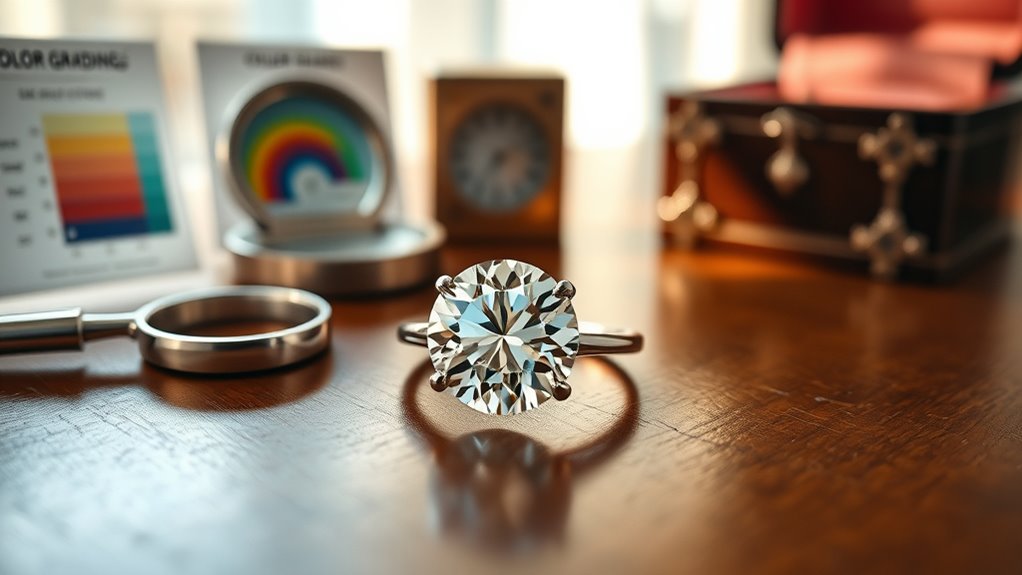
Besides clarity, color also plays a significant role in determining the price of a diamond engagement ring. When you consider diamond hue, the grading scale from D (colorless) to Z (light yellow or brown) directly impacts the cost. Higher color intensity often means a lower price, but your personal preference matters most. You’ll want to weigh:
Color grading, from D to Z, significantly influences diamond ring prices alongside clarity and personal preference.
- Visual appeal: How the diamond’s color complements the ring and your style.
- Market demand: Popular hues may carry a premium price range.
- Color comparison: Subtle differences can affect both value and look.
- Balance: Choosing a diamond that fits your budget without sacrificing beauty.
Understanding these factors helps you pick a ring that suits your taste and investment wisely.
How Ring Metal Choice Affects Engagement Ring Price
When you choose the metal for your engagement ring, you directly influence its overall cost and durability. Different alloy types like platinum, gold, and silver vary in metal durability and price, so a price comparison helps you find the best fit.
Platinum, for example, is durable but often pricier due to limited metal sourcing and ethical considerations. Gold offers various color options: yellow, white, and rose. Each color is affected by alloy blends and current fashion trends.
Keep in mind that maintenance costs differ. Some metals require more upkeep to retain their luster. Ethical sourcing can also impact price, especially if you prioritize conflict-free or recycled metals.
Balancing these factors guarantees you select a ring metal that fits your budget and values without sacrificing style or longevity.
How Setting Style Influences Engagement Ring Price
You’ll find that popular setting styles like solitaire, halo, and pavé each affect the price in their own way. Plus, the craftsmanship and complexity needed for more intricate designs usually bump up the cost. Knowing how these factors influence your ring’s setting can really help you make a smart choice.
Popular Setting Styles
Although the quality of the diamond itself greatly impacts the overall cost, the setting style you choose plays a significant role in determining the price of an engagement ring. Different popular setting styles offer unique aesthetics and price points.
For instance, halo settings and pave accents add extra diamonds, increasing cost, while solitaire elegance focuses on a single stone, often making it more affordable. Vintage styles and artistic designs might involve intricate details, affecting pricing differently than cleaner styles like bezel or tension settings.
Here are some popular setting styles to evaluate:
- Three stone designs highlight multiple diamonds for a sophisticated look.
- Cluster rings group smaller stones, often lowering the price.
- Channel settings secure diamonds in a metal channel, balancing durability and cost.
- Bezel settings encase the diamond fully, offering a modern yet often pricier style.
Craftsmanship and Complexity
Since the intricacy of a ring’s design directly affects its price, understanding craftsmanship and complexity is key to making an informed choice. The setting style you pick often reflects artisan techniques that showcase design intricacies requiring a high skill level.
Rings with unique features or historical significance tend to cost more because they incorporate quality materials and demand specialized craftsmanship. Regional influences also play a role, as certain areas are known for distinct styles and meticulous handwork.
Brand craftsmanship matters too. Renowned jewelers charge premiums for their expertise and reputation. When you choose a ring, consider how these factors impact the cost, ensuring the setting style balances your aesthetic preferences with your budget.
Ultimately, the finer the craftsmanship and complexity, the higher the price you’ll pay.
How Brand Prestige Impacts Engagement Ring Prices
When you choose a well-known brand for your engagement ring, you’re not just paying for the diamond’s quality. You’re also investing in the brand’s reputation. Brand prestige greatly influences price because it shapes how you perceive value.
Factors like luxury perception and designer exclusivity raise costs beyond the stone itself. You’re paying for heritage value and decades of craftsmanship that build consumer trust. Plus, strategic marketing strategies and celebrity endorsements boost desirability.
Luxury appeal, heritage craftsmanship, and celebrity endorsements all elevate the ring’s value beyond the diamond alone.
There’s also brand loyalty that assures consistent quality and style. And the unique status a prestigious brand confers makes your ring a symbol of more than just beauty.
Understanding how brand reputation impacts price helps you decide whether prestige aligns with your budget and personal values when selecting the perfect engagement ring.
Why Diamond Certification Matters for Engagement Ring Price
You want to be sure the diamond you pick is genuine, and certification gives you that peace of mind. It’s like having a trusted stamp that confirms what you’re getting.
Plus, certification helps standardize the quality, so you really know what you’re paying for. No surprises or guessing games.
And if you ever decide to sell the ring down the road, a certified diamond tends to hold its value much better. It’s definitely worth considering!
Authenticity Verification Importance
Why does diamond certification play an essential role in determining the price of an engagement ring? When you buy a certified diamond, you’re getting more than just a pretty stone. You’re getting a guarantee backed by thorough verification processes. Authenticity certificates confirm the diamond’s quality and origin, which directly affects its value.
Here’s why these certificates matter:
- They verify the diamond’s authenticity, preventing counterfeit purchases.
- They detail key characteristics like cut, color, and clarity.
- They provide transparency, helping you compare prices confidently.
- They guarantee the diamond meets industry standards, justifying its cost.
Impact On Resale Value
Although diamond certification might seem like just an extra step when buying an engagement ring, it greatly boosts the ring’s resale value. When you have a certified diamond, buyers in the resale market trust the quality and authenticity without hesitation. This trust translates into higher offers compared to uncertified stones.
Additionally, a diamond certification provides a reliable basis for a professional diamond appraisal, which you’ll need if you decide to sell or insure the ring. Without certification, appraisers must guess or spend extra time verifying details, often lowering the appraisal value.
Standardized Quality Assessment
Clarity plays an essential role in determining the price of a diamond engagement ring, and certification provides a standardized way to evaluate quality. When you choose a certified diamond, you rely on established diamond grading reports that follow strict quality standards.
These certifications guarantee consistent evaluation, so you know exactly what you’re paying for. Certification affects price because it:
- Verifies the diamond’s authenticity and characteristics
- Confirms adherence to recognized quality standards
- Provides detailed insights into cut, color, clarity, and carat weight
- Improves trust and resale value by offering transparency
Without certification, evaluating diamond quality becomes subjective, increasing risk. By opting for certified diamonds, you make a confident investment backed by industry-accepted grading systems that directly influence engagement ring cost.
How Market Trends Affect Engagement Ring Prices
When you keep an eye on market trends, you’ll notice how they directly influence engagement ring prices. Market demand plays a huge role. When more people want rings, prices often rise.
Economic conditions also impact costs. During downturns, you might find better deals. Fashion trends and consumer preferences shift over time, affecting which styles are more expensive.
Supply fluctuations, such as limited diamond availability, can drive prices up. Seasonal sales create opportunities to buy at lower costs. Luxury branding adds a premium, reflecting both status and quality.
Furthermore, ethical sourcing has become a major factor. Rings certified as conflict-free sometimes cost more, but many buyers prioritize this. Understanding these forces helps you make smarter choices when purchasing an engagement ring.
How Customization and Extras Affect Engagement Ring Cost
Market trends and ethical considerations influence the base price of an engagement ring, but customization and added features can quickly change the final cost. When you opt for a custom design, you’re investing in a piece tailored specifically to your vision.
Personalization options allow you to add unique elements that reflect your style and story. Bespoke services often come with luxury improvements, elevating both beauty and price. Keep in mind these factors that impact cost:
- Intricate metalwork or engraving
- Adding side stones or halo settings
- Incorporating rare or ethically sourced materials
- Upgrading to luxury enhancements like platinum or designer settings
Frequently Asked Questions
How Does Insurance Affect the Overall Cost of an Engagement Ring?
Insurance affects your engagement ring’s overall cost by adding ongoing expenses based on its appraisal value. When you insure the ring, the insurance premiums are calculated according to that appraised worth, which means higher appraisals lead to higher premiums.
You’ll want to get an accurate appraisal value to guarantee you’re neither underinsured nor overpaying. Including insurance costs upfront helps you budget more realistically for your ring’s total cost.
Are Financing Options Available for Purchasing Diamond Engagement Rings?
Yes, you’ll find various financing plans available when purchasing diamond engagement rings. Many jewelers offer credit options that let you spread out payments over time, making it easier to afford the ring you want without paying everything upfront.
These plans often come with flexible terms and sometimes promotional interest rates. Be sure to compare credit options carefully to choose the one that best fits your budget and financial situation.
How Do Return Policies Impact Engagement Ring Purchases?
A good return policy is the safety net you didn’t know you needed when buying an engagement ring. It directly impacts your confidence and customer satisfaction, letting you shop without fear of making a costly mistake.
If the ring doesn’t meet your expectations or fit perfectly, a flexible return policy lets you exchange or refund easily. This peace of mind transforms your purchase from stressful to joyful, ensuring you feel secure every step of the way.
What Maintenance Costs Should I Expect After Buying an Engagement Ring?
After buying your engagement ring, expect occasional ring cleaning to keep it sparkling. Professional cleanings usually cost $50 to $100. You might also need prong tightening or stone resetting over time.
Check your warranty coverage carefully. Some include free maintenance or repairs for a set period. Remember, regular inspections help catch issues early, saving you money down the road.
Staying proactive means your ring stays beautiful without surprise costs.
How Does the Retailer’s Location Influence Engagement Ring Prices?
Location is the heartbeat of pricing. If you shop in a big city, you’ll often face higher prices due to local market demand and upscale retail spaces.
Conversely, smaller towns might offer better deals because pricing trends tend to be less intense there. You’ll find that retailers adapt their prices to fit what local customers expect and can afford.
Conclusion
When choosing your diamond engagement ring, keep in mind that carat weight alone doesn’t dictate price. Cut, clarity, and color play huge roles too.
For instance, did you know that a one-carat diamond can vary in price by over 50% depending on its cut quality? By understanding these factors, you’ll make a smarter, more confident purchase that fits your budget and style perfectly.
Your perfect diamond engagement ring is within reach!