How to Determine if a Lab Created Diamond Is Real
Figuring out if a lab created diamond is real can feel tricky, and you’re definitely not alone if you’ve struggled with this. Many people want to be sure they’re getting a genuine stone but aren’t sure where to start or what to look for.
Understanding the key signs can save you time and give you confidence when making such an important purchase.
You can determine if a lab created diamond is real by looking for consistent color and fewer variations, often visible to the naked eye.
Using a 10x loupe helps spot metallic inclusions or unique growth patterns. Check for laser inscriptions that confirm its origin.
Experts use advanced tools like spectrometers and fluorescence microscopes for verification. By understanding these methods, you’ll be better equipped to identify genuine lab diamonds and make confident choices about your purchase.
Key Takeaways
- Use a 10x loupe to inspect for metallic inclusions and consistent color hues unique to lab created diamonds.
- Verify laser inscriptions on the diamond’s girdle for a lab-created identifier.
- Employ diamond testers that measure thermal or electrical conductivity to confirm authenticity.
- Check certification from reputable labs that clearly state the diamond is lab created with a unique report number.
- Observe fluorescence under UV light for growth patterns typical of synthetic diamonds using a fluorescence microscope.
Lab Created Diamonds: What They Are and How They’re Made
Lab created diamonds are real diamonds that form in a controlled environment rather than underground. You’ll find that diamond synthesis methods, like High Pressure High Temperature (HPHT) and Chemical Vapor Deposition (CVD), replicate natural processes to produce these gems.
These methods allow you to get diamonds with the same chemical, physical, and optical properties as mined ones. When you choose lab created diamonds, you’re also considering ethical factors, since their production avoids the environmental damage and labor issues linked to traditional mining.
You can trust these diamonds to be authentic, just grown differently. Understanding how they’re made helps you appreciate their value and the responsible choices you make when buying a diamond that’s both real and ethically sound.
How Lab Created Diamonds Compare to Natural Diamonds
Although natural diamonds form over millions of years deep within the Earth, you won’t notice a difference when comparing them to diamonds created in a lab. Both have the same physical and chemical properties, making them visually indistinguishable to the naked eye.
When you consider ethical considerations, lab created diamonds often come out ahead since they avoid the environmental damage and labor concerns linked to mining. Market trends also show a growing demand for lab diamonds because they’re usually more affordable and sustainable.
If you’re weighing your options, understanding these differences helps you make an informed choice that aligns with your values and budget. Ultimately, knowing how lab created diamonds compare to natural ones empowers you to shop confidently.
Why Lab Created Diamonds Are Just as Real as Natural Ones
Because they share the same chemical structure and physical properties, you can trust that diamonds created in a lab are just as real as those formed naturally. Lab created diamonds offer several benefits that make them a genuine and responsible choice:
Ethical sourcing guarantees no exploitation or conflict related to mining. Reduced environmental impact compared to traditional diamond mining. Identical hardness, brilliance, and durability as natural diamonds. Often more affordable, giving you better value without compromise.
When you choose a lab created diamond, you’re not only getting a real gemstone but also supporting sustainable practices. This means you get the beauty and authenticity of diamonds while promoting ethical and eco-friendly standards. So, don’t doubt the legitimacy of lab diamonds; they truly stand on equal footing with natural ones.
Visual Clues to Identify Lab Created Diamonds With the Naked Eye
Understanding that lab created diamonds are just as genuine as natural ones, you might wonder if you can spot the difference on your own. While both share similar clarity levels, lab diamonds often show fewer color variations, appearing more consistent in hue.
Lab created diamonds match natural ones in clarity but often display a more consistent color hue.
You may notice slight cut differences since lab diamonds are frequently optimized for maximum sparkle effects. These differences can influence consumer perceptions, especially as market trends favor ethically sourced gems.
Ethical considerations play a big role in why many prefer lab created stones, which typically cost less, affecting price comparisons. Though the naked eye might catch subtle sparkle and color cues, distinguishing a lab created diamond from a natural one remains challenging without specialized tools.
Still, knowing these visual clues helps you make more informed choices.
Using a Loupe to Identify Lab Created Diamonds
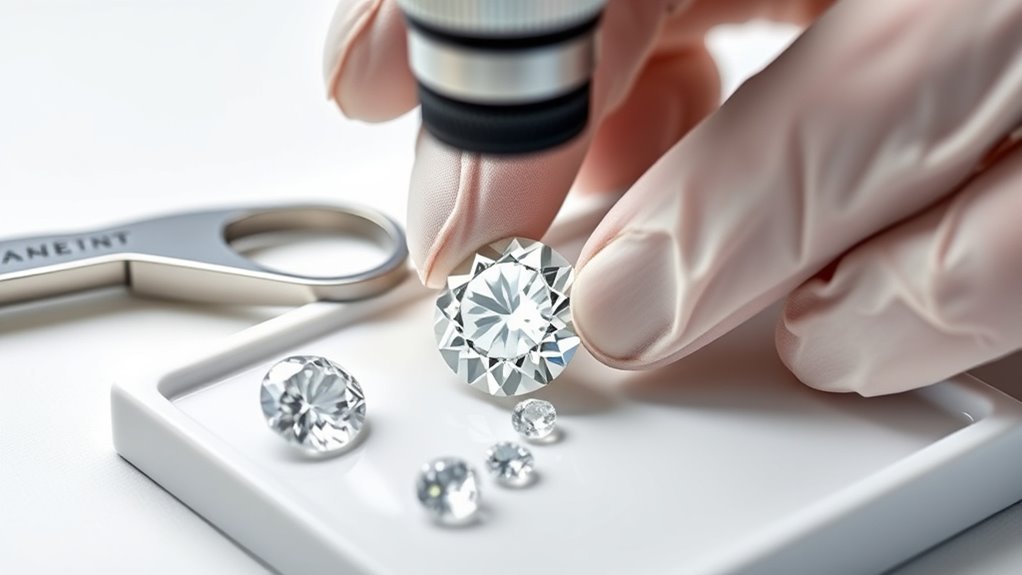
Grab a loupe and take a close look at the diamond’s interior. By magnifying it, you can start to spot unique features that might not be obvious at first glance. You’ll want to focus on specific internal characteristics because these often indicate a lab-created stone. With a bit of careful inspection, you can catch details that the naked eye usually misses. It’s all about taking your time and really examining what’s inside.
Magnification Tips
When you use a loupe to examine a diamond, you’ll notice details that reveal whether it’s lab created or natural. Mastering magnification techniques can greatly improve your ability to identify subtle clues. Proper loupe usage means holding it close to your eye and the diamond, ensuring steady hands and good lighting.
Here are some magnification tips to keep in mind:
- Use a 10x loupe for the best balance between detail and ease of use
- Inspect the diamond under different angles to catch reflections and surface features
- Look for unnatural patterns or metallic inclusions often found in lab created stones
- Avoid relying solely on magnification; combine it with other identification methods
These tips help you confidently spot lab created diamonds with your loupe.
Spotting Internal Characteristics
After getting comfortable with magnification techniques, you can start focusing on the internal characteristics that help distinguish lab created diamonds from natural ones. Using a loupe, you’ll examine internal inclusions closely, as they often differ in type and pattern between the two.
Lab created diamonds usually have metallic inclusions or distinctive growth patterns that natural ones lack. These details affect clarity grades, so spotting them is essential.
| Internal Characteristic | What to Look For |
|---|---|
| Metallic Inclusions | Tiny reflective metal spots |
| Growth Patterns | Unusual, layered formations |
| Natural Inclusions | Carbon spots or feathers |
| Clarity Grades | Lab diamonds often have higher clarity but unique inclusions |
Testing Lab Created Diamonds With a Diamond Tester Device
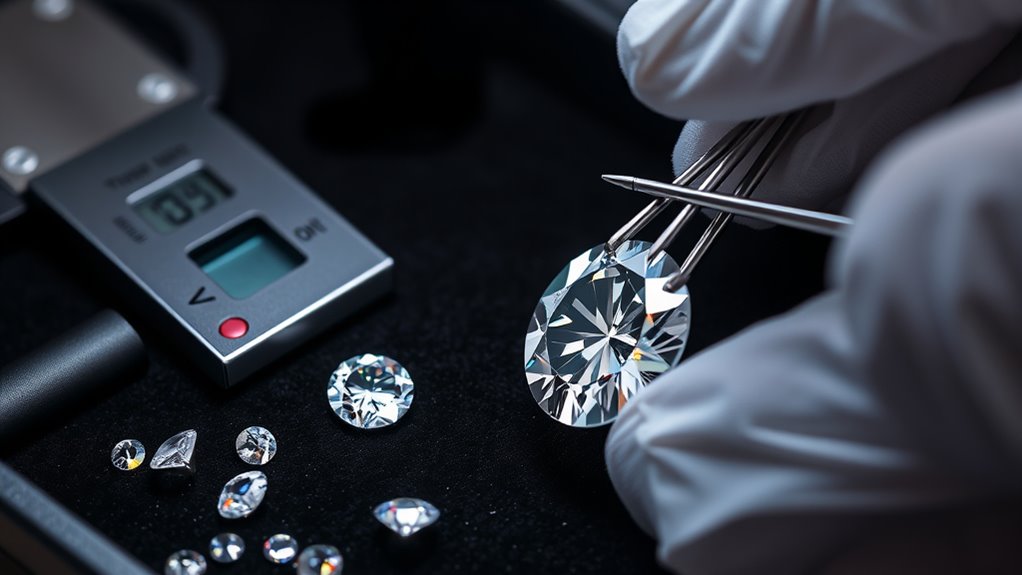
Using a diamond tester device offers a quick and reliable way to verify if a lab created diamond is genuine. These devices measure thermal or electrical conductivity, distinguishing diamonds from imitations.
To guarantee diamond tester accuracy, you should follow proper testing methods carefully. Here’s what you need to know:
Calibrate the tester before use to get accurate readings. Place the tester’s probe gently on the diamond’s surface. Read the display to confirm if the stone conducts like a diamond.
Keep in mind, some testers can’t differentiate between natural and lab created diamonds, but both will register as real diamonds.
Why Laser Inscriptions Matter for Lab Created Diamonds
Why do laser inscriptions play such an essential role in identifying lab created diamonds? When you look closely, these tiny markings provide a unique fingerprint that sets lab created diamonds apart.
The laser engraving significance lies in its ability to offer a permanent, precise identifier etched onto the diamond’s girdle without damaging it. This helps with authenticity verification, allowing you or a jeweler to confirm whether a diamond is lab created or natural.
Without these inscriptions, distinguishing between the two can be challenging. So, when you’re evaluating a diamond, checking for laser inscriptions can give you confidence in its origin, ensuring you know exactly what you’re buying.
In short, laser inscriptions are a key tool in verifying the authenticity of lab created diamonds.
How Experts Check if a Lab Created Diamond Is Genuine
You’ll want to start by taking a close look at the diamond with your eyes. This helps you spot some key features right away. After that, experts usually bring in advanced gemological tools to get a more precise reading of the diamond’s origin and quality. And to be absolutely sure, they check the certification, which guarantees the diamond is authentic and lab-created.
Visual Inspection Techniques
How can you tell if a lab-created diamond is genuine just by looking? Visual inspection techniques let you spot key details that reveal authenticity. Start with color grading. Observe the diamond’s hue under natural light to check for consistent, slight tints typical of lab-created stones.
Next, clarity evaluation is essential. Look for tiny inclusions or internal features unique to synthetic diamonds.
Here’s how you can inspect the diamond visually:
- Examine the facets for sharpness and symmetry.
- Look for inclusions with a jeweler’s loupe.
- Check for even color distribution.
- Observe the diamond’s brilliance and fire.
These steps help you assess a diamond’s genuine quality without advanced tools.
Advanced Gemological Tools
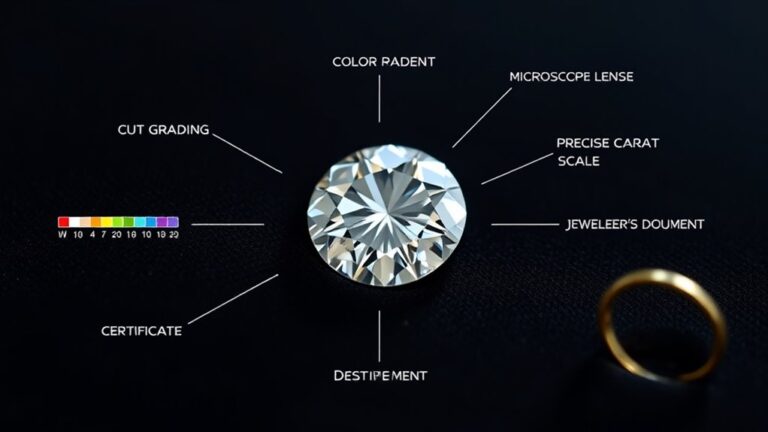
While visual inspection can reveal a lot about a lab-created diamond, some details need specialized equipment to confirm authenticity. Experts rely on advanced testing methods using precise gemological tools to analyze properties invisible to the naked eye.
Tools like spectrometers and fluorescence microscopes detect unique growth patterns and chemical signatures that set lab-created diamonds apart from natural ones.
| Tool | Purpose | What It Detects |
|---|---|---|
| Spectrometer | Light absorption analysis | Chemical composition |
| Fluorescence Microscope | UV light reaction | Growth patterns |
| Diamond Tester | Thermal conductivity | Genuine diamond vs simulant |
| Magnification Loupe | Surface and inclusions | Internal characteristics |
| UV Light Source | Fluorescence response | Synthetic features |
Using these tools, you can trust the diamond’s authenticity beyond just surface appearances.
Certification Verification Process
Because lab-created diamonds can closely mimic natural ones, verifying their authenticity often starts with examining their certification documents. These certifications provide detailed information about the diamond’s origin, quality, and adherence to grading standards.
You’ll want to focus on the certification types issued by reputable labs, as they guarantee consistent evaluation criteria. When checking a certificate, look for:
- The issuing authority’s name and credibility
- Clear identification of the diamond as lab-created
- Detailed grading standards used in assessment
- A unique report number for online verification
Common Mistakes That Mislead Diamond Buyers
Although lab-created diamonds have gained popularity, many buyers still fall for common pitfalls that cloud their judgment. Without proper buyer education, you might accept misconceptions about price perception or resale value. Emotional value and ethical considerations also influence your choices, but marketing influences can skew your understanding of quality standards.
| Mistake | What You Should Know |
|---|---|
| Confusing Price with Quality | Lower price doesn’t always mean low quality |
| Overlooking Ethical Factors | Lab diamonds often have better ethical profiles |
| Ignoring Resale Value | Resale value varies; research is key |
Stay informed to avoid being misled and make smarter diamond buying decisions.
Where to Buy Verified Lab Created Diamonds Safely
If you’re looking to buy lab created diamonds, it’s best to go with trusted retailers who offer clear certification. These certificates are important because they prove the diamond’s authenticity and quality. So, definitely don’t skip checking them!
Knowing where to find verified sellers makes a big difference. It helps you avoid scams and ensures you get exactly what you’re paying for. In the end, it’s all about feeling confident in your purchase.
Trusted Retailers Overview
Several reputable retailers specialize in selling verified lab created diamonds, ensuring you get a genuine product without worry. To confidently purchase, focus on trusted brands known for their transparency and quality. Check retailer credentials like customer reviews, return policies, and industry affiliations. These details help confirm you’re dealing with a reliable source.
Consider these trusted options when shopping:
- Brilliant Earth: Known for sustainable practices and clear sourcing
- James Allen: Offers high-definition images and expert customer support
- Blue Nile: Provides extensive customization with verified diamonds
- Clean Origin: Specializes exclusively in lab created diamonds with strong guarantees
Certification Importance Explained
When buying lab created diamonds, certification plays a key role in confirming their authenticity and quality. You should look for certification types from reputable labs like GIA, IGI, or AGS, as these guarantee the diamond meets strict grading standards.
These certificates provide detailed information about the diamond’s cut, color, clarity, and carat weight, giving you confidence in what you’re purchasing. Avoid sellers who don’t provide certification or rely on uncertified stones, as it’s difficult to verify their claims.
To buy verified lab created diamonds safely, stick to trusted retailers who offer clear certification documentation. Doing this protects you from scams and assures you get a genuine, high-quality diamond that matches its certified description.
Frequently Asked Questions
Do Lab Created Diamonds Have Different Resale Values Than Natural Diamonds?
Yes, lab created diamonds generally have lower resale value than natural diamonds. You’ll find that market demand plays a big role here. Natural diamonds tend to hold value better because of their rarity and emotional appeal.
While lab created diamonds are beautiful and more affordable upfront, their resale market isn’t as strong. So, if you’re thinking long-term investment, natural diamonds usually outperform in resale value due to higher demand.
Can Lab Created Diamonds Trigger Metal Detector Alarms?
No, lab created diamonds won’t trigger metal detector alarms because diamonds themselves don’t contain metal. However, if the setting has metal, metal detector sensitivity might cause an alarm.
When you’re using diamond authenticity tests, keep in mind these detectors focus on metal presence, not the diamond’s origin. So, whether your diamond is lab created or natural, it won’t affect metal detector responses directly.
Are There Ethical Concerns Specific to Lab Created Diamonds?
Yes, you should know that 78% of consumers now prioritize ethical sourcing when buying diamonds. While lab created diamonds generally have fewer ethical concerns than mined ones, some worry about environmental impacts and corporate transparency.
Your perception matters because some still question the authenticity and value of lab diamonds, influencing market demand. It’s smart to research brands thoroughly to guarantee their ethical claims align with your values and expectations.
How Do Lab Created Diamonds Affect Insurance Policies?
Regarding insurance coverage, lab created diamonds can be treated differently than natural ones because of valuation differences. You’ll want to confirm your policy clearly lists your lab diamond and reflects its market value, which is often lower than mined diamonds.
Some insurers might require specific documentation or appraisals to avoid coverage issues. Always check with your provider to guarantee your lab created diamond is properly protected against loss or damage.
What Is the Environmental Impact of Producing Lab Created Diamonds?
You might picture a sparkling gem born from earth’s depths versus one crafted in a lab’s controlled glow. Lab created diamonds often boast better sustainability practices, using less water and land than mining.
However, they still demand significant energy, impacting resource consumption. When you choose lab diamonds, you support a shift toward eco-friendly methods, but it’s wise to reflect on the energy source behind their creation to truly gauge their environmental footprint.
Conclusion
Now that you know how to spot a lab created diamond, you’re practically a gemologist in disguise! These diamonds are just as real and stunning as natural ones, with only a few subtle clues separating them.
Don’t let common mistakes fool you. Use a loupe, check for laser inscriptions, and trust expert verification. Buying from reputable sources guarantees you get the genuine sparkle you deserve, shining brighter than a thousand suns!
When it comes to choosing a stone, remember that a lab created diamond is real and beautiful, making it a smart and dazzling choice.