7 Factors That Determine How Much a 20 Carat Diamond Ring Costs
Shopping for a 20 carat diamond ring can feel overwhelming, especially when you see prices that vary so much. You’re not alone—many people struggle to understand what really drives the cost of such a rare and valuable piece. Knowing what factors to consider can help you make a confident choice without overpaying.
When buying a 20 carat diamond ring, you’ll pay more due to rarity, carat weight, and market demand. Cut, color, and clarity greatly affect brilliance and value, while certification from trusted labs boosts buyer confidence.
The ring setting and metal choice further impact the total cost, with intricate designs and platinum raising prices. Brand reputation and seller comparisons also influence what you’ll pay. Keep exploring to understand how to balance quality and cost effectively.
Key Takeaways
- Diamond rarity and carat weight significantly increase price, with larger sizes being disproportionately more expensive.
- Cut, color, and clarity quality directly affect the diamond’s brilliance, appeal, and market value.
- Certification from reputable organizations like GIA or AGS enhances buyer trust and resale value.
- Ring setting complexity and metal choice, such as gold versus platinum, influence overall ring cost.
- Market demand and seller pricing variations mean you should compare multiple sources for the best purchase decision.
What Determines the Price of a 20 Carat Diamond Ring?
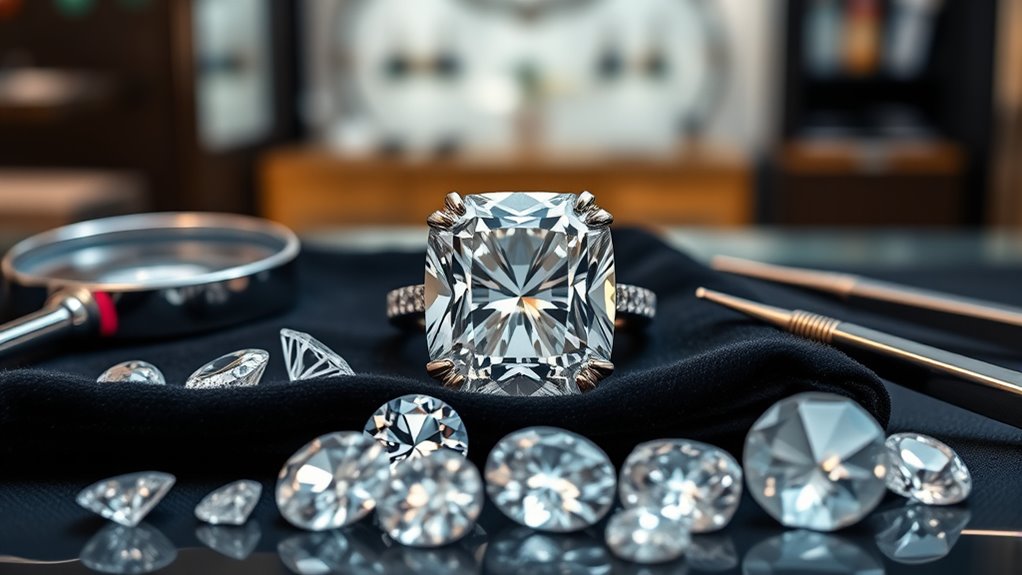
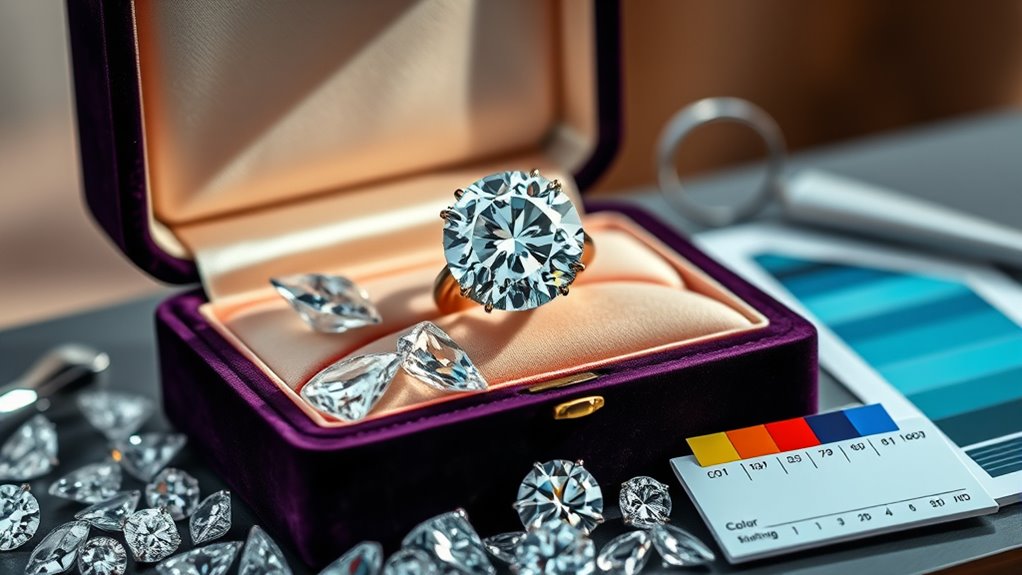
The price of a 20 carat diamond ring depends on several key factors that you should grasp before making a purchase. One major factor is diamond rarity. Larger diamonds like a 20 carat stone are incredibly rare, making them more valuable. Their scarcity naturally drives prices up.
You’ll also want to evaluate market demand. When demand for large, high-quality diamonds is high, prices tend to increase accordingly. This means the cost can fluctuate based on buyer interest and trends.
Other elements such as cut, color, and clarity also impact the price but aren’t the focus here. By understanding how diamond rarity and market demand influence pricing, you can better anticipate the investment required for a 20 carat diamond ring.
How Carat Weight Influences Your Diamond Ring’s Cost
Understanding how carat weight influences your diamond ring’s cost helps you make smarter buying decisions. Carat value directly impacts price since larger diamonds are rarer, increasing their market demand and cost.
As carat weight rises, the diamond rarity intensifies, making each additional fraction of a carat more expensive than the last. This means a 20 carat diamond won’t just cost twice as much as a 10 carat; its price escalates disproportionately due to scarcity.
When shopping, keep in mind that carat weight is a key factor in pricing but not the only one. By grasping how carat value and diamond rarity affect cost, you can better evaluate whether a diamond’s price aligns with its size and uniqueness before making your purchase.
Why Cut, Color, and Clarity Matter for 20 Carat Diamonds
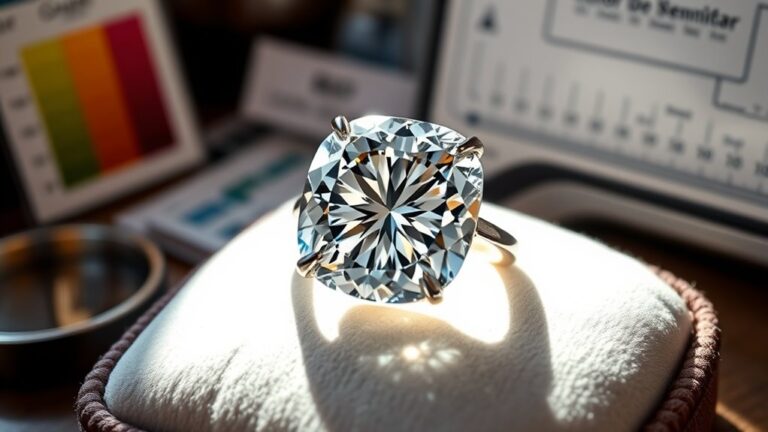
Because 20 carat diamonds are so rare and valuable, their cut, color, and clarity play an even bigger role in determining their overall worth. When you choose a well-cut diamond, you maximize its brilliance and light performance. This makes the stone sparkle intensely despite its size.
Color affects how pure and vibrant the diamond looks. Even slight tints can diminish its appeal and value. Clarity matters because imperfections become more noticeable in larger diamonds, impacting both beauty and price.
How Certification Affects the Price of a 20 Carat Diamond
When you’re investing in a 20 carat diamond, certification plays a key role in its price. You see, different certification bodies have their own standards, and these can really impact your diamond’s market value. Knowing the differences between them helps you feel confident when making your purchase.
Certification Bodies Comparison
Although many factors influence a 20 carat diamond’s price, the certification body you choose plays a crucial role. Each certification impacts grading consistency, diamond appraisal accuracy, and ultimately, certification costs. Here’s a quick comparison:
- GIA standards are widely respected for strict grading consistency and high market recognition.
- AGS grading is known for precise cut evaluations, often adding value with rigorous assessments.
- EGL certification offers competitive pricing but sometimes faces scrutiny over grading leniency.
- IGI assessments are popular for affordability but vary in market acceptance compared to GIA or AGS.
Picking a reputable certification guarantees your diamond’s quality is accurately appraised, which affects trust and price. You’ll want to balance cost with credibility for the best investment.
Impact on Market Value
The certification you choose directly influences your 20 carat diamond’s market value. When you pick a reputable certification body, buyers trust the authenticity and quality of your diamond more, which increases its desirability.
Market demand reacts strongly to certifications recognized worldwide, so your diamond fetches a higher price when certified by top laboratories like GIA or AGS. Furthermore, economic conditions play an essential role; in strong economies, certified diamonds attract premium offers as buyers have more confidence and spending power.
Conversely, during economic downturns, even certified diamonds may see softened prices due to reduced demand. Ultimately, the right certification not only assures quality but also positions your diamond better in the market, helping you maximize its value regardless of fluctuating economic factors.
How Ring Setting and Metal Choice Impact Your Total Cost
Your choice of ring setting can really impact your total cost. Intricate styles, for example, often come with a higher price tag. Then, there’s the metal you choose—whether it’s platinum or gold—which also makes a big difference in price. Knowing these options helps you find the right balance between style and budget without any surprises.
Setting Styles And Prices
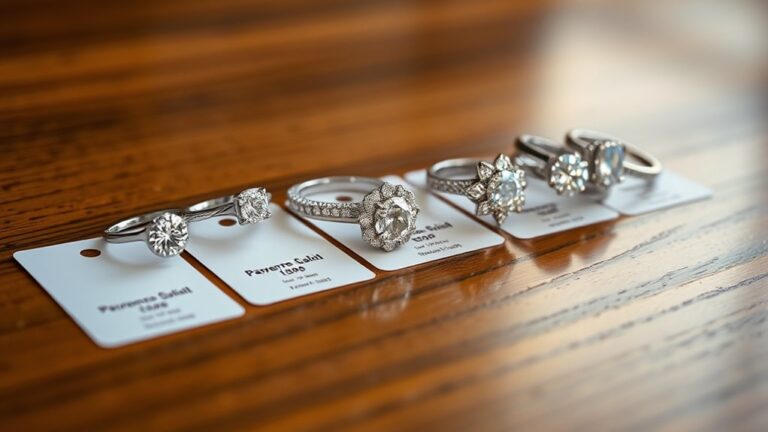
Choosing a ring setting and metal type plays a big role in determining your diamond ring’s final price. The setting materials and design intricacies directly influence cost. Here’s how different setting styles impact what you’ll pay:
- Prong Settings – Minimal metal used, usually the most affordable option.
- Bezel Settings – Metal surrounds the diamond, adding durability but increasing material costs.
- Pavé Settings – Multiple small diamonds set closely, requiring intricate craftsmanship and higher prices.
- Halo Settings – A circle of smaller diamonds around the center stone, boosting both design complexity and cost.
Each style demands specific setting materials and varying labor intensity. So, when choosing your ring, weigh the style’s beauty against its budget impact carefully.
Metal Types And Costs
Although the setting style greatly influences cost, the metal type you pick can likewise sway your diamond ring’s final price. You’ll find various gold types: yellow, white, and rose. Each affects cost differently.
For instance, 18K gold costs more than 14K due to its higher purity and richer color. Platinum prices tend to be higher than gold because platinum is denser and rarer. This makes it more durable but also costly.
When you choose platinum, you’re paying for longevity and hypoallergenic benefits. Ultimately, your budget and style preferences will guide you. If you want a balance of affordability and classic appeal, certain gold types might suit you better.
But if durability and exclusivity matter most, platinum is worth considering despite the higher price.
Brand Reputation’s Role in Pricing 20 Carat Diamond Rings
Because a 20 carat diamond ring represents a considerable investment, the brand behind it plays an essential role in its pricing. When you choose a ring, brand prestige directly impacts cost, as well-established names command higher prices. Luxury branding adds value through exclusivity and craftsmanship, which you pay for.
A 20 carat diamond’s price is deeply influenced by the prestige and craftsmanship of its brand.
Here’s how brand reputation influences pricing:
- Heritage and History: Brands with a long legacy often price higher due to proven quality.
- Design Innovation: Renowned brands offer unique designs that justify premium prices.
- Customer Trust: Trusted brands assure you of authenticity and superior service.
- Marketing and Exclusivity: Heavy branding and limited editions increase desirability and cost.
Understanding these factors helps you recognize why brand reputation considerably shapes the price of a 20 carat diamond ring.
Tips to Balance Quality and Price When Buying a 20 Carat Diamond
While brand reputation influences the price of a 20 carat diamond ring, you can still find ways to balance quality and cost effectively. Start by setting clear budget considerations before shopping; this helps you avoid overspending.
Next, focus on quality evaluation by prioritizing the diamond’s cut and clarity, which often impact appearance more than carat weight alone. Don’t hesitate to compare diamonds from different sellers to spot better deals without sacrificing quality.
Consider slightly lower color grades or unique shapes, which can offer great value. Finally, ask for certification to guarantee you’re buying a genuine, high-quality diamond.
Frequently Asked Questions
How Do Diamond Prices Fluctuate Over Time?
Diamond prices fluctuate over time because market trends and economic factors constantly shift. When demand rises or supply tightens, you’ll see prices go up.
Conversely, during economic downturns or when new sources increase supply, prices often drop. You’ll also notice that global events and currency changes impact costs.
Staying aware of these factors helps you predict when prices might rise or fall, so you can buy or sell at the best time.
Can Insurance Costs Affect the Overall Price of a Diamond Ring?
Yes, insurance costs can affect the overall price of a diamond ring because you’ll need an accurate insurance valuation to guarantee proper premium coverage. When you insure your ring, the valuation determines how much you pay in premiums.
Higher valuations mean higher premiums. So, while the insurance cost doesn’t change the purchase price, it adds to your total expense of owning the ring, especially for valuable pieces like a 20 carat diamond.
What Financing Options Are Available for Purchasing Expensive Diamond Rings?
Did you know 60% of luxury jewelry buyers use financing? When purchasing expensive diamond rings, you can investigate payment plans and credit options to spread out the cost.
Many jewelers offer flexible payment plans that let you pay over months or years with little or no interest. You can also use credit cards or specialized credit options tailored for high-value purchases, making it easier to afford that stunning ring without breaking the bank.
How Does Resale Value Vary for 20 Carat Diamond Rings?
Resale value for 20 carat diamond rings varies widely based on appraisal factors like cut, clarity, color, and certification. You’ll find that market demand plays a huge role too; if big, high-quality diamonds are sought after, you can get a better price.
However, resale often falls below retail price, so you shouldn’t expect to break even. Knowing these factors helps you set realistic expectations when reselling your ring.
Are Lab-Grown Diamonds Cheaper Than Natural Ones for Large Carat Sizes?
Coincidentally, you’ll find lab-grown diamonds are generally cheaper than natural ones, even at large carat sizes like 20 carats. You benefit from lab-grown perks such as lower costs and ethical sourcing.
However, natural rarity still commands a premium price, making natural diamonds pricier due to their unique formation and scarcity. So, if you want a big, beautiful diamond without breaking the bank, lab-grown is often the smarter choice.
Conclusion
When you’re investing in a 20 carat diamond ring, remember it’s not just about size. It’s about the subtle dance of quality, cut, and certification that truly shapes value.
Choosing the right setting and brand can add a touch of elegance without tipping the scales. With a little savvy, you’ll find a sparkling treasure that feels like a steal, proving that brilliance doesn’t always demand breaking the bank.
Finding the perfect 20 carat diamond ring means balancing all these factors to get the best value for your investment.