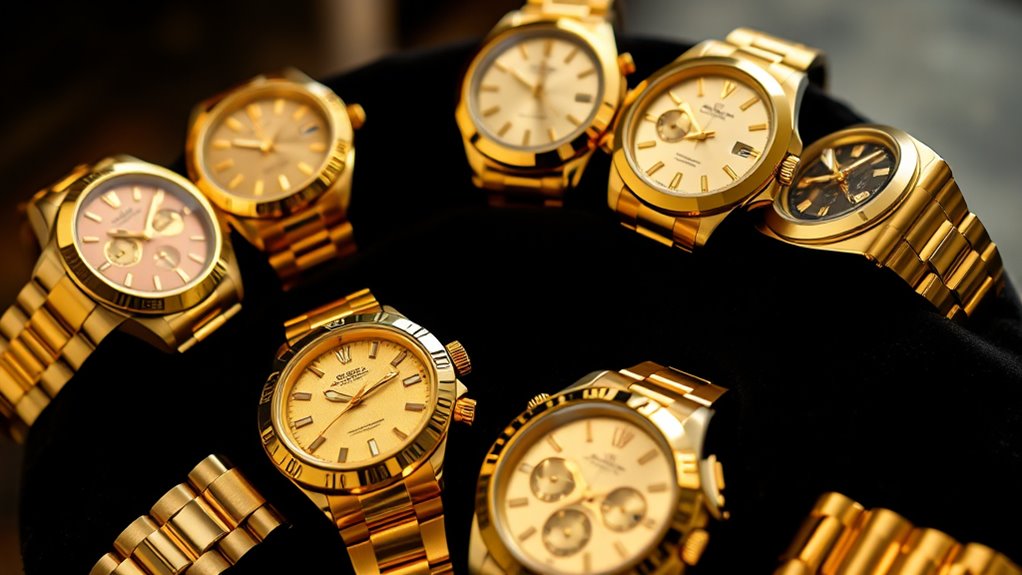
7 Key Factors: How Much Gold Watches Cost
Trying to find the perfect gold watch without overspending can be really frustrating. You’re not alone—many people struggle to understand why some gold watches cost so much more than others. If you’ve ever wondered what makes these timepieces tick in terms of price, you’re in the right place.
When you shop for gold watches, know that seven key factors drive their cost. Gold purity directly impacts price, with higher karats meaning more gold and higher value.
Market gold prices and brand prestige also play big roles, with luxury brands charging more.
Craftsmanship, intricate designs, and complex movements add to the cost, while limited editions and extra features push prices higher.
These influences shape why gold watches can vary so much, and understanding them reveals even more about their value.
Key Takeaways
- Gold purity (karat level) directly impacts watch cost by determining the amount of gold content and alloy composition.
- Fluctuating gold market prices influence production costs and retail prices of gold watches.
- Brand prestige and exclusivity significantly raise gold watch prices through perceived luxury and demand.
- Craftsmanship, intricate designs, and mechanical complexity increase the watch’s value and price.
- Added features like chronographs, moon phases, and engravings justify higher costs and enhance appeal.
How Gold Purity Influences Gold Watch Prices
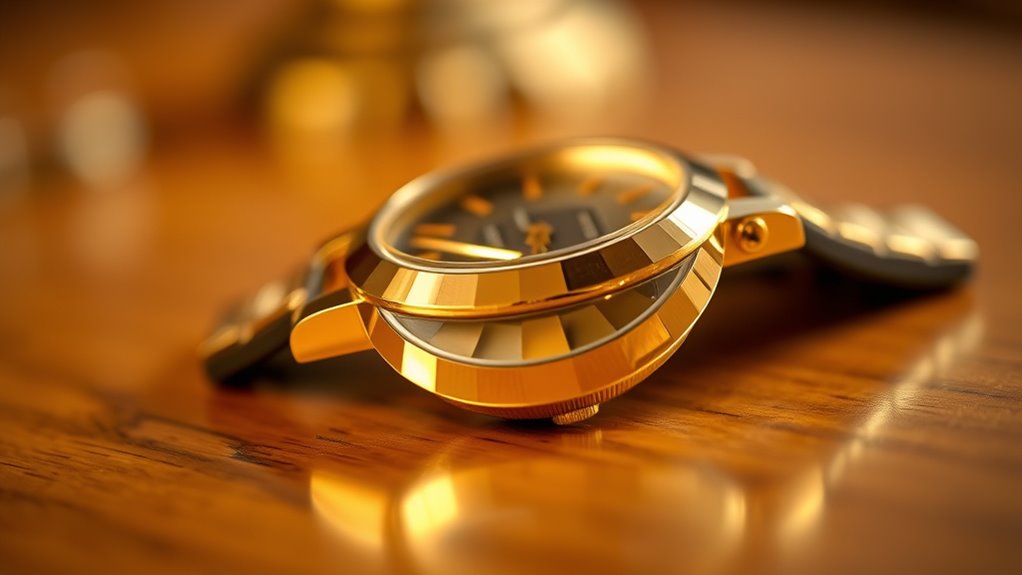
When you choose a gold watch, its purity directly affects the price you’ll pay. The gold composition determines the watch’s value, with higher purity grades commanding higher costs.
Gold purity is measured in karats, ranging from 10K to 24K, where 24K is pure gold. Watches with 18K gold, containing 75% pure gold, balance durability and luxury, often priced higher than 14K or 10K options.
Lower purity grades mix gold with other metals, reducing cost but also the richness and weight of the gold. When you understand these purity grades, you can better assess whether a watch’s price matches its gold content.
Why Market Gold Prices Affect Gold Watch Costs
You’ll notice that when gold prices go up or down, the cost of gold watches tends to move right along with them. That’s because the value of the raw material—gold itself—has a direct impact on the overall price. On top of that, changes in market demand can cause costs to rise even more or drop further. So, it’s not just the price of gold but also how much people want these watches that affects what you’ll pay.
Gold Price Fluctuation Impact
Because gold serves as the primary material in many luxury watches, its market price directly influences the cost you pay. When gold market trends shift, especially with price volatility, watchmakers adjust their prices accordingly.
If gold prices spike, expect watch costs to rise; if prices dip, you might find better deals. Understanding this helps you time your purchase wisely.
| Gold Market Trends | Impact on Watch Costs |
|---|---|
| Rising gold prices | Increased production cost |
| Falling gold prices | Reduced watch prices |
| Sudden price volatility | Unstable watch pricing |
| Stable prices | Consistent watch pricing |
| Long-term upward trend | Gradual price increase |
Market Demand Influence
Gold prices don’t move in isolation. They respond to market demand, which shapes the cost of gold watches. When you track market trends, you’ll see how shifts in consumer preferences directly impact gold’s value.
If more people want gold jewelry or investments, the demand pushes prices up, making gold watches pricier. Conversely, lower demand can ease costs.
Here are key ways market demand influences gold watch prices:
- Increased demand for luxury goods raises gold prices
- Consumer preference for gold vs. alternative materials shifts costs
- Economic uncertainty boosts investment demand, driving prices higher
- Seasonal trends affect buying patterns and gold watch pricing
- Market speculation can cause rapid price fluctuations
Understanding these factors helps you grasp why gold watch costs fluctuate with market demand.
Why the Brand Name Drives Gold Watch Prices
You’ll notice that a brand’s prestige plays a huge role in the cost of a gold watch. It’s not just about the materials; the heritage and craftsmanship behind each name add real value you can’t find elsewhere. On top of that, limited editions from top brands often command higher prices because they’re rare and special. So, when you’re looking at a gold watch, it’s the brand that often drives the price up.
Brand Prestige Impact
Few factors influence the price of a gold watch as much as the brand behind it. When you choose a prestigious brand, you’re not just buying a timepiece. You’re investing in luxury perception and exclusivity appeal that enhance social status.
Brands use targeted marketing strategies and celebrity endorsements to shape consumer trends and build strong brand loyalty. Their historical significance adds depth, making their watches more desirable and expensive.
Consider these key reasons why brand prestige impacts gold watch prices:
- Luxury perception drives demand and price.
- Brand loyalty encourages repeat purchases.
- Exclusivity appeal limits availability.
- Marketing strategies create high desirability.
- Celebrity endorsements boost brand image.
Understanding these factors helps you grasp why brand prestige commands a premium in gold watch pricing.
Heritage and Craftsmanship
The prestige of a brand often stems from its rich heritage and exceptional craftsmanship, which play a major role in driving up the price of a gold watch. When you choose a watch from a brand with deep heritage significance, you’re investing in more than just timekeeping; you’re buying a piece of history.
These brands have refined their craftsmanship techniques over decades, sometimes centuries, ensuring each gold watch is a masterpiece. You’ll notice meticulous attention to detail, from hand-polished cases to intricate movement assembly, reflecting skilled artisanship passed down through generations.
This heritage significance enhances the brand’s value, making their gold watches more desirable and costly. So, when you pick a renowned name, you’re paying for timeless tradition and unmatched craftsmanship that justify the higher price tag.
Limited Editions Value
Often, limited edition gold watches carry a premium because their rarity creates a sense of exclusivity that collectors and enthusiasts crave. When you consider investing in one, the brand name greatly influences the price.
Here’s why these watches hold such collector appeal and serve as smart luxury investments:
- Scarcity boosts demand, driving up value
- Unique design elements distinguish them from regular models
- Brand reputation assures quality and heritage
- Limited production runs create urgency among buyers
- Potential for appreciation over time due to collectibility
How Craftsmanship and Design Affect Gold Watch Prices
Understanding how craftsmanship and design influence gold watch prices can help you make a smarter purchase. When you choose a gold watch, design aesthetics play a significant role in its value. Watches featuring unique styles and refined shapes often command higher prices because they stand out.
Intricate detailing, such as hand-engraved patterns or expertly set gemstones, adds to both the watch’s beauty and its cost. Skilled artisans invest hours perfecting these elements, which you’ll see reflected in the final price.
The combination of thoughtful design and meticulous craftsmanship guarantees your gold watch isn’t just a timepiece but a wearable work of art. So, by focusing on these factors, you can better appreciate why some gold watches cost more and select one that truly matches your taste and budget.
How Watch Movement Impacts Gold Watch Prices
Because the movement powers your gold watch, it plays an essential role in determining its price. When you choose between mechanical vs. quartz movements, you’re not just selecting functionality, you’re influencing value. Mechanical watches, with intricate gears and craftsmanship, often cost more due to their complexity and tradition.
Quartz movements, powered by batteries, offer superior movement accuracy at a lower price. Consider these factors:
- Mechanical movements require skilled assembly, increasing cost
- Quartz movements provide higher accuracy and lower maintenance
- Mechanical watches appeal to collectors, boosting value
- Quartz watches are more affordable and practical for daily wear
- The movement’s brand and origin also impact price
Understanding these elements helps you make an informed choice about your gold watch investment.
Why Limited Editions and Rarity Boost Gold Watch Prices
The movement inside your gold watch sets its foundation, but limited editions and rarity take value to another level. When a watch is produced in small quantities, its collectible appeal skyrockets because fewer people can own it.
You’re not just buying a timepiece; you’re investing in something unique that stands out from mass-produced models. This exclusivity factor makes limited editions highly sought after, driving the price higher.
Collectors often chase these rare watches because they promise not only prestige but potential appreciation in value. So, when you choose a limited edition gold watch, you’re tapping into a market where scarcity, desirability, and exclusivity all work together to boost the watch’s worth well beyond its material cost.
How Extra Features and Materials Raise Gold Watch Prices
When you add extra features like chronographs, moon phases, or intricate engravings, a gold watch’s price can climb considerably. These luxury features not only improve functionality but also demand skilled craftsmanship, pushing costs higher.
Material choices also influence the price. Different gold alloys, diamonds, and sapphire crystals add layers of value. You’ll find that the combination of these factors creates a premium product tailored to your tastes.
Consider how these elements impact price:
- Complexity of complications like tourbillons
- Type of gold used (yellow, rose, white)
- Inclusion of precious stones or diamonds
- Quality of sapphire crystal or other dial materials
- Level of hand-finishing and engravings
Each aspect contributes to a unique, high-priced gold watch experience.
Frequently Asked Questions
How Do Gold Watch Prices Compare to Other Luxury Watches?
You’ll find gold watch prices generally higher than many other luxury watches, mainly because gold watch brands use precious metals that add value. Market trends show that demand for gold watches remains strong, especially among collectors seeking timeless elegance.
While some luxury watches made from stainless steel or ceramic might be more affordable, gold watches often hold their value better and appeal to those wanting a blend of prestige and investment potential.
What Are the Best Places to Buy Gold Watches?
If you think the best places to buy gold watches are only luxury brand stores, you might be missing out. You’ll find great deals and rare pieces through online retailers, who offer wide selections and competitive prices.
Don’t overlook vintage boutiques either. They often carry unique, timeless gold watches with character. By exploring both, you’ll increase your chances of finding a perfect gold watch that suits your style and budget.
How Does Watch Maintenance Affect Long-Term Gold Watch Value?
Watch maintenance greatly affects your gold watch’s long-term value. By following maintenance best practices like regular cleaning, timely servicing, and using authorized technicians, you keep your watch in prime condition.
Proper restoration impact is essential. Restoring your watch carefully preserves its originality and appeal, which collectors love. Neglecting maintenance can lead to wear, damage, and reduced value, so staying proactive guarantees your gold watch remains a valuable, cherished piece for years to come.
Are There Ethical Concerns With Sourcing Gold for Watches?
Are you comfortable knowing your gold watch might come from unethical sources? Yes, there are ethical concerns with sourcing practices, including environmental damage and labor exploitation.
You should look for brands committed to fair trade and responsible mining to guarantee your watch supports sustainable and humane efforts. By choosing ethically sourced gold, you not only get a beautiful timepiece but also contribute to a better industry and world.
How Does Insurance Impact the Cost of Owning a Gold Watch?
Insurance impacts your gold watch’s cost by increasing your monthly or annual expenses through insurance premiums. Since gold watches are valuable, you’ll need a detailed watch appraisal to accurately insure it, which can be an additional upfront cost.
The higher your watch’s appraised value, the more you’ll likely pay in premiums. So, while insurance protects your investment, it also adds to the overall cost of owning a gold watch.
Conclusion
You might think gold watches are just overpriced luxury, but understanding these 7 key factors shows why they cost what they do. From gold purity and market prices to brand reputation and craftsmanship, every element adds value.
Plus, limited editions and extra features make your watch truly unique. So, when you invest in a gold watch, you’re not just buying time, you’re owning a piece of art and lasting quality in a gold watch.