Are Chronograph Watches Automatic?
If you’ve ever shopped for a chronograph watch, you know how confusing it can be to figure out whether they’re automatic or not. You’re not alone—many people struggle with understanding the different types of chronograph watches and which one fits their lifestyle best.
Chronograph watches aren’t always automatic—you’ll find them in automatic, manual, and quartz types. Automatic chronographs wind themselves through your wrist’s movement, so you don’t need to manually wind them.
Manual chronographs require regular winding, while quartz versions run on batteries and are often more affordable and shock-resistant.
Your choice depends on your lifestyle and maintenance preference. If you want to understand how each type works and which suits you best, there’s plenty more to investigate.
Key Takeaways
- Chronograph watches can feature automatic, manual, or quartz movements, so not all are automatic.
- Automatic chronographs wind themselves using wrist motion via a rotor mechanism.
- Manual chronographs require hand winding, unlike automatic models which are self-winding.
- Quartz chronographs operate on battery power and don’t have automatic winding.
- Choosing between automatic and other types depends on your lifestyle, maintenance preferences, and personal taste.
What Is a Chronograph Watch and How Does It Work?
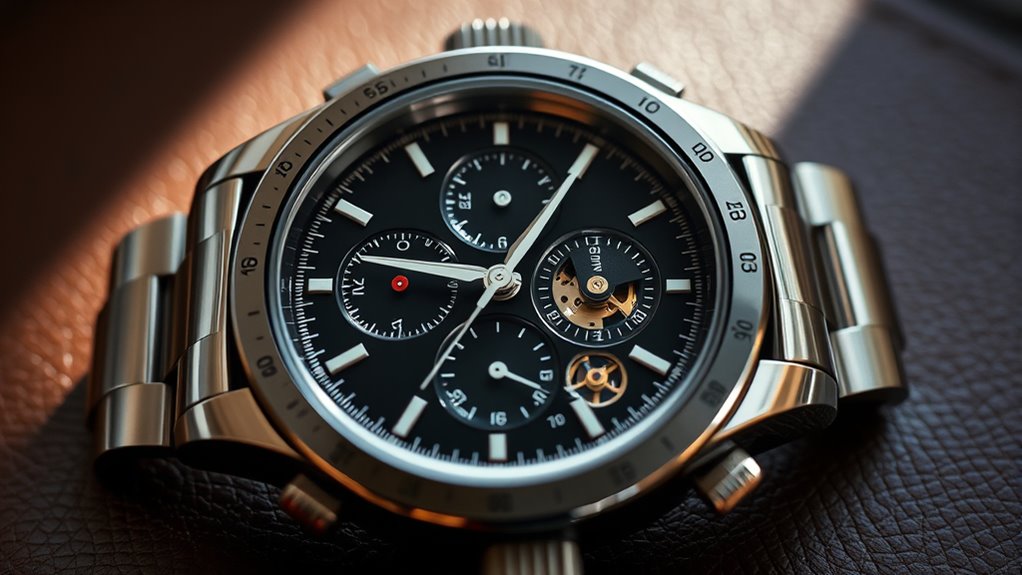
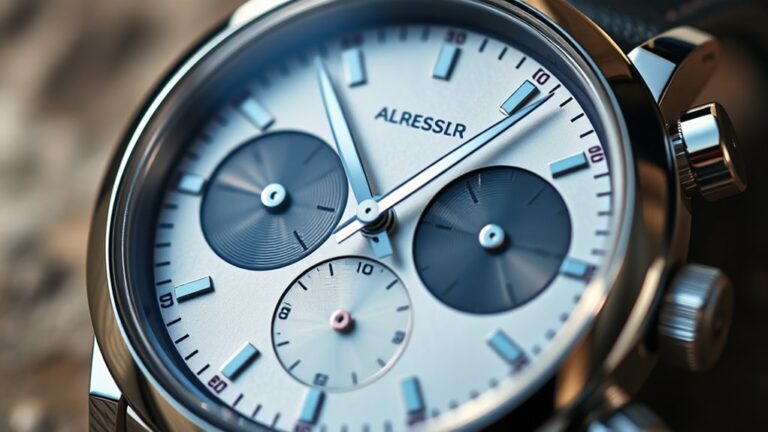
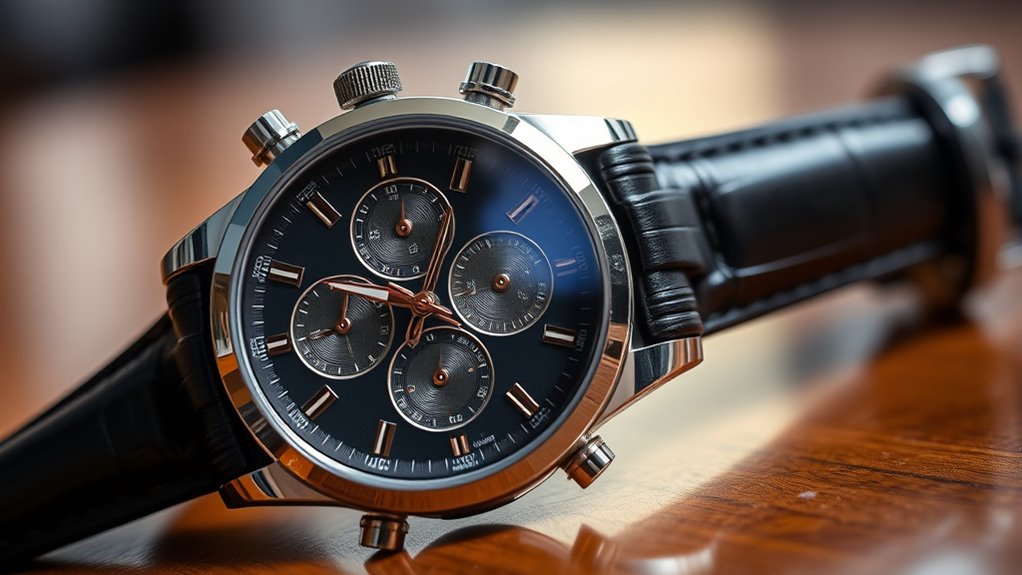
A chronograph watch is more than just a timekeeper; it’s a versatile tool that lets you measure elapsed time with precision. You’ll find that chronographs combine the basic function of telling time with a stopwatch feature, making them unique among watch complications.
The chronograph history dates back to the early 19th century when these watches were invented for scientific and sporting purposes. When you use a chronograph, you activate buttons that start, stop, and reset the timer, allowing you to track specific intervals without interfering with the main time display.
Understanding how it works helps you appreciate the engineering behind these watches, which skillfully integrate multiple functions in a compact design that’s both practical and stylish.
Are All Chronograph Watches Automatic?
How do chronograph watches power their intricate mechanisms? Not all chronograph watches are automatic. You’ll find various chronograph types, each with distinct movement variations.
Some use automatic movements that wind themselves through your wrist’s motion, while others rely on manual winding, requiring you to turn the crown regularly. Quartz chronographs also exist, powered by batteries instead of mechanical movements.
Understanding these movement variations helps you choose the right watch for your lifestyle. If you prefer less maintenance, a quartz chronograph might suit you. If you enjoy traditional watchmaking, mechanical chronographs, both manual and automatic, offer more appeal.
How Automatic Chronograph Movements Work
When you wear an automatic chronograph, your wrist’s natural movement powers the watch’s intricate mechanism. This self-winding system relies on a rotor that spins with your motion, transferring energy to the mainspring.
Unlike simple automatic watches, the chronograph’s movement complexity increases considerably due to the added stopwatch function, which controls start, stop, and reset operations. This complexity is a nod to the rich chronograph history, where precise timing was essential for aviation and racing.
Inside, a series of gears and levers engage seamlessly, allowing you to measure elapsed time without manual winding. Understanding how automatic chronograph movements work gives you a deeper appreciation for the engineering involved, blending traditional watchmaking with innovative self-winding technology.
Manual vs. Automatic Chronographs: Key Differences
When you compare manual and automatic chronographs, you’ll notice some key differences in how they’re powered and wound. Manual chronographs need you to wind them by hand. On the other hand, automatics use the movement of your wrist to keep running.
Getting a handle on these differences can really help you pick the right watch that fits your lifestyle. So, whether you like the hands-on approach or prefer something more effortless, knowing how each works makes all the difference.
Winding Mechanism Differences
Although both manual and automatic chronographs serve the same purpose of measuring elapsed time, they differ considerably in how you keep them running. Manual chronographs require you to regularly engage in manual winding, turning the crown to build tension in the mainspring. You have to remember to wind your watch daily or it will stop.
On the other hand, automatic chronographs use a self-winding mechanism powered by your wrist’s natural movement. This eliminates the need for constant manual winding, as the rotor inside the watch spins with your motion, keeping the mainspring tensioned. Understanding these winding mechanisms helps you choose a chronograph that fits your lifestyle, whether you prefer the hands-on ritual of manual winding or the convenience of automatic winding.
Power Source Comparison
Since the power source directly impacts how you interact with your watch, it’s important to grasp the key differences between manual and automatic chronographs. Manual chronographs rely entirely on you to wind the mainspring, meaning energy storage depends on your routine.
This can affect power efficiency since inconsistent winding might cause the watch to stop unexpectedly. On the other hand, automatic chronographs harness your wrist’s motion to keep the mainspring wound, offering more consistent energy storage and enhanced power efficiency throughout the day.
While manual watches give you direct control, automatic ones provide convenience by reducing the need for frequent winding. Understanding these differences helps you choose a chronograph that fits your lifestyle and guarantees peak performance based on how you prefer to manage power.
Quartz Chronographs: How They Differ From Automatic Models
If you’re exploring chronograph watches, you’ll notice that quartz models operate quite differently from automatic ones. Quartz chronographs rely on a battery and a quartz crystal to keep time, offering superior quartz accuracy compared to the mechanical movements in automatic watches.
This means you’ll get more precise timing and less maintenance. However, you’ll need to replace the battery every few years, which affects battery lifespan. In contrast, automatic chronographs wind themselves using your wrist’s motion.
Here’s a quick comparison:
| Feature | Quartz Chronograph | Automatic Chronograph |
|---|---|---|
| Power Source | Battery | Mechanical (self-winding) |
| Accuracy | High (quartz accuracy) | Moderate |
| Maintenance | Battery replacement needed | Regular servicing |
| Durability | Less sensitive to shocks | More delicate |
| Cost | Generally lower | Usually higher |
Pros and Cons of Automatic Chronograph Watches
When you choose an automatic chronograph watch, you get a timepiece that combines intricate craftsmanship with the convenience of self-winding mechanics. One major advantage is automatic reliability. You don’t need to replace batteries, and the watch stays powered as you wear it daily. Plus, many automatic chronographs offer impressive chronograph accuracy, making them practical for precise timing tasks.
However, automatic chronographs can be pricier and require occasional servicing to maintain performance. They’re also more sensitive to shocks and magnetic fields than quartz models. If you don’t wear your watch regularly, it may stop and need resetting. Despite these drawbacks, if you appreciate mechanical artistry and value automatic reliability combined with solid chronograph accuracy, an automatic chronograph watch can be a rewarding choice.
How to Identify an Automatic Chronograph Watch
Although automatic chronograph watches can look similar to other types, you can spot them by certain key features. First, check for automatic features like a sweeping second hand rather than a ticking one, which indicates a mechanical movement powered by wrist motion.
Look for a transparent case back, which often reveals the intricate rotor and gears unique to automatic watches. Familiarize yourself with various chronograph styles; some have subdials measuring seconds, minutes, and hours.
Automatic chronographs typically have more complex dial layouts compared to quartz versions. Also, they usually lack a battery hatch, hinting at their self-winding mechanism. By focusing on these details, you can confidently identify an automatic chronograph watch without confusing it with other chronograph types or quartz models.
When to Choose an Automatic Chronograph
Identifying an automatic chronograph sets the stage for deciding whether it fits your needs. You should consider choosing one if your style preferences lean towards classic, intricate timepieces with mechanical craftsmanship.
Automatic chronographs often appeal to those who appreciate the blend of functionality and tradition in their watches. Lifestyle suitability also matters. If you lead an active life but want a watch that doesn’t require frequent battery changes, an automatic chronograph is ideal.
Automatic chronographs combine timeless tradition with practical durability, perfect for active lifestyles without the hassle of battery changes.
It suits individuals who enjoy mechanical engineering and can wear a slightly heavier, more complex watch daily. However, if you prioritize low maintenance or prefer a minimalistic design, you might look elsewhere.
Ultimately, pick an automatic chronograph when you want a watch that reflects both your aesthetic sense and your dynamic lifestyle.
How to Care for Your Automatic Chronograph
Maintaining your automatic chronograph guarantees it runs smoothly and lasts for years. Regular watch maintenance is key, especially sticking to recommended oiling intervals to keep internal parts lubricated and functioning properly.
You should also make comfort adjustments to make certain the watch fits well without pinching or sliding. Don’t overlook strap care. Clean leather or metal straps gently with appropriate cleaning techniques to prevent wear.
When you’re not wearing your watch, use proper storage solutions like a watch box or winder to protect it from dust and moisture. Finally, avoid exposing your chronograph to extreme conditions, and clean the case and crystal regularly with a soft cloth.
Following these steps helps preserve both performance and appearance over time.
Popular Automatic Chronograph Watches to Consider
If you’re thinking about buying an automatic chronograph, it’s a good idea to get familiar with the top brands and what makes each one special. You’ll want to check out the key features and specs to see which watch suits your style and needs best. And, of course, knowing the price ranges can really help you find something that fits your budget without any surprises.
Top Brands Overview
Several top brands have mastered the art of creating automatic chronograph watches that combine precision, style, and durability. If you’re looking for luxury brands, you’ll find names like Rolex, Omega, and TAG Heuer leading the pack with sleek, high-performance models.
These brands excel at blending sporty designs with sophisticated craftsmanship, ensuring your watch looks great whether you’re at a formal event or on an outdoor adventure. Brands like Breitling and Zenith also offer exceptional automatic chronograph options, known for their innovative movements and robust build quality.
When choosing your watch, consider what style and features matter most to you, but rest assured that these top brands deliver reliable, stylish timepieces that stand the test of time.
Key Features Comparison
After exploring the leading brands known for their automatic chronograph watches, it’s time to look closely at what sets these models apart. When choosing your watch, focus on chronograph features like sub-dials, tachymeter scales, and pushers, as well as watch accuracy, which guarantees precise timekeeping.
Here’s a quick comparison to help you decide:
| Model | Chronograph Features |
|---|---|
| Omega Speedmaster | Multiple sub-dials, tachymeter |
| TAG Heuer Carrera | High-precision pushers |
| Breitling Navitimer | Slide rule bezel, sub-dials |
| Seiko Prospex | Durable build, reliable timing |
Each model offers unique chronograph features and varying levels of watch accuracy, so consider what suits your style and needs best.
Price Range Insights
While automatic chronograph watches come in a range of prices, understanding what influences their cost can help you make a smarter purchase. If you’re on a tighter budget, brands like Seiko and Tissot offer reliable automatic chronographs with solid craftsmanship without breaking the bank.
These watches balance quality and affordability, making them great entry points. On the other hand, if you’re drawn to the luxury segment, brands like Omega, TAG Heuer, and Breitling deliver exceptional precision, heritage, and design but come with a higher price tag.
Your budget considerations will shape which models you investigate, so it’s important to weigh features, brand reputation, and movement quality against cost. This approach guarantees you find a watch that fits both your style and wallet.
Frequently Asked Questions
Can Chronograph Watches Be Water-Resistant?
Yes, chronograph watches can have water resistance features, but the level varies by model. You should always check the specific rating before exposing your watch to water.
Proper chronograph maintenance is essential to keep these features intact, especially if you use the stopwatch functions underwater. Regularly servicing seals and gaskets guarantees your watch stays protected against moisture, helping you enjoy its full functionality without worrying about water damage.
What Is the Typical Price Range for Automatic Chronographs?
Picture owning a timepiece that echoes the craftsmanship of legendary watchmakers. You’ll find automatic chronographs typically range from $2,000 to over $10,000.
Luxury brands like Omega and TAG Heuer blend historical significance with cutting-edge technology, justifying their higher prices. If you want a piece that’s both functional and a nod to horological history, expect to invest accordingly.
Your budget shapes whether you go for a classic or a premium masterpiece.
Are Automatic Chronographs Suitable for Sports and Outdoor Activities?
Yes, automatic chronographs are suitable for sports and outdoor activities, thanks to their robust movement mechanics and thoughtful design features. You’ll appreciate their precise timekeeping and stopwatch functions during workouts or adventures.
Many models offer water resistance, shock absorption, and durable materials that stand up to rough conditions. Just make sure to pick one with features tailored to your specific activity, so you get the best performance and reliability when you need it most.
How Long Does the Power Reserve Last in Automatic Chronographs?
The power reserve in automatic chronographs typically lasts between 40 to 70 hours, depending on the movement type. Some high-end movements offer extended reserves beyond 70 hours.
You’ll find that mechanical movements rely on your wrist’s motion to stay wound. So, if you don’t wear your watch daily, the power reserve duration becomes essential. To keep it running smoothly, you might need to manually wind it after a couple of days off.
Can Automatic Chronograph Watches Be Customized or Modified?
Yes, you can customize and modify automatic chronograph watches to suit your style. Customization options include changing the dial, hands, or straps to give your watch a unique look.
Modification techniques might involve upgrading the movement, adding complications, or enhancing the case finish. Just make sure you work with a skilled watchmaker so you don’t risk damaging the intricate mechanics while personalizing your timepiece.
Conclusion
Now that you know chronograph watches come in automatic, manual, and quartz varieties, you’re better equipped to choose the right one for you. Automatic chronographs blend classic craftsmanship with modern convenience, much like a pocket watch in the digital age.
Whether you want precision timing or timeless style, understanding these differences helps you pick a watch that fits your lifestyle perfectly. So, go ahead, make your choice and wear your automatic chronograph watch with confidence!