7 Key Factors That Determine How Much Gemstones Are Worth
Trying to figure out how much your gemstone is really worth can feel overwhelming. You’re not alone—many people struggle to understand what makes one gem more valuable than another.
Whether you’re buying, selling, or just curious, knowing the key factors behind gemstone value can save you time and money.
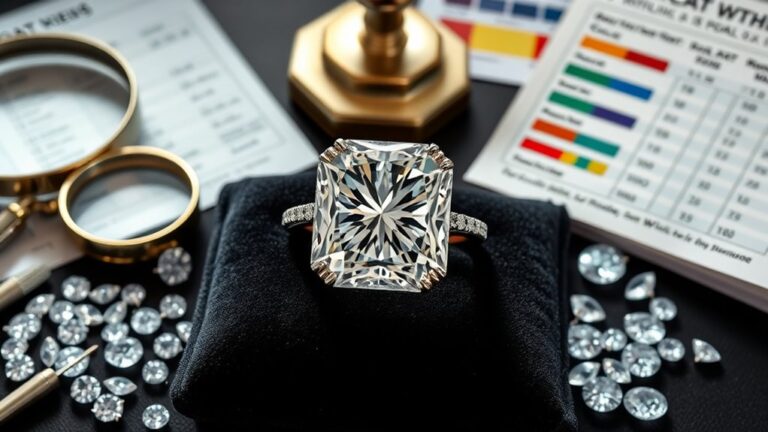
You determine a gemstone’s worth by looking at seven key factors: color quality, clarity, cut, carat weight, rarity, origin, and certification.
Color affects appeal through hue, saturation, and consistency, while clarity reveals internal flaws that impact value. The cut improves brilliance, and carat weight influences price based on size.
Rarity and origin add prestige and demand, and certification guarantees authenticity and boosts market trust.
Understanding these basics sets the stage to investigate how each factor shapes a gem’s true value.
Key Takeaways
- Rarity and unique origin increase gemstone desirability and market value. People often pay more for stones that are hard to find or come from special locations.
- Color quality, including hue, saturation, and consistency, strongly influences price. The more vibrant and even the color, the higher the value.
- Clarity affects gemstone brilliance, durability, and overall worth. Fewer flaws mean the gem will look better and last longer.
- Expert cut quality enhances light reflection and visual appeal, raising value. A well-cut stone sparkles more and catches the eye.
- Certification verifies authenticity and grading, boosting buyer confidence and resale potential. Having paperwork can make a big difference when selling or buying.
How Gemstone Value Is Determined: An Overview
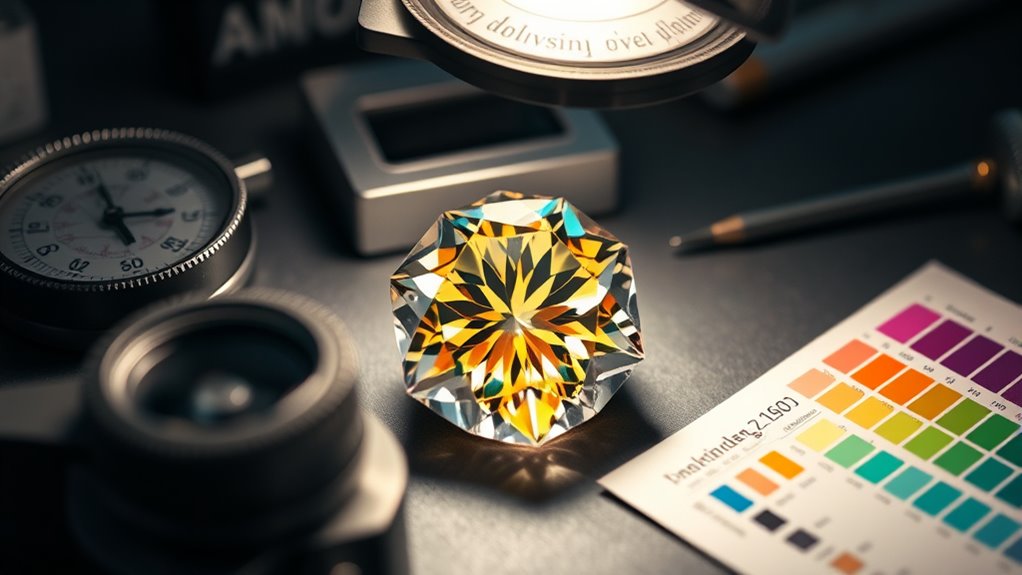
When you want to understand how gemstone value is determined, you need to reflect on several key factors that experts use to assess worth. First, market trends play a significant role. If demand for a particular gemstone is high, its value rises accordingly.
You’ll also need to examine historical significance. Gems with a rich history or those linked to famous events or figures often command higher prices. Moreover, rarity and origin influence value, but these are tied closely to market interest and cultural importance.
How Color Affects a Gemstone’s Value
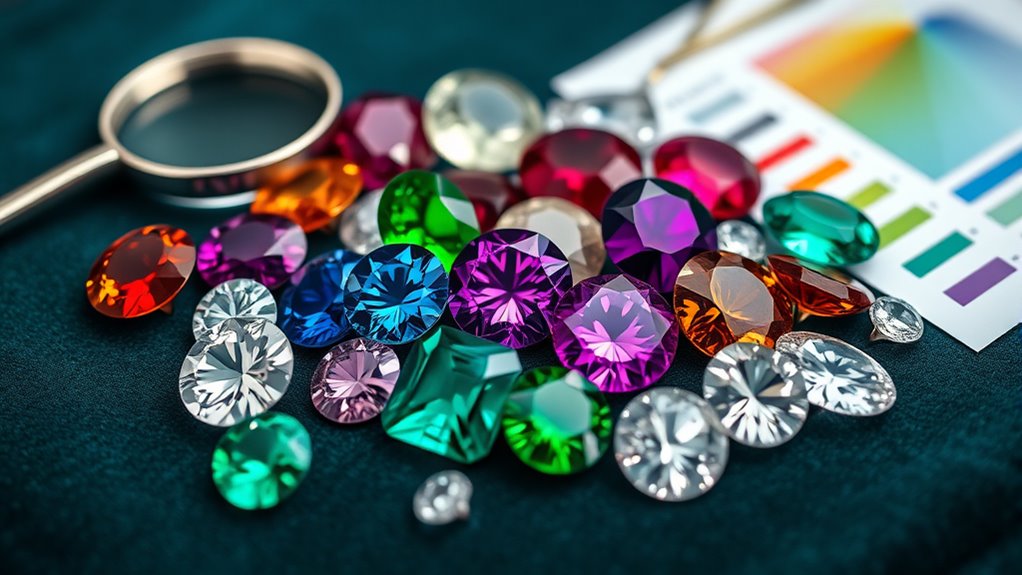
When you’re checking out a gemstone’s value, you’ll see that its hue really matters—it’s a big part of what makes the stone appealing. Then, there’s saturation, which is basically how deep or intense the color is. This can seriously bump the value up or bring it down. And don’t forget about color consistency—if the color is even all over the stone, that usually means it’s higher quality and worth more.
Hue Importance
Because hue directly influences a gemstone’s visual appeal, it plays an essential role in determining its value. You’ll find that the hue significance lies in how it shapes your perception of the gem’s beauty and rarity.
Subtle shifts in hue can enhance a stone’s desirability, making hue perception a key factor for collectors and jewelers alike.
Here’s a quick look at how different hues impact value:
| Hue Type | Common Value Range | Market Demand |
|---|---|---|
| Pure Hue | High | Very High |
| Mixed Hue | Moderate | Moderate |
| Off-Hue | Low | Low |
Understanding this helps you appreciate why some hues command premium prices while others don’t.
Saturation Impact
Saturation plays an essential role in how you perceive a gemstone’s color intensity and overall appeal. When saturation levels are high, the gemstone’s color appears vivid and rich, which often increases its value.
If the saturation is too low, the color may look washed out or dull, reducing its attractiveness and worth. You’ll find that gemstones with balanced saturation levels stand out because they showcase a vibrant hue without looking overly dark or muted.
Color intensity, influenced directly by saturation, helps you judge the gemstone’s quality at a glance. Understanding how saturation levels affect color intensity enables you to make smarter choices when evaluating gemstones, ensuring you invest in stones that offer the most visual impact and value.
Color Consistency
Although color intensity draws your eye, color consistency plays an equally important role in determining a gemstone’s value. When you examine a stone, you want to see color uniformity throughout, without distracting patches or uneven tones.
Color zoning, areas where hues vary within the same gem, can lower its worth because it disrupts the gem’s overall appearance. If the color is patchy or uneven, it may make the gemstone look less vibrant or lower quality.
On the other hand, gems with smooth, consistent color often command higher prices since they appear more attractive and rare. So, when you’re evaluating a gemstone, pay close attention to how evenly color is distributed. Color uniformity can truly improve the gem’s beauty and, ultimately, its value.
Why Clarity Matters When Valuing Gems
When you evaluate a gemstone, clarity plays an essential role in determining its value. Clarity grading assesses how free a gem is from internal flaws or inclusions, which can affect its brilliance and overall appearance.
Different inclusion types, such as crystals, feathers, or clouds, impact clarity in varying degrees. Some inclusions are barely visible, while others can greatly reduce a gem’s transparency and sparkle.
As you examine a gemstone, understanding clarity grading helps you identify stones that offer better light performance and durability. Higher clarity grades usually mean fewer imperfections, making the gem more desirable and valuable.
How Carat Weight Influences Gemstone Price
One carat can make a big difference in a gemstone’s price, but the relationship between weight and cost isn’t always straightforward. You’ll notice that as carat weight increases, prices often rise exponentially rather than linearly, reflecting the carat importance in the market.
Larger gems are rarer, so they command much higher prices per carat compared to smaller ones. However, market trends also play a vital role; demand for certain carat sizes can fluctuate, affecting value. For example, a popular size in engagement rings might carry a premium.
When you’re evaluating gemstones, don’t just look at the weight. Consider how carat weight interacts with current market trends to truly understand a gem’s worth. This approach helps you make smarter buying or selling decisions.
Why Cut Quality Impacts Gemstone Value
You’ll notice that a gemstone’s cut quality directly affects how it reflects light and shines. When the symmetry and proportion are just right, the gem looks more balanced and appealing. And it’s not just about looks—a great cut can actually bring out the best color and clarity, which boosts the stone’s overall value. So, in the end, the cut really makes a big difference in how valuable the gemstone is.
Light Reflection And Brilliance
Anyone examining a gemstone quickly notices how its cut influences the way light dances within it. When a gem is expertly cut, it maximizes light reflection, creating a stunning brilliance improvement that captures your eye.
The angles and facets direct light to enter, bounce inside, and exit beautifully, showcasing the stone’s full potential. You’ll also see increased light dispersion, which breaks white light into vibrant flashes of color, adding to the gem’s allure.
Poorly cut stones fail to reflect light effectively, making them appear dull or lifeless. So, the cut quality directly impacts how much sparkle and fire a gemstone displays, which in turn affects its value.
When you choose a gem, consider light reflection and brilliance as key indicators of worth.
Symmetry And Proportion Effects
Because symmetry and proportion dictate how light travels within a gemstone, they play an essential role in its overall appearance and value. When you examine a stone, precise facet alignment guarantees light reflects evenly, enhancing brilliance and sparkle.
If the facets aren’t aligned properly, light leaks out, making the gem look dull or uneven. Design symmetry also affects how balanced and attractive the gemstone appears. When a gemstone has perfect design symmetry, each side mirrors the other, creating harmony that appeals to your eye.
Poor symmetry disrupts this balance, lowering the gem’s desirability and worth. So, when evaluating a gemstone’s value, always consider how well its proportions and symmetry contribute to its visual impact and overall quality.
Enhancing Color And Clarity
Symmetry and proportion don’t just influence how light behaves inside a gemstone. They also set the stage for highlighting its color and clarity. When a gem is cut with precision, you’ll notice vibrant color improvement, making hues appear richer and more vivid.
Proper cutting angles allow light to bounce ideally, revealing the gemstone’s true brilliance. Likewise, clarity improvement depends on how well the gem is shaped. A skilled cut can minimize visible inclusions, improving overall transparency.
If the cut quality is poor, even the best stones look dull or cloudy. So, when evaluating gemstones, always consider cut quality. It directly impacts how effectively color improvement and clarity enhancement reveal the gem’s natural beauty, ultimately determining its value.
How Rarity and Origin Raise Gemstone Value
When you consider a gemstone’s rarity and origin, you tap into two of the most powerful factors that boost its value. Rarity factors, like limited supply or unique features, make certain gems highly sought after. Origin significance also plays an essential role; gems from famous locations or with historical importance command premium prices.
Here’s why rarity and origin matter:
- Limited availability increases demand and price.
- Unique geological conditions create one-of-a-kind gems.
- Renowned origins add prestige and desirability.
- Provenance can link a stone to cultural or historical stories.
Why Certification Increases Gemstone Value
Although a gemstone’s beauty is essential, having a certified appraisal greatly improves its market value. When you go through the certification process, your gemstone undergoes strict appraisal standards and grading systems set by reputable gemological institutes. This guarantees authenticity verification, giving buyers confidence about your gem’s quality and origin.
Expert opinions provided during certification help clarify details that influence market demand, making your gemstone more attractive to collectors and investors. Certified gems also have higher resale potential since buyers trust the documented evaluation over uncertified stones.
Frequently Asked Questions
How Do Market Trends Affect Gemstone Prices?
Market trends directly impact gemstone prices because you’ll see how supply dynamics shift with demand changes. When demand spikes but supply stays limited, prices go up. Conversely, if supply floods the market or demand drops, prices fall.
Market fluctuations can also be influenced by fashion trends or economic conditions, so you need to stay updated. Understanding these shifts helps you predict when to buy or sell gemstones for the best value.
Can Treatments or Enhancements Decrease Gemstone Value?
Yes, treatments or improvements can decrease gemstone value, especially if the treatment types are common or reduce durability. When you buy a gem with enhancement effects like dyeing or fracture filling, it often costs less because these treatments can fade or wear off over time.
However, some treatments, like heat treatment in sapphires, are widely accepted and might not impact value much. Always ask about treatment types to understand improvement effects on worth.
What Role Does Gemstone Demand Play in Pricing?
You might think gemstone rarity alone sets the price, but demand plays a huge role too. When demand surges, even stones with steady market supply can see prices climb.
If you want to invest wisely, bear in mind that high demand can drive prices up faster than rarity does. So, keep an eye on trends. Popularity affects value just as much as how rare a gemstone actually is.
How Does the Jewelry Setting Influence Gemstone Value?
The jewelry setting influences gemstone value by improving its appeal through setting materials and design complexity. When you choose high-quality metals like platinum or gold, it raises the overall worth.
Intricate designs and superior craftsmanship quality make the piece more desirable. Plus, brand influence plays a big role. Well-known designers enhance value considerably.
Are Synthetic Gemstones Valued Differently Than Natural Ones?
Yes, synthetic gemstones are generally valued differently than natural ones. You’ll find that synthetic stones lack the rarity natural gems have, which affects their market perception.
While they can look just as stunning and offer great affordability, collectors and investors usually prefer natural stones for their uniqueness. So, even though synthetics might be perfect for everyday wear, their value doesn’t match the rarity and prestige of natural gems in the market.
Conclusion
Now that you know the key factors fueling gemstone fascination: color, clarity, carat, cut, rarity, origin, and certification, you can confidently calculate a gem’s true worth. By carefully considering these vital criteria, you’ll capture the crystal-clear value behind every stone.
Remember, recognizing these remarkable details not only improves your expertise but empowers you to make smarter, sparkling selections. So stay savvy and shine bright when seeking your next stunning stone, keeping gemstone worth in mind!