How Many Types of Gemstones Are There – A Complete Guide
Choosing the perfect gemstone can feel overwhelming, especially with so many types to consider. You’re not alone—many people struggle to understand the differences between gemstones and which ones are best for their style or collection.
You’ll find thousands of gemstone types, each unique in color, composition, and cultural meaning. They range from classic precious stones like diamonds and rubies to semi-precious and exotic varieties such as amethyst and tanzanite, plus organic gems like pearls and amber.
Their value depends on factors like hardness, clarity, and rarity. Understanding these differences helps you pick the best gemstones for jewelry or collecting.
Exploring further reveals fascinating details about their origins and care.
Key Takeaways
- Gemstones are broadly classified into precious, semi-precious, and organic types based on mineral composition and origin.
- Classic precious gemstones include diamonds, rubies, and sapphires. They are known for luxury and historical significance.
- Semi-precious stones like amethyst, citrine, and garnet offer diverse colors and cultural meanings.
- Organic gemstones such as pearls and amber come from biological sources, adding unique qualities.
- Thousands of gemstone varieties exist, differentiated by chemical composition, hardness, color, and clarity.
What Makes a Gemstone? Definitions and Types
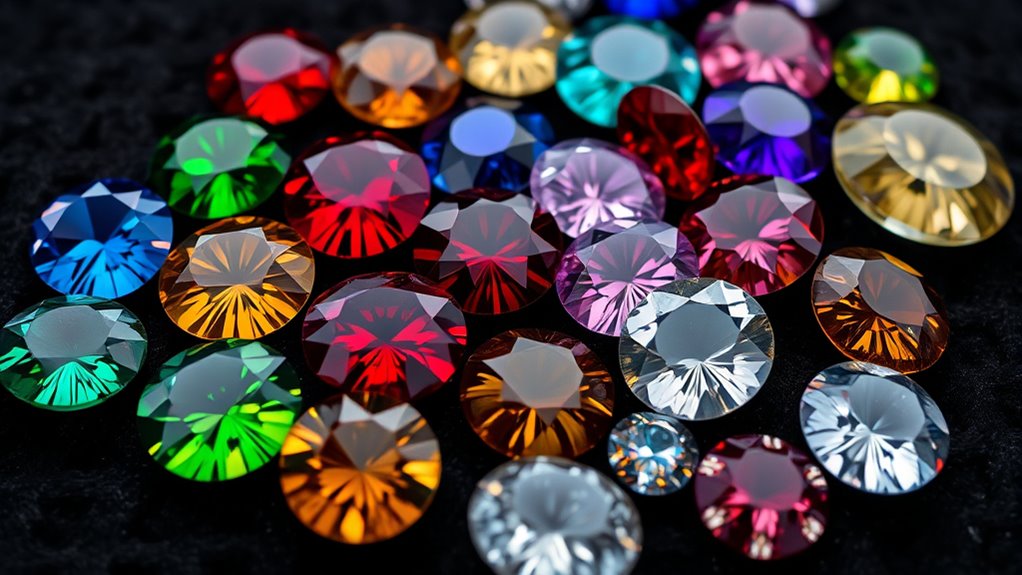
A gemstone is a mineral or organic material that’s been cut and polished to improve its beauty and durability. When you investigate gemstone origins, you’ll find they come from deep within the Earth or from organic sources like pearls and amber.
Each gemstone carries unique qualities, and many people believe in their healing properties, using them to promote physical and emotional well-being. To truly appreciate gemstones, you should understand that their value depends on factors like color, clarity, and rarity.
Knowing these basics helps you recognize what makes a gemstone special beyond just its appearance. Whether you’re drawn to their natural origins or their reputed healing powers, gemstones offer more than just aesthetic appeal. They connect you to nature’s hidden treasures.
How Many Types of Gemstones Are There?
How many types of gemstones can you actually find? Gemstone classifications vary widely, with thousands of varieties grouped into categories based on their mineral composition, hardness, and optical properties.
You’ll encounter broad groups like precious and semi-precious stones, but there are also organic gems like amber or pearl. Each classification holds its own historical significance, reflecting how different cultures valued and used these stones through time.
Understanding these classifications helps you appreciate their diversity and unique origins. While the total number of gemstone types is vast, focusing on their classifications gives you a clearer picture of what’s out there, setting a foundation before exploring specific popular gemstones in more detail later on.
Popular Precious Gemstone Types Explained
Now you’re going to learn all about classic precious gemstones and what makes each one special. You’ll discover their key characteristics, see where they’re most commonly used, and find out how their value is determined. By the end, you’ll have a better appreciation for why these gems have stayed favorites in jewelry and collections over the years.
Classic Precious Gemstones
Three classic precious gemstones have stood the test of time as symbols of luxury and elegance: diamonds, rubies, and sapphires. When you choose these gems, you tap into their rich historical significance, as they’ve adorned royalty and celebrated milestones for centuries.
You’ll often find them expertly shaped using classic cuts like the round brilliant for diamonds or the cushion cut for rubies, maximizing their brilliance and appeal. These cuts aren’t just about beauty; they preserve tradition and enrich each gem’s unique qualities.
Whether you’re selecting an engagement ring or a statement piece, these timeless gemstones offer both prestige and enduring value. Embracing classic precious gemstones means appreciating their legacy while enjoying their unmatched allure in your collection.
Characteristics of Each Type
While each precious gemstone shares a reputation for beauty and value, their distinct characteristics set them apart in color, hardness, and brilliance. When you examine gemstone hardness, diamonds top the scale, making them highly durable, while emeralds are softer and more prone to scratches.
Gemstone luster varies too; sapphires offer a vibrant, glassy shine, contrasting with the silky glow of some pearls. Transparency also plays a key role. Rubies and diamonds are typically transparent, enhancing their sparkle, whereas emeralds often contain gemstone inclusions that give them a unique, mossy appearance.
These inclusions can affect clarity but also add character. Understanding these features helps you appreciate each gemstone’s unique beauty and guides you in choosing the right one for your style and needs.
Popular Uses and Value
Understanding the unique characteristics of each gemstone helps you see why certain stones are favored for specific uses and how their value is determined. You’ll find that gemstones like diamonds, rubies, and sapphires are popular in fine jewelry due to their durability and brilliance.
Gemstone applications extend beyond adornment. Some stones are used in industrial tools or as collectors’ items. Market trends also influence value. Rarer stones and those with unique colors or origins often command higher prices.
When you choose a gemstone, consider not only its beauty but also its practical uses and current demand. This knowledge guarantees you select a stone that holds both aesthetic appeal and lasting worth in the constantly changing gemstone market.
Common Semi-Precious Gemstone Types to Know
You’ll find plenty of semi-precious gemstones that offer unique beauty and versatility. Knowing their key characteristics really helps when you’re choosing the right stone for your style or collection. So, let’s take a look at some popular semi-precious stones and see how they’re commonly used.
Popular Semi-Precious Stones
Semi-precious stones offer a vibrant range of colors and unique qualities that make them popular choices for jewelry and collections. When you investigate popular semi-precious stones, you’ll encounter gems like amethyst, citrine, garnet, and peridot.
Each boasts distinct semi-precious properties, such as varying hardness, clarity, and hues that appeal to different tastes. Understanding sourcing semi-precious stones is key, as their availability often depends on geographic regions and mining practices.
You’ll find that many semi-precious stones are more abundant than precious ones, making them affordable yet stunning options. Whether you’re buying for style or collecting, these popular semi-precious gems offer versatile beauty, ensuring you have plenty of options to suit your needs without sacrificing quality or aesthetic appeal.
Characteristics and Uses
Many popular semi-precious stones share unique characteristics that influence how they’re used in jewelry and decoration. You’ll notice their color variations often reflect cultural meanings and birthstone significance, adding personal value.
Their healing properties and historical uses make them popular beyond aesthetics. Market trends now also include synthetic gemstones, which offer affordability but affect investment potential.
Understanding these factors helps you choose stones wisely for style and value.
| Gemstone | Characteristics | Uses & Significance |
|---|---|---|
| Amethyst | Purple hues, healing | February birthstone, spiritual |
| Citrine | Yellow-orange shades | Attracts wealth, decorative |
| Garnet | Deep reds, cultural symbol | January birthstone, protection |
Rare and Exotic Gemstones Worth Discovering
Although rare and exotic gemstones may not be as well-known as diamonds or rubies, they offer unique beauty and fascinating stories that can enchant any collector or enthusiast. When you investigate exotic varieties, you’ll uncover stones with unique origins and deep historical significance.
These gems hold cultural importance and are prized for their healing properties, adding layers to their allure. Their investment potential is rising, especially within the collector’s market where rare finds are highly sought after.
You’ll also notice that craftsmanship techniques used to shape these gems reflect their special status. However, it’s important to reflect on the environmental impact of sourcing these stones.
Chemical Differences Among Gemstone Types
When you examine gemstones closely, you’ll find that their chemical compositions play a crucial role in defining their color, hardness, and overall appearance. Each gemstone’s unique crystal structure influences its place on the hardness scale and affects its optical properties.
Understanding mineral classification helps you distinguish between natural, synthetic gemstones, and organic gemstones, which come from biological sources. Geological formation impacts these chemical differences and, in turn, their healing properties.
Mineral classification reveals the origins and healing traits of natural, synthetic, and organic gemstones.
Gemstone treatments can alter appearance but not the fundamental chemical makeup.
- Chemical composition determines durability and color range.
- Crystal structure affects brilliance and toughness.
- Synthetic gemstones mimic natural chemical traits.
- Organic gemstones differ chemically from mineral ones.
Knowing these helps you appreciate each gem’s unique identity.
Why Color and Clarity Vary in Gemstones
Because gemstones form under varying conditions, their color and clarity can differ markedly even within the same type. You’ll find that factors like temperature, pressure, and mineral impurities influence the hue, saturation, and brightness, highlighting the color significance in each stone. For example, trace elements can cause vibrant reds or deep blues, making every gem unique.
Clarity importance comes into play as internal flaws or inclusions affect how light passes through the gemstone. These imperfections impact brilliance and value, so understanding why clarity varies helps you appreciate each gem’s individuality. When you consider both color significance and clarity importance, you realize why no two gemstones look exactly alike even if they belong to the same family. This variability is part of what makes gemstones so fascinating to collectors and enthusiasts alike.
How to Recognize Different Gemstone Families
How can you tell one gemstone family from another? When identifying gemstones, understanding gemstone classification is key. Each family shares unique traits that help you recognize them quickly.
Start by observing color, as some families display characteristic hues. Then, consider hardness, which affects durability and use. Next, examine crystal structure under magnification; different families have distinct patterns.
Finally, check refractive index with proper tools to see how light bends through the stone.
- Note the dominant colors typical for each family
- Test hardness using the Mohs scale
- Analyze crystal shapes and growth patterns
- Measure refractive index for precise identification
Best Gemstones for Jewelry and Collecting
Choosing the best gemstones for jewelry and collecting involves balancing beauty, durability, and rarity. You want stones that not only catch the eye but also stand the test of time.
Popular choices like sapphires, rubies, and emeralds remain favorites due to their vibrant colors and toughness. However, staying updated on current gemstone trends can help you find unique options such as tanzanite or spinel, which are gaining popularity.
When collecting, focus on quality, origin, and certification to guarantee authenticity. Collecting tips include starting with versatile stones that suit various settings and gradually adding rare specimens.
Caring for Different Gemstone Types
Even if you select the most durable gemstones, proper care is essential to keep them looking their best. Different stones require specific cleaning techniques and storage methods to maintain their brilliance and avoid damage. For example, some gems are sensitive to heat or chemicals, while others scratch easily.
To care for your gemstones effectively, remember to:
- Use gentle cleaning techniques like warm soapy water and a soft brush for most stones.
- Avoid ultrasonic cleaners on fragile gems such as opals or emeralds.
- Store gemstones separately in soft pouches or lined boxes to prevent scratches and damage.
- Keep them away from prolonged exposure to sunlight or extreme temperatures to preserve color and clarity.
Following these tips helps you protect your collection and enjoy your gemstones for years.
Frequently Asked Questions
How Are Synthetic Gemstones Made and How Do They Compare to Natural Ones?
You create synthetic gemstones using synthetic processes like the flame fusion or hydrothermal methods, replicating natural conditions. Compared to natural stones, they often match in clarity and color but usually cost less.
Market trends show growing demand for synthetics due to affordability and ethical concerns. Quality assessments confirm their durability, yet consumer perceptions vary. Some prefer natural gems for rarity, while others appreciate synthetics for consistency and eco-friendliness.
What Is the History Behind Famous Gemstones and Their Cultural Significance?
You’ve probably heard of famous gemstones carrying a little “mystical charm.” Their cultural significance runs deep, often wrapped in historical legends that give each gem a unique story.
Think of gemstone symbolism as a secret language; rubies might whisper passion, while sapphires speak of wisdom. These stories have shaped how people treasure and use gemstones across cultures, making them more than just beautiful stones.
They’re timeless symbols connecting us to the past.
How Do Gemologists Grade and Certify Gemstones?
You’ll find that gemologists grade gemstones by examining their color, clarity, cut, and carat weight, often called the “Four Cs.” During the certification process, they use specialized tools to assess these qualities precisely.
They then issue a certificate detailing the gemstone’s characteristics and authenticity. This gem grading and certification process guarantees you know exactly what you’re buying, giving you confidence in a gemstone’s value and quality.
What Are the Ethical Concerns in the Gemstone Mining Industry?
You might think gemstones sparkle with beauty, but behind that shine lie serious ethical concerns. Conflict diamonds fund violence, causing immense human suffering.
Meanwhile, gemstone mining often leads to environmental impact, destroying ecosystems and polluting water sources. When you buy gems, you’re part of this story.
Can Gemstones Have Any Healing or Metaphysical Properties?
Yes, many people believe gemstones have healing properties and metaphysical beliefs tied to them. You can use stones like amethyst or rose quartz to tap into their energy vibrations, which some say promote emotional balance and stress relief.
Gemstones are often used for chakra alignment, helping you focus and harmonize your body’s energy centers. While science doesn’t prove these effects, exploring their benefits can improve your spiritual and emotional well-being.
Conclusion
Now that you know how many types of gemstones there are, you can spot the sparkle in every stone, feel the history in every hue, and appreciate the beauty in every cut. Whether you’re choosing a precious gem for elegance, a semi-precious stone for charm, or a rare gem for wonder, you’ll care for them with respect, admire them with awe, and collect them with passion.
Gems are more than stones; they’re stories you wear. Understanding how many types of gemstones there are helps you connect deeper with each piece and truly celebrate their unique beauty.