5 Tips to Tell If Gemstones Are Real
Wondering if the gemstones you’re looking at are truly real? You’re not alone. Many people struggle with telling genuine stones from fakes, especially when shopping online or at busy markets. Knowing how to spot authentic gems can save you money and give you confidence in your purchase.
To tell if gemstones are real, start by examining their color and clarity; natural stones show rich, varied hues and tiny imperfections. Use a loupe to spot irregular inclusions, as these indicate authenticity, while perfect bubbles often mean synthetic.
Feel the weight to check density, since fake stones tend to be lighter. Test hardness with common items to see if scratches appear. Finally, always verify certification to guarantee quality.
Keep exploring, and you’ll uncover even more ways to spot genuine gems.
Key Takeaways
- Examine color depth and subtle variations. Natural gems have rich hues and tiny imperfections, unlike uniform synthetic stones.
- Use a loupe to spot irregular inclusions, such as crystals or feathers. These usually indicate a natural origin.
- Compare the gemstone’s weight to a known genuine stone. A lighter weight may suggest a fake or treated gem.
- Perform a scratch test with household items to check hardness. This helps ensure the stone isn’t softer than expected.
- Verify certification from reputable labs to confirm authenticity, grading, and provenance before purchase.
Examine Color and Clarity for Natural Gemstone Traits
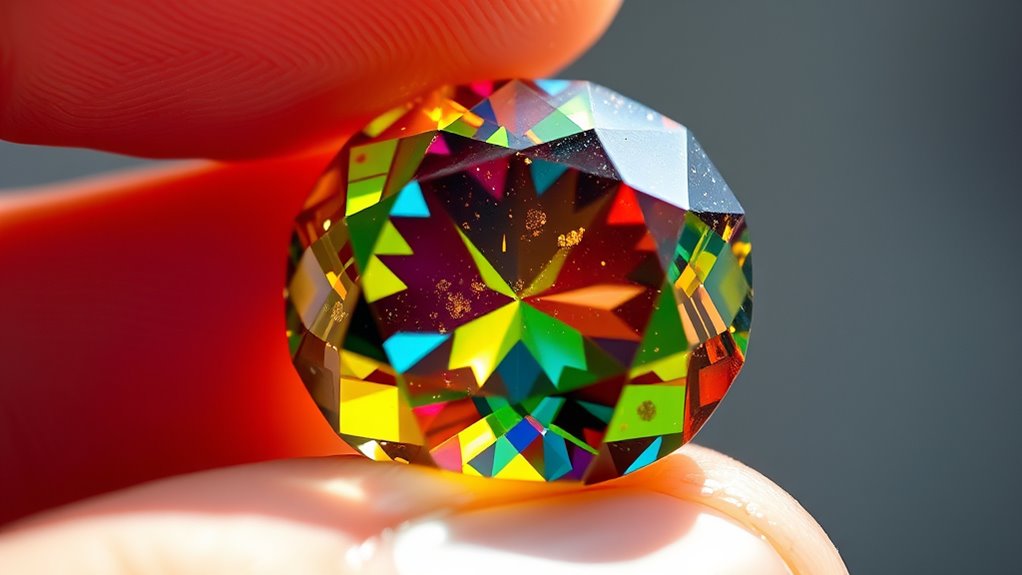
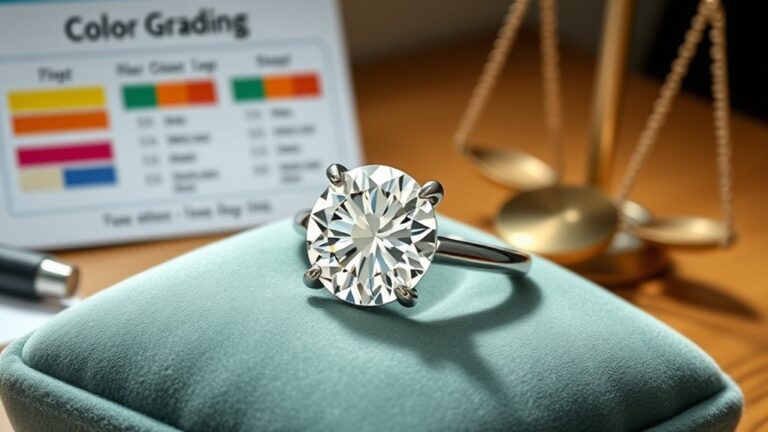
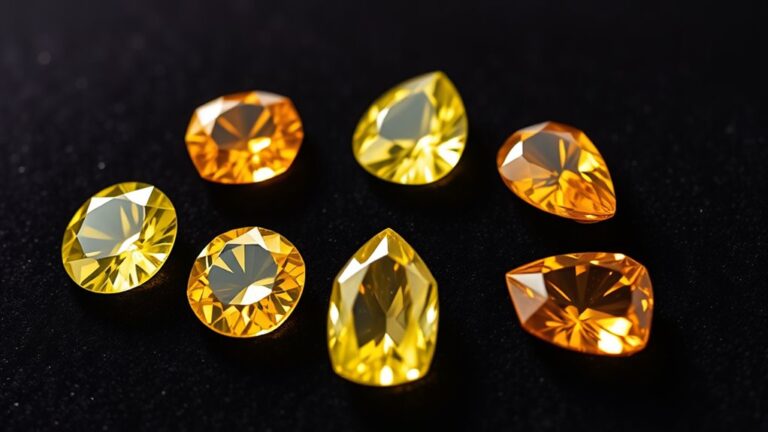
How can you tell if a gemstone is natural just by looking at it? Focus on its color saturation and clarity grading. Natural gemstones usually display rich, deep color saturation, but not overly uniform hues.
If the color looks too perfect or artificial, it might be synthetic or treated. Clarity grading helps you assess how many internal flaws or inclusions the stone has.
While natural gems often have some tiny imperfections, flawless clarity could indicate a lab-created stone. You want to look for subtle variations in color and slight inclusions that add character without detracting from beauty.
Use a Loupe to Spot Inclusions and What They Mean
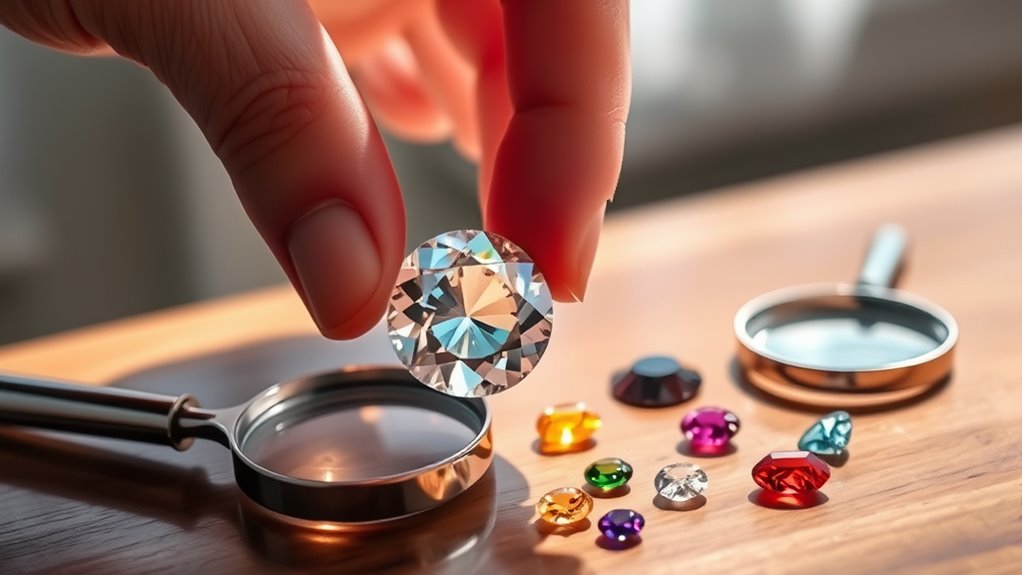
Although you can learn a lot by examining a gemstone with the naked eye, using a loupe lets you see tiny inclusions that reveal its true nature. Inclusions are natural imperfections like crystals, feathers, or gas bubbles trapped inside the gem.
Different inclusion types can indicate whether a gemstone is natural or synthetic. For example, natural stones often have irregular inclusions, while synthetic gems tend to show curved growth lines or gas bubbles.
Inclusion types reveal a gem’s origin: irregular for natural, curved lines or bubbles for synthetic.
By spotting these details, you can better assess gemstone clarity, a key factor in value and authenticity. Keep in mind that flawless stones are rare; some inclusions actually confirm a gem’s natural origin.
Using a loupe helps you identify these subtle clues, so you can confidently determine if a gemstone is genuine.
Feel the Weight: How Density Reveals a Real Gem
Once you’ve inspected a gemstone under a loupe, the next step is to feel its weight. Real gemstones have specific densities that set them apart from imitations. You can perform a simple weight comparison by holding the stone and comparing it to a similar-sized piece you know is genuine.
If it feels unusually light, it might be a fake or treated. For a more precise check, use a density measurement: weigh the gemstone in air, then in water, and calculate its density using the formula density = weight in air / (weight in air – weight in water). This method helps confirm if the stone matches the expected density of the genuine gem.
Trust this tactile test as a reliable step before moving on to other authenticity checks.
Test Gemstone Hardness With Simple Tools at Home
You can easily test a gemstone’s hardness at home using just a few simple tools. The scratch test is a straightforward way to check if your gem matches its expected hardness on the Mohs scale.
Grab household items like a steel nail, glass, or a copper coin. Each has a different hardness level. Gently try to scratch the gemstone’s surface with these items.
If the item scratches the stone, your gem is softer than the tool. If it doesn’t, the stone is harder or equal in hardness. For example, quartz won’t scratch from a steel nail but might scratch glass.
Remember to test in an inconspicuous spot to avoid visible damage. This simple scratch test helps you quickly assess your gemstone’s authenticity.
Verify Gemstone Certification and Provenance Before Buying
Before you invest in a gemstone, make certain it comes with proper certification and a clear provenance. Certification from reputable labs confirms the gemstone grading, verifying authenticity, quality, and treatments.
Without this, you risk buying a fake or lower-grade stone. Always ask for documents that detail the gemstone’s origin and grading report to guarantee transparency.
Risk buying fake or low-quality stones without proper origin and grading documents to ensure transparency.
Be cautious about purchase sources; reputable dealers provide certification willingly and have a trustworthy history. If a seller hesitates or can’t provide proof, walk away.
Checking certification and provenance not only protects your investment but also gives you confidence in what you’re buying. Don’t skip this step; it’s essential for distinguishing real gemstones from imitations and securing a genuine, valuable piece.
Frequently Asked Questions
Can UV Light Help Identify Synthetic Gemstones?
Yes, UV light can help you distinguish synthetic vs. natural gemstones by revealing their fluorescence characteristics. When you shine UV light on a gemstone, natural stones often fluoresce differently compared to synthetic ones.
This difference in glow or color helps you spot fakes. However, it’s not foolproof since some synthetics mimic natural fluorescence closely. So, use UV light as one tool among others for identifying real gems.
How Does Thermal Conductivity Indicate Gemstone Authenticity?
Thermal conductivity varies wildly between real and fake gems, so it’s a powerful clue for gemstone authenticity. Diamonds, for example, conduct heat much faster than glass or cubic zirconia.
When you touch a thermal conductivity tester to a stone, a quick heat transfer suggests it’s genuine. In contrast, fake gems trap heat, showing slower conduction.
Are Gemstone Treatments Like Dyeing Detectable at Home?
Yes, you can often detect gemstone treatments like dyeing at home with careful observation. Look for uneven color patches or unnatural hues, which are clues for dye identification. Treatment effects might include color concentrations in cracks or surface spots.
Using a magnifying glass and a bright light helps spot these inconsistencies. While home methods give hints, professional testing provides a definite answer on treatments and authenticity.
What Role Does Refractive Index Play in Gem Identification?
Refractive index is like a magical compass from the Renaissance guiding you through gemstone identification. It measures how light bends inside a gem, affecting light dispersion and sparkle.
When you check a stone’s refractive index, you can distinguish between similar-looking gems and assess gemstone clarity. This helps you spot fakes or treated stones, making refractive index essential for anyone serious about verifying a gem’s authenticity.
Can a Magnet Test Differentiate Real Gemstones?
You can use a magnet test, but it’s limited in effectiveness. The magnet strength matters because only certain gemstone types, like those with iron content, will react. For example, some garnets or magnetite-based stones might attract a strong magnet, while diamonds or sapphires won’t.
Keep in mind, many real gemstones are non-magnetic, so this test alone won’t definitively tell if your gemstone is authentic or fake.
Conclusion
When you hold a gemstone, think of it as a story captured in light and time. By examining its colors, weight, and tiny imperfections, you’re uncovering the gem’s true essence, like reading the rings of a sturdy oak tree.
Trust the tools and certifications as your compass, guiding you through the forest of imitations. With these tips, you’ll confidently spot the real treasure shining beneath the surface.
Knowing how to tell if gemstones are real helps you appreciate their beauty and value with certainty.