5 Factors That Affect How Much a 13 Carat Diamond Ring Costs
Shopping for a 13 carat diamond ring can feel overwhelming, especially when you’re trying to understand why prices vary so much. You’re not alone—many people struggle with figuring out what really affects the cost of such a significant purchase. Knowing what to look for can help you make a confident choice without breaking the bank.
When you shop for a 13 carat diamond ring, several key factors drive the cost. The large carat weight makes the diamond rare and pricey, but cut quality also plays a big role by maximizing sparkle.
Clarity and color impact brilliance and value, while the setting and metal choice affect style and labor costs. Finally, the brand’s reputation can add a premium for exclusivity.
Investigate these elements to see how they shape the final price.
Key Takeaways
- Larger carat weight increases rarity and price non-linearly, making 13 carat diamonds significantly more expensive.
- Superior cut quality maximizes brilliance and greatly impacts the diamond’s value.
- Higher clarity and color grades enhance appearance and raise the diamond’s cost.
- Intricate setting designs and choice of precious metals add to overall ring price.
- Brand reputation influences price through perceived exclusivity and craftsmanship.
How Carat Weight Drives the Price of a 13 Carat Diamond Ring
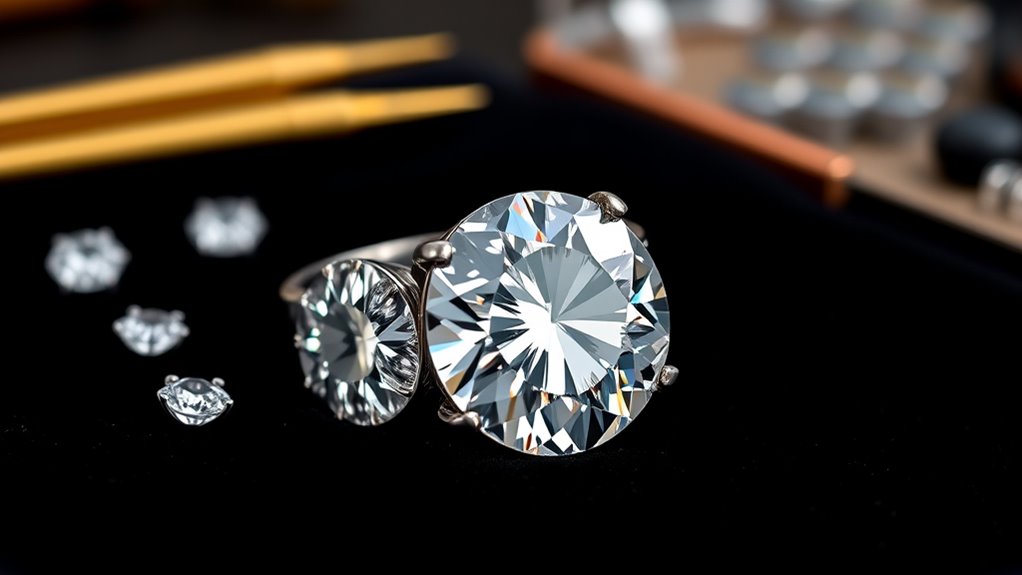
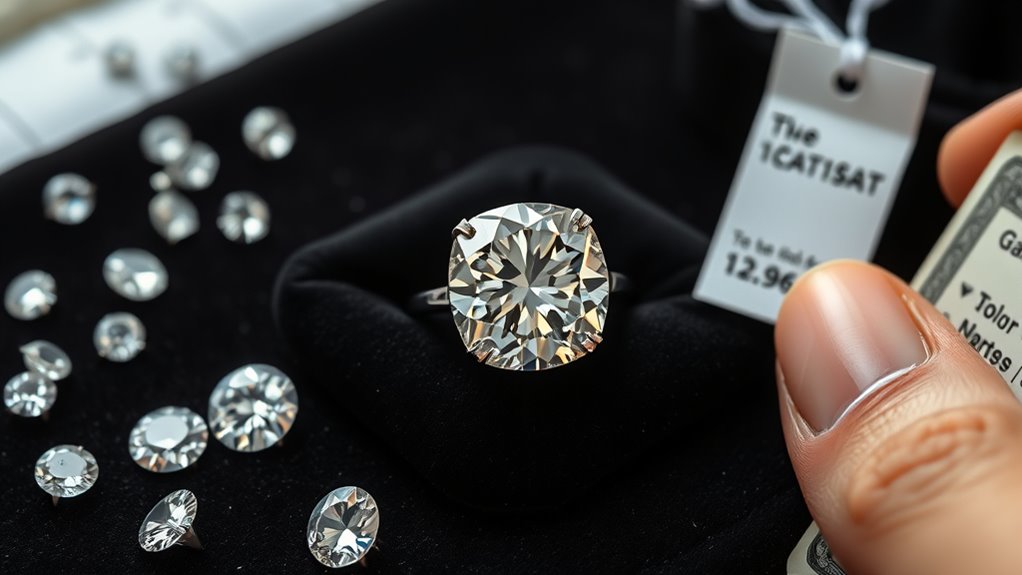
When you look at a 13 carat diamond ring, the sheer size immediately impacts its cost. Larger diamonds like this are rare, so their carat weight considerably drives the price up.
You should also consider that a diamond of this size demands exceptional cut quality to maximize its brilliance, which adds to the cost. Market demand plays a big role too. 13 carat diamonds are highly sought after for their impressive presence, pushing prices higher.
As carat weight increases, the price per carat doesn’t just rise linearly; it spikes because fewer large diamonds exist. So, when you’re shopping for a 13 carat ring, keep in mind that the size itself, combined with cut quality and market demand, largely determines what you’ll pay.
How Your Diamond’s Cut Affects Its Price and Sparkle
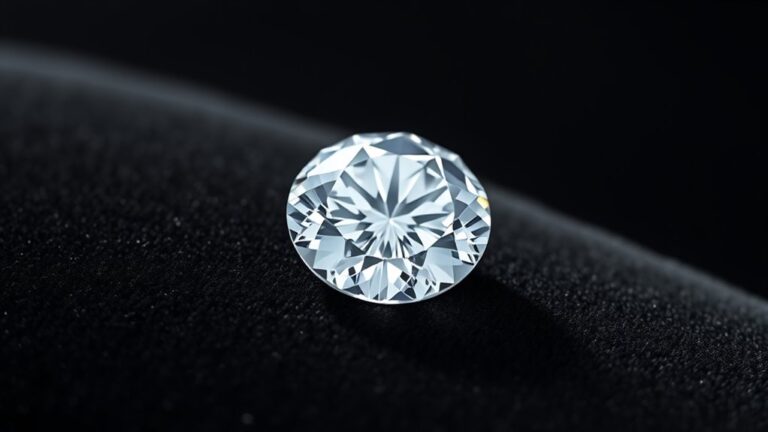
Since the cut determines how light interacts with your diamond, it directly influences both its sparkle and price. A well-cut diamond maximizes the brilliance factor, making your 13 carat stone dazzle brilliantly. The cut’s quality depends on several key aspects you should consider:
The cut shapes light’s dance within your diamond, boosting its sparkle and value brilliantly.
Ideal Proportions: These guarantee your diamond reflects light at its best, enhancing its sparkle.
Facet Arrangement: The precise alignment and number of facets impact how light disperses, affecting overall brilliance.
Light Performance: This measures how effectively your diamond returns light to your eye, influencing both appearance and value.
Why Clarity and Color Matter When Buying a 13 Carat Diamond
Beyond cut, clarity and color play significant roles in determining the beauty and value of your 13 carat diamond. When choosing your diamond, you’ll want to pay close attention to clarity grades, which measure the presence of internal flaws or inclusions.
Higher clarity grades mean fewer imperfections, resulting in a cleaner, more brilliant stone. At this size, even small inclusions can impact appearance and price.
Similarly, the diamond’s position on the color spectrum affects its overall look. Diamonds range from colorless to light yellow or brown, with colorless stones being rarer and more valuable.
Selecting a diamond closer to the colorless end guarantees your 13 carat gem shines with maximum brilliance and elegance, making clarity and color essential factors in your buying decision.
How Setting and Metal Affect a 13 Carat Diamond Ring’s Cost
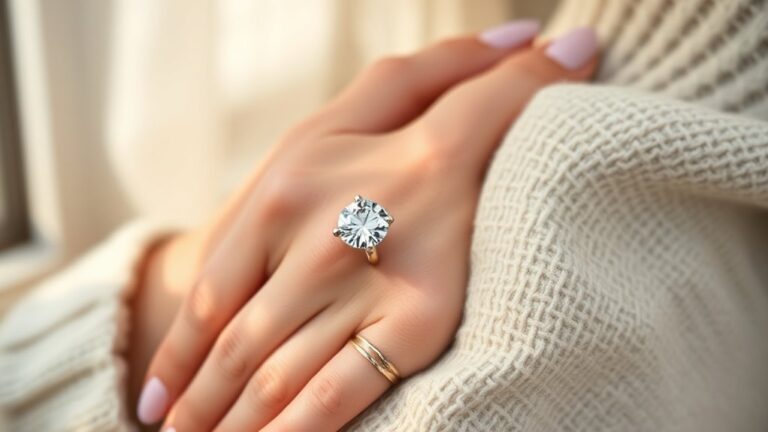
Although the diamond itself commands attention, the setting and metal you choose can greatly influence your 13 carat ring’s overall cost. Different setting styles and metal types not only affect the look but also the price. For example:
Setting styles: Intricate designs like pavé or halo require more craftsmanship, raising costs, while simpler solitaires tend to be less expensive.
Metal types: Platinum, known for its durability and rarity, usually costs more than gold or silver.
Customization: Personalized engravings or unique settings add to labor expenses.
How Brand Reputation Influences 13 Carat Diamond Ring Pricing
Perception plays a huge role in how much you’ll pay for a 13 carat diamond ring. When you choose a brand with a strong reputation, you’re not just buying a ring; you’re investing in the luxury perception that brand has built over time.
Established brands use marketing strategies that highlight exclusivity, craftsmanship, and heritage. This can greatly increase the ring’s price. You’ll find that these brands often command higher prices because their name adds perceived value beyond the diamond’s physical quality.
On the other hand, lesser-known brands might offer similar diamonds at lower prices but without that added prestige. So, if you value brand reputation, expect to pay more for that sense of trust and status that comes with a well-known name.
Frequently Asked Questions
How Does Diamond Certification Impact the Price of a 13 Carat Ring?
Diamond certification directly impacts your 13 carat ring’s price by verifying its cut quality and clarity grade. When you have a certified diamond, you’re assured of its true value, which often commands a higher price.
Without certification, you might pay less but risk overpaying for lower quality. Certification lets you confidently compare diamonds, ensuring your investment matches the cut quality and clarity grade you want in your ring.
Are Lab-Grown 13 Carat Diamonds Cheaper Than Natural Ones?
Yes, lab-grown 13 carat diamonds are generally cheaper than natural ones. When you compare pricing, lab-grown diamonds offer significant benefits like ethical sourcing and environmental friendliness, which can lower costs.
Because they’re created in controlled environments, you avoid the rarity premium natural diamonds carry. So, if you want a big, beautiful diamond without the steep price, lab-grown options are a smart, budget-friendly choice that doesn’t compromise on quality.
What Is the Typical Resale Value of a 13 Carat Diamond Ring?
The typical resale value of a 13 carat diamond ring is often lower than its original purchase price. When you sell, the resale market usually offers 30-60% of the retail value.
Getting a professional diamond appraisal helps you understand the ring’s worth accurately. Keep in mind, resale prices vary based on demand, diamond quality, and market trends. So, you’ll want to research and compare offers before deciding to sell.
How Do Market Trends Influence the Cost of Large Diamond Rings?
Market trends directly impact the cost of large diamond rings because when market demand increases, prices usually go up. You’ll notice rarity factors play a big role too; if large diamonds become harder to find, their value spikes.
Can Insurance Costs Affect the Overall Price of a 13 Carat Diamond Ring?
Insurance premiums can quietly tip the scales of your 13 carat diamond ring’s total cost. Think of them as the safety net beneath your dazzling treasure, shaped by valuation factors like clarity, cut, and market value.
While the ring’s price shines upfront, these ongoing insurance costs add a steady glow to your expenses, ensuring your investment stays protected without dimming your sparkle.
Conclusion
Think of buying a 13 carat diamond ring like crafting a symphony. Each factor, from carat weight to brand, plays its unique note. Just like a conductor balances instruments for perfect harmony, you balance cut, clarity, setting, and reputation to find the right price.
Remember, a stunning diamond isn’t just about size; it’s about how all these elements come together to create your perfect sparkle. Your dream 13 carat diamond ring awaits its perfect song.