6 Key Factors That Determine How Much a 4 Carat Diamond Costs
Trying to find the perfect 4 carat diamond can feel overwhelming. You want to make a smart investment, but with so many factors affecting price, it’s easy to get confused. You’re not alone—many people struggle to understand what really drives the cost of these stunning gems.
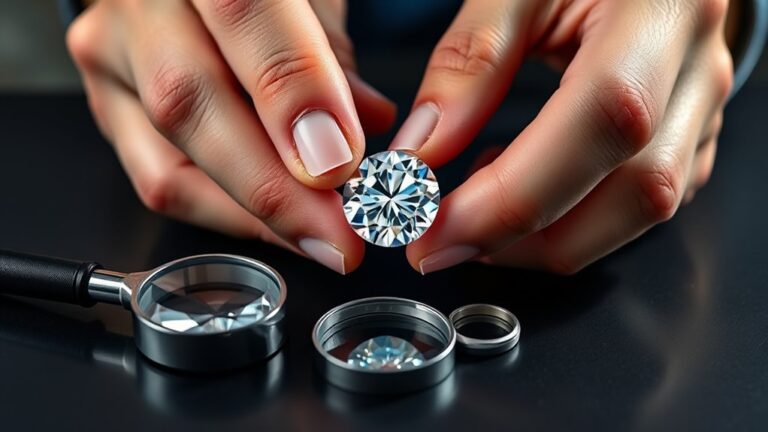
When buying a 4 carat diamond, you’re paying for more than just weight. Cut quality and shape affect sparkle and demand, while color grades from D to Z influence price considerably.
Clarity plays a big role, with flawless diamonds commanding top dollar. Certification from labs like GIA guarantees authenticity, and brand reputation can boost value further.
Understanding these six factors helps you get the best value. Keep exploring to see how each one shapes the diamond’s cost.
Key Takeaways
- Carat weight heavily influences price but is just one part of the overall value equation for a 4 carat diamond.
- Cut quality affects sparkle and price. Premium cuts command higher prices because they perform better with light.
- Color grade ranges from D (colorless) to Z (light hue) and significantly impacts cost. Higher grades usually fetch premium prices.
- Clarity levels, from flawless to included, determine price based on visible flaws and overall diamond purity.
- Certification from reputable labs and brand reputation add value by ensuring authenticity and quality assurance.
Why Carat Weight Isn’t the Only Price Factor for 4 Carat Diamonds
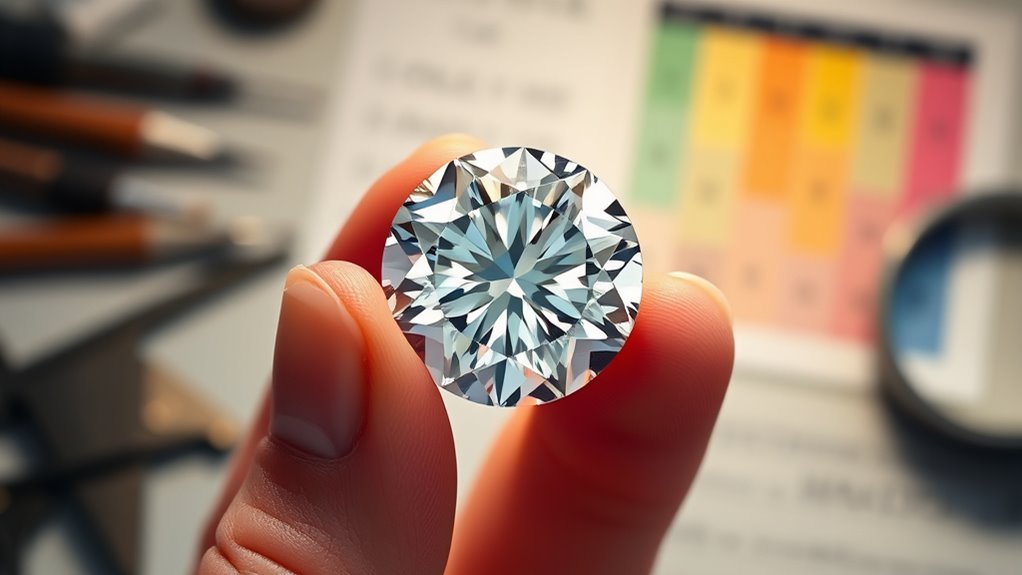
Although carat weight plays a big role in diamond pricing, it’s not the only factor that determines the cost of a 4 carat diamond. You might have heard carat misconceptions suggesting size alone sets the price, but diamond pricing factors go beyond weight.
Clarity, color, and overall quality greatly influence value. Even two diamonds with the same carat can differ vastly in price because of these elements.
When shopping, you should consider these details carefully, not just focus on the number. Understanding that carat is just one part of the equation helps you make smarter decisions and avoid overpaying.
How Cut and Shape Affect 4 Carat Diamond Prices
You’ll find that the cut of a 4 carat diamond really plays a big role in its sparkle and value. And it’s not just the cut—different shapes like round, princess, or emerald also impact the price. That’s mostly because some shapes are more popular and in higher demand than others. So, knowing how these factors work can help you make a smarter purchase.
Impact Of Diamond Cut
Every 4 carat diamond’s value is strongly influenced by its cut and shape, which determine how brilliantly it reflects light. When you choose a diamond, cut quality directly impacts its diamond brilliance. The better the cut, the more sparkle you’ll see.
A well-cut diamond maximizes light return, making your stone look more radiant and lively. On the other hand, a poor cut can dull even a large diamond, reducing its visual appeal and price. You should focus on cut grades like Excellent or Very Good to guarantee your diamond shines at its best.
Since the cut affects not only beauty but also perceived size, it plays a significant role in how much you’ll pay for a 4 carat diamond.
Popular Diamond Shapes
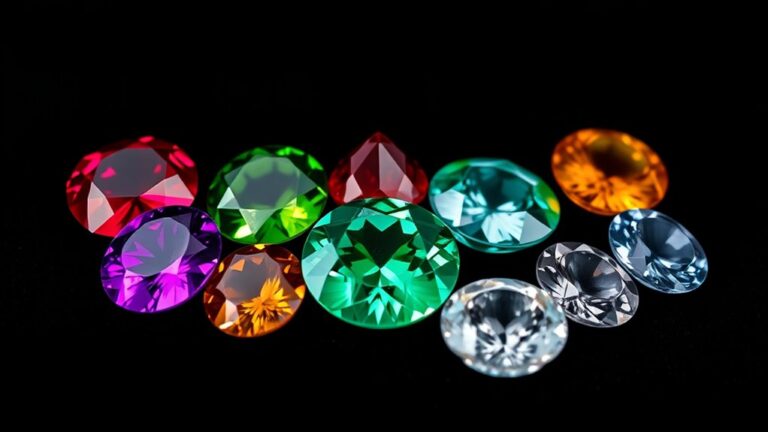
Diamond shape plays an essential role in determining the price of a 4 carat stone because it influences both appearance and demand. When you choose round diamonds, expect higher prices due to their classic brilliance and popularity.
Princess diamonds offer a modern square shape with sharp edges, often priced slightly less than rounds. Emerald cuts and radiant cuts provide unique light reflection; emerald cuts are elegant but can reveal inclusions, affecting cost, while radiant cuts combine sparkle with shape appeal.
Oval shapes and cushion shapes balance brilliance and size appearance, usually at moderate prices. Pear shapes and heart shapes are less common, which can make them pricier or more affordable depending on buyer interest. Your choice directly impacts value and visual impact.
How Color Grades Impact 4 Carat Diamond Pricing
You’ll notice a diamond’s color grade has a big impact on its price, especially when you’re looking at 4 carat stones. The color scale goes from D, which means completely colorless, all the way to Z, where you start seeing light yellow or brown tones. Prices can change quite a bit as you move along this spectrum. Knowing how these grades affect cost will definitely help you make a smarter purchase.
Color Grade Scale
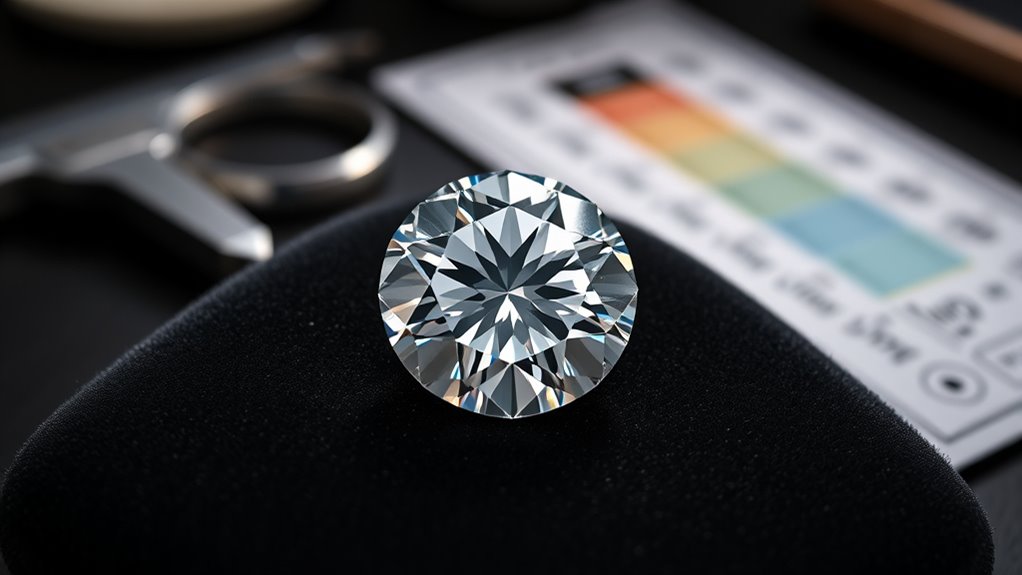
Color plays an essential role in determining the value of a 4 carat diamond, with subtle differences in hue considerably affecting price. When you investigate the color grade scale, you’ll find it ranges from D (colorless) to Z (light yellow or brown).
Diamonds graded closer to D have the highest value because their lack of color improves brilliance and visual appearance. As you move down the scale, slight tints become noticeable, which can reduce the diamond’s appeal and market value.
Understanding color grading helps you make an informed choice, especially with a large 4 carat stone where color differences are more apparent. By carefully selecting the right color grade, you guarantee your diamond looks stunning while fitting your budget.
Price Variation Effects
The subtle differences in hue you’ve learned about can lead to considerable price shifts, especially in a 4 carat diamond. Diamonds with higher color grades, like D or E, typically command premium prices because their rarity and brilliance attract buyers willing to pay more.
Market trends heavily influence these prices. During economic upswings, demand for top-tier color grades rises, pushing prices higher. Conversely, economic factors such as recessions can reduce demand, causing prices to stabilize or drop, even for high-quality stones.
As you investigate purchasing a 4 carat diamond, keep in mind that small changes in color grade impact value considerably. Understanding how market trends and economic factors affect pricing helps you make smarter decisions and find a diamond that balances beauty and cost effectively.
How Clarity Influences the Value of a 4 Carat Diamond
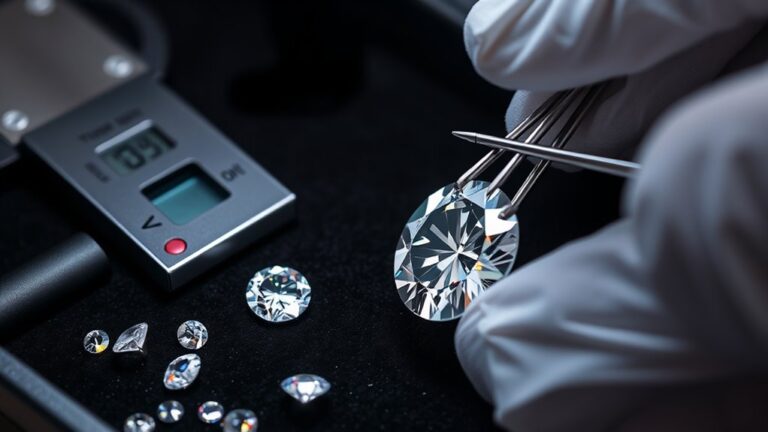
Although carat weight importantly impacts a diamond’s price, clarity plays a comparably important role, especially for a 4 carat stone. When you consider clarity grading, you’ll see it categorizes diamonds based on the presence of internal flaws or inclusions and external blemishes.
Different clarity types affect both appearance and value. For a 4 carat diamond, small differences in clarity can mean big price changes. Here’s what you should know:
- Flawless and Internally Flawless diamonds have no visible inclusions, commanding the highest prices.
- Very Slightly Included (VS1, VS2) grades mean minor imperfections that are hard to see, offering good value.
- Included (I1, I2, I3) clarity types have noticeable flaws, greatly reducing the price.
Understanding these clarity distinctions helps you make an informed choice.
How Certification Affects 4 Carat Diamond Prices
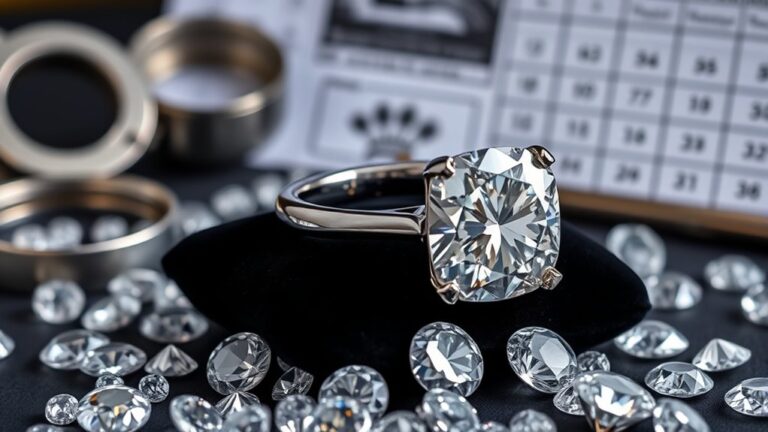
When you’re evaluating a 4 carat diamond, certification plays an essential role in determining its price and authenticity. Different certification types, such as GIA, AGS, and IGI, follow varying grading standards, which can impact the diamond’s value.
You’ll find that diamonds certified by reputable labs with strict grading standards typically command higher prices because their quality is verified and trusted. Certification also provides a detailed report on the diamond’s cut, clarity, color, and carat weight, helping you compare stones confidently.
Without proper certification, a diamond’s true quality remains uncertain, and its price might not reflect its actual worth. So, always prioritize diamonds with reliable certification types to guarantee you’re paying a fair price for a genuine 4 carat diamond.
Why Brand Reputation Can Change the Cost of 4 Carat Diamonds
Because brand reputation reflects quality and trust, it can greatly influence the price you pay for a 4 carat diamond. When you choose a well-known brand, you often pay a premium due to established brand loyalty and perceived assurance of superior craftsmanship. Market trends also play a role, as popular brands tend to set higher price points that others follow.
Brand reputation shapes the price of a 4 carat diamond through trust, loyalty, and market influence.
Here’s how brand reputation affects cost:
- Premium Pricing: Trusted brands charge more because buyers associate them with consistent quality.
- Resale Value: Strong brand names maintain or increase diamond value over time.
- Market Demand: Brands aligned with current market trends attract more buyers, pushing prices up.
Frequently Asked Questions
How Does Diamond Fluorescence Affect the Price of a 4 Carat Diamond?
Diamond fluorescence can impact the price of a 4 carat diamond by affecting its appearance under certain lighting. If you pick a diamond with strong fluorescence, it might appear hazy or oily, which can lower its value.
However, in some cases, fluorescence can make lower color grades look whiter, potentially increasing its appeal. Understanding fluorescence impact alongside color grading helps you make a smarter purchase decision and get the best value for your investment.
Are There Seasonal Trends in Diamond Pricing?
You’d think diamond prices skyrocket like a rocket during certain times, and you’re right! Seasonal trends do exist, especially during holiday demand spikes and wedding season peaks.
Around December and spring, more people shop for diamonds, driving prices up. If you’re hunting for a 4 carat diamond, buying outside these busy times might save you a pretty penny.
Timing your purchase can seriously impact what you pay!
How Do Market Fluctuations Impact 4 Carat Diamond Costs?
Market fluctuations directly impact how much you’ll pay for a 4 carat diamond because changes in market demand cause price volatility. When demand spikes, prices tend to rise quickly, and when demand drops, prices fall.
You’ll notice this especially in larger diamonds like 4 carats, which are less common and more sensitive to shifts. Staying informed about market trends helps you time your purchase to avoid paying more than necessary.
Can Custom Settings Influence the Overall Price of a 4 Carat Diamond?
Yes, custom settings can definitely influence the overall price of a 4 carat diamond. When you choose a custom design, you’re often paying for unique craftsmanship tailored to your preferences.
Plus, the setting materials you pick, like platinum or gold, also affect the cost. High-quality metals or intricate designs generally raise the price, so your custom setting choices play a big role in the final amount you’ll spend.
What Role Does Diamond Origin or Ethical Sourcing Play in Pricing?
You’d think a diamond’s origin wouldn’t matter, but ironically, it does a lot for the price. When you choose ethical sourcing, you’re paying for peace of mind and diamond certification that proves it’s conflict-free.
Jewelers know transparency matters, so ethically sourced diamonds often cost more because you’re not just buying sparkle, you’re investing in responsibility. So, if you want your 4 carat diamond with a clear conscience, expect that to reflect in the price.
Conclusion
When shopping for a 4 carat diamond, keep in mind that carat weight is just one piece of the puzzle. Did you know that a slight difference in color grade can change the price by up to 20%? That’s a big impact!
By paying attention to cut, clarity, certification, and brand reputation, you’ll make a smarter choice. So, don’t just focus on size. Consider all factors to find the perfect diamond that fits your budget and style when buying a 4 carat diamond.