
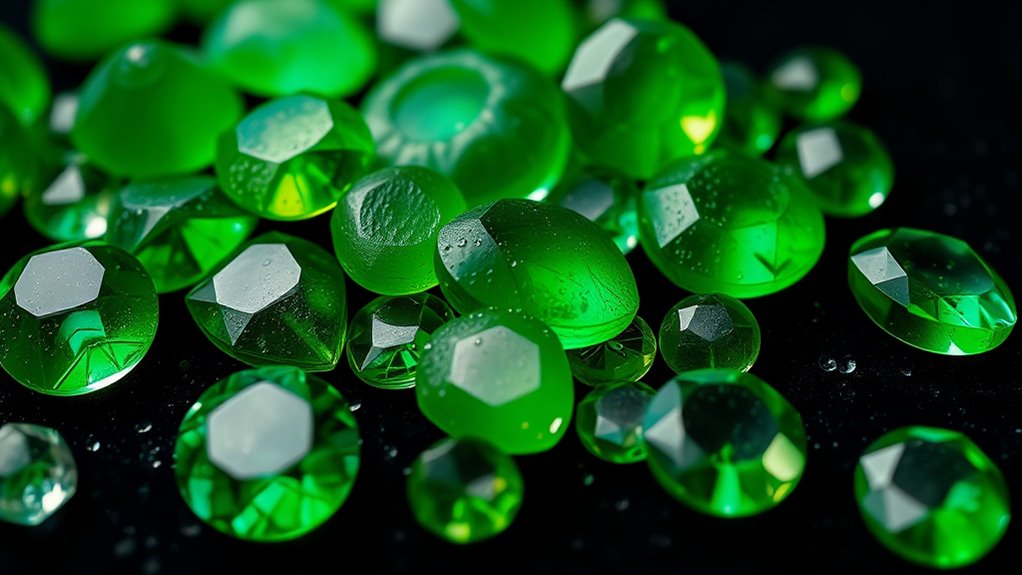
What Are Green Gemstones Called?
Finding the perfect green gemstone can feel overwhelming, especially with so many options out there. If you’ve ever struggled to understand the differences or to pick the right one, you’re not alone. Many people want a stone that not only looks beautiful but also carries special meaning and value.
Green gemstones are called by names like emeralds, peridots, jade, and green tourmalines, each known for their unique shades and meanings. You’ll find emeralds symbolizing rebirth, peridots representing strength, and jade standing for harmony.
Green sapphires and garnets add variety with their brilliance and rarity.
These stones not only look stunning but also carry healing and protective properties. If you want to uncover what makes each gem special and valuable, there’s much more to investigate.
Key Takeaways
- Green gemstones are minerals known for their green hues, including varieties like emerald, peridot, jade, tourmaline, and garnet.
- Emeralds are famed green gemstones symbolizing rebirth and love. They’re recognized by their rich green color and natural inclusions called “jardin.”
- Peridot is a consistent olive-green gemstone valued for strength and protection. It originates from Earth’s mantle and even from space.
- Jade ranges from pale to deep green and symbolizes harmony and balance. Its colors are influenced by chromium and iron content.
- Tsavorite garnet and green sapphires are notable green gemstones. They’re prized for their vivid colors and durability in jewelry.
What Are Green Gemstones? An Introduction
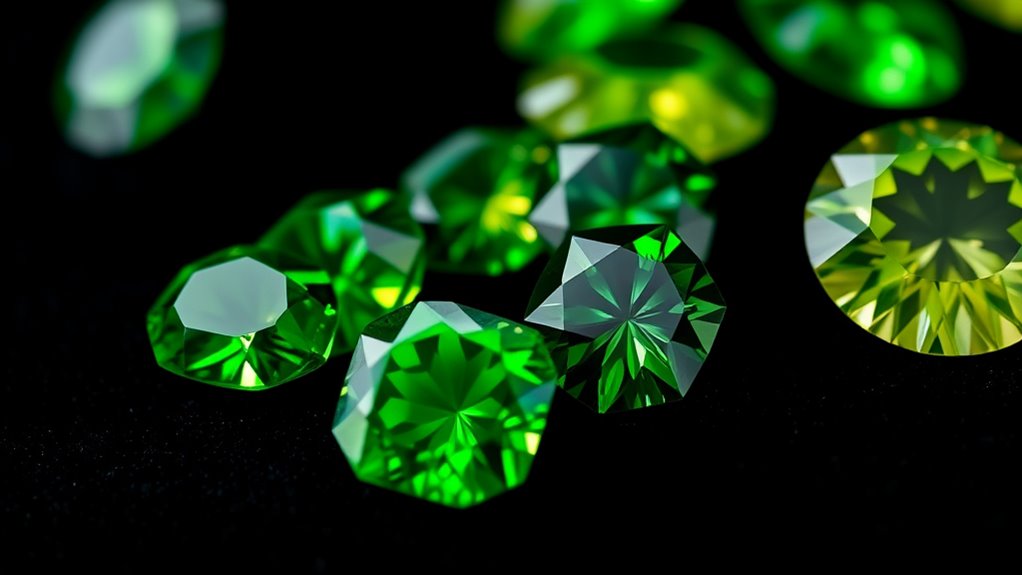
Green gemstones enchant with their vibrant hues and natural beauty. When you investigate green gemstone varieties, you’ll find a diverse range of stones, each with unique shades and characteristics.
These gems aren’t just visually stunning; many carry powerful healing crystal properties that people have valued for centuries. You can use green gemstones to promote balance, growth, and emotional calm, tapping into their natural energy.
Whether you’re drawn to their color or their metaphysical benefits, understanding what green gemstones are helps you appreciate their role beyond beauty. As you uncover more about these stones, you’ll notice how their healing properties connect with nature’s energy, enhancing your well-being and grounding your spirit.
The Most Popular Green Gemstones: Names & Types
Although many gemstones display stunning colors, few enchant quite like emeralds, peridots, and jade. These green gemstone varieties stand out not only for their beauty but also for their rich green gem symbolism.
Emeralds symbolize rebirth and love, making them a timeless choice. Peridots, with their vibrant lime-green hue, represent strength and protection. Jade, deeply cherished in many cultures, embodies harmony and balance.
Besides these, you’ll find other popular green stones like tsavorite garnet and green tourmaline, each with unique shades and meanings. When you investigate green gemstones, you’re diving into a world full of history, meaning, and natural wonder.
Understanding these popular names and types helps you appreciate their significance and allure even more.
How to Identify Green Gemstones
How can you tell one green gemstone from another? Start by examining gemstone clarity. Some stones have visible inclusions, while others appear nearly flawless. Next, consider color grading. Subtle differences in hue, tone, and saturation can help you distinguish between varieties.
You should also look at the gem’s cut and shape since certain cuts improve a stone’s natural brilliance. Finally, test hardness or consult a gemologist for specific gravity and refractive index measurements.
- Assess gemstone clarity for inclusions or transparency
- Evaluate color grading focusing on hue and saturation
- Note the gem’s cut and shape for characteristic brilliance
- Use hardness and refractive index tests for precise ID
Following these steps will help you confidently identify green gemstones.
What Makes Emeralds the Iconic Green Gemstone?
You’ll notice emeralds really stand out with their rich green hue—that vibrant color is truly unmatched. It’s no wonder they’ve enchanted people for centuries, becoming a symbol of luxury and elegance. So, let’s take a closer look at what else has made emeralds so iconic throughout history and culture.
Rich Green Hue
The rich green hue of emeralds enchants anyone who sees them, making these gemstones instantly recognizable. You’ll notice their vibrant hues and lush tones set emeralds apart from other green gemstones. Their deep greens come from trace amounts of chromium and vanadium, giving each stone a unique shade.
When you admire emerald shades, you also appreciate the natural brilliance that comes with high color saturation. However, gemstone clarity can vary, often showing inclusions known as “jardin,” which add character without diminishing beauty.
- Rich green tones with vivid color saturation
- Vibrant hues blending blue and yellow undertones
- Lush tones that evoke nature’s deepest greens
- Natural brilliance improved by gemstone clarity variations
This rich green hue is what makes emeralds truly iconic.
Historical And Cultural Significance
Since ancient times, emeralds have fascinated civilizations with their striking green color and symbolic meaning. You’ll find that many cultures valued emeralds for their healing properties and association with fertility and rebirth.
Ancient uses included adornments for royalty and talismans believed to protect against evil. Cultural beliefs held that emeralds brought wisdom, patience, and augmented intuition. When you wear or admire emeralds, you connect with this rich heritage that spans continents and centuries.
Their vivid green hue made them a symbol of eternal life and prosperity in many societies, from the Egyptians to the Incas. Understanding this history helps you appreciate why emeralds remain the iconic green gemstone, cherished not only for their beauty but also their deep cultural significance.
Why Are Peridots So Unique Among Green Gems?
What makes peridots stand out among green gemstones? You’ll find that peridots have a unique charm rooted in their peridot significance and peridot origins. Unlike many gems formed deep within the Earth’s crust, peridots come from the mantle and even outer space, making their story fascinating.
Peridots captivate with their unique origins from Earth’s mantle and even outer space, setting them apart from typical gemstones.
When you wear or see a peridot, you’re witnessing a gem with a distinct olive-green hue that rarely fades.
Here’s why peridots are so unique:
- Formed in volcanic rocks and sometimes delivered by meteorites
- Display a consistent, vibrant green without secondary colors
- Have been treasured since ancient times for their protective symbolism
- Are one of the few gemstones that come in only one color variety
This combination of origin, color, and history makes peridots truly special.
How Green Tourmalines Stand Out Among Green Gemstones
When you investigate green gemstones, green tourmalines catch your eye with their remarkable range of shades and striking brilliance. Unlike many other green gems, tourmaline varieties offer hues from pale mint to deep forest green, giving you plenty of options.
You’ll also appreciate their excellent gem clarity, often exhibiting fewer inclusions than comparable stones. This clarity boosts their sparkle and makes each gem distinctly vibrant.
Furthermore, green tourmalines tend to have a lively, almost electric quality that sets them apart from softer greens like peridot or jade. If you want a green gemstone that combines versatility, clarity, and dazzling color, green tourmalines stand out as a top choice among green gemstones.
Green Sapphires: Key Characteristics
When you look at green sapphires, you’ll notice they come in a variety of shades—from pale mint to deep forest green. It’s pretty amazing how many different tones there are. Plus, they’re not just about looks; their durability is impressive too. That means they’re perfect for everyday jewelry. So, let’s dive into what makes these gemstones both beautiful and practical.
Color Variations
How do green sapphires stand out among other green gemstones? Their color variations offer unique appeal, ranging from pale mint to deep forest green. When you’re choosing a green sapphire, pay close attention to color intensity and gemstone clarity. These factors greatly influence the gem’s overall beauty and value.
Here’s what you should know about green sapphire color variations:
- Color intensity varies from subtle pastel to vivid green.
- Some stones show secondary hues like blue or yellow.
- High gemstone clarity guarantees fewer inclusions, enhancing brilliance.
- Color distribution can affect how evenly the green shade appears.
Durability and Uses
Although green sapphires share the same hardness as other sapphires, their exceptional durability makes them a fantastic choice for everyday wear. You’ll appreciate their resistance to scratches and chips, thanks to key durability factors like their tough crystal structure.
This strength means green sapphires can handle daily activities without losing their beauty. When considering gemstone applications, green sapphires are ideal for rings, bracelets, and pendants, pieces that face frequent contact.
Their durability guarantees they maintain brilliance over time, making them practical for both casual and formal jewelry. So, if you want a green gemstone that combines stunning color with long-lasting wear, green sapphires offer a reliable and versatile option perfect for your collection.
How Green Garnets Differ From Red Garnets
Even though both green and red garnets belong to the same mineral family, you’ll notice distinct differences in their color, chemical composition, and rarity. When you compare green garnet varieties to red garnet characteristics, the contrast becomes clear.
Green garnets, like tsavorite and demantoid, showcase vibrant green hues due to trace amounts of chromium or vanadium. Red garnets, more common, display deep red to reddish-brown colors caused by iron and manganese content.
You’ll also find green garnets generally rarer and more valuable than many red garnets.
- Green garnet varieties include tsavorite and demantoid.
- Red garnet characteristics often feature a deeper red tone.
- Chemical elements vary, affecting color and value.
- Green garnets tend to be rarer and pricier than red garnets.
Why Jade and Chrysoprase Are Special Green Gems
You’ll notice that jade and chrysoprase really stand out because of their unique green shades and rich histories. These gems have been cherished for centuries—not just for their beauty, but also for their healing powers. So, let’s dive in and see what makes them truly special.
Unique Color Characteristics
When you look closely at jade and chrysoprase, you’ll notice their green hues stand out because of unique chemical compositions and formation processes. Jade’s rich, often translucent green comes from traces of chromium and iron, giving it a smooth, almost waxy appearance that symbolizes purity and serenity.
Chrysoprase, on the other hand, owes its bright apple-green color to nickel, making it rarer and prized for its vibrant glow.
Jade’s green varies from pale to deep emerald, reflecting its cultural color symbolism. Chrysoprase’s color is more uniform and intense due to nickel content.
Both gems’ rarity factors depend on the quality and saturation of their green tones. Their formation conditions influence the subtle differences in texture and hue.
These factors make both stones truly special in the world of green gemstones.
Historical Significance And Uses
Since ancient times, jade and chrysoprase have held significant cultural and practical value, making them more than just beautiful green gemstones. You’ll find jade deeply rooted in many cultures, especially in East Asia, where it symbolizes purity, protection, and status.
Historically, jade was carved into tools, ceremonial objects, and jewelry, reflecting its importance beyond aesthetics. Chrysoprase also carries rich historical uses, prized since antiquity for its vibrant apple-green color.
It symbolized hope and fertility in various cultures and was often used in signet rings and amulets. When you investigate these gems, you see how their cultural symbolism and historical uses make them special.
They connect you to the past, reminding you of the values and meanings ancient people treasured in green gemstones.
Healing Properties And Benefits
Although jade and chrysoprase have long held cultural significance, their healing properties make them truly special green gemstones today. When you use them in healing rituals, you tap into powerful gemstone energy that promotes balance and well-being.
Jade is known for fostering harmony and emotional release, helping you feel grounded and calm. Chrysoprase encourages joy and forgiveness, opening your heart to positive transformation. Including these stones in your daily routine can improve your mental and physical health.
- Jade supports emotional healing and stress relief
- Chrysoprase boosts optimism and reduces anxiety
- Both stones improve chakra alignment and energy flow
- They aid in opening the heart for compassion and love
How Color Affects Green Gemstone Value and Where to Find the Best Ones
Because color plays an essential role in determining a green gemstone’s value, you’ll want to understand how different hues, tones, and saturations affect their worth. The color intensity directly impacts a gem’s appeal. Vivid, rich greens typically fetch higher prices. Meanwhile, gemstone clarity also matters; gems with fewer inclusions let color shine through, boosting their value.
When shopping, look for stones with bright, evenly distributed green hues and excellent transparency.
As for sourcing, some of the best green gemstones come from locations like Colombia for emeralds, Brazil for tourmalines, and Russia for demantoid garnets. Each region offers unique color qualities, so consider origin alongside color and clarity to find the most valuable green gems for your collection.
Frequently Asked Questions
How Do I Care for and Clean Green Gemstones?
To care for and clean green gemstones, you should use gentle cleaning methods like warm soapy water and a soft brush. Avoid harsh chemicals and ultrasonic cleaners because they can damage some stones.
For gemstone maintenance, store them separately to prevent scratches and avoid exposure to extreme heat or sunlight. Regularly inspect your gemstones for chips or loose settings to keep them looking their best and sparkling beautifully.
Are Green Gemstones Believed to Have Any Healing Properties?
Yes, green gemstones are often believed to carry powerful healing energy that can help you feel balanced and rejuvenated. Many people use them to support chakra alignment, especially focusing on the heart chakra to promote emotional healing and harmony.
When you wear or meditate with these stones, you might notice a calming effect that encourages growth, renewal, and a deeper connection to nature’s restorative power.
Can Green Gemstones Be Used in Engagement Rings?
You absolutely can use green gemstones in engagement rings. They’re the ultimate showstoppers! Choosing alternative stones like emeralds or tsavorite has skyrocketed in engagement trends because they break tradition with bold, stunning color.
When you pick a green gem, you’re not just following a trend; you’re making a vibrant statement that’s distinctly yours. So, if you want a ring that’s unforgettable and full of life, green gemstones are your perfect choice.
What Is the History Behind Green Gemstone Symbolism?
Green gemstones have rich symbolism rooted in history. You’ll find emerald mythology linking this stone to fertility, rebirth, and love. It was often treasured by ancient Egyptians and Romans.
Jade traditions, especially in East Asia, regard jade as a symbol of purity, protection, and harmony. When you wear green gems, you tap into these powerful meanings. You connect with nature’s life force and ancient beliefs that have celebrated growth and balance for centuries.
How Do Synthetic Green Gemstones Compare to Natural Ones?
When you compare synthetic vs natural green gemstones, you’ll notice quality differences mainly in origin and price. Synthetic stones often look flawless and cost less since they’re lab-made, but they might lack the unique inclusions and rarity natural stones have.
Natural gemstones carry more value and character, but synthetic ones offer consistent quality and eco-friendly benefits. So, your choice depends on whether you prioritize authenticity or affordability.
Conclusion
Green gemstones are like nature’s whispers of renewal and growth, each one telling a unique story through its vibrant hues. Whether you’re drawn to the deep mystery of emeralds or the fresh glow of peridots, these gems symbolize life’s endless possibilities.
By learning to identify and appreciate their differences, you’re not just choosing a stone. You’re embracing a living symbol of hope, balance, and beauty that can brighten any moment. That’s what green gemstones are called—a celebration of nature’s vibrant spirit.