7 Factors That Determine How Much a Diamond Ring Will Cost
Finding the perfect diamond ring can feel overwhelming. You’re not alone if you’re unsure about what influences the price. Many people struggle with understanding how to balance quality and budget.
When you’re shopping for a diamond ring, seven key factors will influence the price. The origin of the diamond affects its cost, and carat weight plays a significant role too.
Cut quality impacts a diamond’s sparkle, while clarity and color greatly affect its value.
Also, consider whether you want a custom or pre-made ring, as that can change the cost.
Understanding these aspects helps you navigate your choices, and there’s more to investigate beyond this.
Key Takeaways
- Origin and Sourcing: Ethically sourced diamonds often come with a premium. Market demand influences prices, especially during holidays.
- Carat Weight: Price rises significantly with larger carat weights. This impacts visual appeal and perceived prestige.
- Cut Quality: A diamond’s cut affects its brilliance. Well-cut diamonds reflect light effectively, enhancing overall value.
- Clarity and Color: Higher clarity grades and rare color saturation increase a diamond’s visual appeal. This also raises its market price.
- Customization vs. Pre-Made: Custom rings typically cost more due to craftsmanship. Pre-made options are more budget-friendly but less personalized.
Key Factors in Diamond Pricing
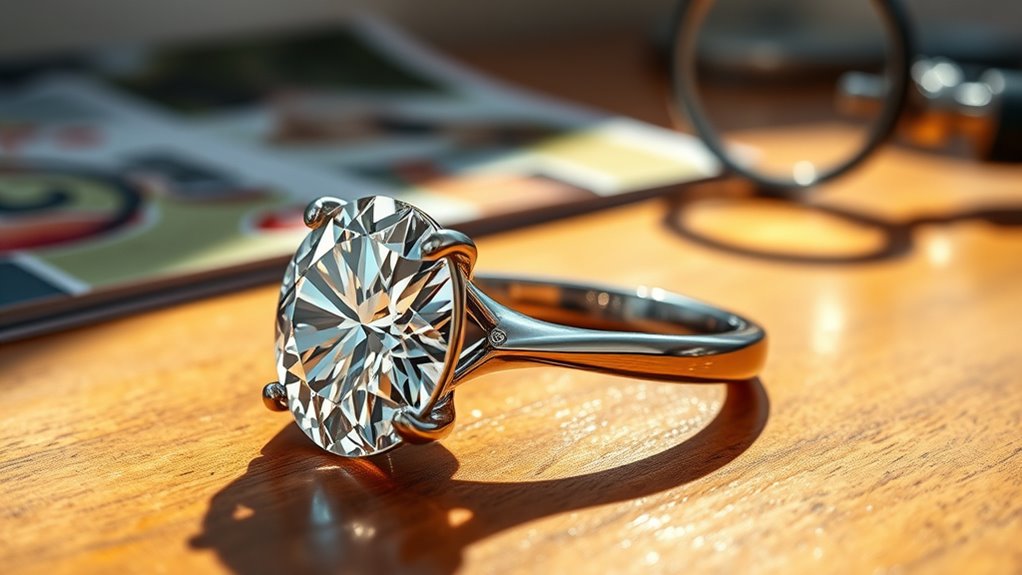
When you’re shopping for a diamond ring, understanding the key factors in diamond pricing can help you make an informed decision.
One major factor is diamond sourcing. The origin of a diamond affects its price greatly. Ethically sourced diamonds often come with a premium, reflecting their traceable backgrounds.
Moreover, market demand plays an important role. When demand surges, like during holidays or peak engagement seasons, prices typically rise. Conversely, during slower periods, you might find better deals.
It’s essential to stay informed about these trends and consider how they impact the cost of the diamond you’re eyeing. By being aware of sourcing and demand, you can navigate the market more effectively and find a ring that fits your budget.
Understanding Carat Weight and Its Impact
Carat weight is one of the most important factors affecting a diamond’s price. It often influences your decision when choosing a ring.
Understanding carat importance is essential since it directly impacts size perception. Here are four key points to take into account:
- Price Increase: As carat weight rises, prices typically increase greatly.
- Visual Impact: A larger carat weight can create a more striking appearance. However, it’s essential to balance size and quality.
- Perceived Value: Bigger diamonds often carry more prestige.
- Market Trends: Demand for larger stones can fluctuate, affecting overall pricing.
The Importance of Diamond Cut Quality
When you’re picking out a diamond, the cut quality is super important for getting that stunning sparkle. A well-cut diamond really knows how to reflect light, making it shine beautifully. On the flip side, if the cut is poor, you might find it doesn’t have that same dazzling effect.
Cut Grades Explained
Although many factors contribute to a diamond’s beauty and value, the cut quality often stands out as the most significant.
Understanding cut grades helps you navigate grading standards and their impact on value perception. Here are four key aspects to take into account:
- Brilliance Factors: A well-cut diamond reflects light beautifully, enhancing its sparkle.
- Grading Standards: Familiarize yourself with the grading scale (Excellent, Very Good, etc.) to assess quality accurately.
- Certification Importance: Always check for certification from reputable organizations to validate cut quality.
- Market Trends: Consumer preferences shift; staying updated can influence your purchase decision.
Expert opinions often emphasize that cut quality is essential in determining a diamond’s overall allure and market value.
Impact on Brilliance
Cut quality directly influences a diamond’s brilliance, making it an essential aspect of your selection process. The brilliance factors, including light performance and optical properties, determine how effectively a diamond reflects and refracts light.
High-quality cuts improve sparkle and fire dispersion, creating that dazzling visual appeal you desire. When evaluating a diamond, consider its symmetry. Well-proportioned facets guarantee ideal light return, improving viewer perception.
A diamond with poor cut quality may lack the brilliance you expect, appearing dull and lifeless. Conversely, a finely cut diamond captures and reflects light beautifully, elevating its overall allure.
Prioritizing cut quality ensures you choose a diamond that truly shines, delivering the sparkle improvement you want in your ring.
Value and Pricing Factors
The value of a diamond ring often hinges on its cut quality, which plays an essential role in determining its overall price. A well-cut diamond reflects light beautifully, increasing its appeal and worth.
Here are four key factors to take into account:
- Cut Grade: Higher grades indicate superior craftsmanship, impacting market trends.
- Shape: Popular shapes, like round or princess, typically hold more historical value.
- Proportions: Ideal proportions improve brilliance, making the diamond more desirable.
- Symmetry and Polish: Perfect symmetry and polish can greatly raise a diamond’s price.
Incorporating these aspects helps you understand pricing and ensures your investment aligns with both current market trends and timeless appeal.
How Clarity Affects Diamond Value
When evaluating a diamond’s value, clarity plays an essential role in determining its overall appeal and price. Clarity grades, ranging from Flawless to Included, directly affect the value you’ll find in a diamond.
Inclusions impact its visual appearance. Even small blemishes can influence buyer perceptions. When comparing diamonds, you’ll notice how grading scales reflect these differences, often leading to significant appraisal differences.
A diamond with higher clarity grades usually commands a premium. It appears more pristine and desirable. Understanding how clarity affects the diamond’s value can help you make an informed choice.
This ensures you find a piece that not only fits your budget but also meets your aesthetic expectations.
Why Color Matters When Buying Diamonds?
Clarity isn’t the only factor influencing a diamond’s value; color plays a significant role as well. Understanding color grading can help you make an informed choice that aligns with your preferences and budget.
Color significantly impacts a diamond’s value, making understanding color grading essential for informed and budget-friendly choices.
Here are four key aspects of why color matters:
- Diamond Hue: The hue affects overall visual appeal and how the diamond interacts with light.
- Color Rarity: Rare colors often command higher prices, so knowing what’s available is essential.
- Color Saturation: A diamond’s saturation can improve its beauty and emotional significance.
- Market Trends: Staying informed about buyer preferences can guide your selection. This ensures you choose a diamond that’s not just beautiful but also a smart investment.
Custom vs. Pre-Made Rings: Cost Considerations
Choosing between custom and pre-made rings can considerably impact your budget, especially since each option has distinct cost considerations.
Custom designs often come with a higher price tag due to the craftsmanship quality and time investment involved. You’re paying for the uniqueness factor that reflects your personal preferences.
In contrast, pre-made options can be more budget-friendly, offering a range of styles without the wait. However, they might lack that personal touch and uniqueness.
When thinking about resale value, custom rings can sometimes fetch a higher price, depending on their design and craftsmanship.
Ultimately, weigh your budget considerations against what feels right for you—whether it’s the individuality of a custom piece or the convenience of a pre-made option.
Other Considerations for Diamond Ring Pricing
While you might focus mainly on the diamond’s quality and design, several other factors notably affect the overall cost of a diamond ring. Here are some key considerations:
- Market Trends: Prices can fluctuate based on current demand and availability.
- Brand Reputation: Well-known brands often command higher prices due to their perceived value.
- Setting Materials: The choice of metals like gold, platinum, or silver affects costs considerably.
- Certification Importance: Rings with certified diamonds hold more value. They ensure quality and authenticity.
Additionally, consider your design preferences and size proportions. Ethical sourcing and potential resale value are also important. All these elements play an essential role in determining how much you’ll pay for that perfect ring.
Frequently Asked Questions
How Do Brand Names Influence Diamond Ring Pricing?
Brand names greatly influence diamond ring pricing due to their brand reputation and luxury perception.
When you choose a well-known brand, you’re often paying for the prestige that comes with it.
These brands invest in marketing and craftsmanship, which enhances their perceived value.
You’re not just buying a ring; you’re buying a status symbol.
Ultimately, the brand’s image can make a considerable difference in how much you’ll spend on a diamond ring.
What Is the Impact of Market Demand on Diamond Prices?
When demand spikes, diamond prices can soar, sometimes increasing by up to 20% in a single year.
This surge reflects diamond scarcity and shifts in consumer preferences.
If people suddenly favor larger or more unique stones, prices adjust accordingly.
You’ll notice that when a particular style gains popularity, it creates a ripple effect on the market.
Are There Seasonal Trends in Diamond Ring Purchases?
Yes, there are seasonal trends in diamond ring purchases. You’ll notice engagement spikes around holidays, especially during Christmas and Valentine’s Day when holiday proposals are popular.
Wedding seasons in spring and summer also drive up demand as couples shop for rings. Furthermore, anniversary trends can lead to increased purchases in late fall, as many celebrate milestones with significant upgrades or new rings.
Being aware of these patterns can help you make informed decisions.
How Do Ethical Sourcing and Certifications Affect Costs?
Imagine you’re a gardener, nurturing a rare flower. Ethical sourcing and certification processes for diamonds guarantee that your bloom thrives without harming the environment.
When you choose a ring with these credentials, you’re not just buying a gem; you’re investing in a story of responsibility. Higher consumer awareness often leads to increased costs, as you pay for the assurance that your diamond respects both people and the planet.
What Role Does the Retail Markup Play in Pricing?
Retail markup substantially impacts pricing by adding a percentage to the cost of the diamond ring.
When you shop, you’ll notice varying markups based on the retailer’s pricing strategies. High-end stores might charge more due to brand prestige, while others may offer lower prices to attract budget-conscious buyers.
Understanding these markups helps you gauge whether you’re getting a fair deal or if it’s inflated beyond the ring’s actual value.
Conclusion
When you’re diving into the dazzling world of diamond rings, remember these key cost components: carat, cut, clarity, and color.
Choosing between custom creations and pre-made pieces can also impact your budget.
By grasping these fundamental factors, you can confidently select a stunning sparkler that suits your style and savings.
So, whether you’re shopping for a special someone or yourself, keep these essential considerations in mind. This will help you make a sparkling selection when it comes to diamond rings!