What Are Pink Gemstones and How to Identify Them
Finding the perfect pink gemstone can feel overwhelming. You want something beautiful, authentic, and suited to your style, but with so many options, it’s easy to get confused. You’re not alone—many people struggle to identify the best pink gems that truly stand out.
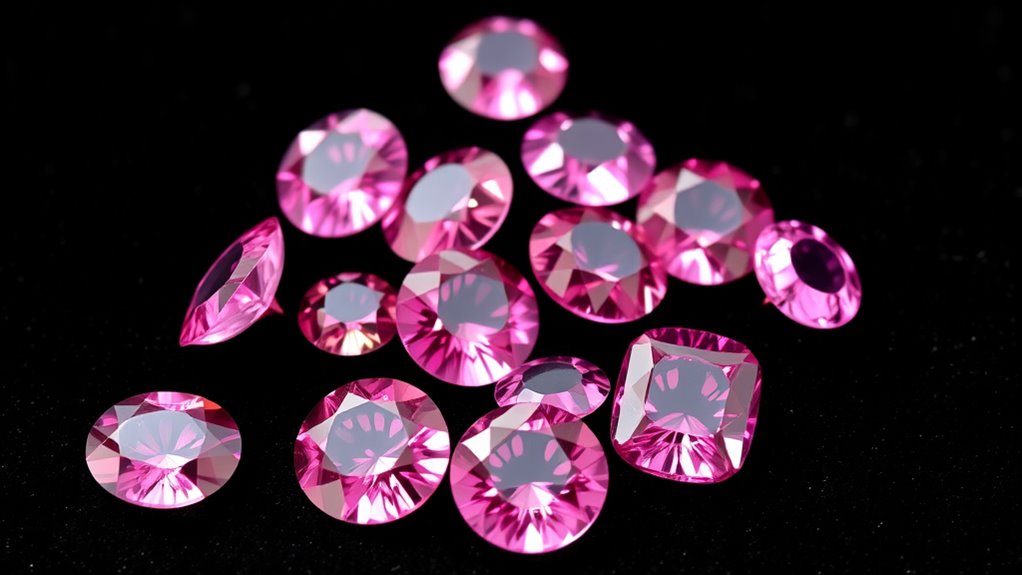
Pink gemstones include varieties like pink sapphire, morganite, rose quartz, and spinel, each with unique colors ranging from soft blush to vibrant magenta. You can identify them by their distinct hues, clarity, cut, and natural inclusions.
For example, pink sapphires are tough and often have subtle inclusions, while morganite shows soft pink tones with high clarity. Knowing their origins and characteristics helps you spot authentic stones.
Keep exploring to uncover how to pick the perfect pink gem for you.
Key Takeaways
- Pink gemstones include varieties like pink sapphire, morganite, rose quartz, and spinel, each with unique colors and symbolic meanings.
- Color shades range from soft blush to vibrant magenta, influenced by lightness, saturation, and undertones such as orange or purple.
- Clarity and cut significantly impact a gemstone’s brilliance. Well-cut stones reflect light to enhance color vibrancy.
- Identification involves recognizing hardness levels, optical properties, and typical inclusions specific to each pink gemstone type.
- Authenticity is confirmed through gemological tests and certificates verifying natural hues, inclusions, and origin by certified experts.
What Are Pink Gemstones?
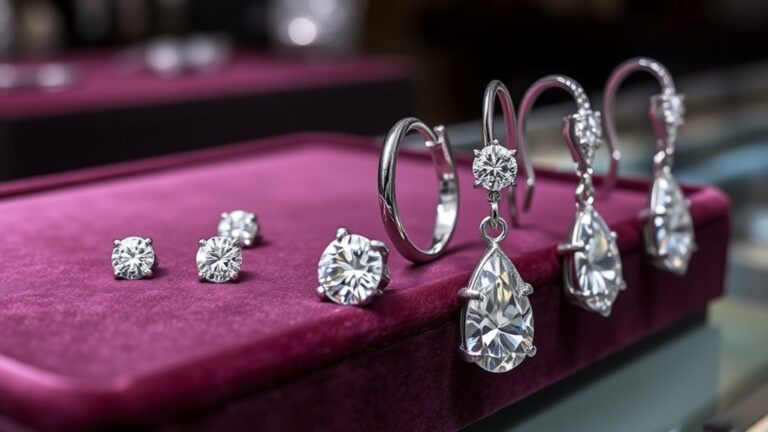
Pink gemstones are vibrant minerals that catch your eye with their charming hues. When you investigate pink gemstone varieties, you’ll uncover stones like pink sapphire, morganite, rose quartz, and spinel. Each offers unique shades and crystal structures that make them stand out.
You might be surprised to learn about their historical significance. Many cultures prized these stones for their beauty and symbolism. For example, pink sapphires were associated with love and protection, while rose quartz symbolized peace and healing.
Knowing what pink gemstones are helps you appreciate their value beyond just color. As you get familiar with these varieties, you’ll better understand why they remain treasured in jewelry and collections worldwide.
How to Recognize Color Variations in Pink Gemstones
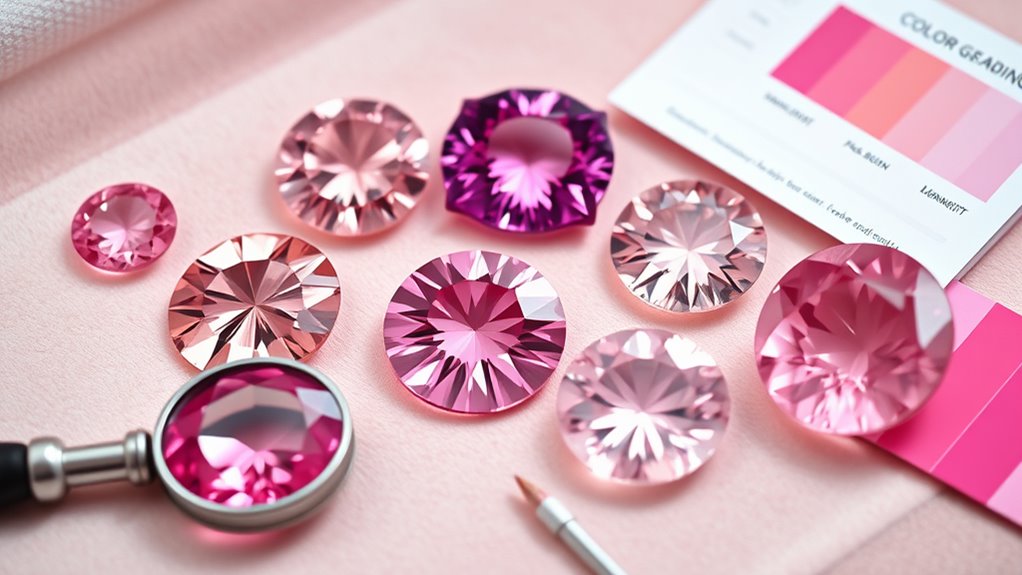
You’ll notice pink gemstones come in all sorts of shades and tones, which really change up their overall look. It’s helpful to pay attention to the lightness and saturation because these aspects affect whether the color feels vibrant or soft. Plus, even subtle shifts in hue can totally change the gemstone’s character, making each one feel unique.
Shades And Tones
Color plays an essential role in identifying and appreciating pink gemstones, as subtle differences in shades and tones can drastically affect their value and appeal. When you examine pink gemstones, you’ll notice a range from soft blushes to vibrant magentas, each carrying unique pink gemstone symbolism and cultural significance.
Lighter shades often evoke feelings of innocence and romance, while deeper tones suggest passion and strength. Recognizing these variations helps you appreciate a stone’s origin and rarity.
Pay attention to undertones. Some pinks lean toward orange, others toward purple or brown, which influence how the gem interacts with light and complements jewelry. By understanding shades and tones, you can confidently identify pink gemstones and connect with their deeper meanings beyond just their beauty.
Lightness And Saturation
Understanding the subtle differences in lightness and saturation can greatly improve your ability to distinguish between various pink gemstones. These factors play a key role in gemstone grading and directly affect the color intensity you observe.
When examining a pink gemstone, pay close attention to how light or dark it appears (lightness) and how vivid or muted its color seems (saturation).
To recognize these variations, consider the following:
- Notice if the gemstone feels pastel or rich in shade
- Check how much the color fades near edges
- Observe if the saturation remains consistent throughout
- Compare the gemstone’s brightness under different lighting
- Use gemstone grading charts to quantify color intensity
Mastering lightness and saturation helps you identify pink gemstones more accurately.
Hue Influences
How do subtle shifts in hue affect the appearance of pink gemstones? Hue variations can drastically change how you perceive these stones, influencing their overall appeal and color symbolism.
A gemstone leaning toward reddish-pink might symbolize passion, while a softer rose hue gives off a calming vibe. When identifying pink gemstones, pay close attention to these slight color shifts, as they tell you a lot about the gem’s nature and value.
| Hue Variation | Color Symbolism |
|---|---|
| Reddish Pink | Passion, Energy |
| Soft Rose Pink | Romance, Gentleness |
| Peachy Pink | Warmth, Friendship |
| Purplish Pink | Mystery, Creativity |
Recognizing these variations helps you appreciate the gem’s unique beauty and meaning.
Why Clarity and Cut Matter for Pink Gemstones
You’ll notice that clarity and cut play a huge role in how your pink gemstone shines. A well-cut stone lets light bounce just right, boosting its sparkle and making the color pop. And if the clarity isn’t good, those little imperfections can really dull the gem’s brilliance and overall beauty. So, paying attention to both cut and clarity is key to getting that perfect glow.
Impact on Visual Brilliance
Because pink gemstones often rely on their unique hues to enchant, clarity and cut play an essential role in improving their visual brilliance. When you choose a pink gemstone, these brilliance factors directly influence its visual impact, making the stone appear more vibrant and lively.
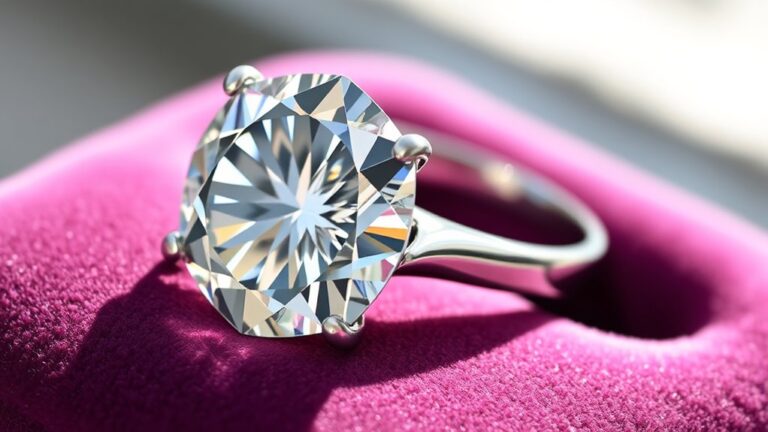
A gemstone with fewer inclusions lets light pass through more freely, while an expert cut maximizes the reflection and refraction of light.
To boost your gemstone’s brilliance, focus on:
- Selecting stones with high clarity to minimize visual distractions
- Ensuring the cut is balanced to improve light performance
- Avoiding overly deep or shallow cuts that dull sparkle
- Recognizing how facets interact to create brilliance
- Considering the stone’s shape, as it affects light play
Together, these elements make your pink gemstone truly enchanting.
Enhancing Color and Sparkle
The way clarity and cut work together doesn’t just affect brilliance; they also play a big part in improving a pink gemstone’s color and sparkle. When you choose a stone with excellent clarity, fewer internal flaws allow light to travel freely, intensifying its natural hue through effective color enhancement.
Meanwhile, precise cut angles maximize the gemstone’s ability to reflect and refract light, amplifying its sparkle. Sparkle techniques like faceting patterns are essential here; they determine how light bounces inside the gem and exits to your eye.
You want a cut that balances depth and symmetry to reveal the richest pink tones. By focusing on clarity and cut, you guarantee your pink gemstone dazzles with vivid color and enchanting sparkle, making it truly stand out.
Where Pink Gemstones Are Found Around the World
Although pink gemstones enchant with their vibrant hues, their origins span diverse regions across the globe. Understanding their geographic distribution helps you appreciate how varied mining techniques adapt to each location’s unique geology. You’ll find pink gemstones in both alluvial deposits and hard rock mines, often requiring different extraction methods.
Pink gemstones captivate with color and reveal unique mining stories shaped by their diverse global origins.
Here are key places where pink gemstones are commonly found:
- Myanmar (Burma), renowned for pink rubies and spinels
- Sri Lanka, rich in pink sapphires
- Madagascar, diverse pink gems, including tourmaline
- Brazil, known for pink topaz and morganite
- Tanzania, famous for pink spinel and sapphire
Knowing where these gems come from can guide you in sourcing and valuing them accurately.
How to Identify Pink Sapphire Gemstones
Pink sapphires stand out among pink gemstones due to their unique properties and vibrant shades. To identify a pink sapphire gemstone, first examine its color, which ranges from soft pastel pink to vivid magenta, often influenced by trace elements like chromium.
Check the stone’s hardness. Pink sapphires score a 9 on the Mohs scale, making them highly durable compared to other pink gems. Look for natural inclusions under magnification, as synthetic sapphires often lack these.
Understanding pink sapphire origins helps too. They primarily come from Sri Lanka, Madagascar, and Myanmar, each region imparting slight color variations. Finally, consider pink sapphire symbolism: they represent love, wisdom, and strength, which adds to their distinct appeal.
These clues will help you confidently identify pink sapphire gemstones.
How to Identify Pink Tourmaline Gemstones
Wondering how to distinguish pink tourmaline from other pink gemstones? Identifying pink tourmaline is easier when you know its unique properties. Pink tourmaline properties include a vibrant range of pink shades, often exhibiting pleochroism, meaning the color can shift when viewed from different angles.
It’s fairly hard, rating 7 to 7.5 on the Mohs scale, making it durable for everyday wear. Unlike some pink stones, tourmaline often has natural inclusions that don’t detract from its beauty.
To help you spot pink tourmaline, remember these tips:
- Look for color shifts due to pleochroism
- Check hardness to rule out softer stones
- Identify natural inclusions typical of tourmaline
- Note the gemstone’s clarity and saturation
- Use a refractometer to confirm its optical properties
These pointers simplify identifying pink tourmaline confidently.
How to Spot Morganite, the Soft Pink Gemstone
When you’re on the hunt for morganite, keep an eye out for its soft pink to peachy hues. These gentle colors really make it stand out from other pink gemstones.
Also, don’t forget to look closely for those subtle inclusions inside the stone. They often show up in morganite and can help you be sure you’ve got the real deal.
Knowing these little details makes it way easier to spot this delicate and beautiful gem.
Morganite Color Characteristics
Morganite enchants with its gentle blush hues, ranging from pastel pink to peachy tones that instantly catch your eye. When you look closer, morganite clarity plays a big role in its appeal. High clarity stones offer a clean, luminous glow.
Understanding morganite origins, primarily from Brazil, Madagascar, and Mozambique, helps you appreciate the subtle color variations found in different regions. To spot authentic morganite, focus on these key characteristics:
- Soft pink to peach color spectrum
- Transparent appearance with minimal inclusions
- Subtle, warm undertones rather than bright or neon pink
- Consistent hue without patchy color zones
- Sparkle improved by quality morganite clarity
Identifying Morganite Inclusions
The subtle warmth and clear glow of morganite are partly defined by the inclusions within the stone. When identifying morganite, pay close attention to its clarity. Most stones have tiny needle-like or liquid inclusions, which are natural and help confirm authenticity.
Unlike synthetic gems, these imperfections are typically consistent with morganite sources such as Brazil, Madagascar, and Mozambique. You won’t usually find flawless morganite, so don’t be alarmed if you spot minor internal features.
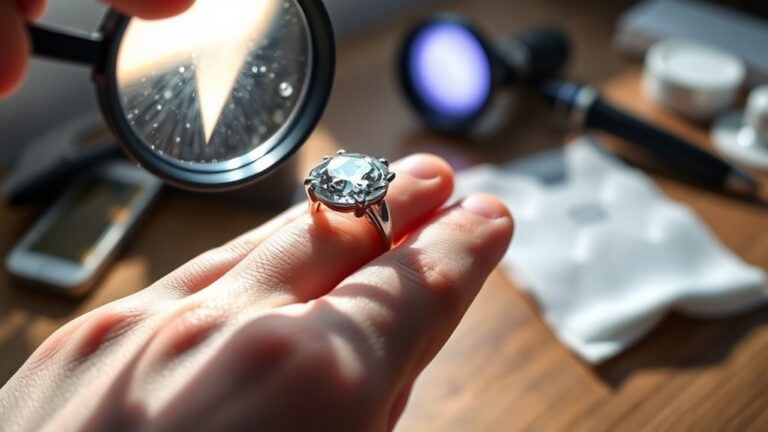
Use a loupe or magnifying glass to examine the stone under good light. Inclusions often appear as fine threads or small bubbles. Recognizing these details helps you distinguish genuine morganite from imitations and better understand the stone’s origin and quality.
How to Tell Spinel Apart From Other Pink Gemstones
How can you confidently distinguish spinel from other pink gemstones? Start with spinel identification by noting its unique spinel characteristics: it often shows a vibrant spinel color range from soft pinks to intense reds. Unlike ruby, spinel brilliance is distinct. Spinels tend to sparkle with a clean, glassy shine without the silkiness rubies show.
Consider spinel durability; it ranks 8 on the Mohs scale, making it quite tough. When comparing spinel vs. ruby, remember spinels lack the chromium content that rubies have, affecting both color and value. Spinel value factors include rarity and historical significance, as it was often mistaken for ruby until modern gemology clarified its identity.
Spinel ranks 8 on Mohs scale and lacks ruby’s chromium, influencing color, value, and historical significance.
- Check refractive index for spinel identification
- Observe color intensity and hue variations
- Assess brilliance under natural light
- Test hardness for durability
- Research provenance for historical significance
How to Verify Pink Gemstone Authenticity
After distinguishing spinel from other pink gemstones, you’ll want to verify the authenticity of any pink stone you encounter. Start with gemstone testing by a certified gemologist who uses tools like refractometers and spectrometers to evaluate the stone’s optical properties. This helps reveal whether the gem is natural, synthetic, or treated.
Pay close attention to color grading, as authentic pink gemstones will display consistent, natural hues without artificial improvements. You can also check for inclusions under magnification. Natural stones often have tiny internal features that synthetics lack.
Finally, always request a detailed certificate of authenticity from reputable sellers to confirm your pink gemstone’s legitimacy. Following these steps protects you from imitations and guarantees your investment is genuine.
How to Choose the Right Pink Gemstone for You
Wondering which pink gemstone suits your style and needs best? Choosing the right one goes beyond just looks. You’ll want to take into account each stone’s unique gemstone symbolism and healing properties to find a perfect match for your energy and intentions.
Here’s how to choose wisely:
- Identify what energy or healing properties you want to attract.
- Consider the gemstone’s durability for daily wear.
- Match the stone’s color intensity with your personal style.
- Reflect on gemstone symbolism that resonates with your goals.
- Check your budget and gemstone authenticity for long-term value.
Frequently Asked Questions
Are Pink Gemstones Associated With Specific Birth Months?
Yes, pink gemstones are often linked to specific birth months. For example, pink tourmaline is the traditional birthstone for October, symbolizing love and healing. Understanding birthstones meanings helps you connect personally with these gems.
Wearing a pink gemstone tied to your birth month isn’t just stylish; it carries sentimental value and believed positive energy. So, if you want to welcome pink gemstones, investigate which ones match your birth month for meaningful sparkle.
How Durable Are Pink Gemstones for Everyday Jewelry?
Think of pink gemstones as your daily reminder of love’s resilience. Their durability varies, so you’ll want to check the hardness scale before choosing one for everyday wear.
Some, like pink sapphires, score high and handle daily life well, while others with softer color variations, like rose quartz, need gentler care. By understanding these differences, you’ll keep your jewelry sparkling and strong, no matter how active your lifestyle gets.
What Is the Historical Significance of Pink Gemstones?
You’ll find that pink gemstones carry rich historical myths and cultural symbolism across civilizations. They’ve often symbolized love, compassion, and healing, making them popular in royal jewelry and talismans.
For instance, ancient cultures believed pink stones could protect from harm and attract positive energy. When you wear or choose pink gemstones, you’re connecting with traditions that value emotional strength and beauty, rooted deeply in history and legend.
Can Pink Gemstones Change Color Over Time?
You might be surprised, but yes, some pink gemstones can change color over time. Their color stability depends on factors like exposure to light, heat, and chemicals.
Gemstone treatments, such as irradiation or dyeing, can also affect how long their pink hue lasts. So, if you want your gemstone to keep its vibrant color, you’ll need to handle it carefully and understand any treatments it has undergone.
Are There Any Synthetic Pink Gemstones to Be Aware Of?
Yes, you should be aware that many synthetic pink gemstones exist due to advances in synthetic origins. These lab-created stones often mimic natural ones closely, making it essential to verify authenticity.
Market trends show a rise in synthetic pink sapphires and spinels because they’re more affordable and flawless. To avoid surprises, always buy from reputable dealers and request certification to confirm whether your pink gemstone is natural or synthetic.
Conclusion
When choosing pink gemstones, keep in mind that beauty is in the eye of the beholder but knowing what to look for makes all the difference. By understanding color variations, clarity, and cuts, you’ll spot the perfect gem that suits your style.
Whether it’s a pink sapphire, morganite, or spinel, trust your knowledge to pick a genuine stone that shines just for you. After all, a little knowledge goes a long way in finding your perfect pink gemstone.